Thailand
Chiang Mai
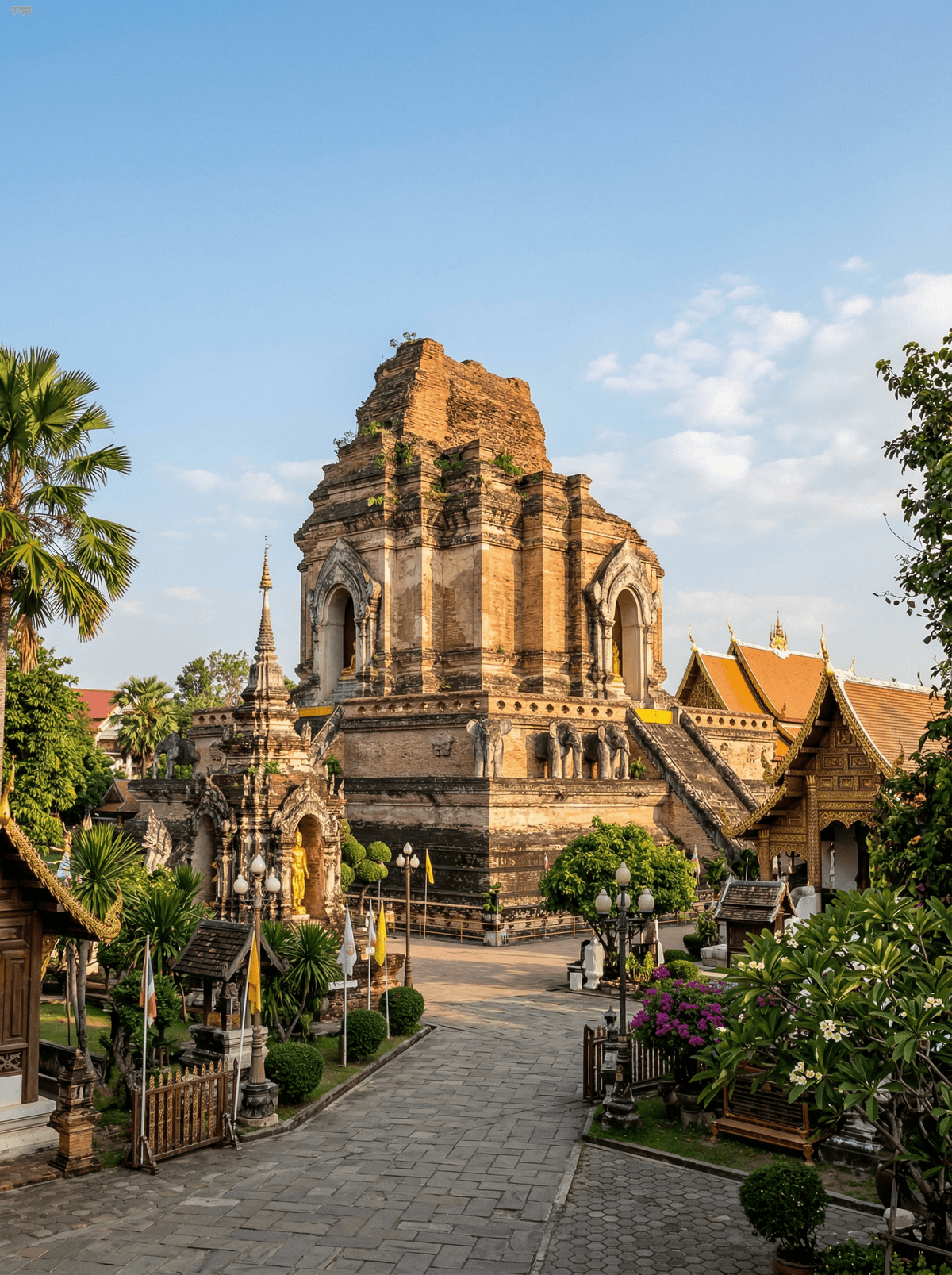
Monks in saffron robes walking barefoot past tattooed expats and ancient brick chedis at dawn.
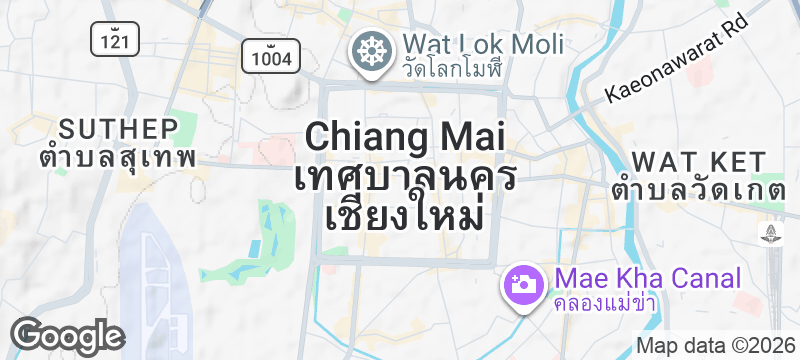
Inside the moated old city, monks sweep temple courtyards at dawn while tattooed digital nomads queue for cold brew across the street. Chiang Mai holds its contradictions in balance — ancient and modern, sacred and hedonistic, deeply Thai and thoroughly international — and the whole city smells faintly of charcoal-grilled sai ua.
Chiang Mai was founded in 1296 to serve as the Lanna Kingdom's capital, while over three hundred Buddhist temples stand across the city, dozens of them inside the old quarter's brick walls and moat. The identity is distinctly northern: Lanna architecture, Lanna cooking, a slower cadence than Bangkok. On Sundays the walking market turns Ratchadamnoen Road into a long bazaar of handmade crafts, hill-tribe textiles and street food. Doi Suthep, the golden mountain temple overlooking it all, is a thirty-minute drive and three hundred naga-flanked steps away, and the surrounding highlands grow some of Thailand's best coffee.
Solo
Walkability, temple density and the street-food scene make Chiang Mai one of Asia's easiest solo cities — and the nomad infrastructure means you can stay for weeks without trying.
Couple
Heritage boutique hotels inside the old walls, candlelit Lanna restaurants and cooking classes in teak kitchens give a romantic base with depth beyond sunsets.
Friends
Night bazaar, Sunday market, ziplining, trekking and ethical elephant sanctuaries in the hills — enough variety that nobody has to split off.
- More than three hundred Buddhist temples stand across the city — saffron robes are part of the street furniture.
- The Sunday walking market fills the old town's spine with handmade crafts, street food and live music.
- Converted teak mansions and heritage boutique hotels sit inside the moated old city walls.
- Northern Thai cuisine is its own tradition — khao soi, sai ua, nam prik num — distinct from everything further south.
Khao soi with tender noodles, coconut curry and a crisp golden crown.
Sai ua sausage with nam prik num and crunchy pork crackling.
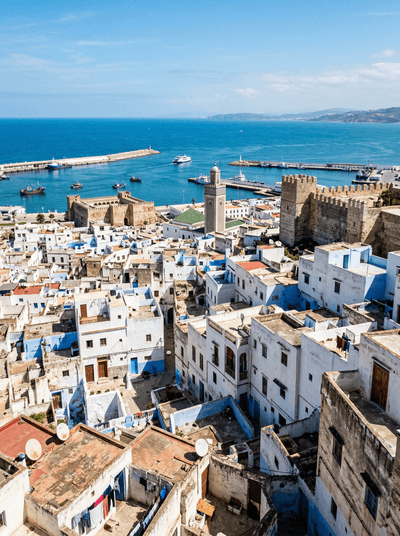
Tangier
Morocco
Mint tea cools on cliff terraces as ships carry the world through Tangier's strait.
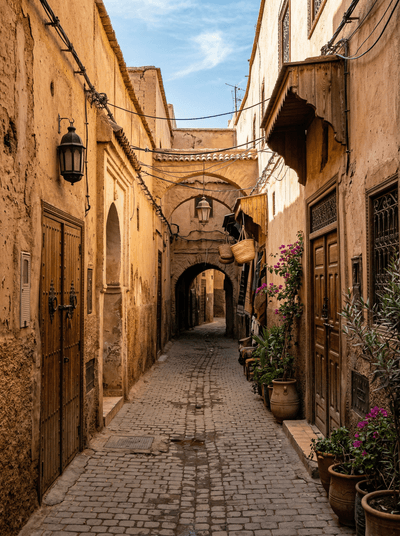
Marrakech
Morocco
Smoke climbs above Jemaa el-Fna as storytellers, drums and twelve thousand suppers take the square.
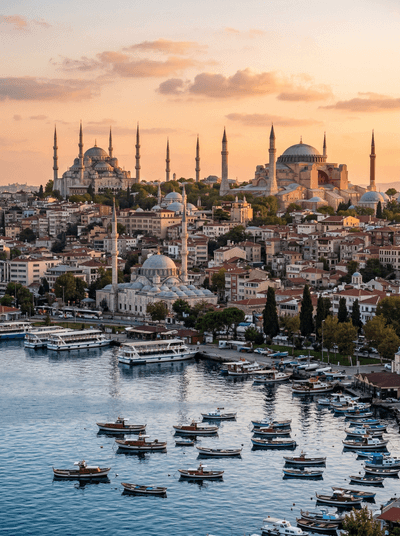
Istanbul
Turkey
Minarets and cargo ships share a waterway where two continents nearly touch.
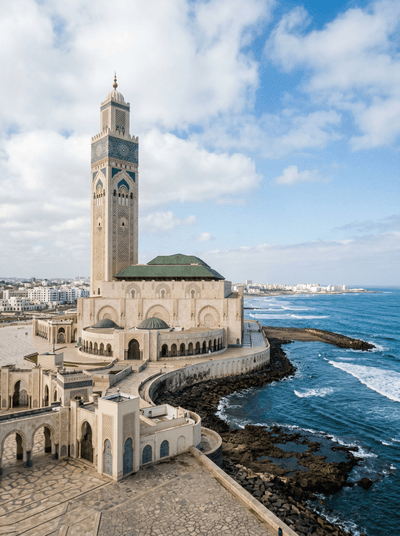
Casablanca
Morocco
The Atlantic runs beneath half a mosque whose roof opens in five minutes.