Portugal
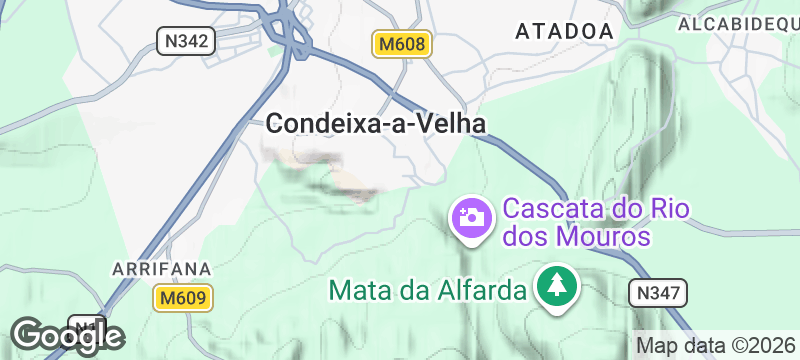
Conimbriga
Roman mosaics under open sky, their dolphins still leaping two thousand years on.
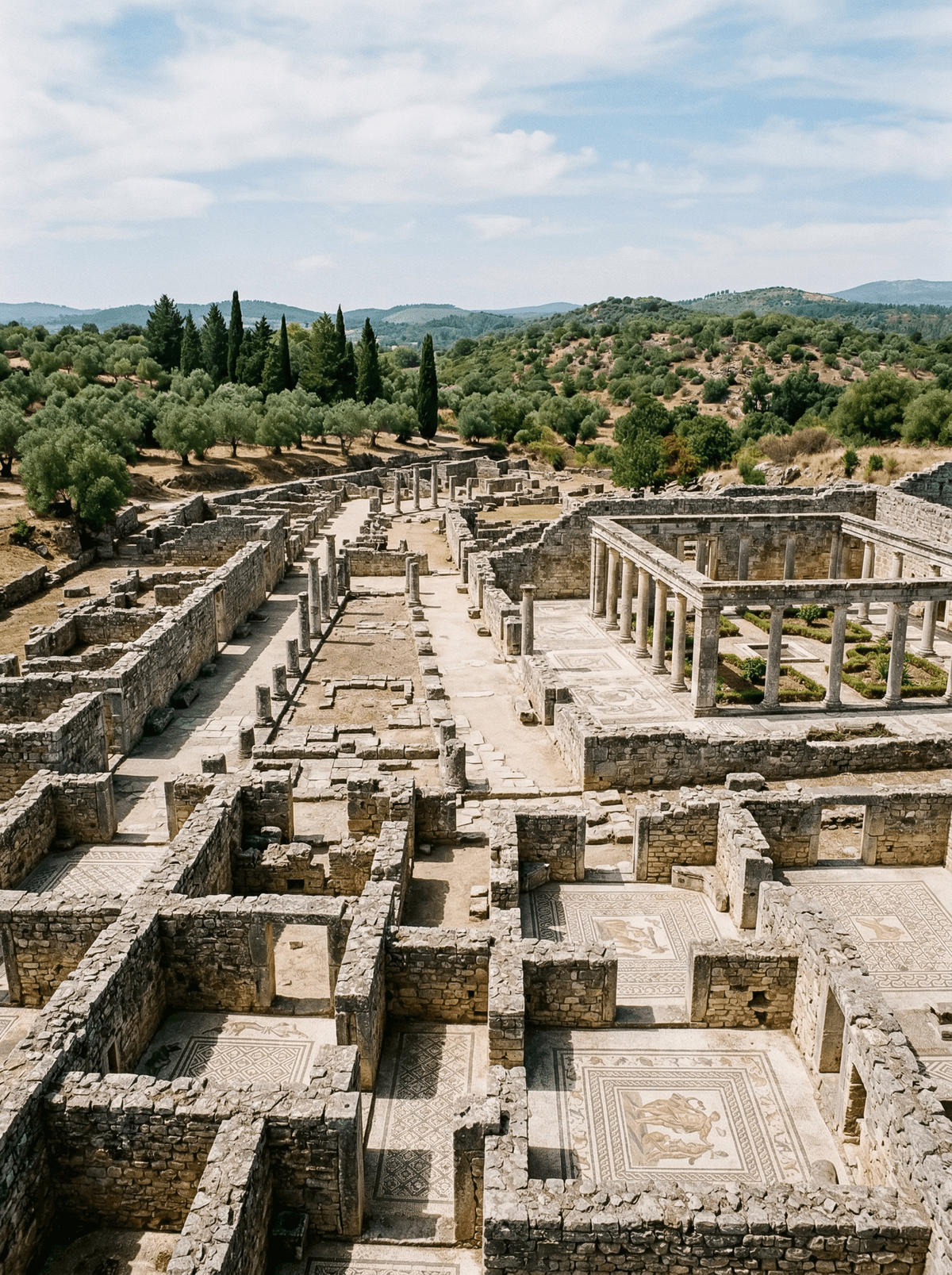
The mosaics stop you. Floor after floor of them, exposed to the Beira sky, their tessellated dolphins and geometric borders still sharp after two millennia of rain and root. You walk raised boardwalks above what were bathhouses, villas and fountains — a Roman city laid bare and barely visited.
Conimbriga is Portugal's best-preserved Roman site, a short drive south of Coimbra — occupied from the Iron Age to Visigothic times and at its peak from the first to third centuries as a prosperous stop on the road between Roman Lisbon and Braga. The mosaics of the House of the Fountains and the House of Cantaber rank with the finest in the western Empire, and the site carries a visible scar of the end: a defensive wall thrown up in haste against invasion in late antiquity slices straight through villas, houses bisected mid-room, urgency frozen in masonry. The site museum gathers the sculptures, coins and surgical instruments the digs surrendered — among the finest Roman collections in Portugal — and the site remains one of Iberia's least-sung marvels.
Solo
A quiet marvel — two thousand visible years underfoot. Anyone who lingers over archaeological detail loses track of time here.
Couple
Roman villas with mosaics still covering whole floors, and the domestic lives they imply — a cultural visit that becomes a conversation lasting the drive home.
Family
Children see the shape of actual Roman houses and grasp antiquity as no textbook allows — with surgical tools and coins in the museum for every age.
Friends
The day trip that earns credibility — a site to rival Italy's, hiding in the Beira countryside.
- Portugal's largest uncovered Roman town spreads mosaics, baths and streets under open sky.
- The House of the Fountains keeps figurative floors among the western Empire's finest.
- A panic-built late-antique wall still bisects villas mid-room — urgency in masonry.
- The site museum keeps a Roman collection with few equals in the country, beside the digs.
Leitão da Bairrada — suckling pig with glass-crisp crackling, the region's pride.
Queijo Rabaçal — the Sicó hills' sheep-and-goat cheese, with quince marmelada.
Port Arthur
Australia
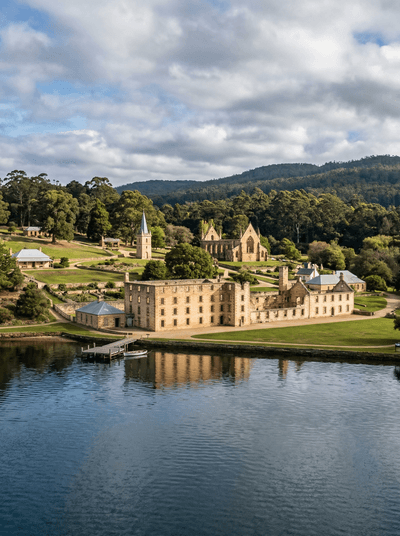
Honey-coloured ruins and harbour gardens disguise the machinery of Britain's convict punishment.
Gettysburg
United States
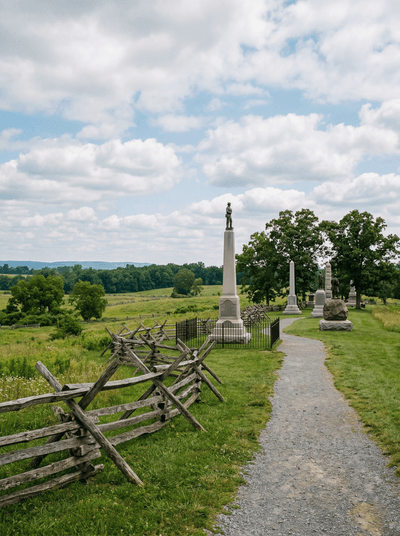
Fifty-one thousand killed, wounded or missing in three days, on fields where silence still weighs.
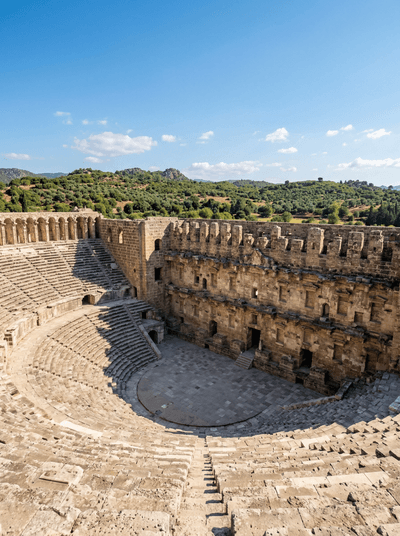
Aspendos
Turkey
A Roman theatre preserved so completely that an unamplified voice carries to the topmost row.
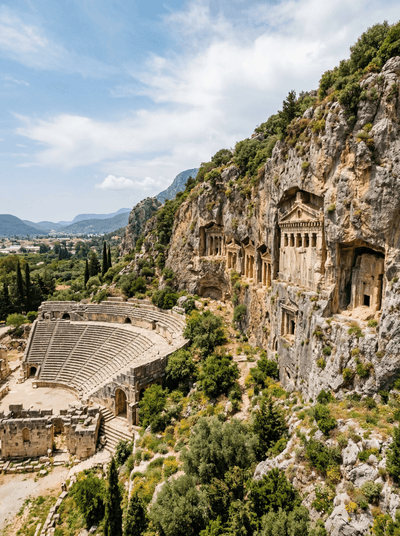
Myra
Turkey
Rock-cut Lycian tombs stacked like a honeycomb above the church where Saint Nicholas was bishop.
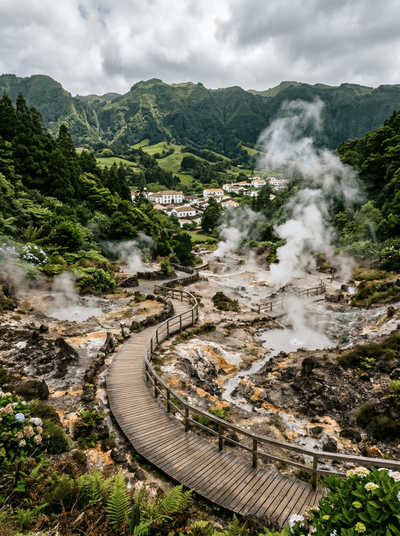
Furnas
Portugal
Hot springs bubble through botanical gardens while stew slow-cooks in volcanic earth.
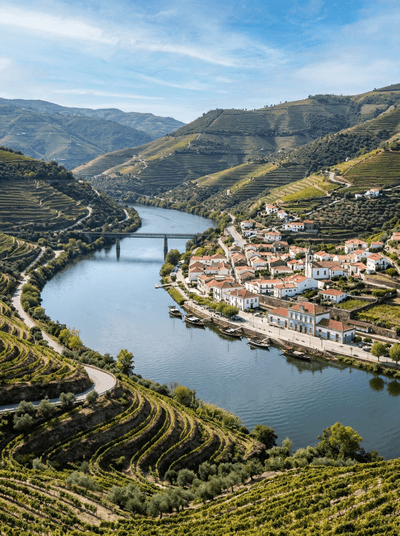
Pinhão
Portugal
Terraced vineyards plunge to the Douro so steep the harvest travels by shoulder.
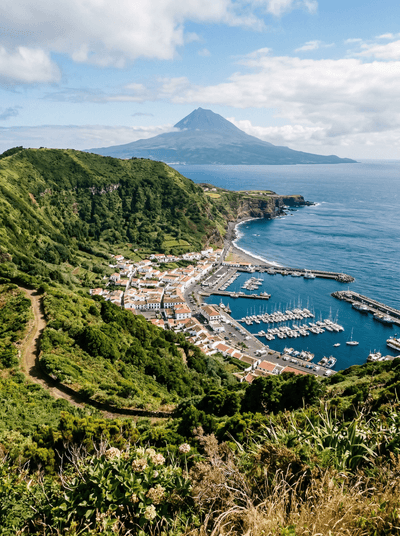
Faial
Portugal
Transatlantic sailors paint crew crests on the harbour walls — decades of voyages in pigment.
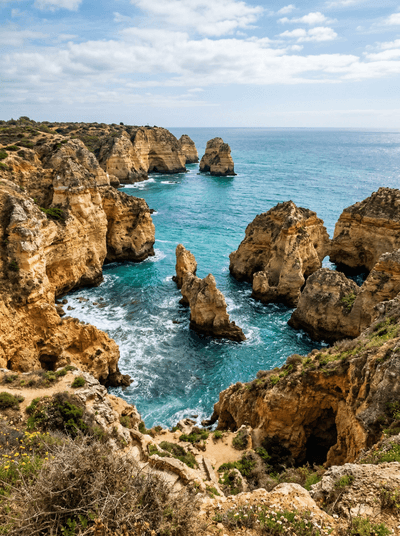
Lagos
Portugal
Amber sea stacks eroded into cathedral arches, kayaks gliding turquoise grottoes below.