United States
Gettysburg
Fifty-one thousand killed, wounded or missing in three days, on fields where silence still weighs.
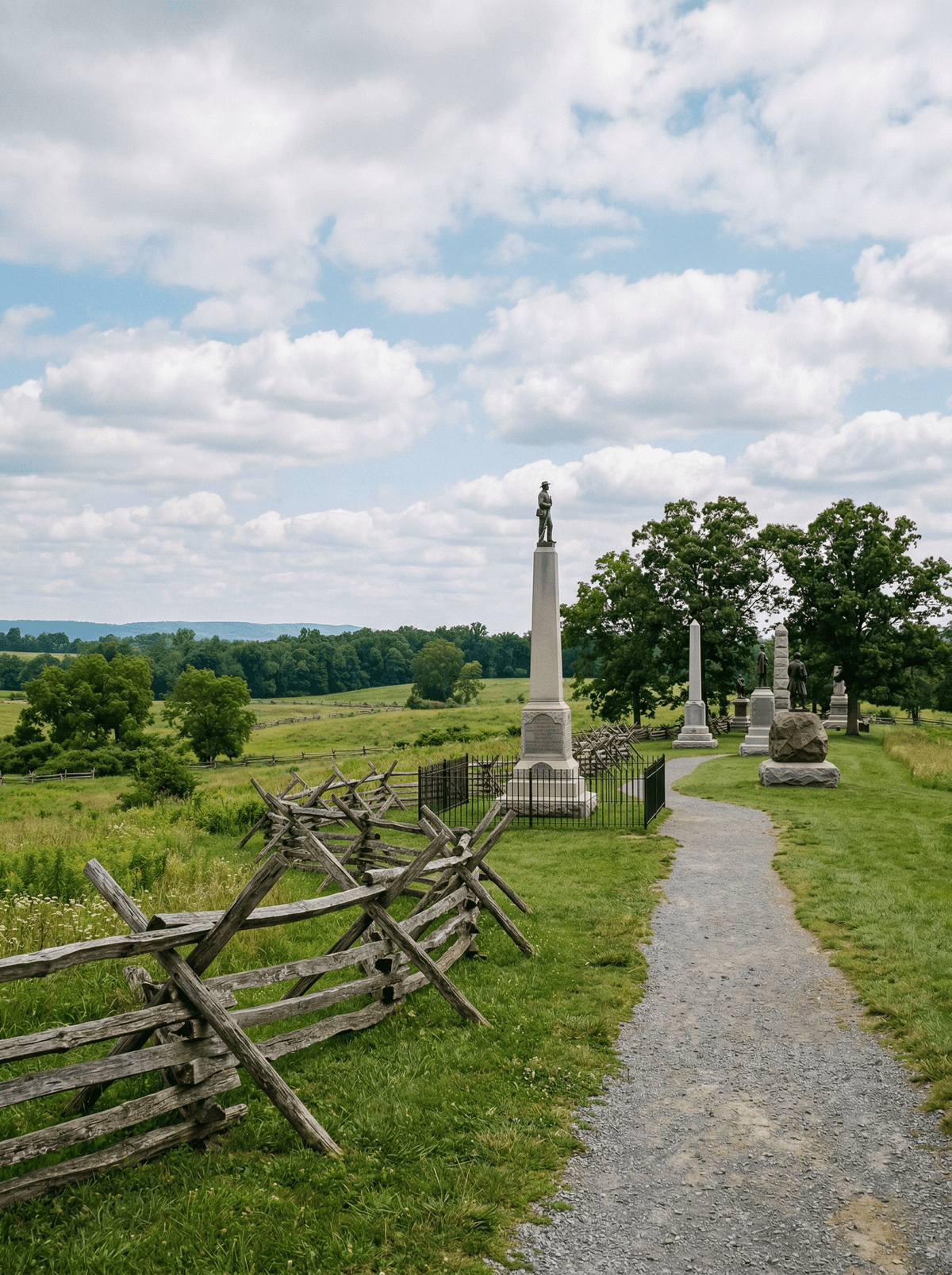
The cannons sit in the grass where they fired, aimed across farmland that has hardly changed in a century and a half. Morning fog clings to the low ground Pickett's Charge crossed into rifle fire, and the quiet over these fields carries a weight you feel in the chest.
The Battle of Gettysburg was the turning point of the American Civil War, the Union victory that ended Robert E. Lee's second and most ambitious invasion of the North, and its three July days in 1863 made it the war's bloodiest battle, with casualties around fifty-one thousand. The battlefield today is a memorial landscape: more than 1,300 monuments stand where regiments fought, most raised within living memory of the fighting by the men who survived it. Licensed battlefield guides, trained through one of the country's most demanding interpretive programmes, take visitors across ground that self-guided walking cannot organise into sense. In the Soldiers' National Cemetery, four months after the battle, Abraham Lincoln delivered the Gettysburg Address over the Union graves arranged by state.
Solo
Walk the Pickett's Charge field alone at first light, three-quarters of a mile of open ground, and let the arithmetic of it settle without commentary.
Couple
Take a licensed guide in the morning, the orchard country and cider rooms of Adams County after lunch and the quiet town squares by evening.
Family
For children old enough for what happened here, the ground itself turns textbook history into something they stand inside; rangers pitch the programmes to their questions.
- The Union victory here ended Lee's most ambitious invasion and turned the Civil War, at the cost of around fifty-one thousand casualties in three days.
- More than 1,300 monuments stand where the regiments fought, most raised by the survivors themselves.
- Licensed battlefield guides, trained through one of America's most demanding interpretive programmes, read the ground for you from your own car.
- Lincoln delivered the Gettysburg Address here four months after the battle, over Union graves arranged by state.
Apple dumplings under cinnamon sauce in Adams County, whose orchards press five million bushels a year.
Fresh cider from the fruit-belt farm stands around Biglerville, the corner of Pennsylvania styled Apple Country USA.
Falun
Sweden
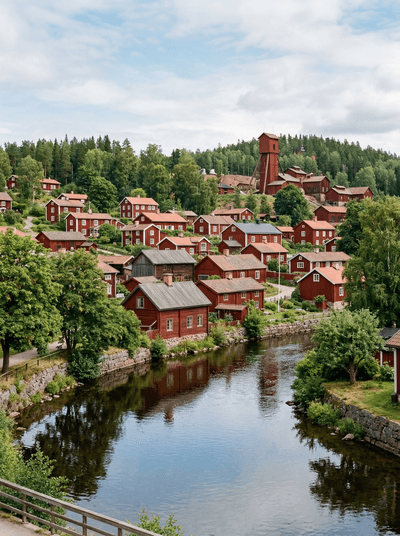
A copper mine so deep it shaped global currency, its red pigment painting every barn.
Olympia
Greece
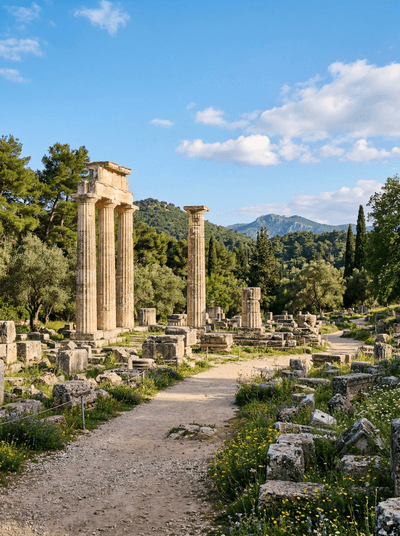
Ancient starting blocks still mark the stadium where Olympic contests unfolded for centuries.
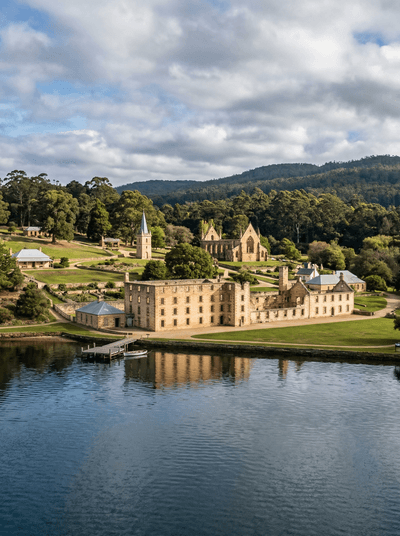
Port Arthur
Australia
Honey-coloured ruins and harbour gardens disguise the machinery of Britain's convict punishment.
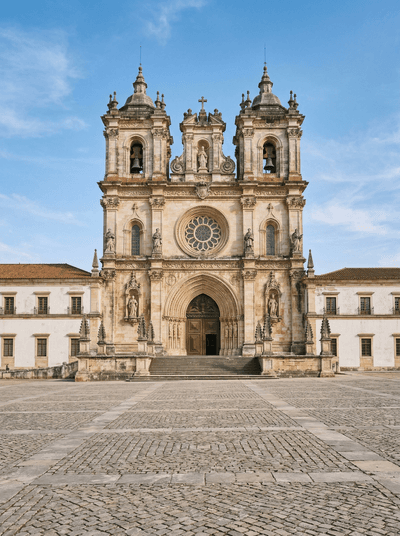
Alcobaça
Portugal
A monastery with a river through its kitchen and star-crossed lovers buried inside.
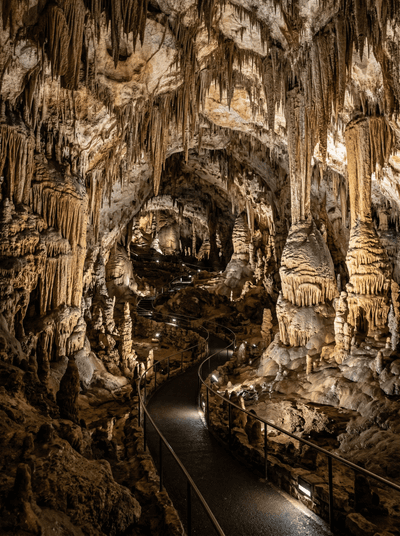
Carlsbad Caverns
United States
At dusk, hundreds of thousands of bats spiral upward from a hole in the desert floor.
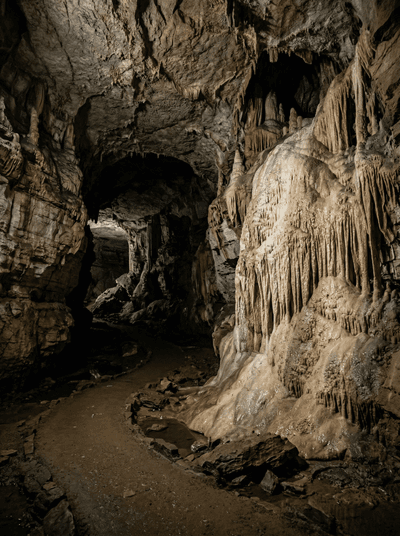
Mammoth Cave
United States
Echoing darkness stretching four hundred miles beneath Kentucky, the longest cave system on Earth.
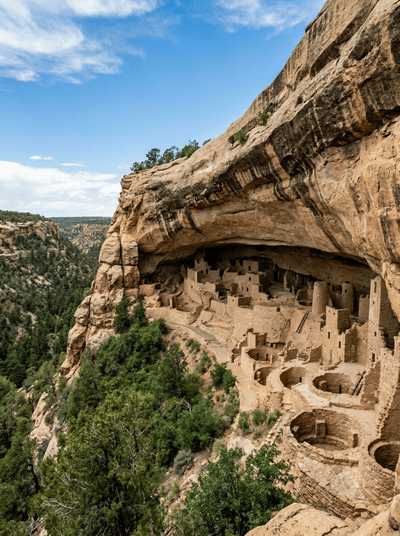
Mesa Verde
United States
Cliff palaces built into alcoves seven centuries ago, then abandoned within a generation.
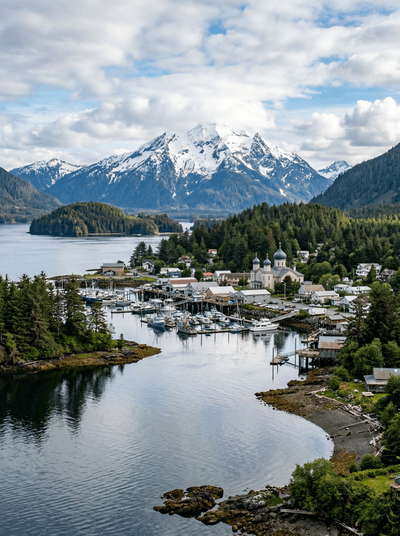
Sitka
United States
Totem poles and Russian onion domes facing each other across a harbour where humpbacks surface.