Costa Rica
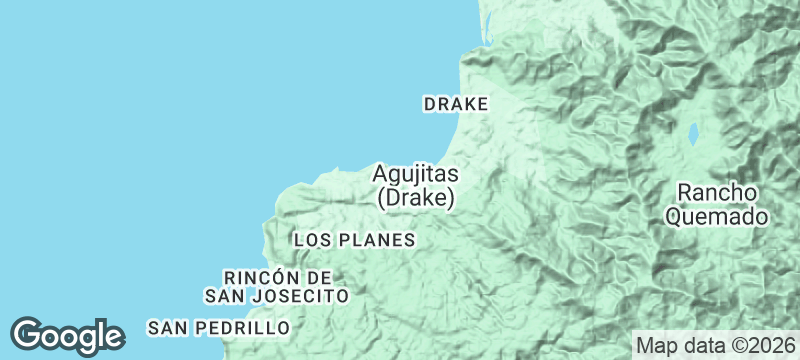
Drake Bay
Scarlet macaws wheel over a rainforest bay where the day's traffic is boat wakes.
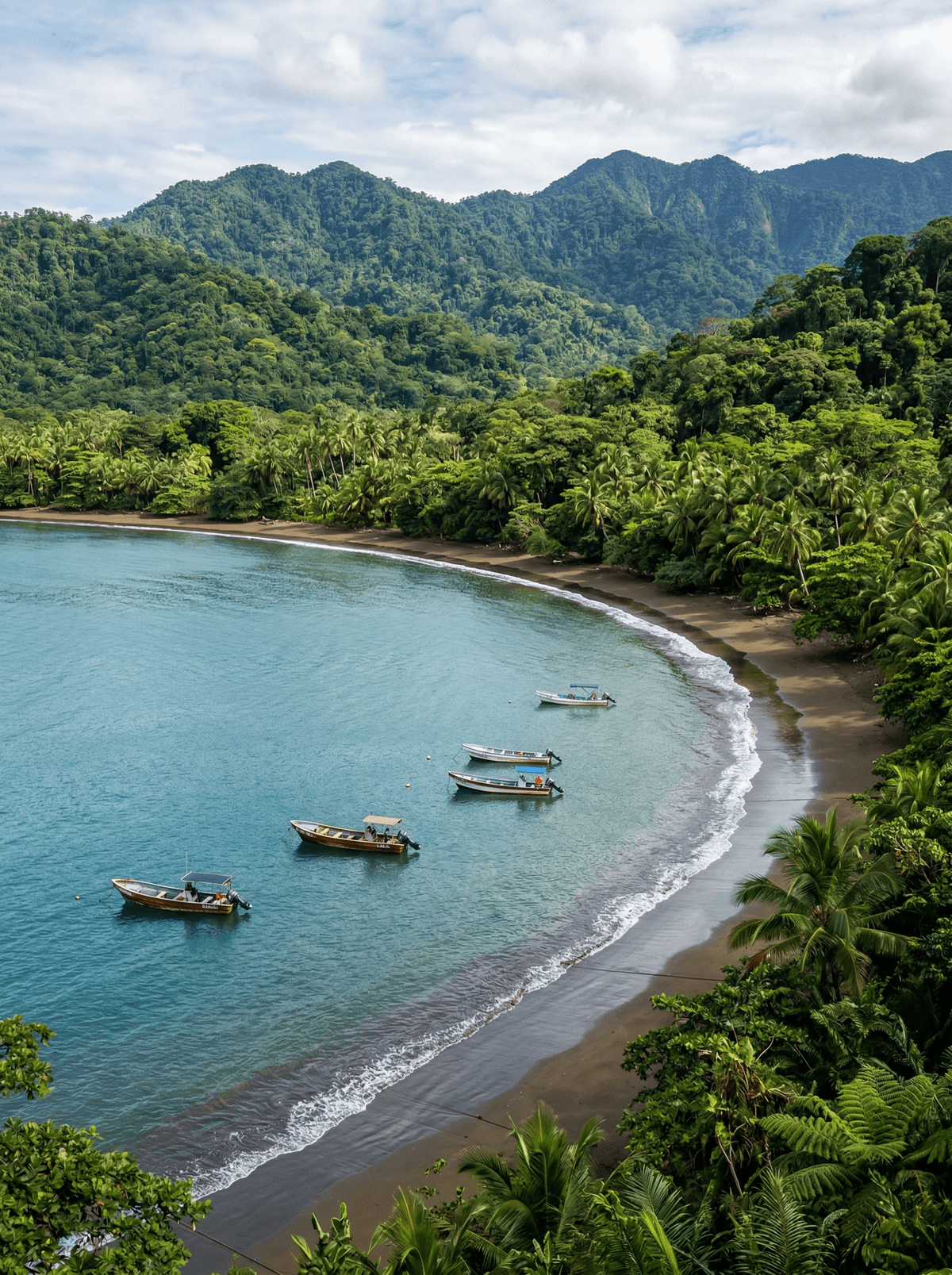
The skipper kills the engine and the boat drifts in past green headlands where scarlet macaws often cross in pairs, their calls tearing the salt air. Most arrivals still come the old way — down the Sierpe river through the mangroves, or along the coast by launch — and the sea sets Drake Bay's pace for it.
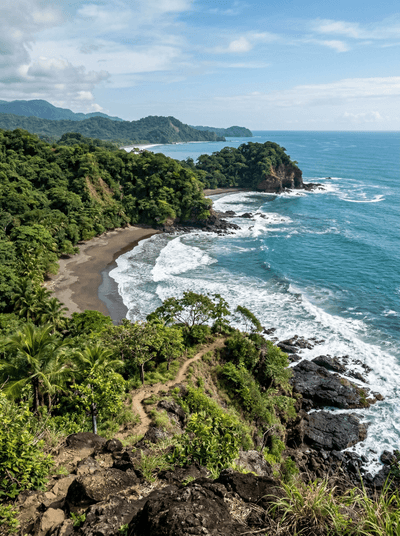
Drake Bay carries the name of the Elizabethan privateer, and the village still commemorates his arrival — this remains the kind of coast a sailor would hide in: rainforest headlands, dark-sand coves, working boats. It is the northern gateway to Corcovado and the launch point for Caño Island, but the bay itself earns the stay, with macaws in the trees, whales and dolphins offshore in season, and the largest meandering mangrove swamp in Central America lining the river route in. Nights are the real luxury — few lights, dark skies, the sound of your own breathing between waves. Eco-lodges string the shoreline path, many running on solar and rainwater.
Couple
Waves audible from bed and a remoteness no resort brochure can manufacture — here it is simply geography.
Family
The boat in is its own adventure, and lodge days mix snorkelling, wildlife walks and beach time without a car in sight.
Friends
A base camp for the Osa's big days — Corcovado treks, Caño Island dives, mangrove kayaks — with sunset ceviche to debrief over.
- Scarlet macaws overhead and, in season, whales and dolphins in the bay — the Osa's wildlife starts at the shoreline.
- Boats run from the bay into Corcovado's San Pedrillo sector and out to Caño Island's reefs.
- Arrival sets the tone: down the Sierpe mangrove channels by boat, or in by light plane.
- The village commemorates Francis Drake's arrival — the bay has kept its name since the age of privateers.
Grilled pargo rojo with patacones and coconut rice, straight off the lodge grill.
Corvina ceviche eaten on the dock while the sun drops into the Pacific.
Lefkada
Greece
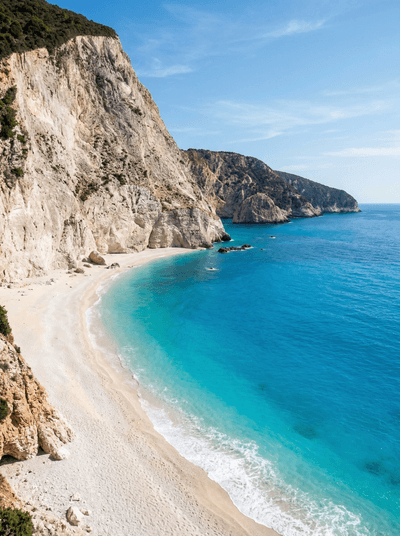
White cliffs plunge into water so absurdly turquoise it looks digitally altered from every angle.
Great Barrier Reef
Australia
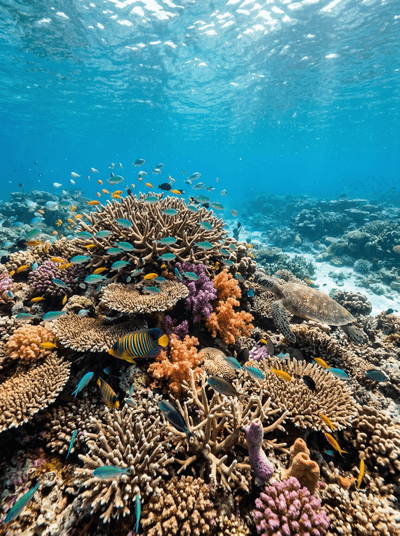
Turtles thread through a coral world stretching 2,300 kilometres along Queensland.
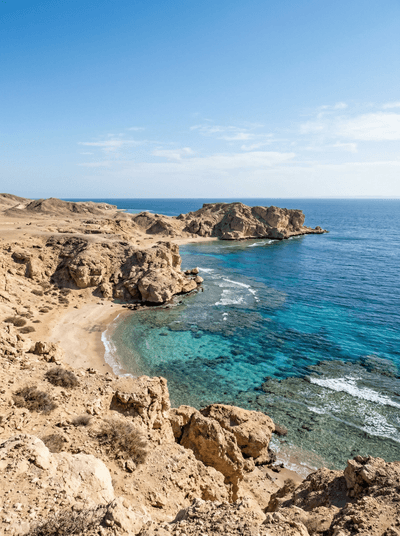
Ras Mohammed
Egypt
The Sinai desert drops into the Red Sea here, mangroves clinging to the last ledge.
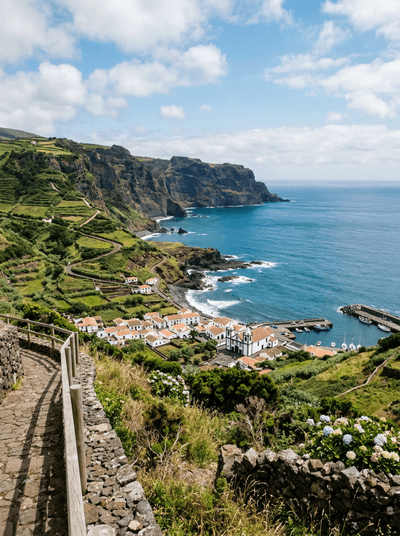
Santa Maria
Cape Verde
Kites carve the trade wind; the morning catch sells straight off the wooden pier.
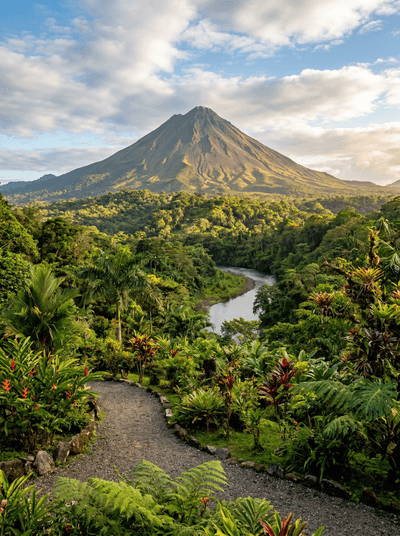
Arenal & La Fortuna
Costa Rica
Hot springs steaming through jungle beneath a volcano's perfect cone at dusk.
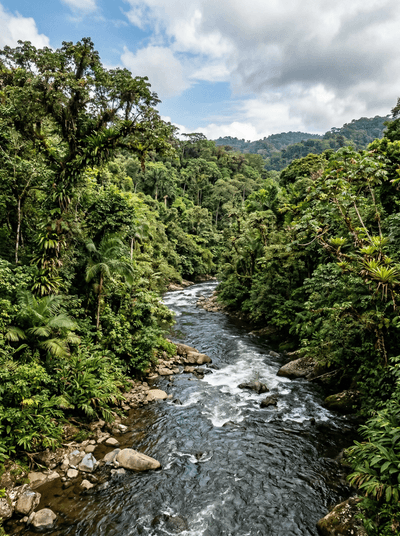
Sarapiquí
Costa Rica
Poison dart frogs glow neon on the forest floor while rapids thunder through lowland jungle.
Punta Islita
Costa Rica
Every surface in this village became a canvas — walls, fences, even the trees.