Morocco
Fes el-Bali
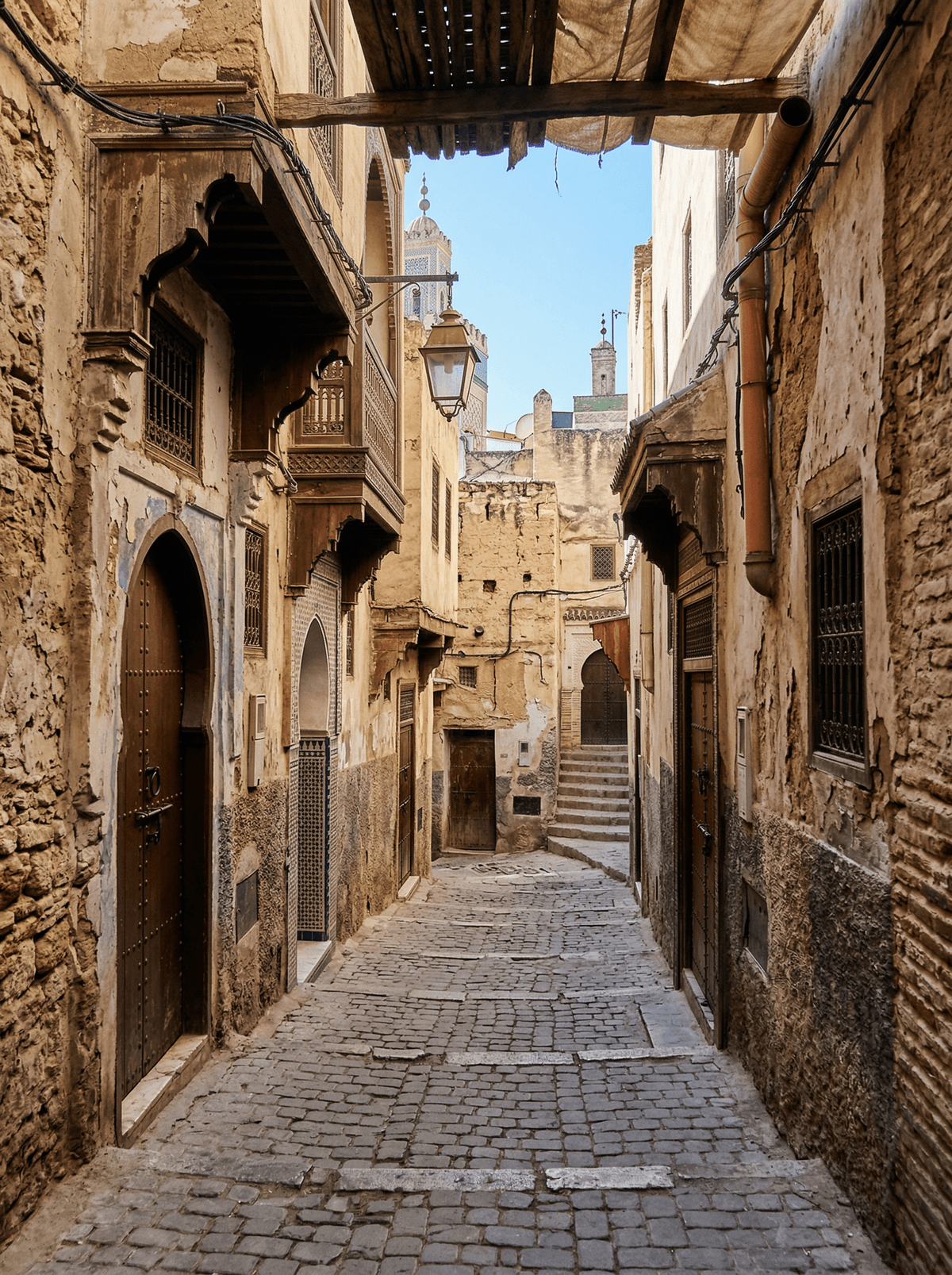
Cedar, cumin and thirty-day leather hang in lanes that refuse to tell you where you are.
Come in through Bab Boujloud, under zellij of blue and jade, and Fes el-Bali closes over you: covered lanes, sudden courtyards, a minaret sighted and then lost behind a wall. Nearly a quarter of a city of more than a million people still lives in here, and the old town owes very little to the outside world beyond electricity and visitors.
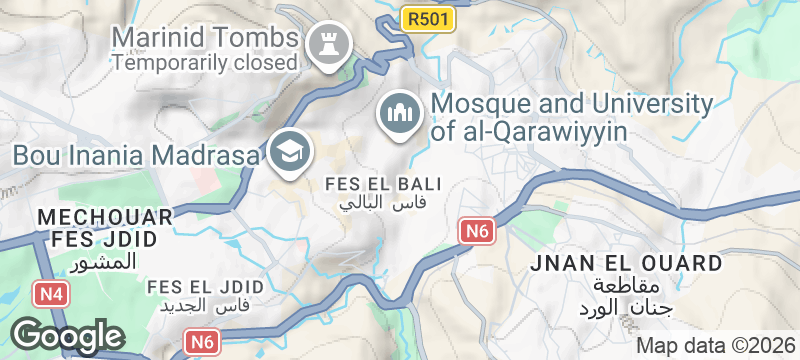
Al-Qarawiyyin opened its doors in 859, and Guinness World Records still lists it as the oldest existing and continually operating educational institution anywhere on earth. The Chouara pits are the medina's other constant: more than five hundred master tanners work them every day, the run from rawhide to finished leather takes about thirty days, and the only way to watch is to climb through a leather shop onto its balcony. Fez took in families expelled from southern Spain and built Morocco's first mellah in the fifteenth century, which is why the pastilla here is dusted with icing sugar over meat and cinnamon. Climb to the Merenid tombs after the lanes begin to empty; the whole medina finally acquires a shape, which is something the lanes themselves refuse to give you.
Solo
Let curiosity set the route. Follow hammering to a coppersmith, follow the smell of bread to a communal oven, and walk up to the Merenid tombs at dusk to see the shape of everything you crossed.
Couple
A restored riad puts a courtyard fountain and a roof terrace between you and the noise. Book the Ruined Garden's patio ahead, then make locating its tucked-away entrance part of the evening.
Friends
Split up at the tannery. Every leather shop opens onto a different balcony above the pits, so you each see it through a separate lens, then settle the argument later over camel burgers on Talaa Kebira.
- Al-Qarawiyyin, founded in 859, is recorded by Guinness World Records as the oldest existing and continually operating educational institution in the world.
- More than five hundred master tanners work the Chouara pits daily, and the process from rawhide to finished leather runs about thirty days.
- Nearly a quarter of Fez's million-plus population still lives inside the medieval medina, keeping its lanes residential as well as historic.
- The Festival of World Sacred Music fills the squares in early May, with Jazz in Riads running alongside it.
Friday couscous at the Ruined Garden, the semolina rolled and sieved by hand, then steamed and plated with saffron-flecked roast pumpkin and courgette.
The camel burger at Cafe Clock, piled with gherkins and a homemade tomato-and-cinnamon ketchup, ordered while the aissawa drummers tune up.
Lyon
France
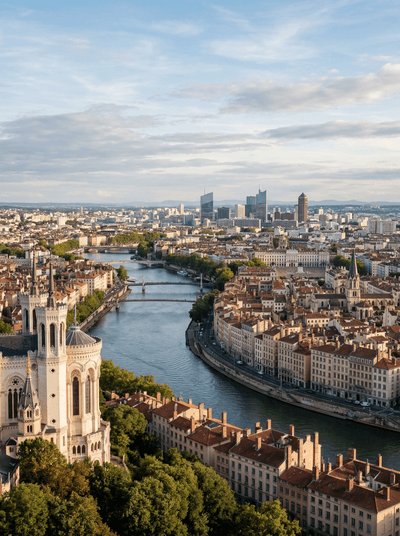
Silk-workers' secret passages threading between two rivers in the city that feeds France.
Bordeaux
France
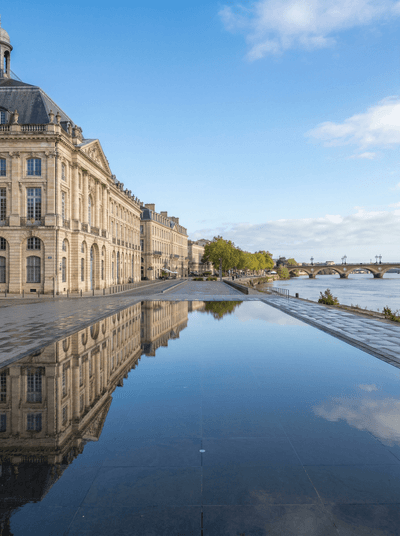
Eighteenth-century grandeur doubled in the Garonne's water mirror — a wine capital scrubbed back to gold.
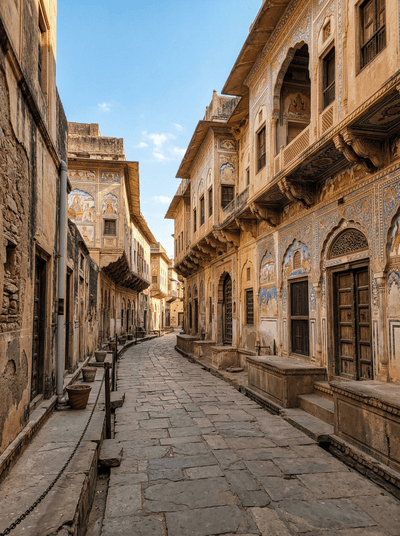
Mandawa
India
Gramophones and steam trains painted on mansion walls, a desert town turned open-air gallery.
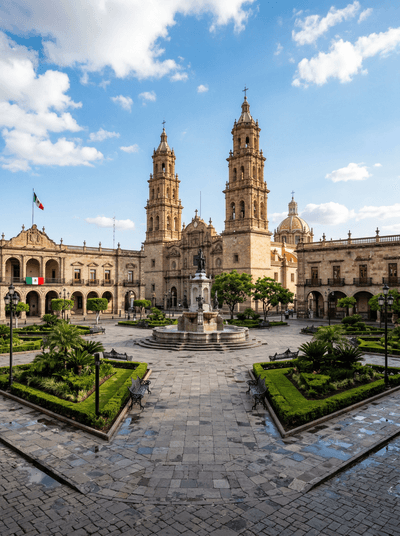
Guadalajara
Mexico
Orozco murals, market kitchens and mariachi nights animate Jalisco's largest city.
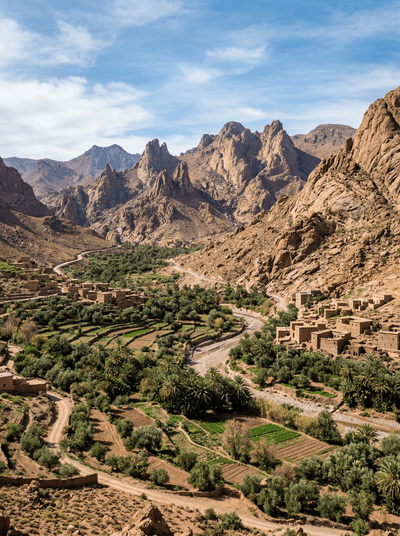
Ameln Valley
Morocco
Ochre villages disappear into Jbel Lekst while almond blossom clouds the valley floor.
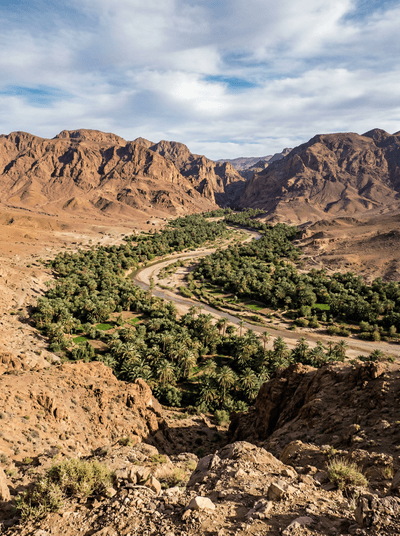
Draa Valley
Morocco
Two and a half million date palms carry a green river towards the Sahara.
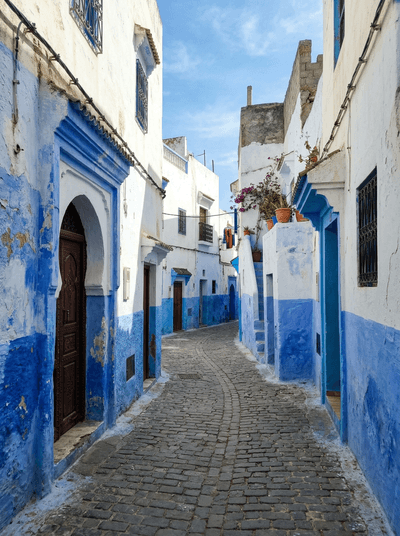
Asilah
Morocco
Fresh murals break across whitewashed lanes inside a fifteenth-century Atlantic wall.
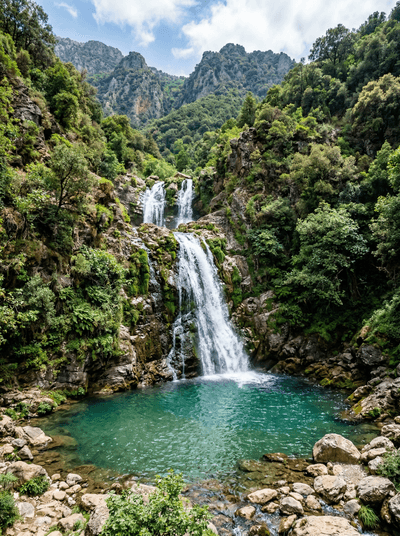
Akchour Waterfalls
Morocco
A rock arch twenty-five metres over the river, and the village crosses it daily.