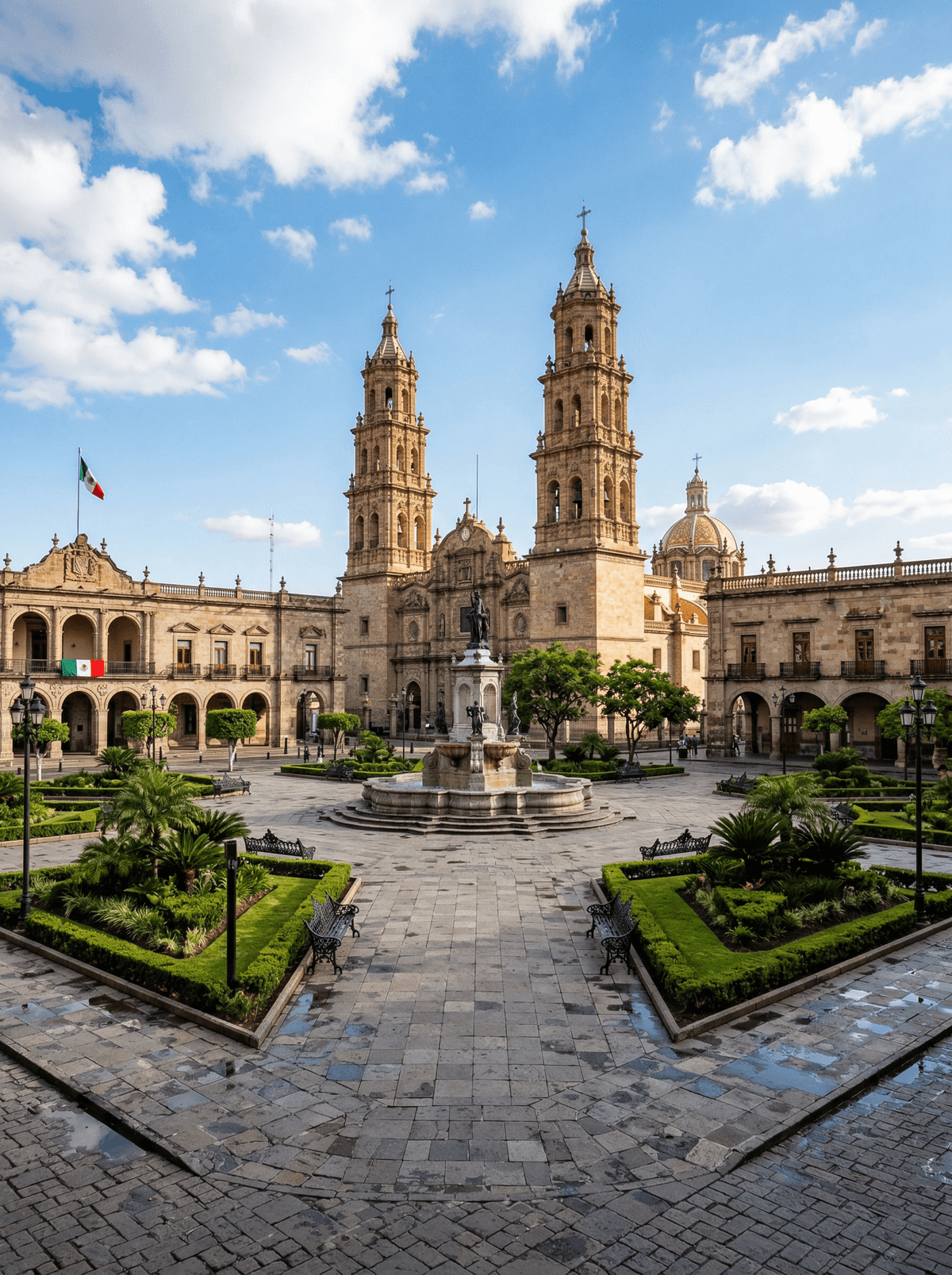
Mexico
Guadalajara
Orozco murals, market kitchens and mariachi nights animate Jalisco's largest city.
In the Hospicio Cabañas, Orozco's fire-and-iron murals burn across the ceiling; in the market across town, birria steams out of clay pots. Guadalajara works both registers at once, all day.
Guadalajara pairs the Hospicio Cabañas murals with plazas, markets and a confident contemporary culture, and serves as the base for the agave country to its west, a landscape holding World Heritage status. Mariachi and tequila are Jalisco's exports, their histories wider than any single square. The city's food canon is its own: birria, tortas ahogadas, and a bread roll history handed down from a Belgian baker.
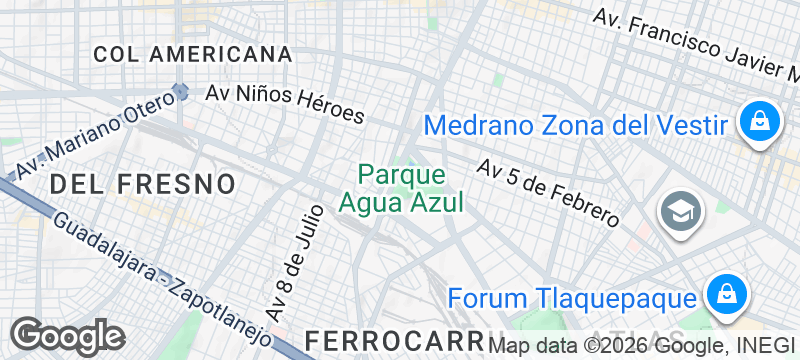
Friends
Chain the market's birria, an evening of mariachi and the city's cantina rounds.
Solo
Give the Orozco murals a slow morning and the markets the afternoon.
Couple
Pair the centre's murals with a day out in the agave landscape.
- Guadalajara combines the Hospicio Cabañas murals with plazas, markets and strong contemporary culture.
- Mariachi and tequila are deeply associated with Jalisco, their histories wider than one square.
- The city serves as the natural base for the agave landscape to its west.
Birria, Jalisco's chilli-braised meat, is the city's clay-pot classic.
The torta ahogada depends on the birote salado, a bread born here after a Belgian baker arrived in 1864.
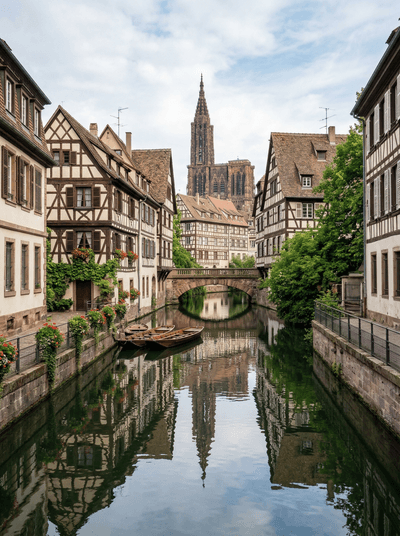
Strasbourg
France
Half-timbered houses over still canals in a Petite France scented with sauerkraut and spice.
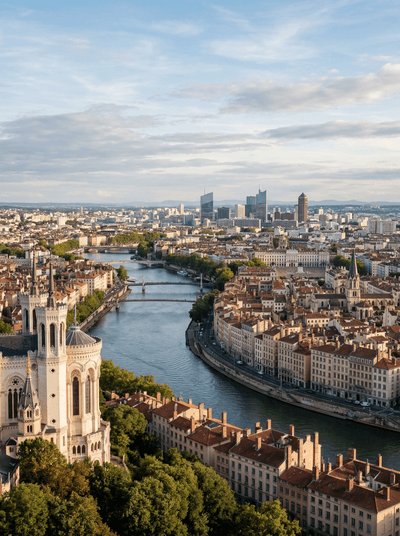
Lyon
France
Silk-workers' secret passages threading between two rivers in the city that feeds France.
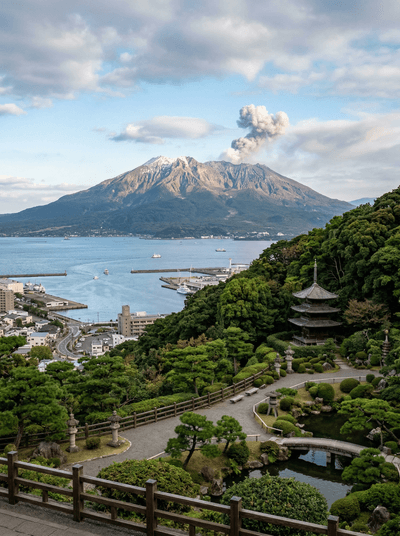
Kagoshima
Japan
Volcanic ash drifting like grey snow on a city living beneath an active cone.
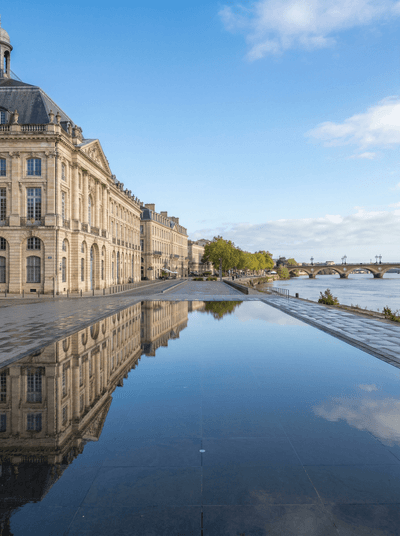
Bordeaux
France
Eighteenth-century grandeur doubled in the Garonne's water mirror — a wine capital scrubbed back to gold.
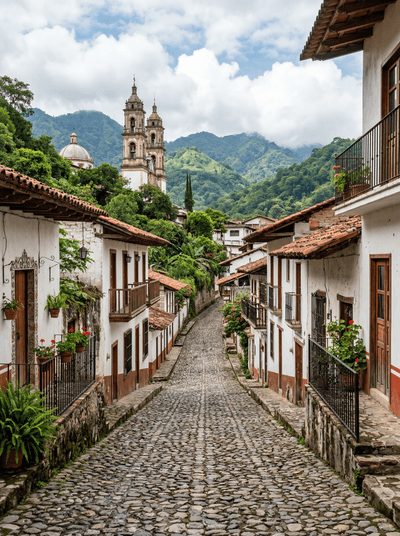
Cuetzalan
Mexico
Clouds drift through steep market streets above coffee, caves and forest paths.
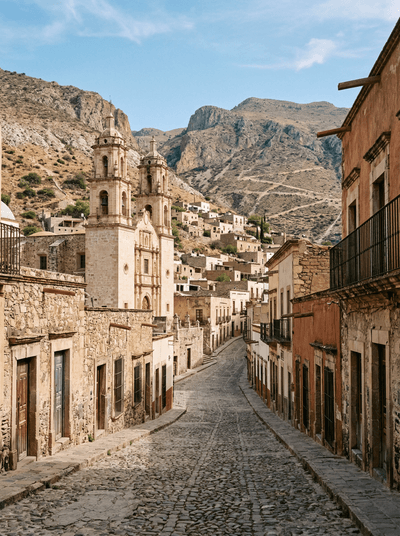
Real de Catorce
Mexico
A mining tunnel opens onto stone lanes, high desert and centuries of pilgrimage.
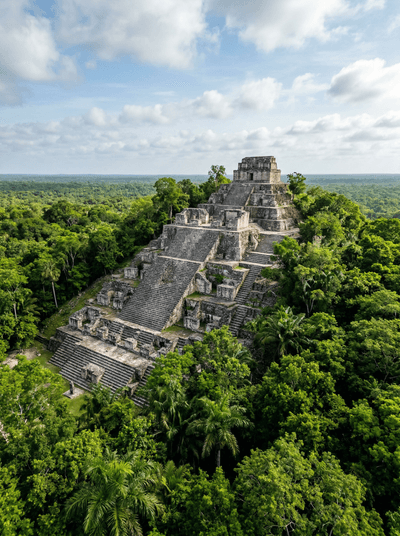
Calakmul
Mexico
A Maya capital's towers still stand above an unbroken sea of forest.
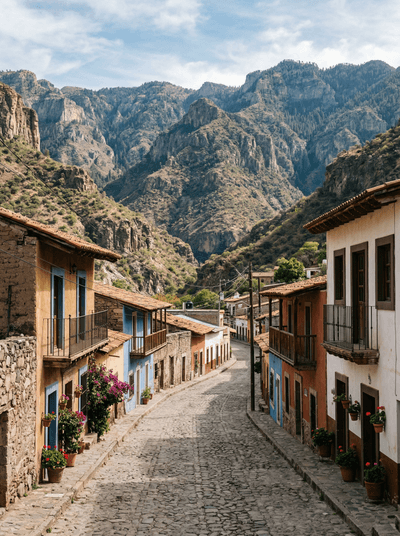
Batopilas
Mexico
A plunging canyon road ends among palms, aqueducts and silver-era stonework.