Portugal
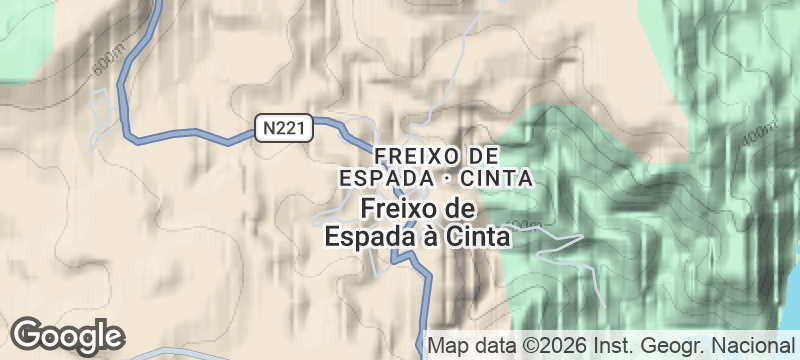
Freixo de Espada à Cinta
Almond blossom turns a remote valley white each late winter beneath a seven-sided tower.
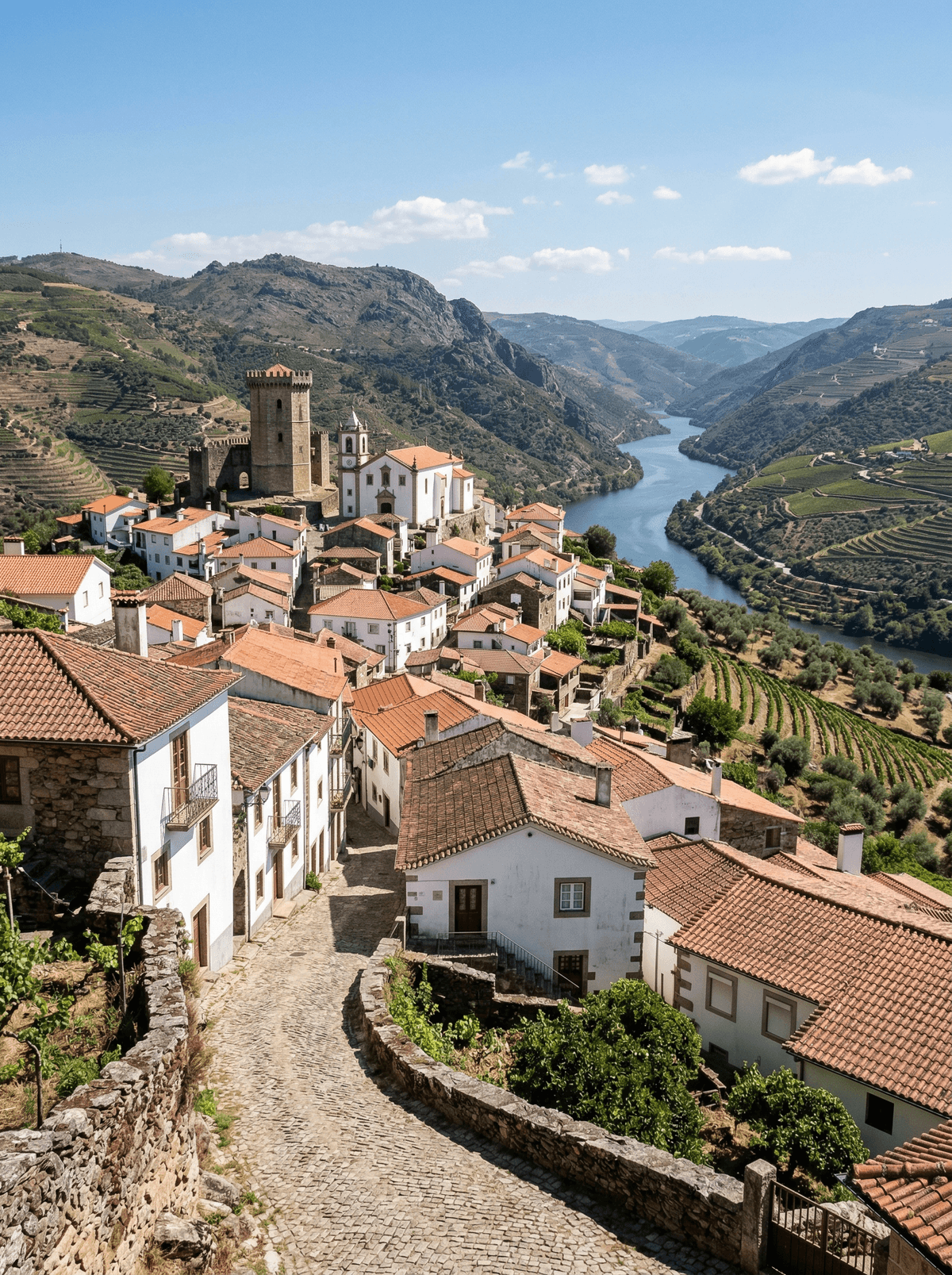
In blossom season, almond flowers turn the terraced valley white, petals drifting against dark schist walls and a seven-sided tower rising above the rooftops like a chess piece left behind. Woodsmoke and pressed olives scent the streets, the silence pierced only by church bells echoing toward the Douro gorge. This is Portugal's deep northeast, where the land feels more meseta than Atlantic.
This town of the sword-belted ash is among Portugal's remotest municipal seats, pressed against the Spanish border in Trás-os-Montes. Its heptagonal tower beside the Igreja Matriz is an architectural oddity without an agreed explanation — Templar origins by some accounts, sixteenth-century military design by others — and the church inside holds Renaissance panels attributed to Grão Vasco's workshop, among the finest painting in the north. The name itself is a story: legend has a king hanging his sword-belt on an ash tree at the founding. Almond groves supply the town's marzipan and sweets, olive terraces centuries old press its oil, and the late-winter blossom turns the valley into a sight the country keeps quietly to itself. East lies the Douro Internacional canyon, vultures circling the river border.
Solo
Deep-Portugal immersion — village rhythm, Renaissance art and ancient olive groves rewarding slow, attentive travel best done alone — remoteness filtering out everything except what matters.
Couple
Blossom season makes one of Portugal's most romantic landscapes; off-season, quiet streets, clifftop views into Spain and candlelit dinners of game and olive oil offer the same intimacy without company.
- The seven-sided Manueline tower stands unexplained, its origins argued for centuries.
- Late-winter blossom whitens the whole valley at once, almond terrace by terrace.
- Grão Vasco-workshop panels hang in a village church at the country's far edge.
- The Douro's international canyon and its vultures lie just east of the streets.
Marzipan and almond sweets born of the February blossom.
Centuries-old-grove olive oil over bread, with local game in winter.
Nakhon Si Thammarat
Thailand
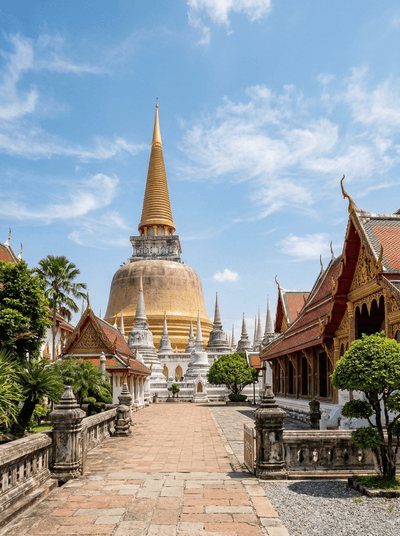
A thousand-year-old stupa town where shadow puppet masters still perform behind lit cotton screens.
Mirbat
Oman
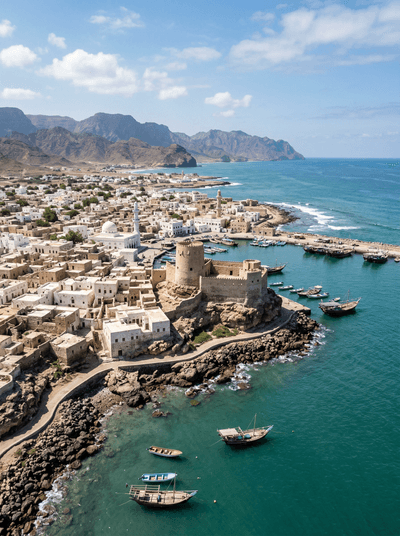
In 1972 this fishing town lent its name to a defining battle of the Dhofar war.
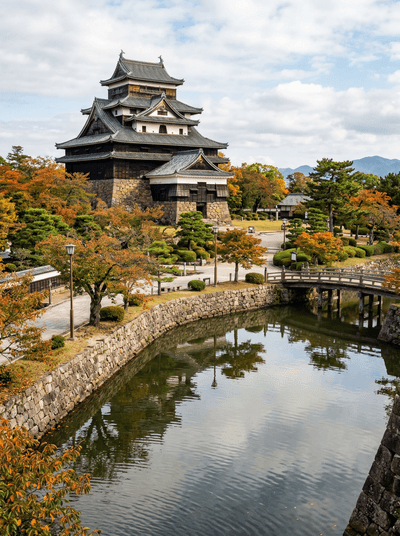
Matsue
Japan
A lakeside castle city where Lafcadio Hearn heard ghost stories the West had never imagined.
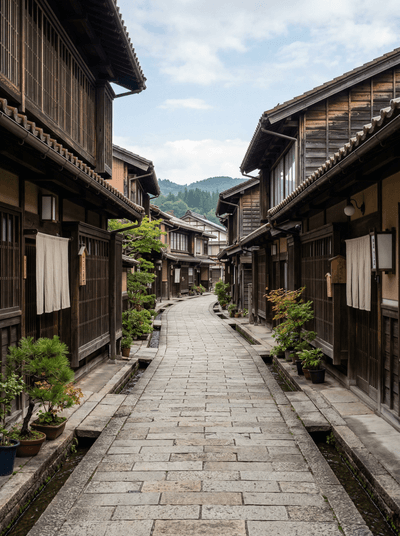
Murakami
Japan
Salmon hanging by their tails from the eaves of old houses, the air salt-sweet and amber.
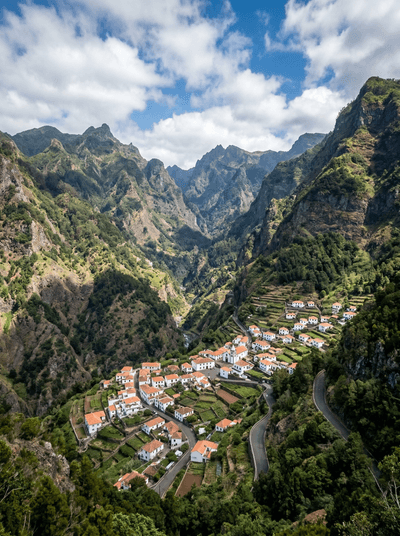
Curral das Freiras
Portugal
A village hidden in a mountain bowl so deep that nuns fled here from pirates.
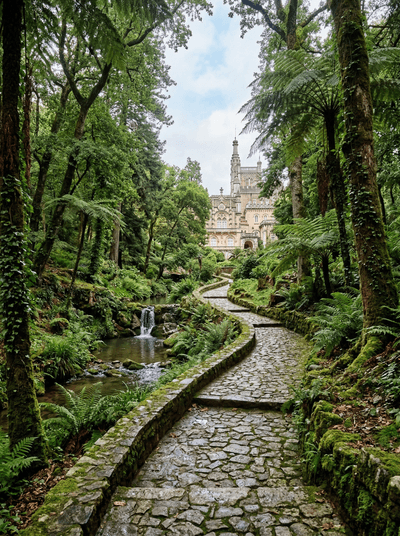
Buçaco Forest
Portugal
A walled forest of seven hundred species, its cedar Via Crucis climbing cathedral canopy.
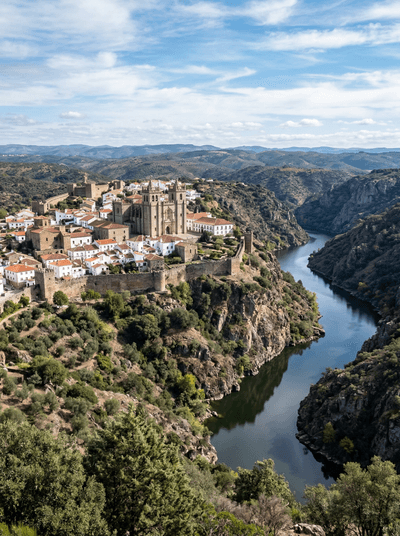
Miranda do Douro
Portugal
A Mirandese-speaking canyon town whose stick dances carry rituals older than the nation.