Oman
Mirbat
In 1972 this fishing town lent its name to a defining battle of the Dhofar war.
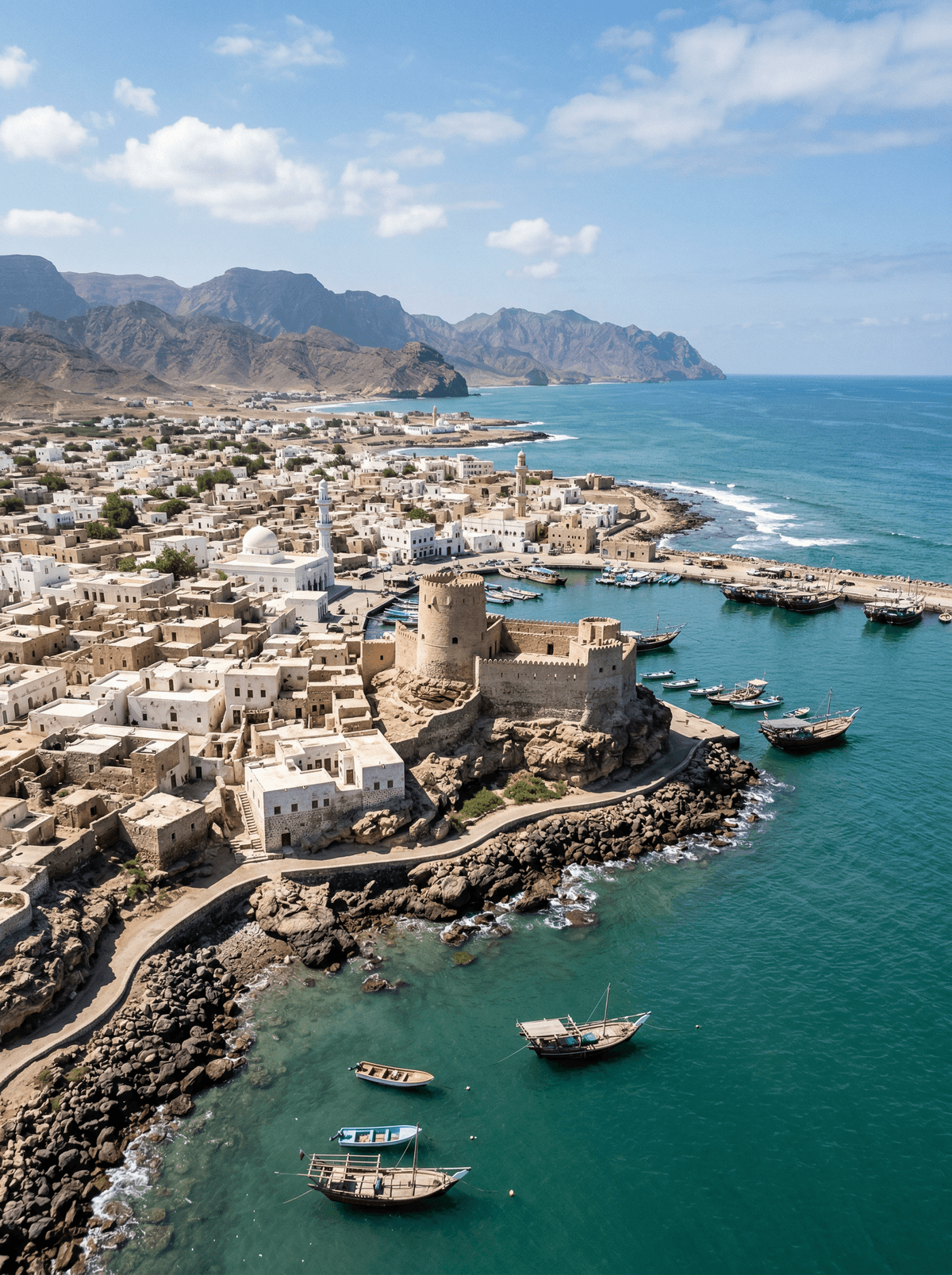
Mirbat's whitewashed old quarter faces a small harbour where fishing boats replace the caravans of earlier trade. The fort, market lanes and weathered merchant houses make the town legible on foot.
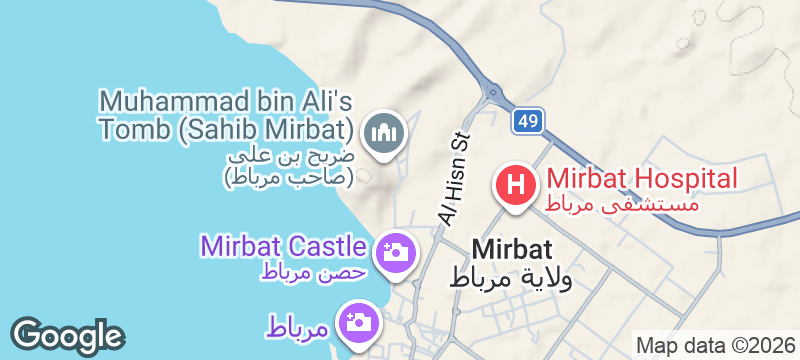
Mirbat is a working fishing town with a long memory. Its old merchant houses date from the trade in horses and frankincense, its castle keeps daily visitor hours, and in 1972 the town lent its name to the Battle of Mirbat, a defining action of the Dhofar war. The harbour still sets the day's rhythm: boats in through the morning, the market selling what they carried, and a catch that rotates with the seasons, lobster in spring, squid in summer, abalone in winter. Bin Ali's tomb stands at the edge of town, visited respectfully.
Solo
The whole town works on foot: castle, merchant quarter, harbour, and a market lunch cooked across the road from where it landed.
Couple
Time the harbour for mid-morning when the boats come in, then walk the old quarter at its own pace and eat what arrived.
- The port café opposite the fish market cooks whatever you carry over from the morning's landing.
- The catch runs on a calendar: lobster in spring, squid in summer, abalone in winter, octopus in autumn.
- In 1972 the Battle of Mirbat was fought at the town's old fort, a defining action of the Dhofar war.
- Old merchant houses stand weathered around the harbour, from the centuries of horse and frankincense trade.
Buy at the fish market and carry it across the road: the port café cooks your fish while you wait.
Whatever the season put on the boats: spring lobster, summer squid, winter abalone.
Flavigny-sur-Ozerain
France
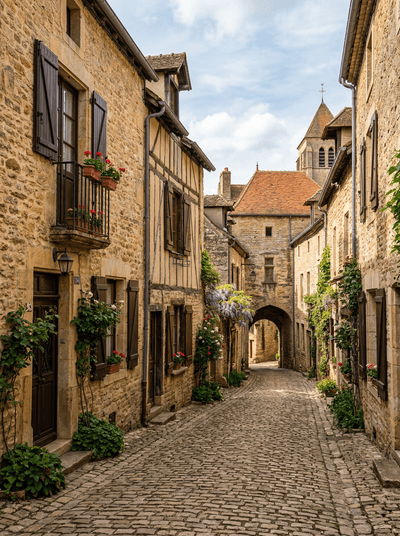
Aniseed sweets made in a hilltop abbey, in the village that played the set of Chocolat.
Sweetheart Abbey
Scotland
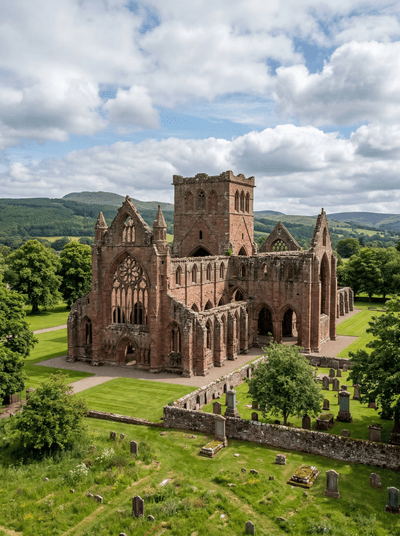
A widow built this abbey around her husband's embalmed heart — the red sandstone still blushes.
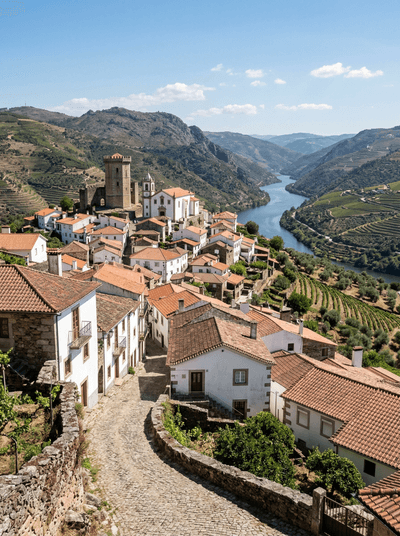
Freixo de Espada à Cinta
Portugal
Almond blossom turns a remote valley white each late winter beneath a seven-sided tower.
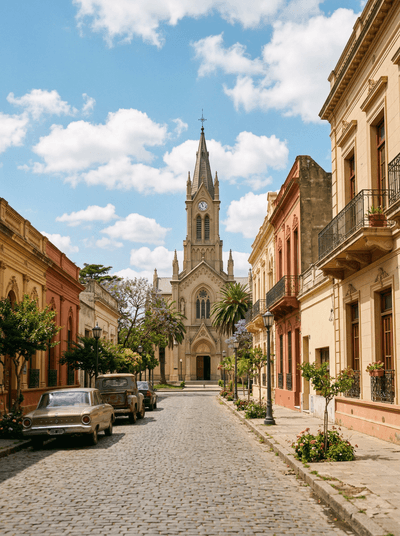
Mercedes
Argentina
Pulperías where gauchos still drink behind wooden counters worn smooth since the 1800s.
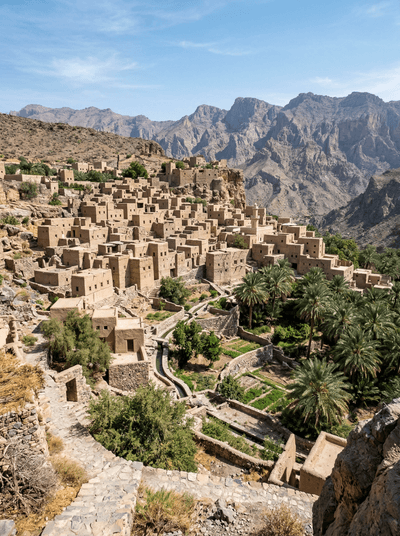
Misfat al Abriyyin
Oman
Falaj water slips beneath date palms and ochre houses on a mountain ledge.
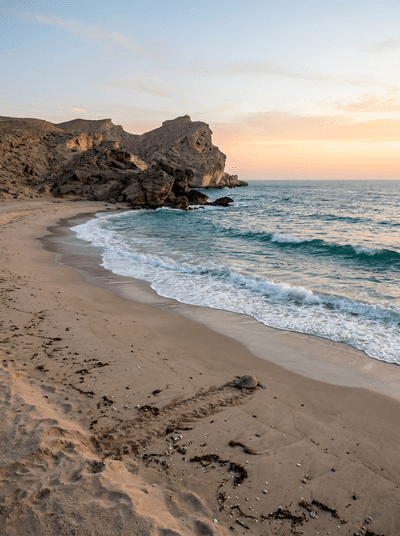
Ras al Jinz
Oman
Green turtles haul ashore by night on one of the Indian Ocean's busiest nesting beaches.
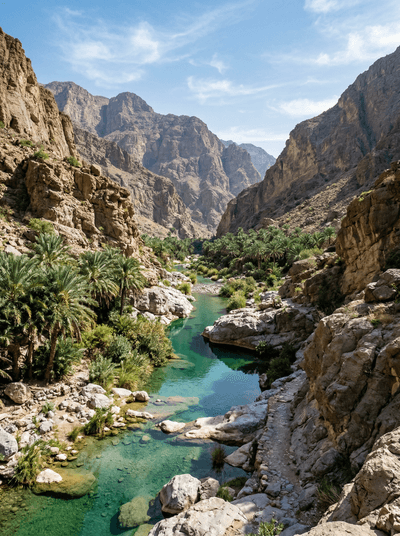
Wadi Tiwi
Oman
Date palms, mangoes and bananas floor a gorge that narrows to a single car's width.