Peru
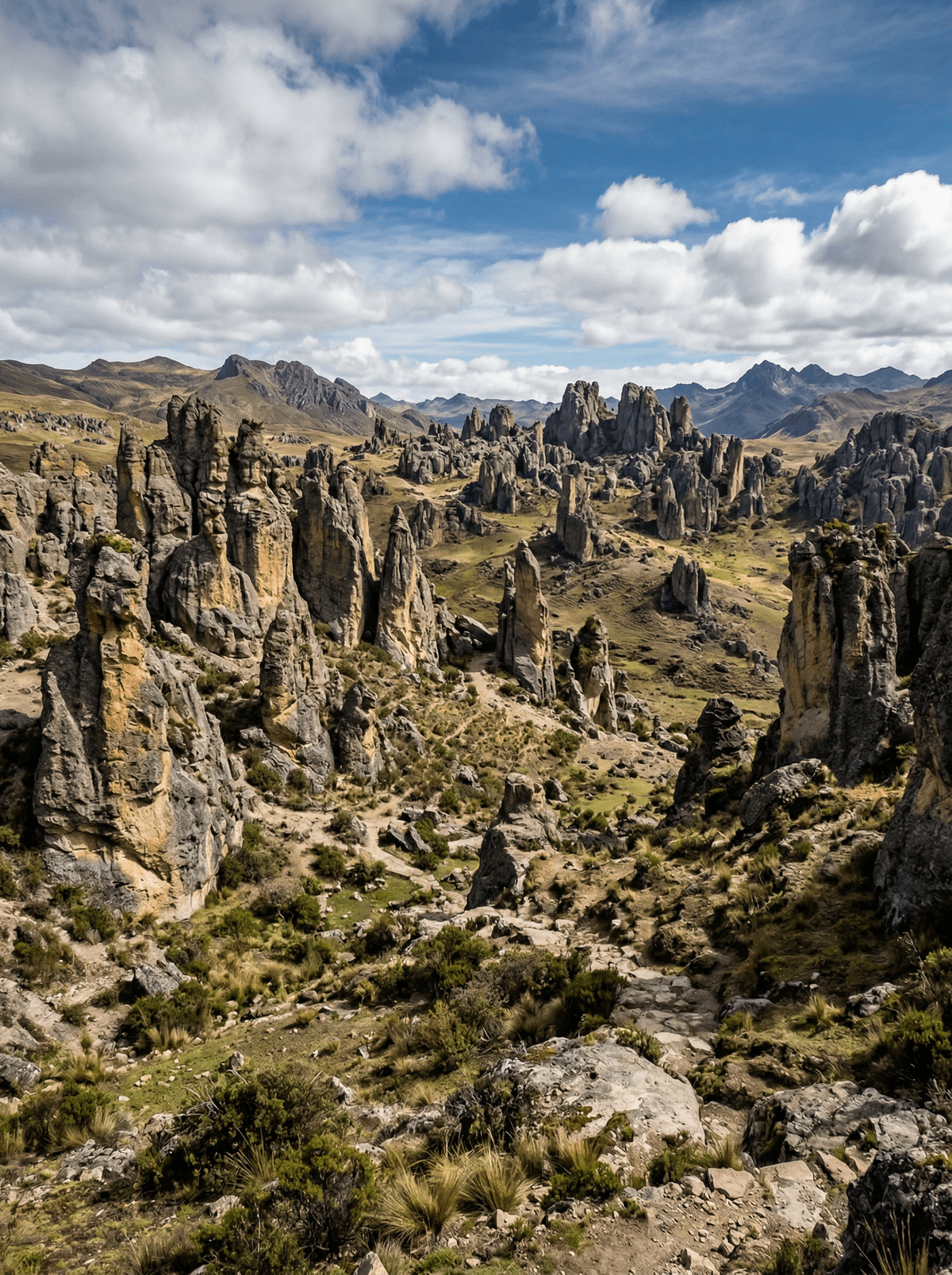
Huayllay Stone Forest
Thousands of rock formations on a frozen altiplano, eroded into elephants and faces.
The altiplano wind carries ichu grass and cold rock. Formations rise from the plateau above 4,100 metres — an elephant here, a human profile there, a condor mid-spread — each shaped by erosion into something that looks carved and isn't. The scale disorients: thousands of formations across country that reads as lunar.
The Huayllay National Sanctuary protects 6,815 hectares of volcanic tuff sculpture in the Pasco highlands, where wind and water have worked the stone into a catalogue of accidental figures — the named shapes a collaboration between erosion and the human eye, which only sharpens the game of finding them. Marked routes and local guides thread the sectors; the altitude between 4,100 and 4,500 metres asks for acclimatisation and layers, and the sparse infrastructure is a planning fact rather than an invitation to roam. Vicuña and Andean foxes work the puna around the towers — sightings a possibility, not a schedule — and the formations change character wholesale with the light: flattened by harsh noon, three-dimensional drama at the day's golden edges.
Solo
For the patient, self-sufficient walker, the marked routes deliver thousands of stone shapes on a frozen plateau in near-solitude.
Friends
The formations become a group game — turtle or boot? — with altitude and cold supplying the adventure and remoteness the earn.
- Thousands of catalogued tuff formations crowd the Huayllay sanctuary.
- Erosion and the human eye collaborate at Huayllay — elephant, condor, face after face.
- Marked routes cross Huayllay's sectors between 4,100 and 4,500 metres.
- Golden-hour light turns Huayllay's flat noon shapes into three-dimensional drama.
Mondongo — tripe stew thick with corn and herbs — at Huayllay village tables.
Cancha and queso from the village tienda, eaten beneath watching stone.
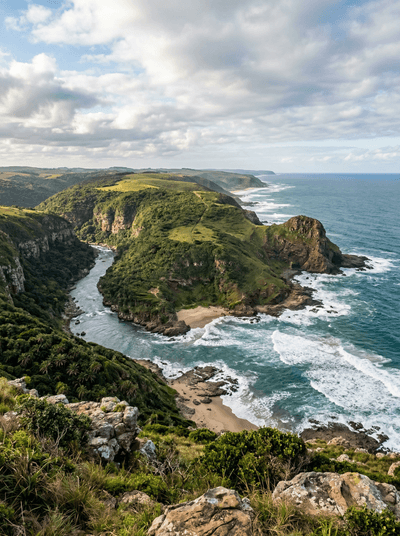
Mkambati Nature Reserve
South Africa
Grassland rivers fall onto empty beaches along an undeveloped Indian Ocean shore.
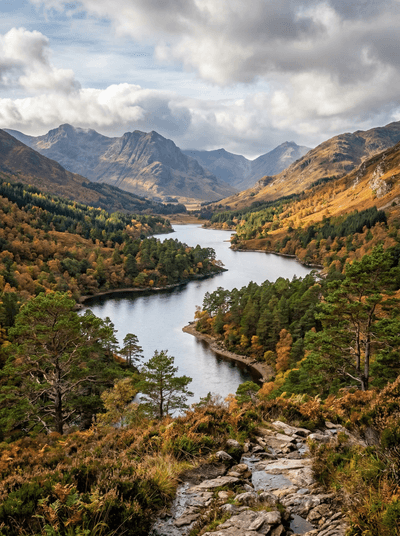
Glen Affric
Scotland
Ancient Caledonian pines guard a glen so remote it still feels like Scotland before roads.
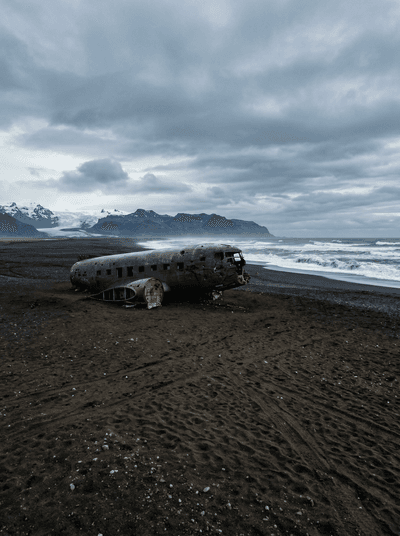
Sólheimasandur
Iceland
A wrecked US Navy plane rusting on a black sand desert where nothing else exists.
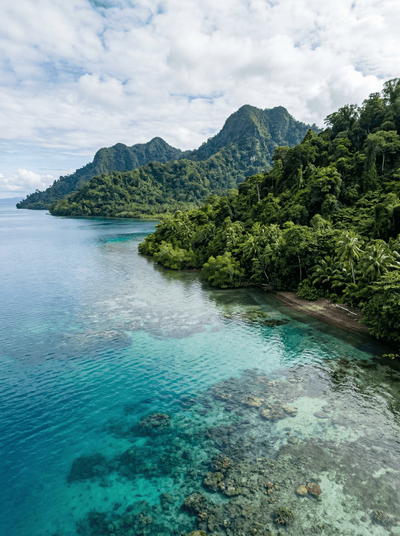
Vangunu Island
Solomon Islands
A giant rat known to Zaira's forest for generations, and to science only since 2017.
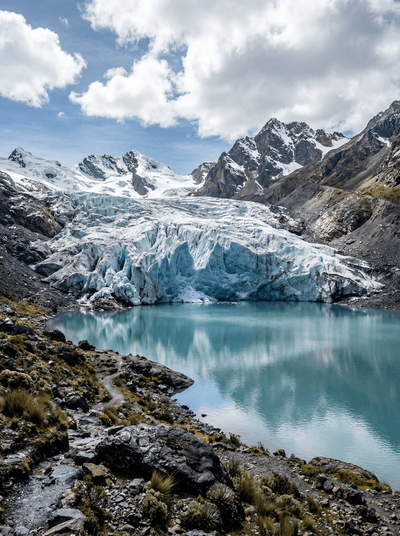
Pastoruri Glacier
Peru
Tropical ice at 5,000 metres, its retreat marked year by year beside the path.
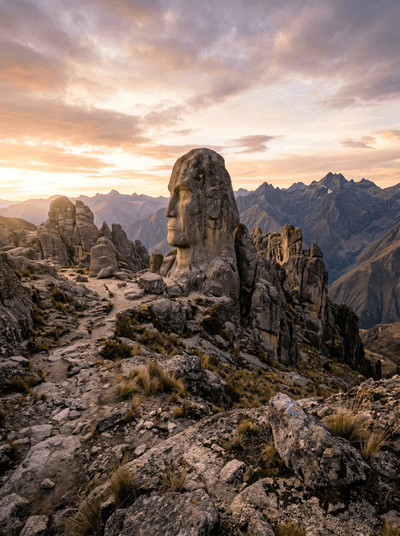
Marcahuasi
Peru
A 4,000-metre plateau where stone has weathered into colossal faces and impossible animals.
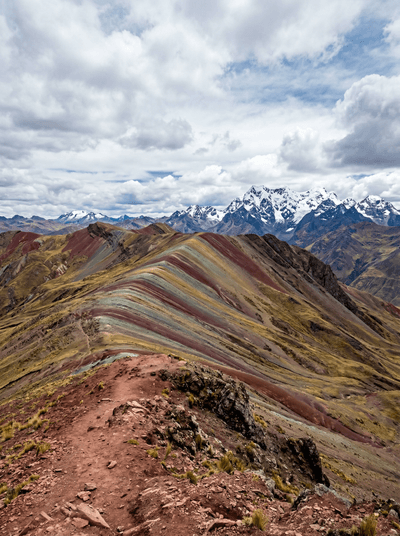
Palccoyo
Peru
Three rainbow ridges from one short plateau walk, plus a forest of stone.
Millpu
Peru
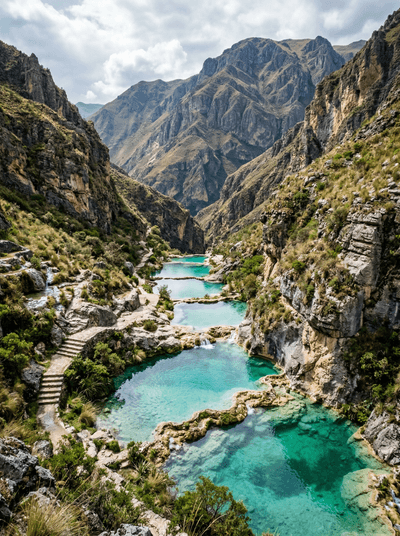
A chain of electric-blue pools threading a pale limestone gorge in the high Andes.