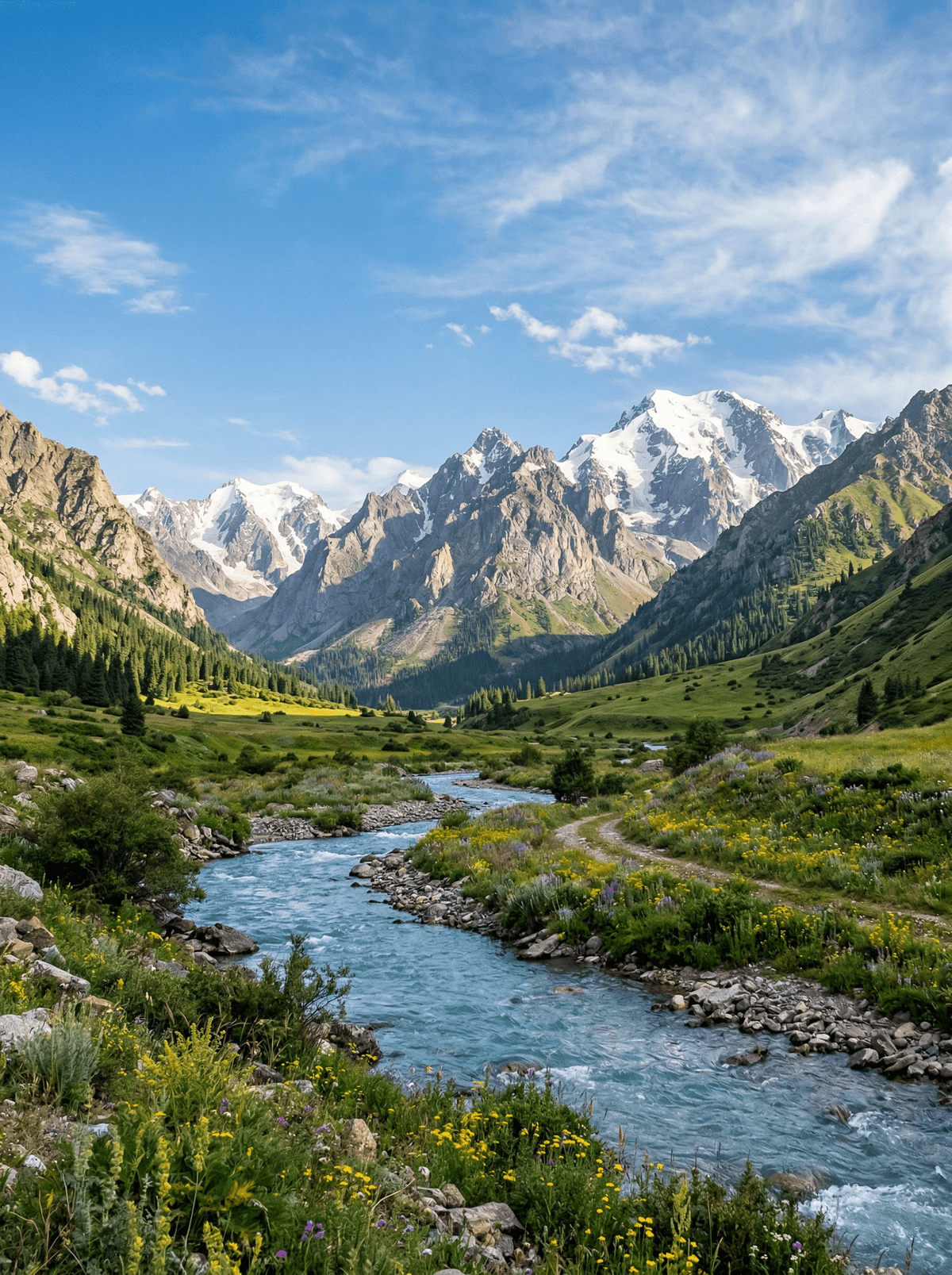
Kyrgyzstan
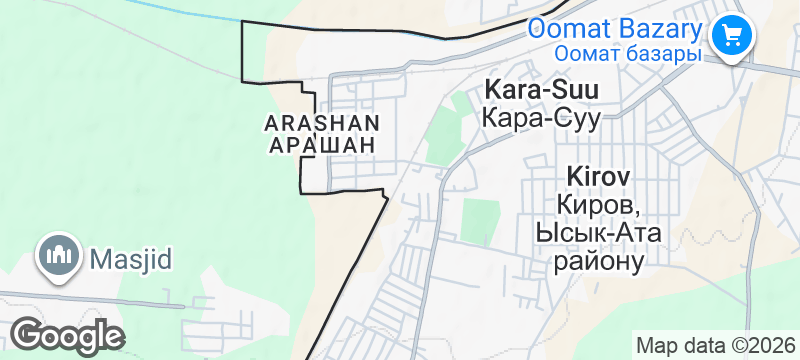
Kara-Suu
The Fergana Valley's largest market sprawling to the Uzbek border, languages shifting with every stall.
The market runs nearly to the border post, stalls multiplying across twenty-four hectares until Kyrgyzstan and Uzbekistan blur into one crowd of fabric, spice and competing currencies. Kara-Suu does not let you browse: it pulls you through corridors of hanging textiles, past mountains of dried apricots, into a wall of sound where Kyrgyz and Uzbek run together mid-sentence.
Kara-Suu hosts the Fergana Valley's largest market: twenty-four hectares in twenty sections, five thousand people working it and up to fifty thousand more coming through on the big days. The town sits on the Uzbek border in Osh province, a short ride from the Dostuk crossing and twenty kilometres from Osh itself, and the market's character reflects that position. Most goods arrive from China, Uzbek textiles and produce come over since the border reopened, and buyers pour in from Osh, Jalal-Abad and Batken on one side and Fergana and Andijan on the other. Weekends are the crescendo, wholesale runs midweek, and Monday the whole thing stops for sweeping. Commerce here is at its rawest: no fixed prices, no packaging, no pretence.
Couple
Not a romantic stroll but an unforgettable one: split a hot samsa, argue over fabric you have no room for, and watch an entire valley do its shopping.
Friends
Split up into different sections and reconvene with competing discoveries: one finds the best samsa, another the most outrageous fabric stall. Kara-Suu gives everyone a different story.
- The Fergana Valley's largest market covers 24 hectares in twenty sections, with five thousand people working it.
- Up to fifty thousand shoppers come through on the biggest days, from both sides of the border.
- Most goods arrive from China, joined by Uzbek textiles and produce since the border reopened.
- Osh is only twenty kilometres away, making the bazaar an easy half-day of pure Fergana commerce.
Samsa hot from a busy stall's tandoor, bought standing in the thick of the morning trade.
Warm rounds of bread and pots of tea at the chaikhanas, the Uzbek-influenced kitchens that pause the bazaar's roar.
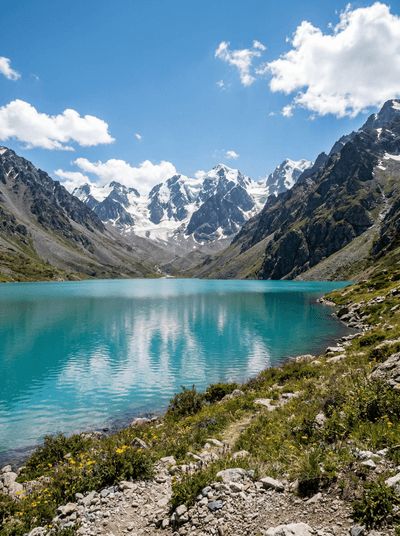
Köl-Tör
Kyrgyzstan
An emerald lake with no visible outlet: its river escapes through the moraine and surfaces below.
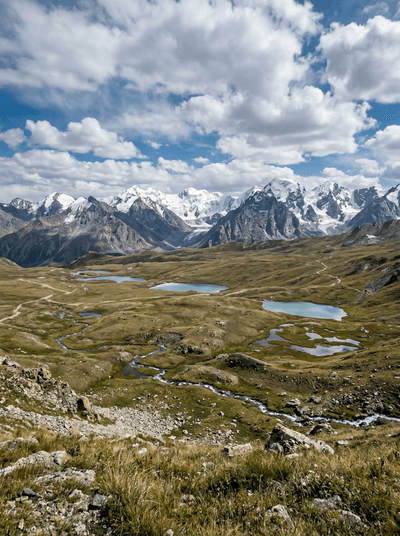
Arabel Plateau
Kyrgyzstan
Treeless tundra at 3,800 metres, dotted with fifty glacial lakes and retreating ice.
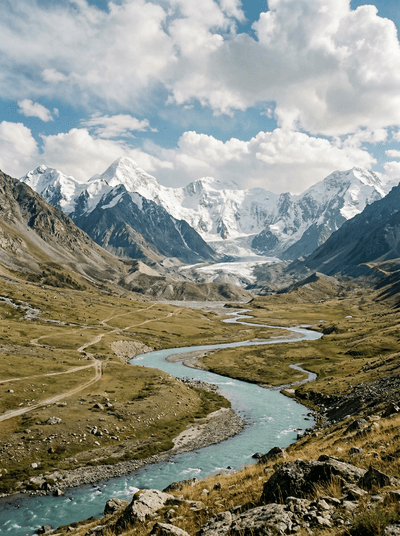
Sary-Jaz Valley
Kyrgyzstan
Abandoned Soviet mines guard a valley of steppe and glacier rivers at the Chinese border.
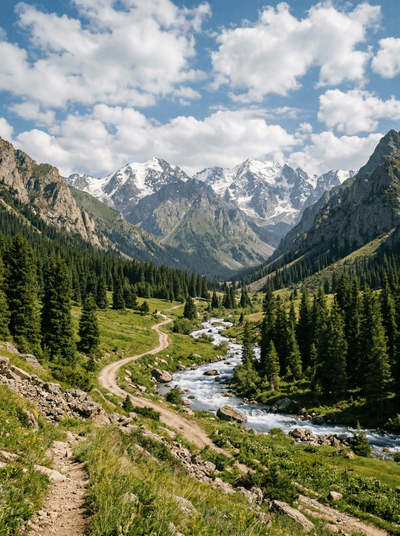
Padysha-Ata
Kyrgyzstan
A snow-leopard juniper reserve wrapped around a mausoleum that still draws pilgrims.