Turkey
Karatepe
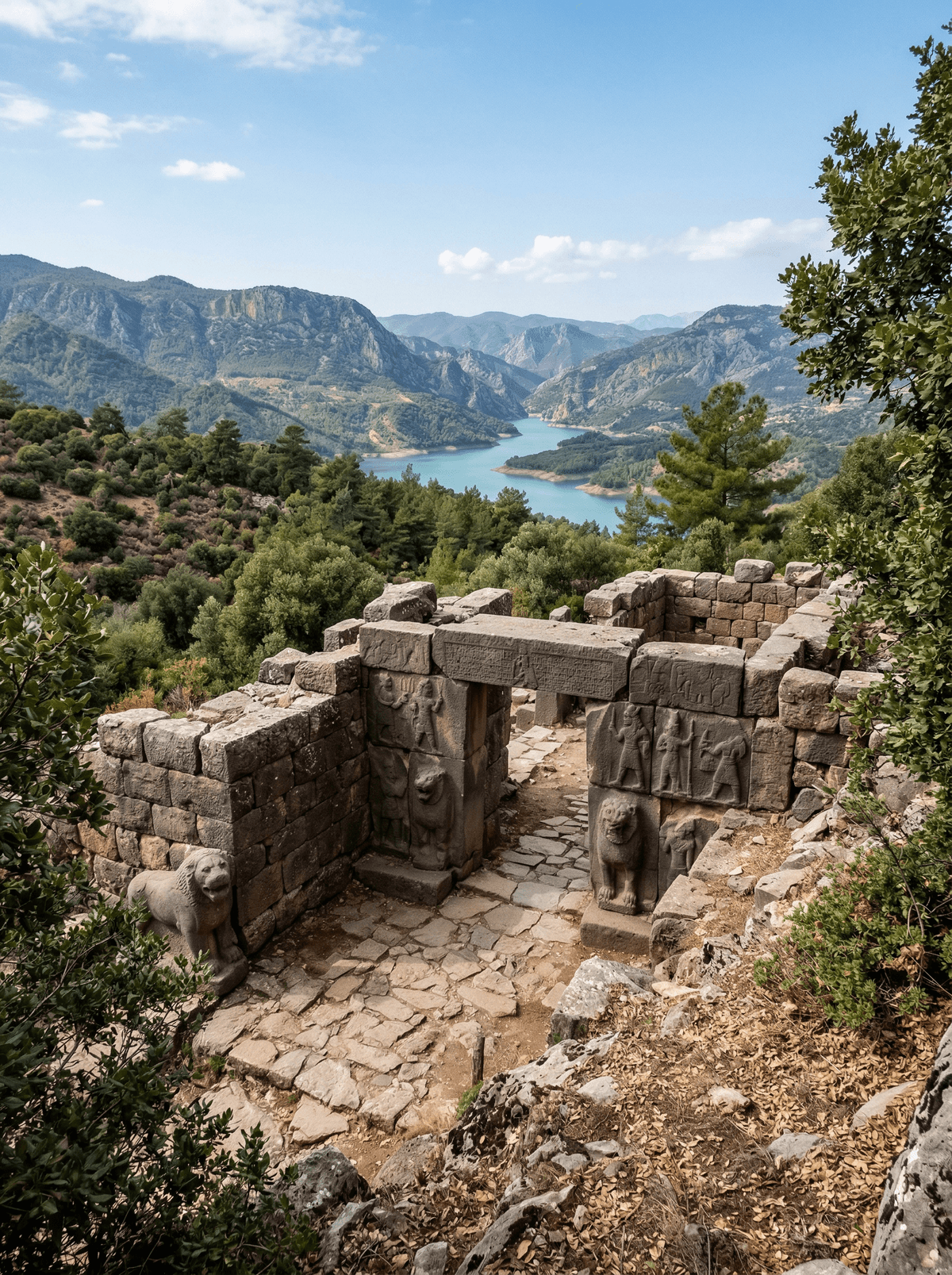
Hittite lion gates guard a forest hillside where bilingual carvings unlocked an extinct language.
Stone lions guard the entrance to a forest clearing where bilingual inscriptions carved into gate pillars unlocked a dead language. The Phoenician text on one side, the Luwian hieroglyphs on the other — scholars matched them like a Rosetta Stone for ancient Anatolia. Pine resin scents the air. The Ceyhan River glints below through the trees.
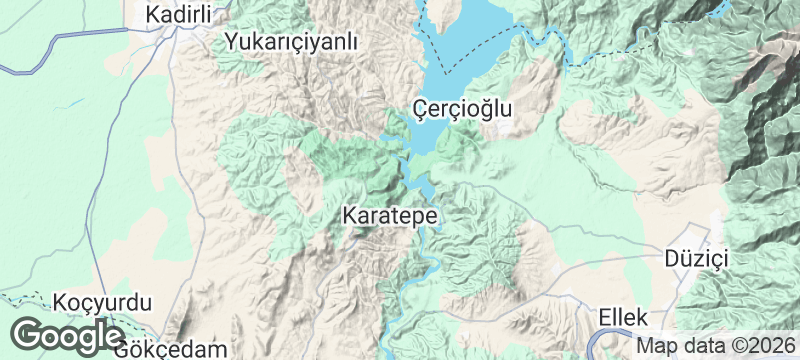
Karatepe-Aslantaş is a late Hittite fortress site in Osmaniye province, southeastern Turkey, set within a national park on a forested hillside above the Ceyhan River. The site's significance lies in its bilingual gate inscriptions — Phoenician script alongside Luwian hieroglyphs — which proved instrumental in deciphering the Luwian writing system. The fortress was built by Azatiwata, a Neo-Hittite ruler of the 8th century BCE, who recorded his political achievements and divine dedications on the monumental gateway. Lion and sphinx sculptures remain in situ.
Solo
Karatepe is a pilgrimage for anyone fascinated by how lost languages are recovered. Standing before the bilingual gate, alone in a national park with no crowds, the detective work of decipherment becomes tangible.
Couple
The forested hillside setting above the river makes Karatepe more than an archaeological site — it is a place to wander, sit, and absorb. The combination of deep history and natural beauty earns a half-day without rushing.
- The Phoenician-Luwian bilingual inscriptions here were key to deciphering the Luwian hieroglyphic script.
- The site sits within Karatepe-Aslantaş National Park — a forested hillside above the Ceyhan River.
- Lion and sphinx gate sculptures from the 8th century BCE remain in their original positions.
- The fortress was built by Azatiwata, a Neo-Hittite ruler who recorded his deeds on the gateway stones.
Adana kebab from roadside charcoal pits — hand-minced lamb on a flat skewer, fierce with chilli.
Fresh-pressed pomegranate juice from orchards on the Çukurova plain below.
Trollskogen (Öland)
Sweden
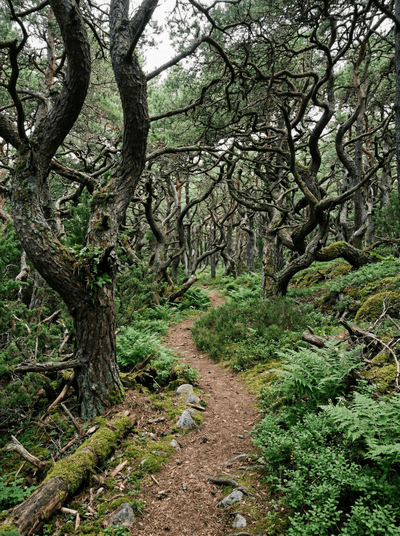
A forest of wind-warped oaks so twisted they look like a witch's spell gone wrong.
Millennium Cave
Vanuatu
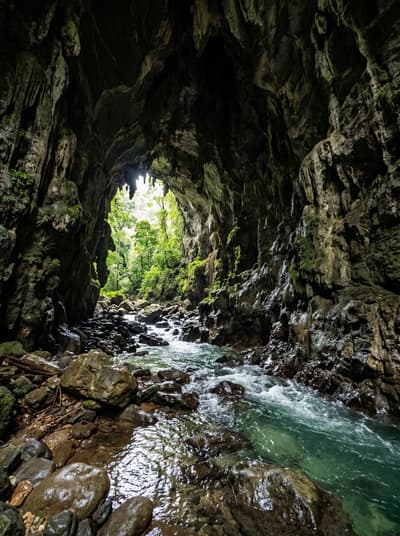
Scramble through jungle and wade chest-deep rivers to a cave you enter walking and exit floating.
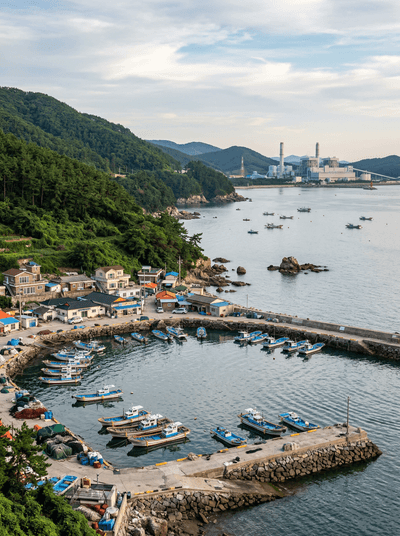
Maryang-ri
South Korea
A five-hundred-year-old forest of camellia trees bleeding red flowers against the grey winter sea.
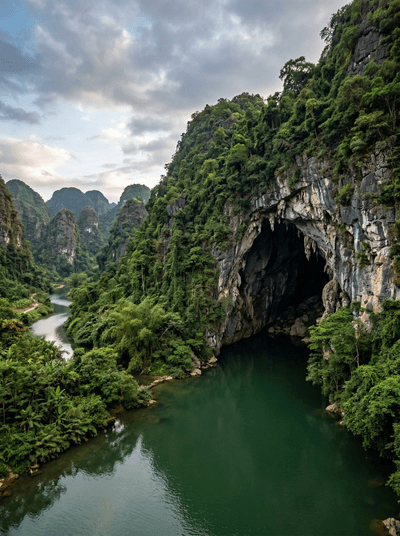
Phong Nha
Vietnam
Hidden jungle portals opening into subterranean river systems and limestone caverns.
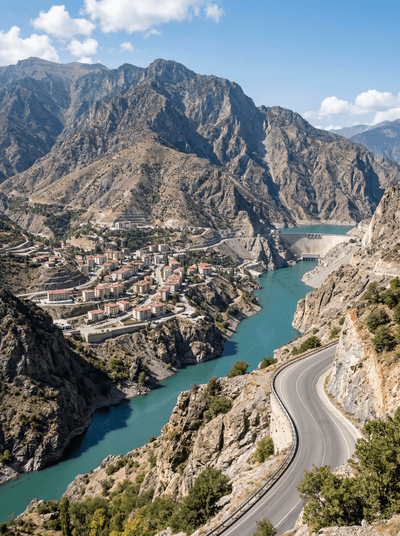
Yusufeli
Turkey
White-water rapids crash through a granite canyon where a medieval Georgian church perches on the cliff.
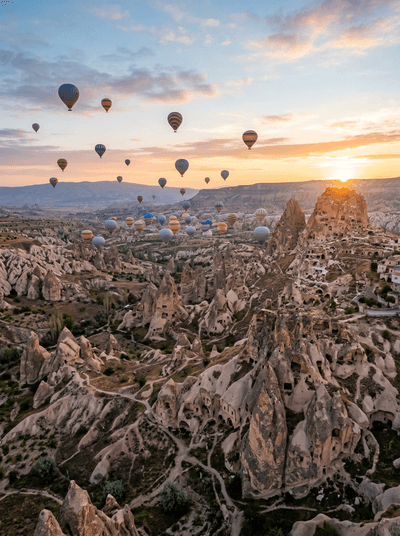
Cappadocia
Turkey
Hundreds of hot air balloons drift through a forest of stone pillars at dawn.
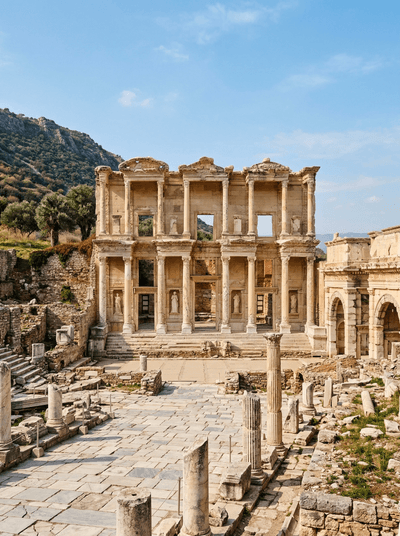
Ephesus
Turkey
Marble streets still grooved by Roman chariot wheels lead to a library that held 12,000 scrolls.
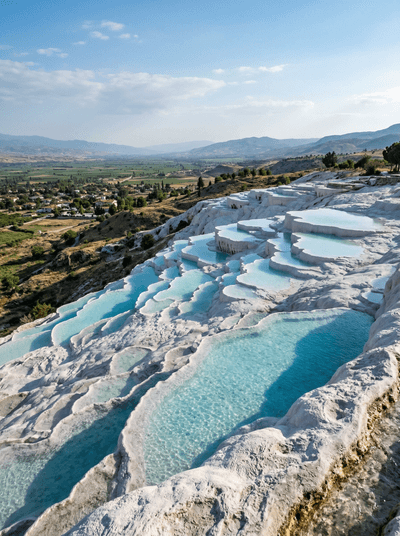
Pamukkale
Turkey
Thermal water spills down white travertine terraces like a frozen waterfall you can wade through.