Gambia
Kemoto
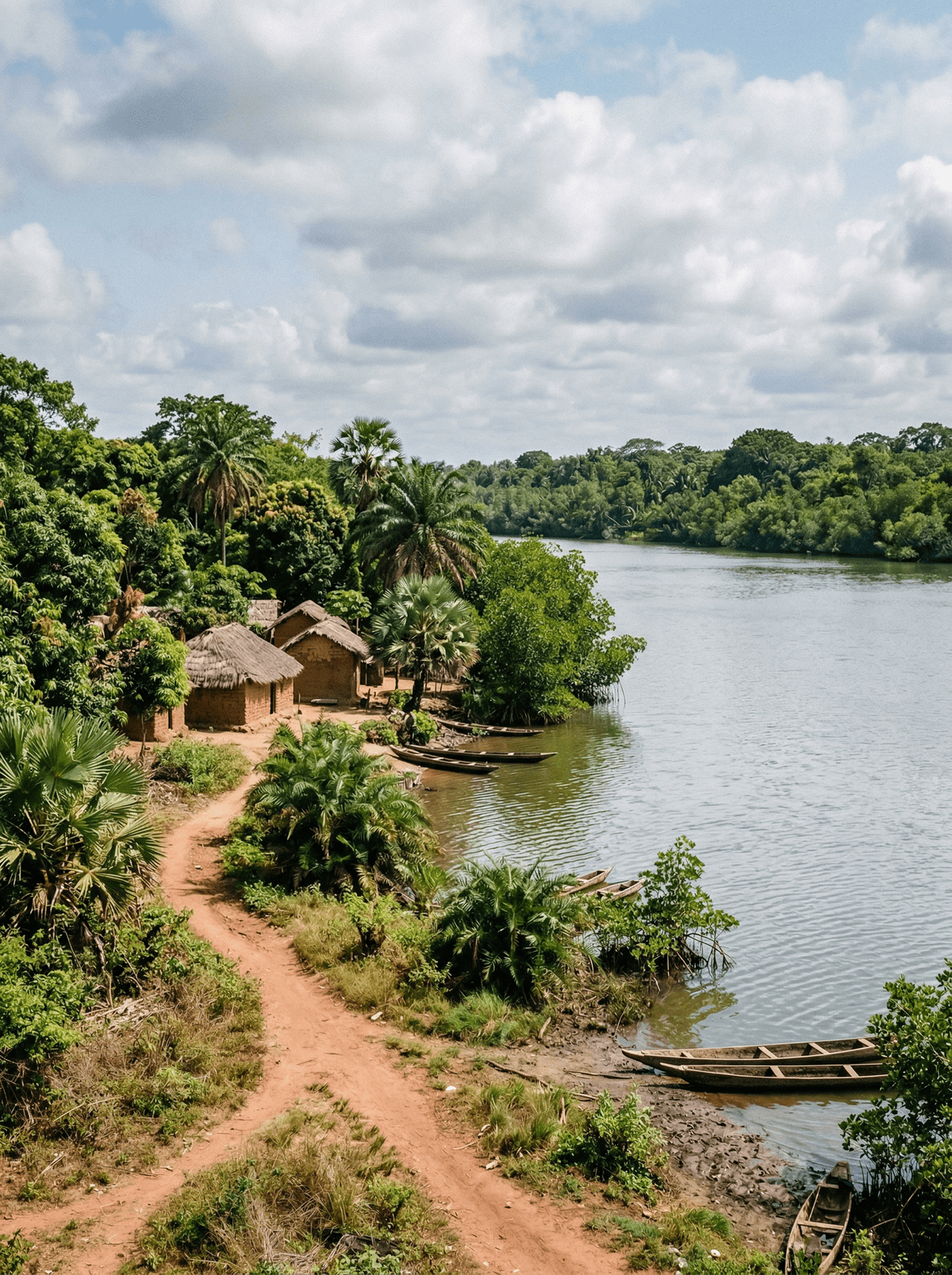
Round mud houses where the kora was born and griot families still play it at dusk.
The first notes of the kora drift across the compound as the sun drops behind the round mud houses. Twenty-one strings, tuned by ear, played by a man whose family has held this music for seven centuries. In Kemoto, the instrument's birthplace, performance is not entertainment. It is inheritance.
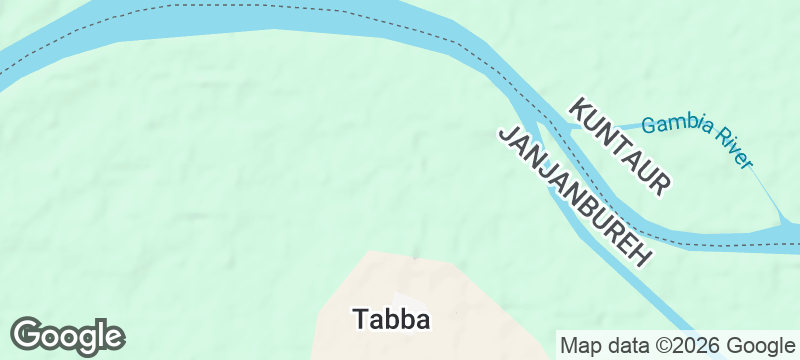
Kemoto is a small Mandinka village in The Gambia's Central River Region, widely regarded as the spiritual birthplace of the kora — the 21-string bridge-harp played exclusively by hereditary griot families across West Africa. Griot lineages here have served as custodians of oral history for over 700 years, each family responsible for a different clan's genealogical memory. Evening performances take place inside family compounds rather than on stages — visitors sit on mats while the musician plays less than a metre away. The oldest quarter of the village is entirely traditional: round mud-brick houses with thatched roofs, no concrete visible. Millet couscous with moringa and sorrel leaf sauce is prepared communally, and palm wine is shared in a circle after the music ends.
Solo
Hearing the kora played inside the compound where it originated, close enough to see the musician's fingers on the strings — this is a pilgrimage for anyone who cares about West African music and oral tradition.
Couple
Sitting on woven mats in a mud-walled compound while a hereditary musician plays the kora at arm's length, then sharing palm wine in a circle afterward — the intimacy here is unmanufactured.
Family
Children sit transfixed during kora performances, and the griot tradition of oral storytelling is inherently multigenerational. The village's living rhythms — cooking, compound life, the bantaba gatherings — are open and welcoming to families.
Friends
A group visit to Kemoto turns into a shared cultural experience that deepens the further into the evening you stay. The communal meals and post-performance palm wine circle are designed for gathering, not spectating.
- Kemoto is considered the spiritual birthplace of the kora — the 21-string bridge-harp played only by hereditary griot families across West Africa.
- Evening performances happen inside compounds rather than on stages — visitors sit on mats while the musician plays less than three feet away.
- The oldest quarter of the village is entirely traditional Mandinka — round mud-brick houses with thatched roofs, no concrete in sight.
- Griot families here have been custodians of West African oral history for over 700 years, each family holding a different lineage's memory.
Home-cooked millet couscous with leaf sauce — moringa, sorrel, and dried fish pounded together.
Fresh-tapped palm wine shared in a circle after an evening kora performance.
Mindelo
Cape Verde
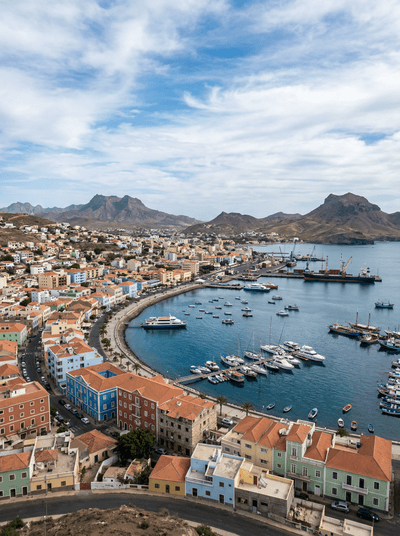
Morna music drifts from dimly lit bars where Cesária Évora once sang barefoot for sailors.
Cidade Velha
Cape Verde
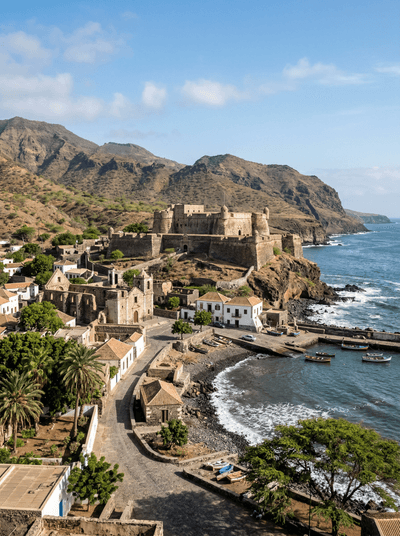
First colonial city in the tropics — a slave pillory still stands in the silent square.

Fukuoka
Japan
Yatai street stalls steaming under canvas where strangers share ramen at midnight.
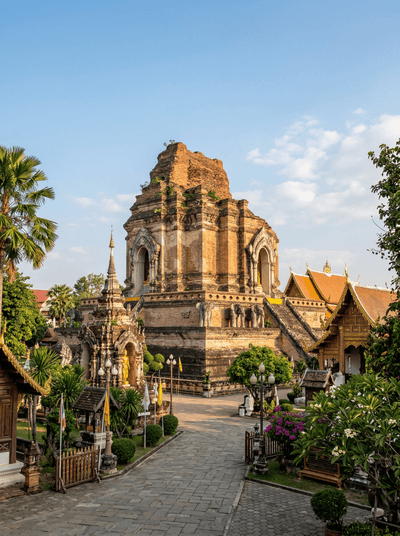
Chiang Mai
Thailand
Monks in saffron robes walking barefoot past tattooed expats and ancient brick chedis at dawn.
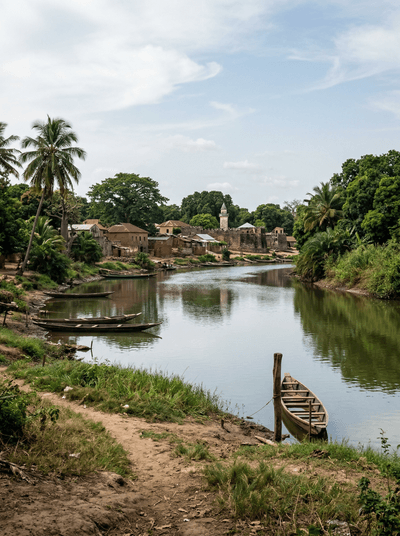
Janjanbureh
Gambia
A colonial island where slave traders' ruins crumble beside baobabs older than the trade itself.
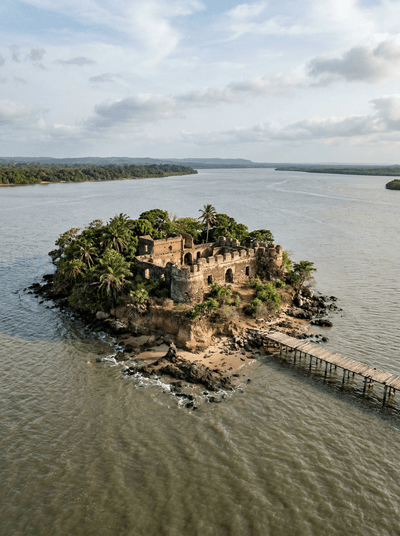
Kunta Kinteh Island
Gambia
Rusted cannons point at nothing on an island where captured Africans last saw home.
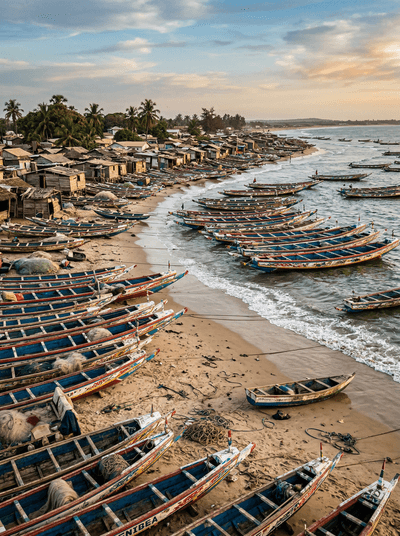
Tanji Fishing Village
Gambia
Hundreds of painted pirogues beached on golden sand while women smoke fish over driftwood pyres.
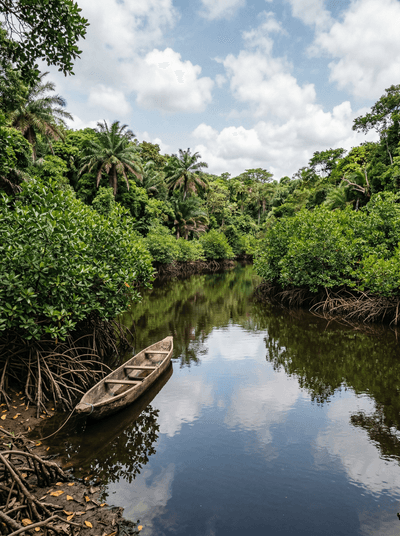
Makasutu Cultural Forest
Gambia
Sacred forest where palm wine tappers scale sixty-foot trunks and griots sing at dusk.