Brazil
Lençóis Maranhenses
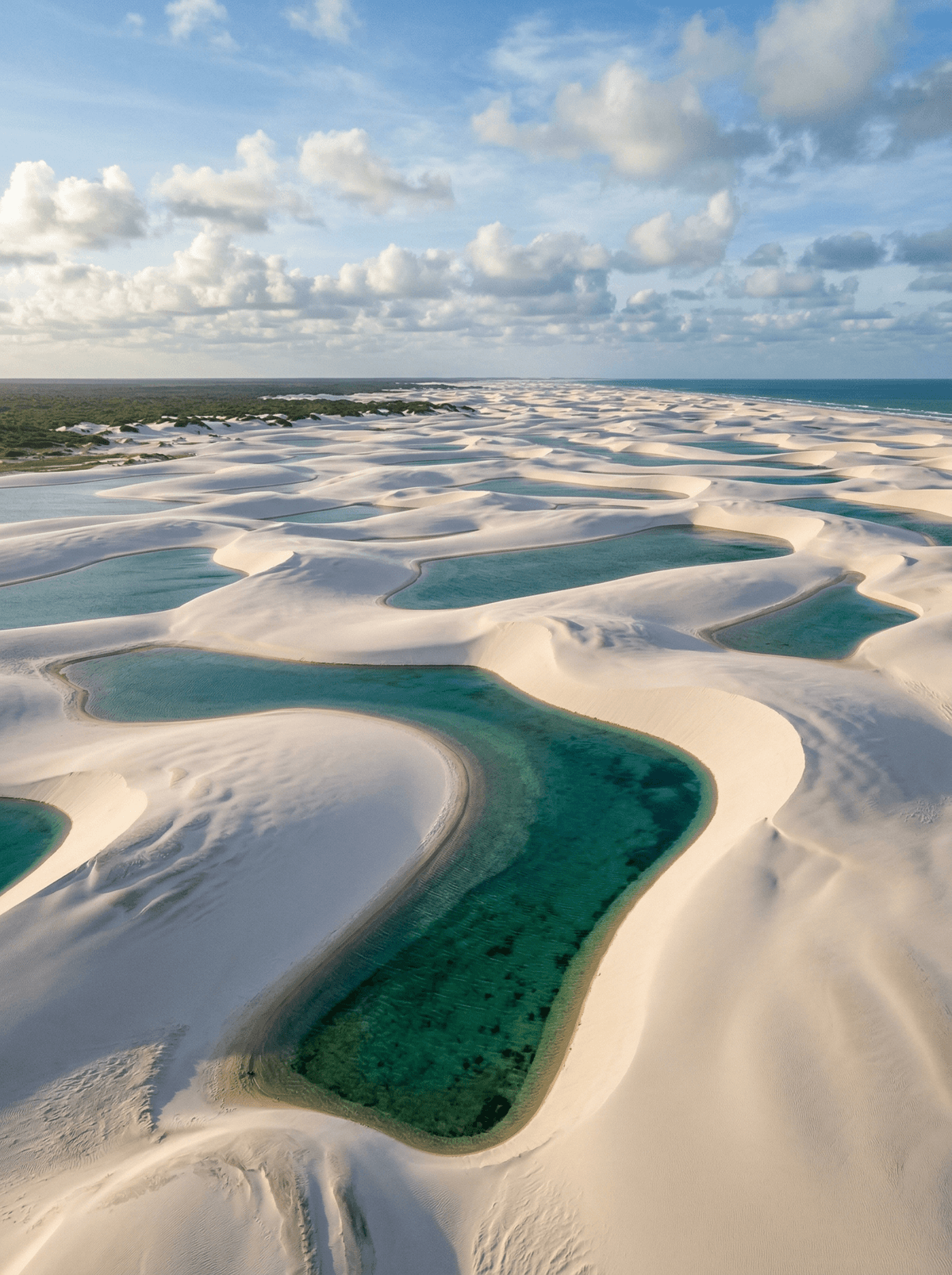
Thousands of rain-filled lagoons between white dunes stretching to the horizon like another planet.
The rain arrives between January and May, and then it sits there. Water gathers in the hollows between the dunes and spreads, in the Maranhão environment secretariat's own words, across practically the whole area of the park, so that by June there are thousands of freshwater lagoons in a field of white sand. By November most of them have gone again, and the ones still holding water are the perennial few.
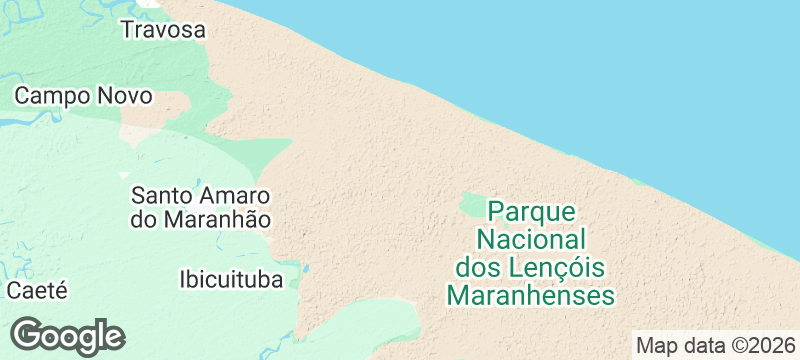
UNESCO inscribed this as a Natural World Heritage site on 26 July 2024, at the 46th session of the World Heritage Committee in New Delhi. Getting in costs nothing, because ICMBio charges no visitation fee at all, and the park is open every day of the year; what you pay for is the accredited driver, the accredited vehicle and the accredited guide, all three of which are required. You cannot drive yourself: motorised transit across the open dune field is prohibited outright, and private cars, motorbikes, buggies, quad bikes and UTVs are barred unless ICMBio authorises them individually. Four towns open onto the park, Barreirinhas, Santo Amaro do Maranhão, Humberto de Campos and Primeira Cruz, with São Luís and Parnaíba the airports behind them. The pressure is now the story: visits went from 141,000 in 2019 to 440,000 in 2024, Santo Amaro alone from 61,000 in 2021 to 297,000, and ICMBio has been working with the municipalities and local communities to establish what flow the sand can take before any cap is set.
Solo
June to August is when the water is there, and it is also when everyone else comes, so aim the day at the first departure rather than the middle of it. Alcohol, fires and stoves are all prohibited inside the park, so carry water and nothing that needs lighting.
Couple
Barreirinhas and Santo Amaro run different circuits into different parts of the dune field, and Atins sits at the eastern edge with the prawns. Pick one gateway and stay in it rather than trying to see the park from two directions in three days.
Friends
Everything here goes through accredited drivers and guides, which rules out the self-drive dune trip a group might picture. What it does not rule out is distance: the park runs to more than fifteen hundred square kilometres and the circuits barely touch it.
- Rain falls January to May and the lagoons are at their fullest in June, July and August, straight after it stops; from September they drop away, and by November only the perennial ones hold water.
- The park is open all year and ICMBio charges nothing to enter, but transport and guiding must be by accredited vehicles, accredited drivers and accredited visitor guides.
- Motorised transit over the open dune field is prohibited, and private cars, motorbikes, buggies, quads and UTVs are barred unless ICMBio authorises them.
- Four towns give access, Barreirinhas, Santo Amaro do Maranhão, Humberto de Campos and Primeira Cruz, with São Luís and Parnaíba the nearest airports.
Arroz de cuxá, built on vinagreira, the sour leaf, with dried shrimp and sesame, and grilled anchova in the good restaurants of Barreirinhas.
Grilled prawns at Atins, the village at the eastern edge of the dunes, and crystallised caju, buriti, bacuri, jackfruit and pineapple after them.
Knoydart Peninsula
Scotland
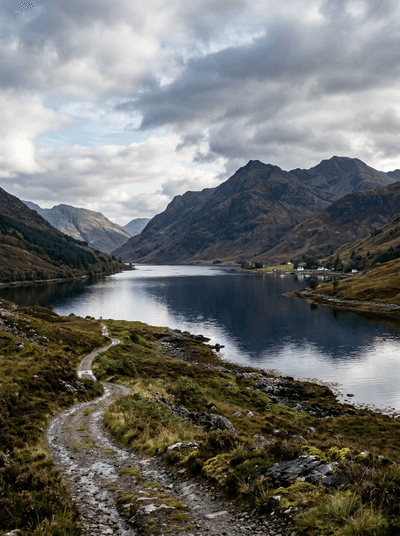
No road reaches this peninsula — you arrive by boat or not at all.
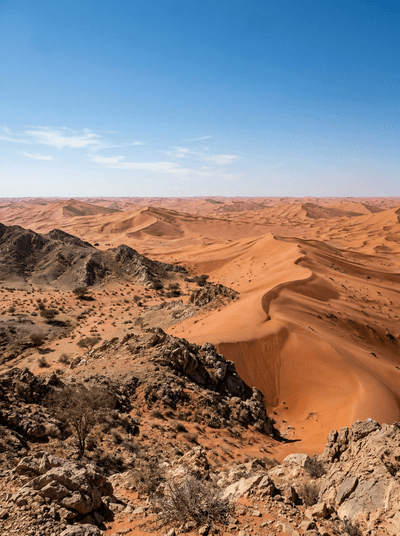
Hisma Desert
Saudi Arabia
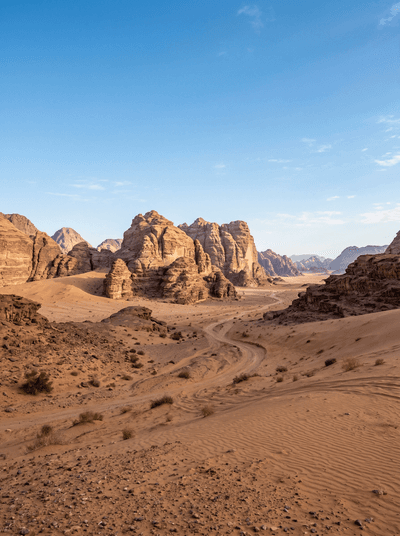
Red sandstone towers erupt from golden sand like a landscape sculpted on another planet.
Empty Quarter Edge
Oman
The largest continuous sand desert on Earth begins where Dhofar's gravel plains give out.
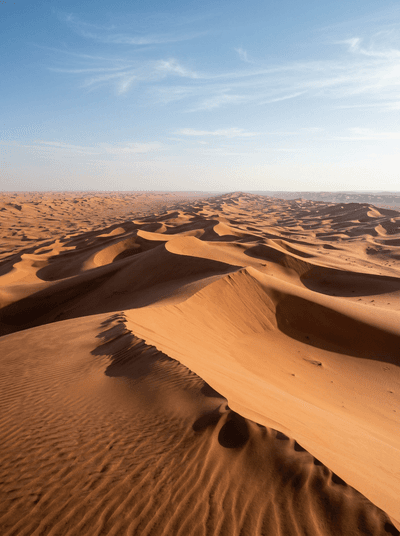
Rub' al Khali
Saudi Arabia
Dunes two hundred metres high stretching unbroken to every horizon, silence pressing like weight.
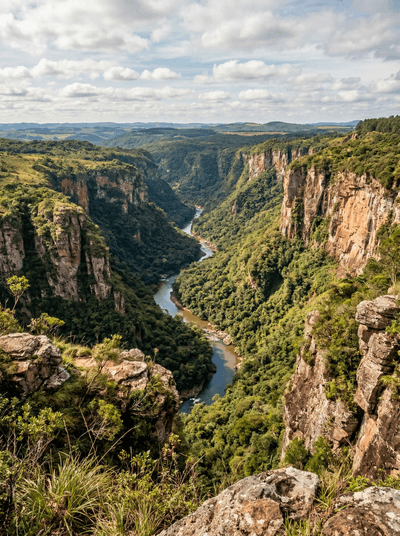
Canyon Guartelá
Brazil
A river that refused to go around cut Brazil's longest canyon dead straight for thirty kilometres.
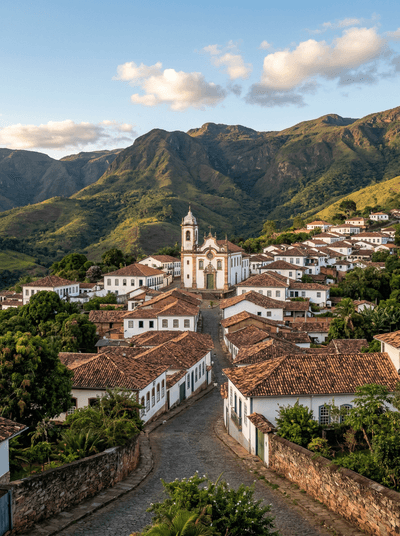
Conceição do Mato Dentro
Brazil
Three hundred and fifty-six springs rise in one park; the waterfalls below are what they become.
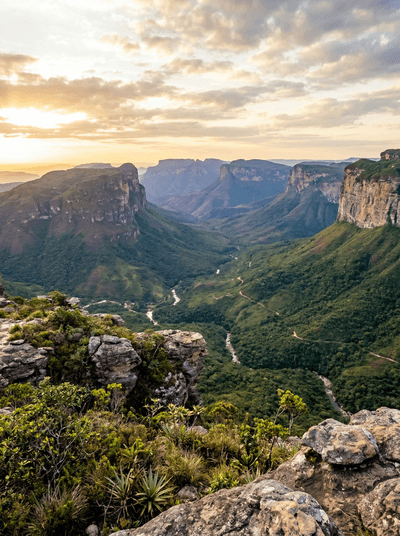
Chapada Diamantina
Brazil
A three-hundred-and-eighty-metre waterfall, in a park with no signposts and no phone signal.
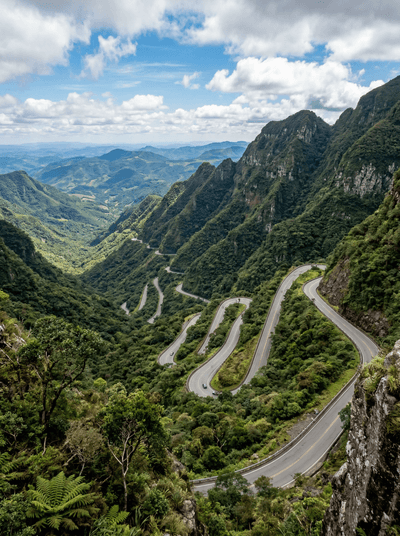
Serra do Rio do Rastro
Brazil
Hairpins carved into a sheer cliff face, climbing out of the lowlands and into cloud.