Saudi Arabia
Rub' al Khali
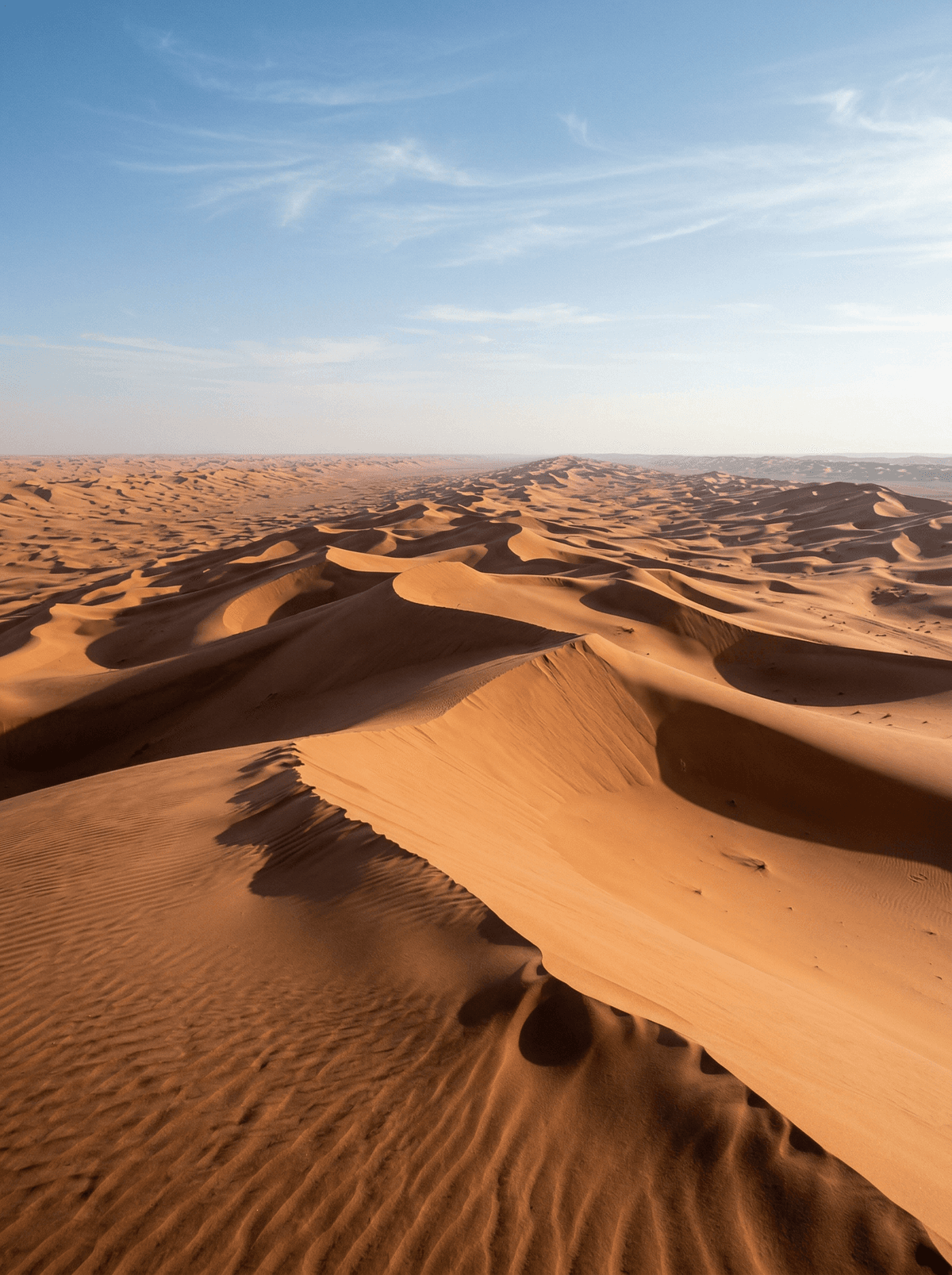
Dunes two hundred metres high stretching unbroken to every horizon, silence pressing like weight.
The dunes begin at the horizon and never stop. In the Rub' al Khali — the Empty Quarter — sand rises in crescent ridges taller than apartment blocks, their surfaces rippled by wind into patterns that shift between visits. The silence here is not an absence of sound but a presence of its own, pressing against your ears until you hear only your breath and the faint hiss of sand grains sliding.
The Rub' al Khali — Earth's biggest unbroken sand sea, an ocean of dunes covering more ground than France — spreads across Saudi Arabia, the UAE, Oman and Yemen. The Saudi portion holds the biggest dunes — crescent ridges lifting two hundred metres off the sand plains — and the deepest solitude. Wilfred Thesiger made two crossings here in the late 1940s — the journeys that became Arabian Sands. On its western edge, the 'Uruq Bani Ma'arid reserve — Saudi Arabia's first natural World Heritage site — shelters the world's only free-ranging herd of wild Arabian oryx, alongside reintroduced gazelles. Guided expeditions run from the desert's edge, with 4x4 dune driving by day and campfires under skies free of light pollution by night.
Solo
On expedition, the dune fields stretch beyond every horizon — a scale of emptiness that recalibrates what solitude feels like.
Couple
Overnight desert camps with private tents, star-gazing, and dune-top sunsets offer an intimacy that built environments cannot replicate.
Family
Guided family days with experienced desert guides make the dunes accessible — dune driving by day, campfire storytelling after dark.
Friends
Multi-day 4x4 expeditions across the dune fields are genuine adventures — the kind of trip groups talk about for years.
- Dune crests here rise two hundred metres above the plains — taller than most city towers — and the silence between them is absolute.
- Guided 4x4 expeditions run from the desert's edge, with overnight camps under skies free of light pollution.
- The 'Uruq Bani Ma'arid reserve on the western edge is Saudi Arabia's first natural World Heritage site, home to the world's only free-ranging wild Arabian oryx.
- Thesiger crossed these sands twice in the late 1940s — the journeys that became Arabian Sands.
Dinner at an expedition camp — meat and rice slow-cooked over the fire as the dunes lose their heat.
Gahwa — cardamom-spiced Saudi coffee poured round the campfire, the welcome that ends an Empty Quarter day.
Knoydart Peninsula
Scotland
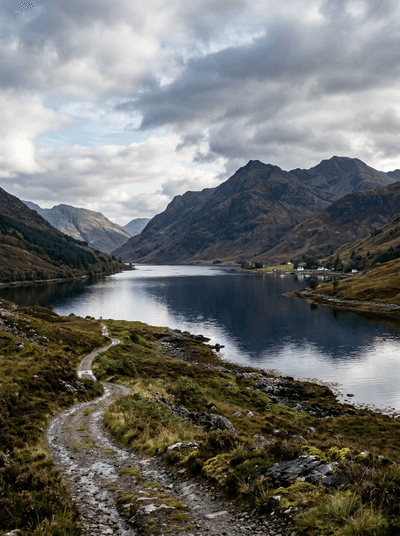
No road reaches this peninsula — you arrive by boat or not at all.
Lençóis Maranhenses
Brazil
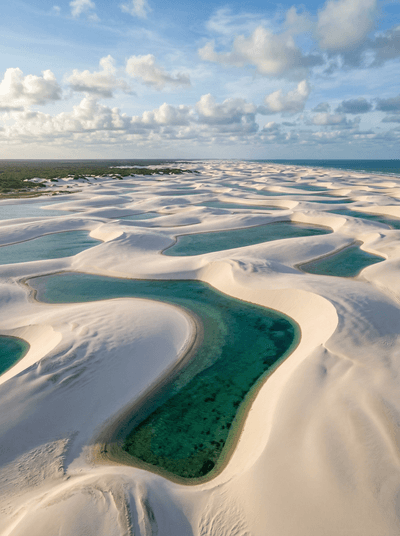
Thousands of rain-filled lagoons between white dunes stretching to the horizon like another planet.
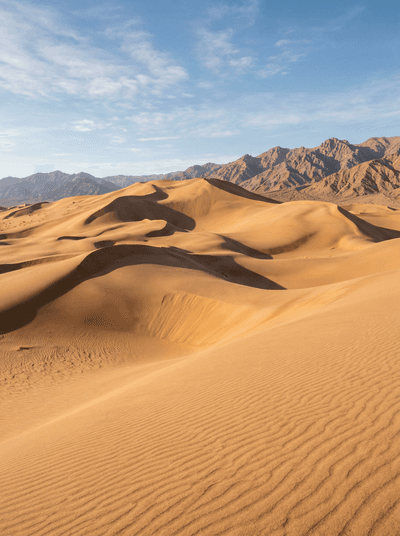
Dunas de Tatón
Argentina
Pale dunes surge against dark Andean foothills where the sand seems to climb the mountains.
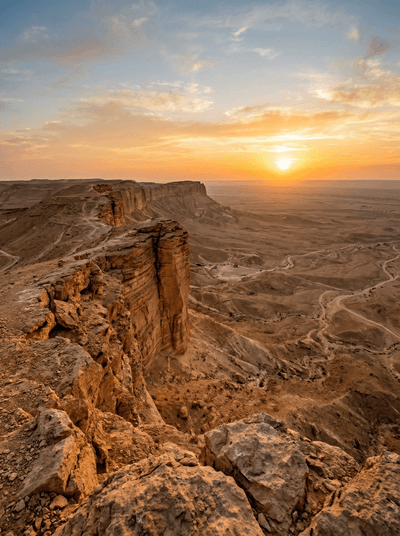
Edge of the World
Saudi Arabia
A cliff edge where the land simply stops and flat desert stretches to infinity.
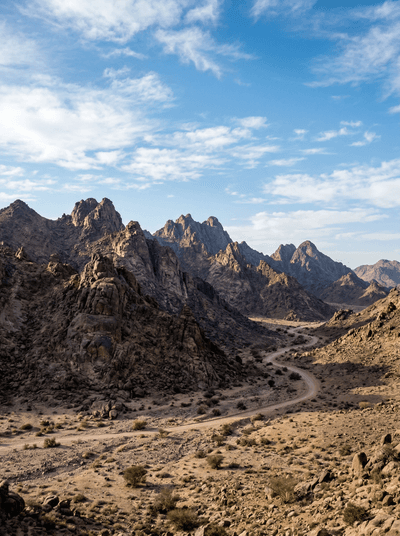
Jabal Aja
Saudi Arabia
Red granite peaks rising from the desert like frozen flames, hiding palm-filled clefts and springs.
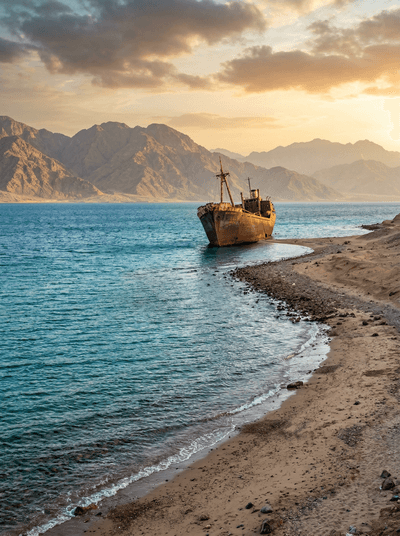
Haql
Saudi Arabia
A rusting cargo ship half-swallowed by turquoise shallows on a beach facing the Gulf of Aqaba.
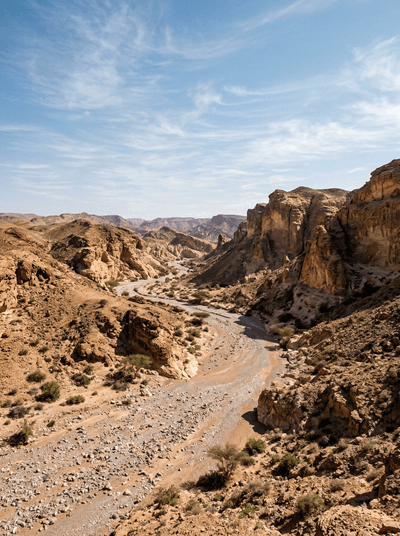
Sha'ib Luha
Saudi Arabia
Seasonal waterfalls carving pools into red desert rock, an hour from Riyadh's glass skyline.