
Kenya
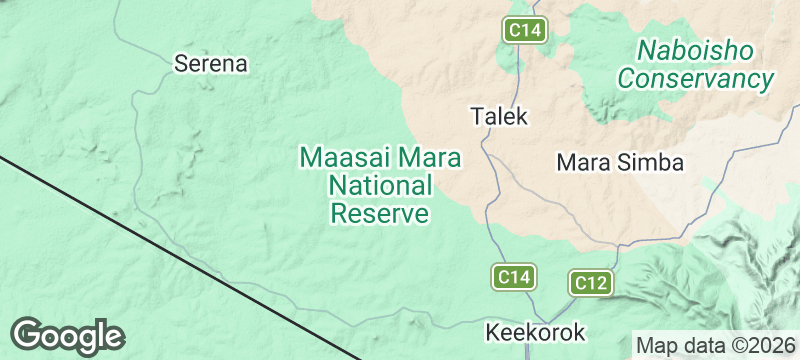
Masai Mara National Reserve
Over a million wildebeest thunder across crocodile-thick rivers in Earth's greatest land migration.
From July, when the migration is in, a dark tide of wildebeest can crest the ridge toward the Mara River — never on schedule, never guaranteed, unforgettable when it comes. The Masai Mara smells of crushed grass, warm dust and something older: the raw mechanics of survival on a savannah that stretches to the curve of the Earth.
The Mara is the northern anchor of the Serengeti–Mara ecosystem: 1,510 square kilometres of open grassland, riverine forest and acacia woodland in Narok County, run by the county and the Mara Conservancy rather than the national parks service. From July the Great Migration mixes into the reserve — a moving nation of wildebeest, zebra and gazelle two million strong — and the river crossings, never scheduled and never guaranteed, are wildlife's greatest set-piece when they come. The drama does not leave with the herds: the Mara supports one of Africa's most important large carnivore communities, and its black rhinos have climbed back from eleven animals in 1984 to around fifty. Some three-quarters of the wider Kenyan ecosystem is Maasai-owned land, and the community conservancies along the boundary are what keep the migration's corridors open.
Solo
Patient observation pays here — hours at a crossing point or a favoured waterhole on nobody's schedule but yours.
Couple
Tented camps open to the entire night sky and dawns that turn the grassland gold — the landscape handles the romance.
Family
Children who see a river crossing never forget it — and the open grassland makes even ordinary drives feel cinematic.
Friends
Share a private vehicle and argue about lion behaviour over sundowners as the savannah turns gold.
- A migration two million strong — wildebeest, zebra and gazelle — mixes into the reserve from July.
- One of Africa's most important large carnivore communities — lion, leopard, cheetah, hyena and wild dog.
- Black rhinos have climbed back from eleven animals in 1984 to around fifty.
- Three-quarters of the wider Kenyan ecosystem is Maasai-owned land — the conservancies keep the corridors open.
Nyama choma with ugali and kachumbari at camp, under a ceiling of equatorial stars.
Sweet milky chai from a tin pot at dawn — Kenya's tea habit rides on every safari.
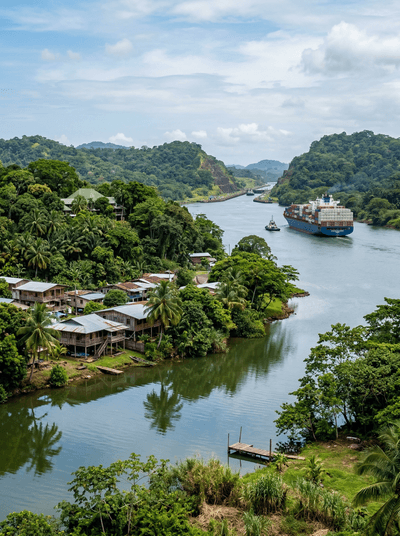
Gamboa
Panama
A rainforest town where ocean-going ships glide silently between the trees.
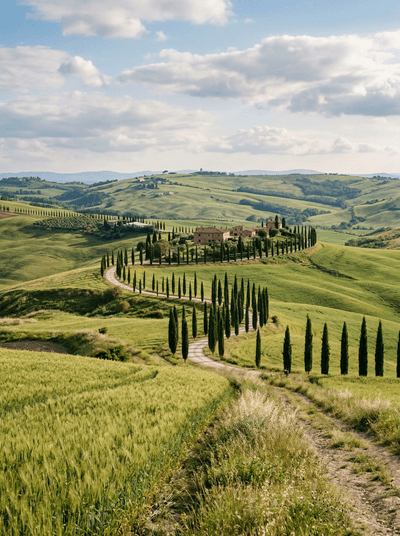
Val d'Orcia
Italy
Cypress-lined roads through golden fields, the landscape Renaissance painters used as their backdrop.
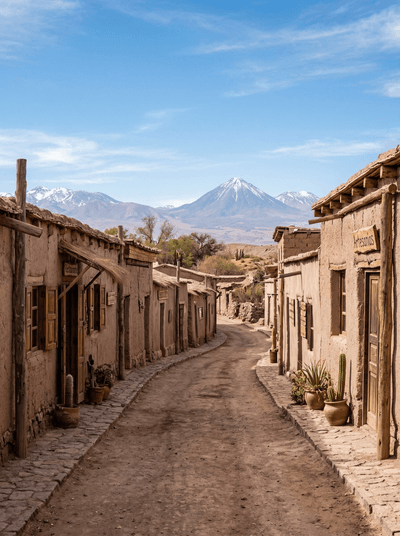
San Pedro de Atacama
Chile
Adobe lanes lead to salt valleys, high lagoons and a sky crowded with stars.
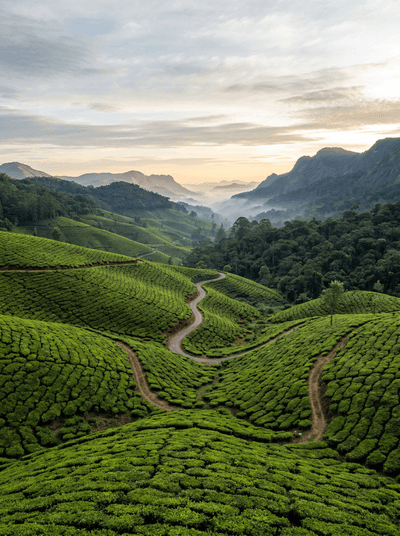
Valparai
India
Rainforest canopy spills over tea estates where wild elephants have the right of way.
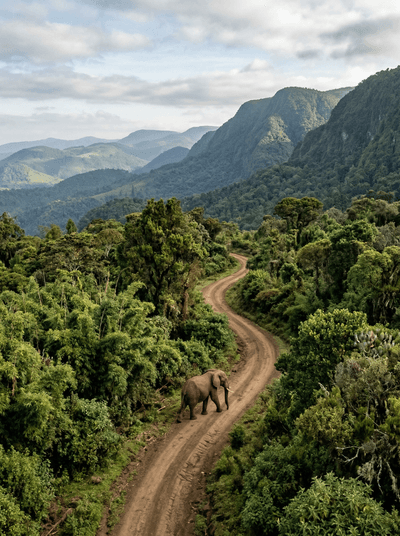
Aberdare National Park
Kenya
Mist-soaked moorlands and waterfalls above a forest where leopards pass treetop lodges at night.
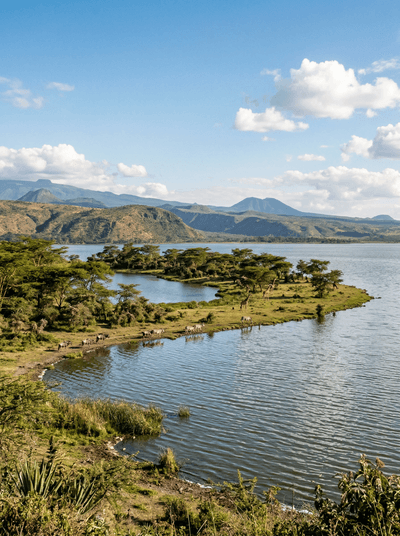
Crescent Island
Kenya
No fences, no vehicles — walk among giraffes and hippos on a volcanic lake island.
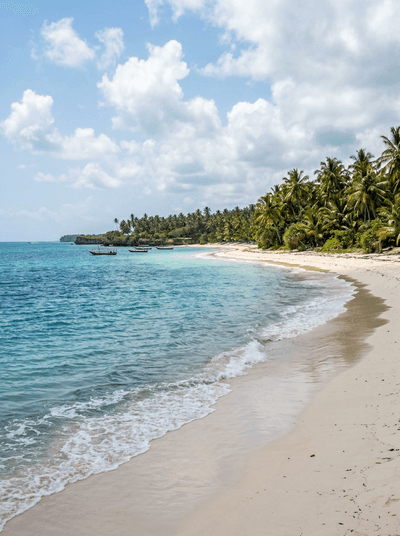
Malindi
Kenya
Vasco da Gama's 1498 pillar still stands where Swahili and Italian menus share the street.
Lamu Old Town
Kenya
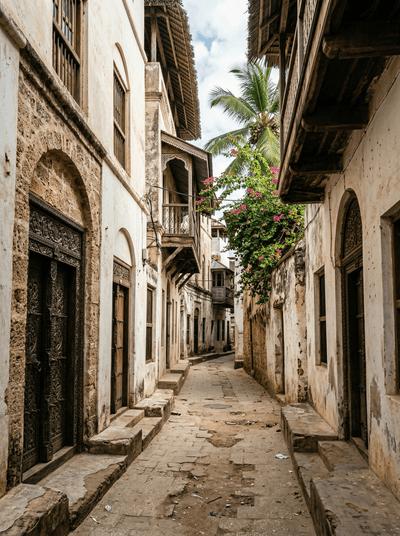
Donkeys replace cars on coral-stone lanes where Swahili doors tell centuries of family history.