Kenya
Lamu Old Town
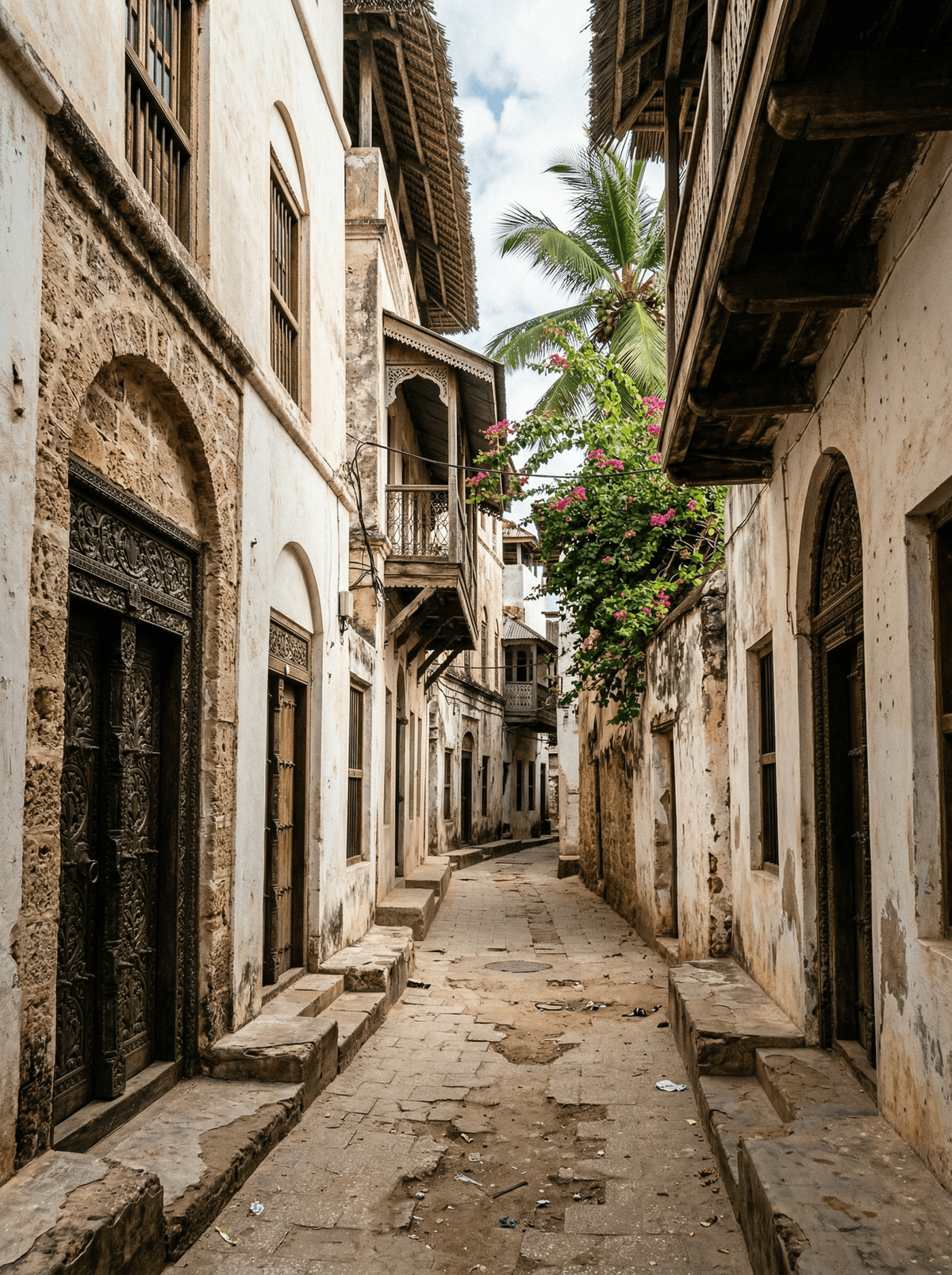
Donkeys replace cars on coral-stone lanes where Swahili doors tell centuries of family history.
The alley narrows until your shoulders nearly brush coral-stone walls, then opens into a courtyard where jasmine spills from a carved balcony and a donkey chews slowly in the shade. Lamu smells of cardamom, sea salt and damp plaster centuries old. The only engine noise comes from the harbour — the lanes were never built for cars.
Lamu Old Town is the oldest and the best-preserved of East Africa's Swahili settlements — World Heritage ground built of coral stone and mangrove timber, continuously lived in for over seven hundred years. Centuries of Indian Ocean trade braided Swahili, Arab, Persian and Indian influence into the town, most visibly in its carved wooden doors, each encoding a family's origin and standing. This was and remains a centre of Islamic scholarship, its working mosques and madrasas woven through the labyrinth alongside the houses. Donkeys and handcarts do the carrying in the labyrinth, and the mosques and houses are living spaces, not exhibits.
Solo
Lamu moves at walking pace and rewards the unscheduled — study door carvings, follow the alleys, and you are never truly lost.
Couple
Rooftop dinners above the harbour, dhow sunsets through the mangrove channels and restored townhouses with private courtyards — intimacy without performance.
Family
Donkeys, boats and a town that is one big maze — endlessly entertaining for children, with courtyard guesthouses as a calm base.
Friends
Rent a Swahili house and work the archipelago by dhow — Shela's sand, Manda's ruins, and evening feasts back in town.
- UNESCO lists Lamu as East Africa's oldest and best-preserved Swahili settlement — over 700 years continuously inhabited.
- No cars in the labyrinth — donkeys and boats still do the town's carrying.
- Carved Swahili doors encode each family's story in Arab, Indian and Bantu craft.
- Seven centuries of Islamic scholarship live on in the town's working mosques.
Swahili pilau spiced with cardamom and cloves, eaten in a courtyard house.
Mandazi and spiced chai from tiny bakeries deep in the alleys.
Casco Viejo
Panama
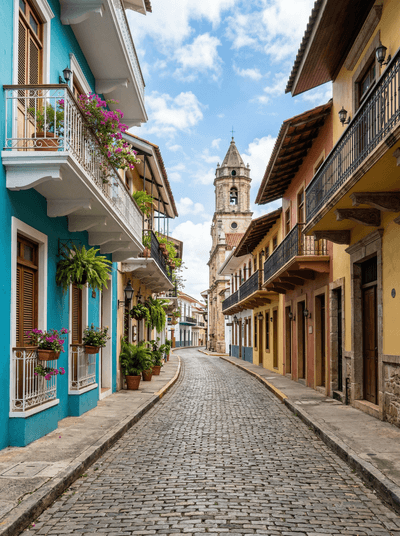
Crumbling colonial balconies where jazz drifts over a skyline of glass towers.
Apia
Samoa
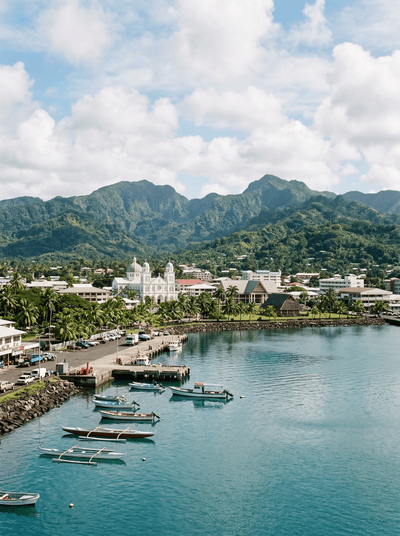
Samoa's capital wakes to a police band marching the waterfront for the flag-raising.
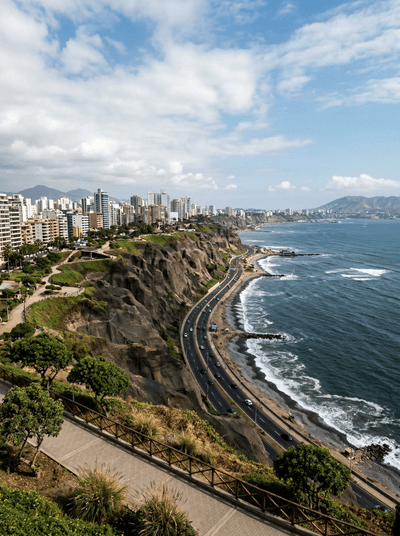
Lima
Peru
Pacific spray on clifftop terraces where ceviche began and the food never stopped evolving.
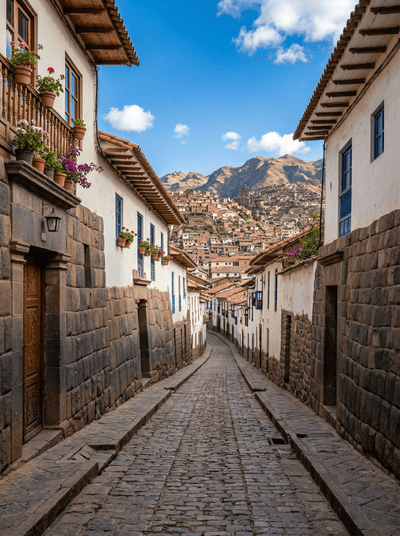
Cusco
Peru
Inca walls fitted so tightly a knife blade won't slide between the stones.
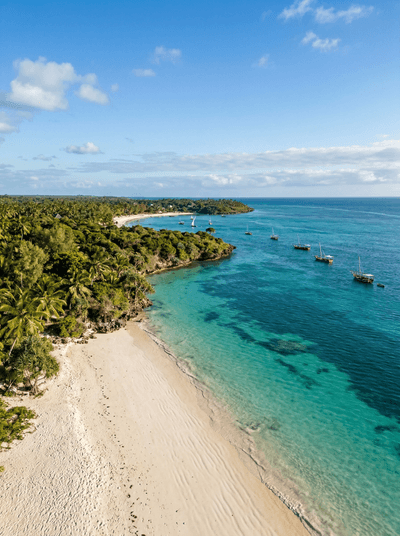
Watamu
Kenya
Turtles come ashore beside reefs being coaxed back to life in Kenya's oldest marine park.
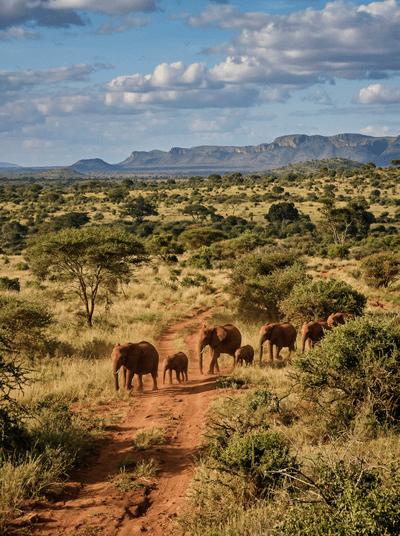
Tsavo National Park
Kenya
Red elephants ghost through rust-coloured scrubland where man-eating lions once stopped the railway.
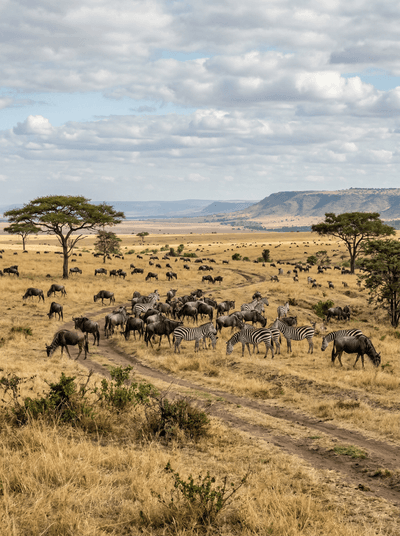
Masai Mara National Reserve
Kenya
Over a million wildebeest thunder across crocodile-thick rivers in Earth's greatest land migration.
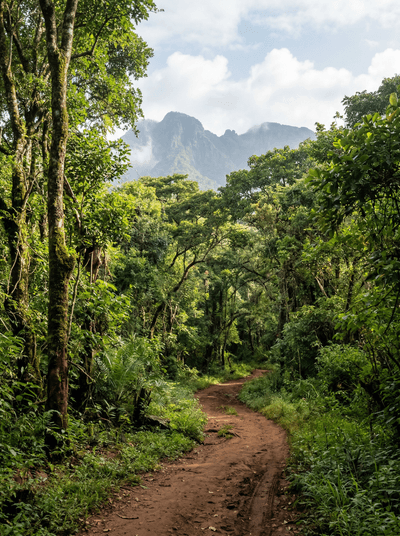
Kibwezi Forest
Kenya
An underground river feeds a rare groundwater forest where rescued elephants learn wildness again.