Italy
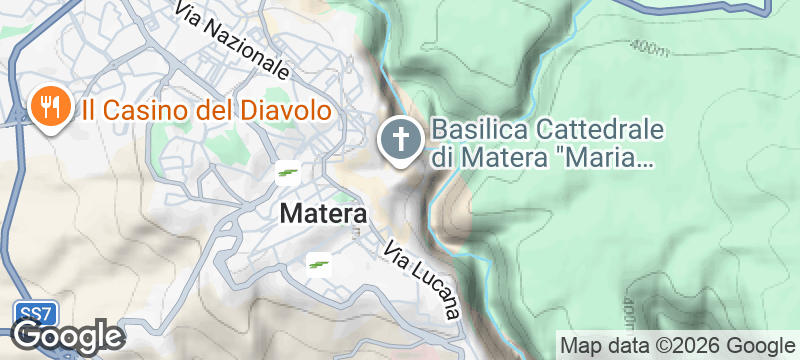
Matera
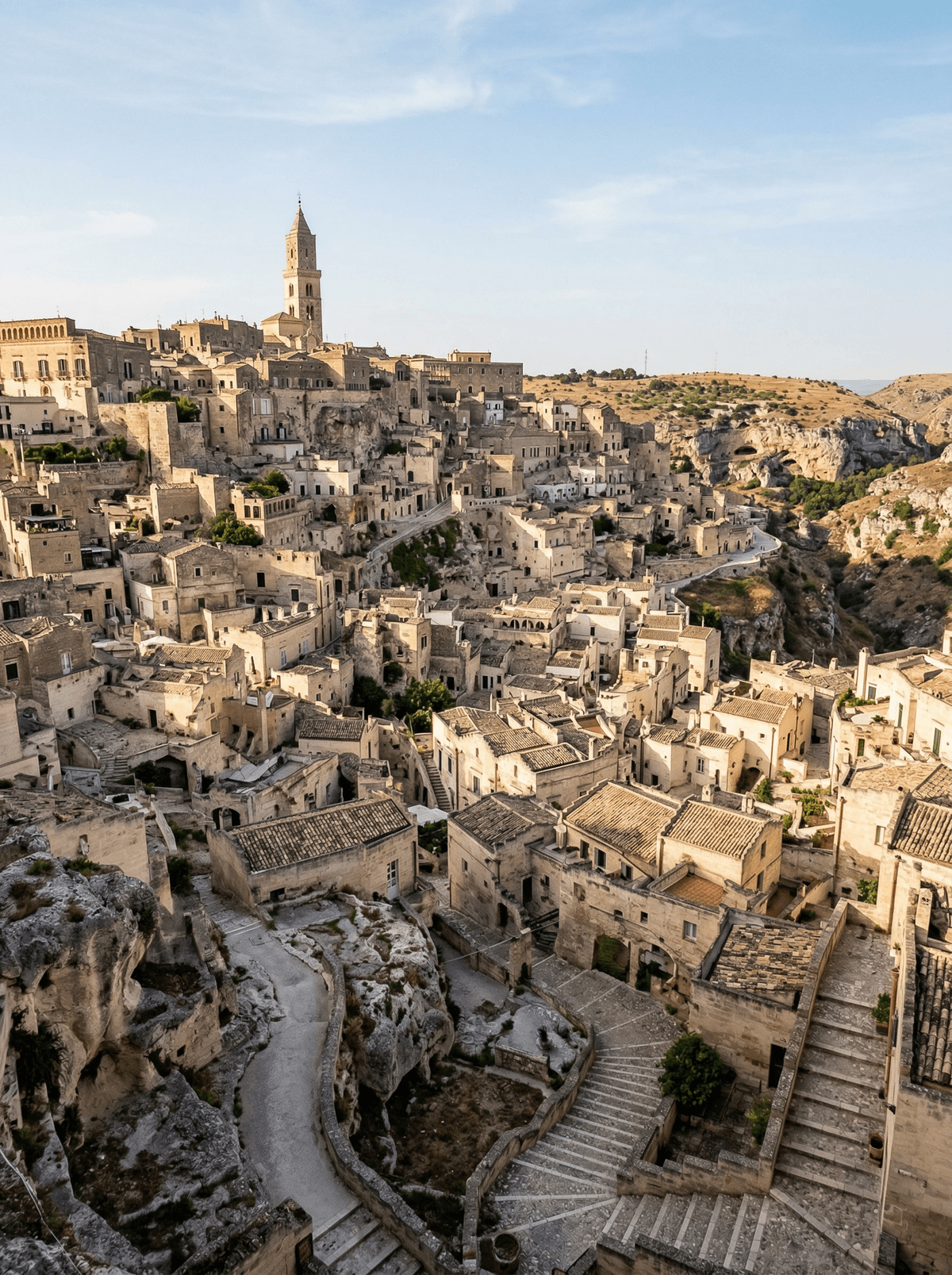
Cave dwellings stacked like a vertical labyrinth inside a ravine, inhabited for nine thousand years.
Cave openings stare from the ravine walls like a thousand dark eyes, stacked from the gorge floor to the cathedral above. At night the sassi glow with the lamplight of cave hotels and restaurants cut into the rock. The silence after dark feels nine thousand years deep.
Matera's sassi districts are dwellings dug by hand into soft calcarenite, one of the longest-running continuous settlements on earth, inhabited from deep prehistory until the state cleared the caves in the 1950s over poverty and disease. Decades of abandonment preserved them; restoration from the 1980s turned them back into homes, hotels and museums, UNESCO listing arrived in 1993, and the city carried Europe's Capital of Culture title in 2019. The rock churches of the ravine keep Byzantine and medieval frescoes painted straight onto cave walls. Across the gorge, the Murgia plateau's viewpoints show the whole improbable city at once.
Solo
Wander past the tour routes and the sassi yield hidden stairways, cave churches and viewpoints away from the main flow.
Couple
A candlelit cave room carved from the ravine makes the hotel the destination; the glowing gorge at night does the rest.
Friends
Use the sassi as a base for Basilicata's ghost towns and badlands, regrouping over Aglianico each evening.
Family
The furnished cave-house museum turns hardship into understanding; children touch walls shaped thousands of years ago.
- The sassi were dug out by humans from soft calcarenite and lived in from prehistory until the 1950s clearances.
- Ravine-cut rock churches carry Byzantine and medieval frescoes on bare cave walls.
- Cave hotels now occupy former dwellings, no two rooms the same shape.
- UNESCO listed the sassi in 1993, and 2019 crowned Matera European Capital of Culture.
Pane di Matera, the horned durum loaf with protected status, keeps its crust for days.
Crapiata, a dense stew of grains and pulses cooked together, is Matera's oldest recipe still working.
Mexico City (Centro Histórico)
Mexico
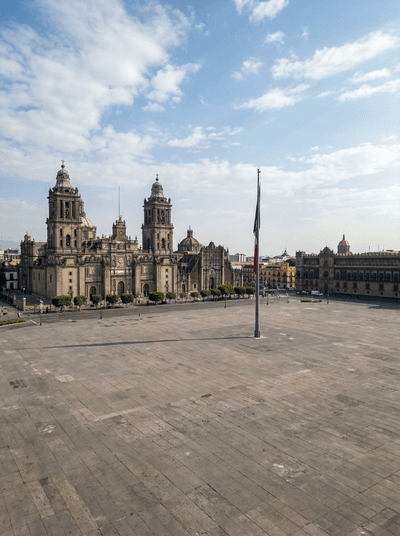
Temples, cathedral stones and Art Deco halls occupy the same sinking city core.
Arequipa
Peru
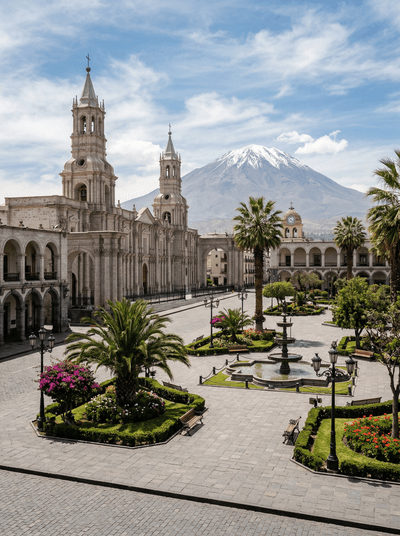
A city carved from white volcanic stone that glows amber under three volcanoes.
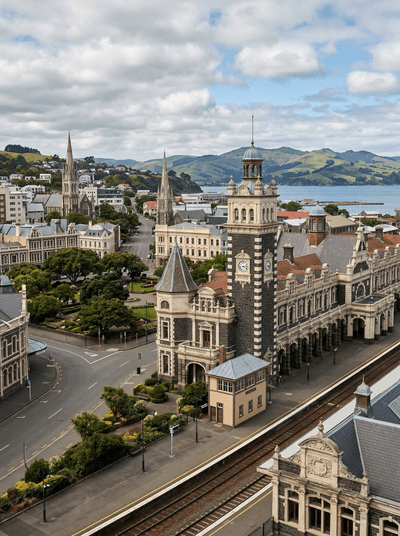
Dunedin
New Zealand
A Scottish-built city with the world's steepest street and albatrosses on the headland.
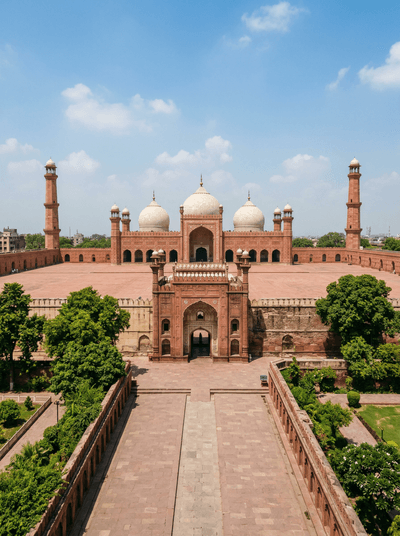
Lahore
Pakistan
A walled city where Mughal emperors' marble still glows at sunset and food stalls never sleep.
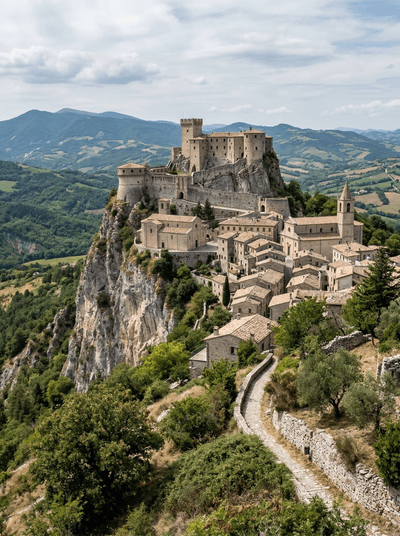
San Leo
Italy
The occultist Cagliostro died a prisoner in this fortress, in a cell entered through its ceiling.
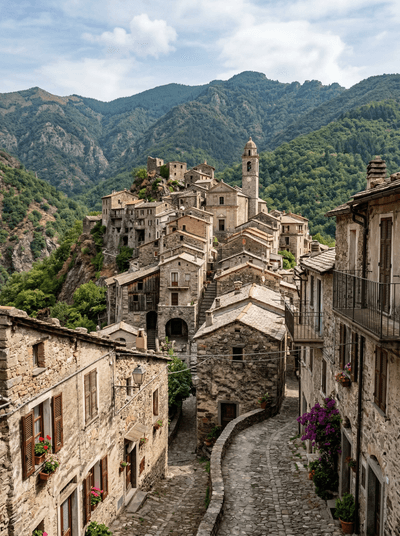
Triora
Italy
A witch-trial village high in the Ligurian Alps, its 1588 terror still marked in stone.
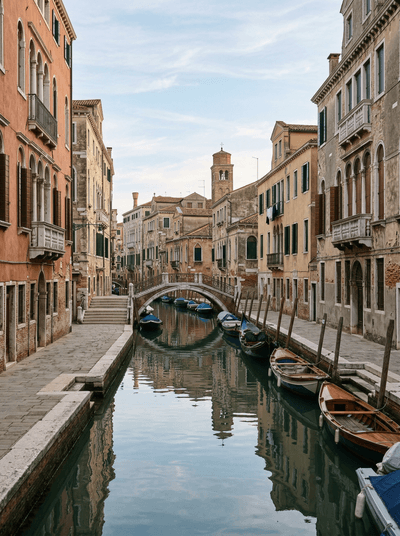
Venice
Italy
Dawn light on a silent canal where only your footsteps echo on wet stone.
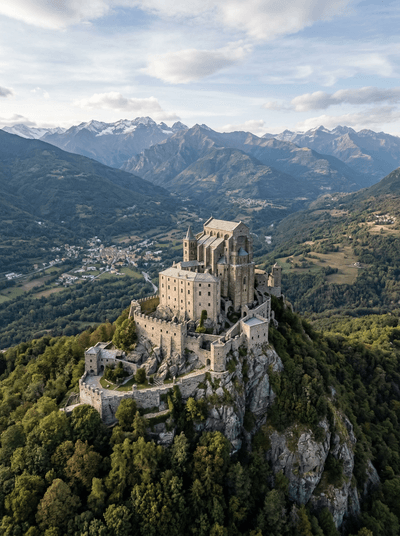
Sacra di San Michele
Italy
A thousand-year-old abbey growing from a mountaintop, its staircase carved through living rock.