Morocco
Meknès
Water runs beneath roofless granaries where tribes once paid their taxes in grain.
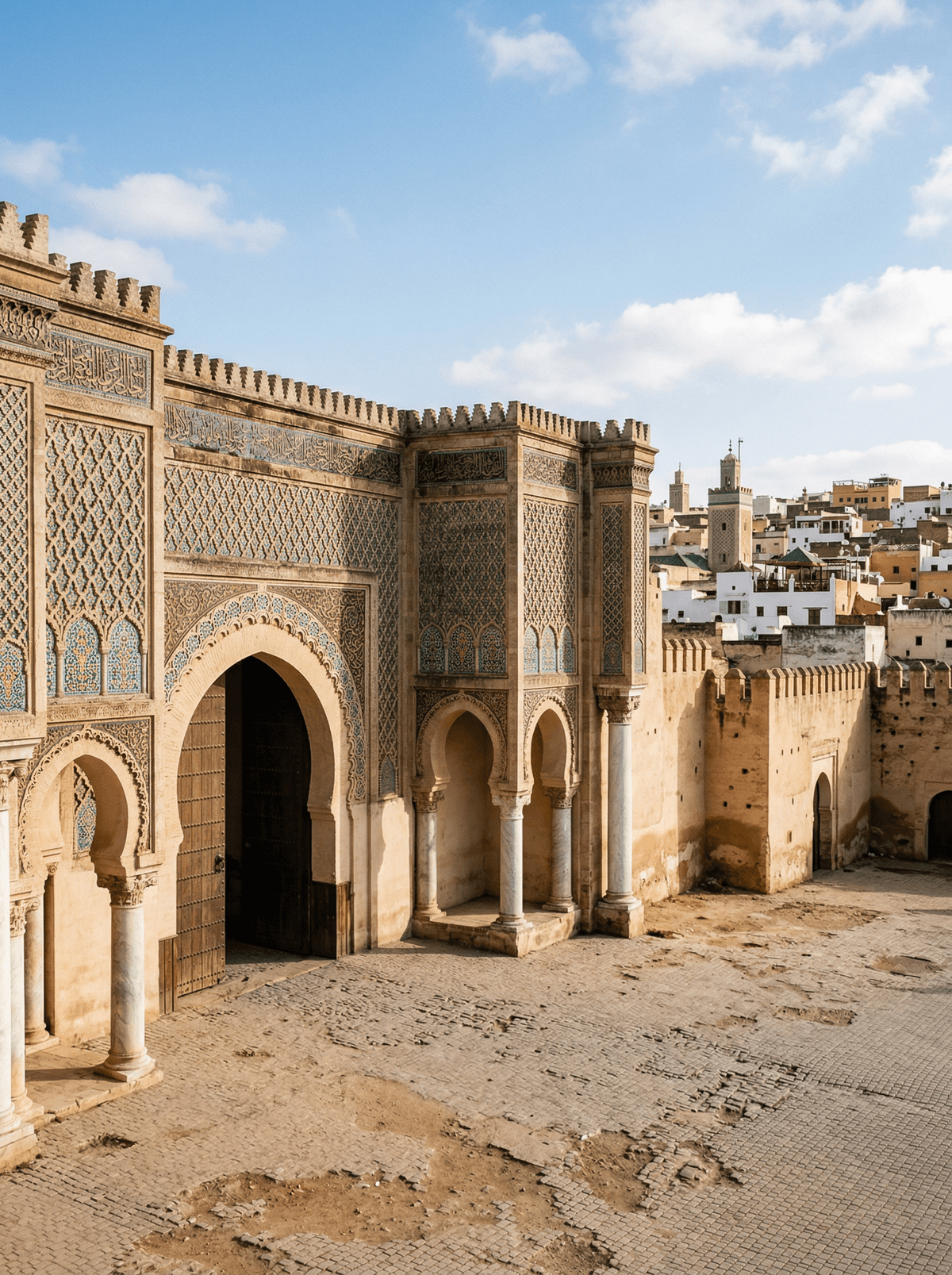
Moulay Ismail wanted a capital and built one, and the walls are how you know. Rammed earth, seven to fifteen metres high and up to three metres thick, running nearly forty kilometres around the old city in three separate rings, cut through by something like seventy monumental gates. You arrive at Place Lahdim beneath a gate; the scale has already made its point before you are inside.
The three walls were built for three different attackers: the low outer one to stop cavalry, the higher second to stop infantry on foot, and the highest to stop whoever had already got past both. Behind them, Heri es-Souani is the piece worth crossing town for. Tribes paid their taxes in grain and it came here, into barrel-vaulted chambers with water channels running beneath the floors from a cistern below to hold the temperature down, with a horse-driven noria in a far corner to lift the water. West of it lie the stables, rows set at angles so the stable masters could see the whole floor at once, roofed until an earthquake in the eighteenth century took the roof off.
Solo
Walk a wall section rather than a monument list. Following the pisé ramparts gate by gate tells you more about what this city was for than any single building inside it, and nobody else will be doing it.
Couple
Take the two kilometres from the mausoleum out to the granary slowly, once the afternoon heat has eased, ending with a bottle from the vineyards you have been looking at all the way.
Friends
Pair the granary with an afternoon among the vineyards. The stables are big enough to lose each other in, and the Meknes vineyards are the only place in Morocco where an afternoon of tasting is a serious proposition.
- Nearly forty kilometres of rammed-earth wall ring the old city in three concentric enclosures, seven to fifteen metres high.
- Roughly seventy monumental gates are cut through those walls, each with its own bastions and zellige.
- Heri es-Souani's granaries were cooled by water channels running under the floors, drawn from a cistern beneath.
- The stables beside them were built for a supposed twelve thousand horses, in angled rows for line of sight.
Meknes red wine made from grapes grown in the hills around the city, carrying forward a viticultural story that reaches back to Roman Volubilis.
Olives and their oil in the city whose old name is Meknassa Azzaytouna, Meknes of the olive tree, where fig, plum and orange blossom scent the same gardens.
Rouen
France
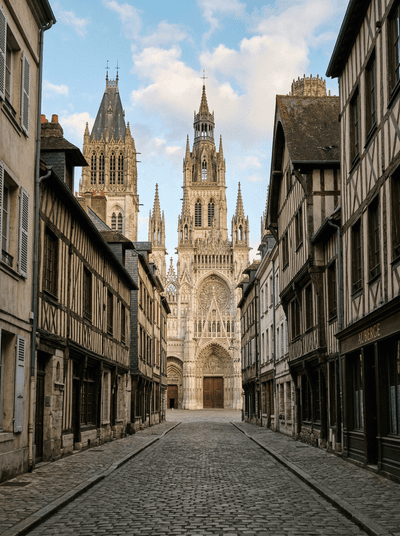
Half-timbered lanes winding to the square where Joan of Arc's fire still scorches the stone.
Chiang Rai
Thailand
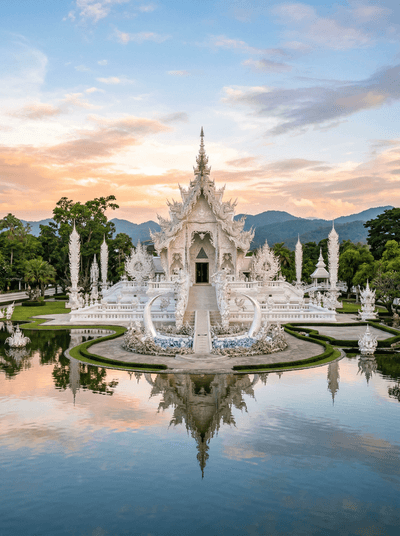
A temple built entirely of white mirror glass reflecting pop-culture damnation inside Buddhist serenity.
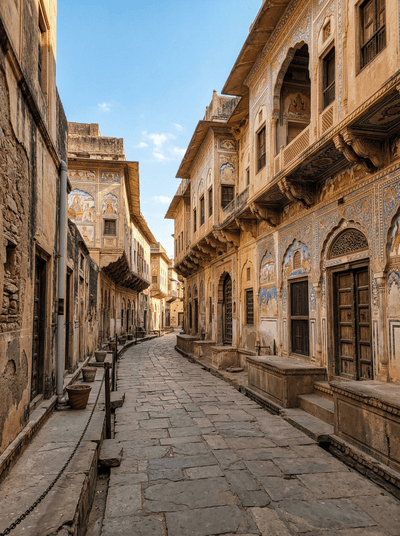
Mandawa
India
Gramophones and steam trains painted on mansion walls, a desert town turned open-air gallery.
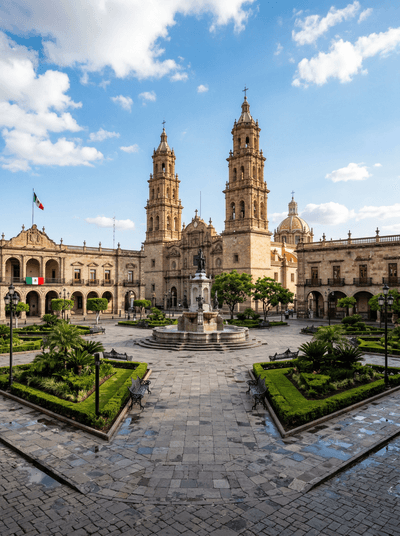
Guadalajara
Mexico
Orozco murals, market kitchens and mariachi nights animate Jalisco's largest city.
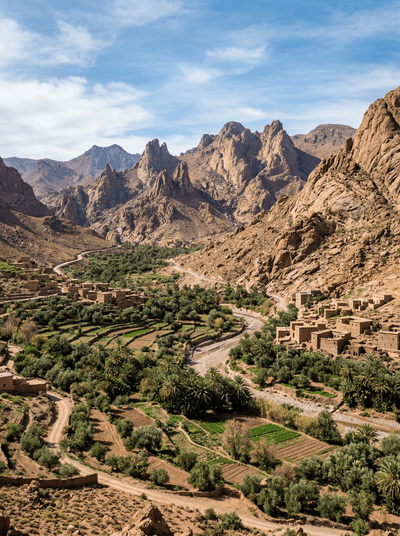
Ameln Valley
Morocco
Ochre villages disappear into Jbel Lekst while almond blossom clouds the valley floor.
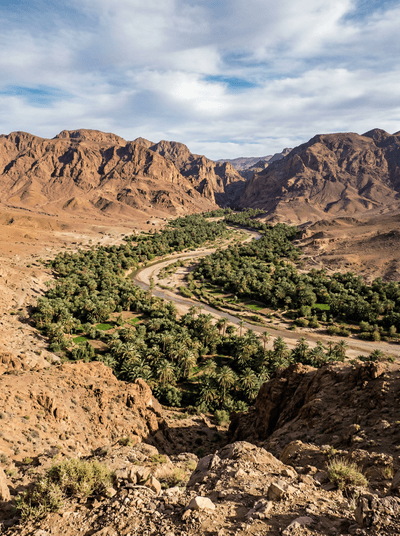
Draa Valley
Morocco
Two and a half million date palms carry a green river towards the Sahara.
Imlil
Morocco
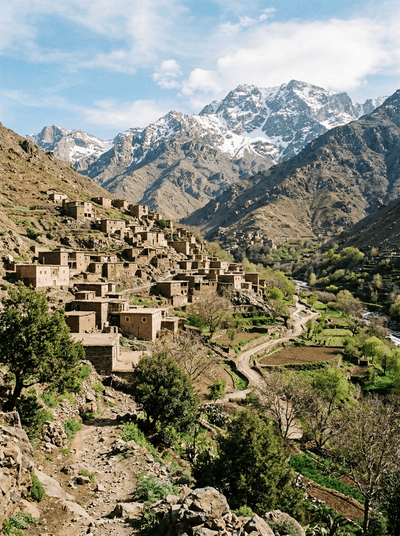
One short street of guides and gear ends where North Africa's highest mountain begins.
Akchour Waterfalls
Morocco
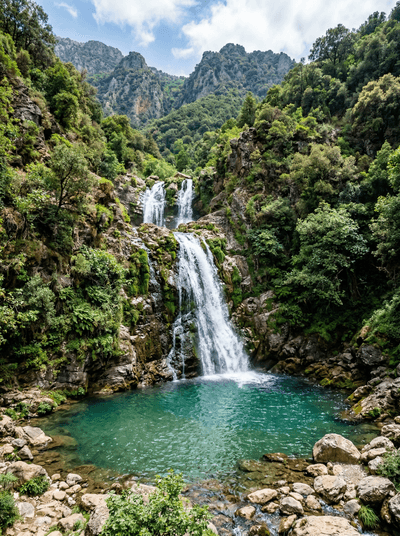
A rock arch twenty-five metres over the river, and the village crosses it daily.