France
Rouen
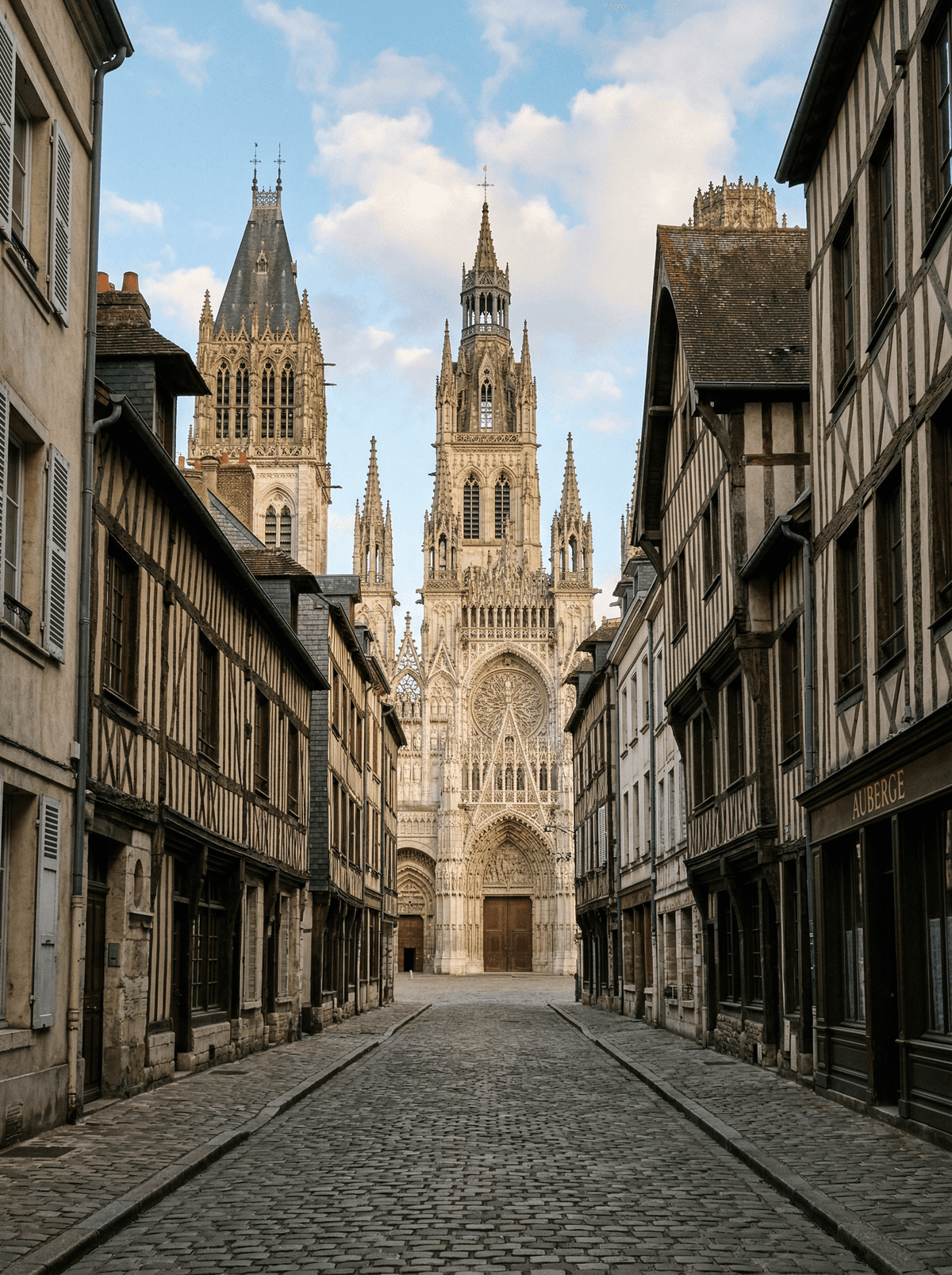
Half-timbered lanes winding to the square where Joan of Arc's fire still scorches the stone.
Half-timbered houses tilt at angles that narrow the sky to a ribbon overhead, their blackened oak frames older than the cobbles beneath. Rouen, Normandy's capital in northern France, carries fire in its history — Joan of Arc burned here, the cathedral came through the wars of religion, the Revolution and the Second World War, and the old quarter has rebuilt itself around the scars. The air in the medieval streets is heavy with timber and river damp.
Rouen is Normandy's capital and its river city on the Seine. Notre-Dame cathedral, Gothic in every period from the twelfth century on, has a west front that Monet painted more than thirty times to catch the shifting light; behind it, Saint-Maclou's flamboyant church and the skull-carved timbers of its old plague cemetery, the Aître Saint-Maclou, sit in the finest of the half-timbered quarters. Joan of Arc was tried in 1431 and burned in the Place du Vieux-Marché, where a startling modern church, finished in 1979, rises over the site with sixteenth-century stained glass salvaged from another Rouen church. The Gros-Horloge, a Renaissance arch carrying a gilded astronomical clock, straddles the main shopping street, and you can climb its tower for the roofs of the old town.
Solo
Rouen is a city for looking up — the timber frames, the cathedral front, the Gros-Horloge. Walk the old quarter slowly and let seven centuries of architecture layer above you.
Couple
The cathedral at different hours, dinner in a candlelit half-timbered restaurant, and the Place du Vieux-Marché at dusk — Rouen pairs romance and gravity in equal measure.
Friends
The old-quarter bistros serve pressed duck and Calvados late into the evening — Rouen is a food city that doesn't advertise itself as one.
- Half-timbered houses tilt at angles that defy physics in streets so narrow the sky is a ribbon overhead.
- The cathedral's west front shifts colour through the day — Monet painted it more than thirty times to prove the point.
- Joan of Arc was tried and burned here in 1431 — the modern church on the pyre site glows with sixteenth-century glass rescued from another church.
- The Gros-Horloge, a gilded astronomical clock on a Renaissance arch, straddles the main street, with a tower to climb above it.
Canard à la rouennaise — pressed duck in a sauce thickened with its own blood — Rouen's darkest and proudest dish.
A mirliton — the city's flaky little tartlet with a smooth vanilla-and-orange filling — from a bakery on the Place du Vieux-Marché.
Kagoshima
Japan
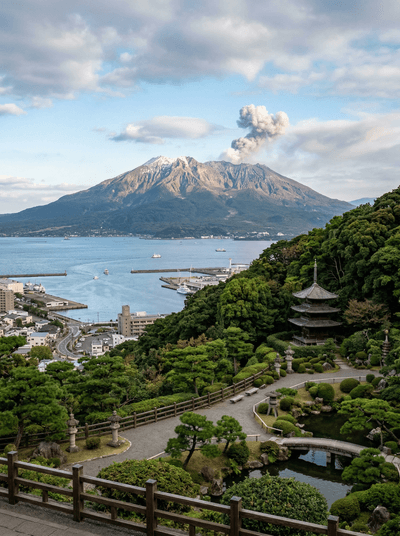
Volcanic ash drifting like grey snow on a city living beneath an active cone.
Varanasi
India
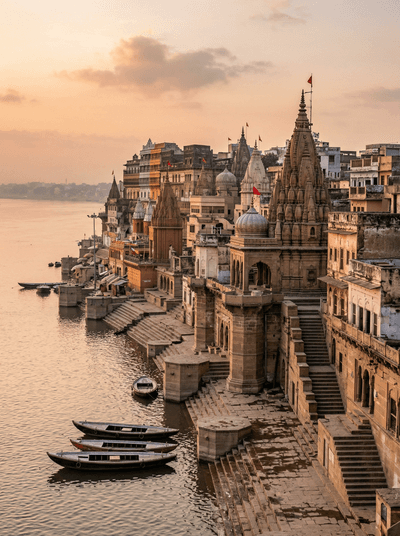
Funeral pyres burning beside a sacred river where thousands bathe in the dawn fog.
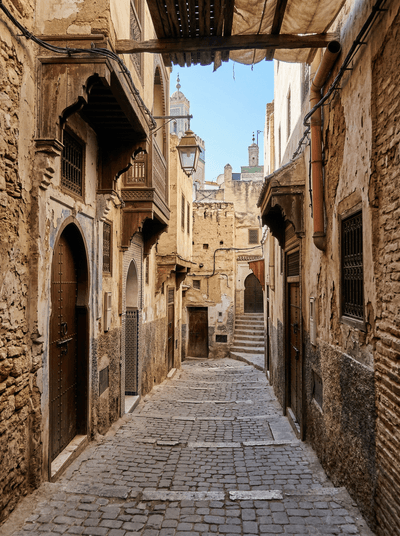
Fes el-Bali
Morocco
Cedar, cumin and thirty-day leather hang in lanes that refuse to tell you where you are.
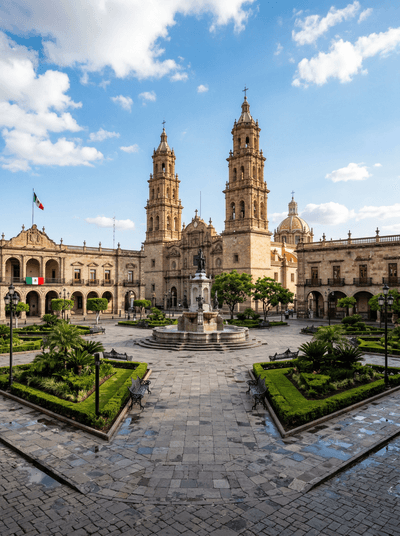
Guadalajara
Mexico
Orozco murals, market kitchens and mariachi nights animate Jalisco's largest city.
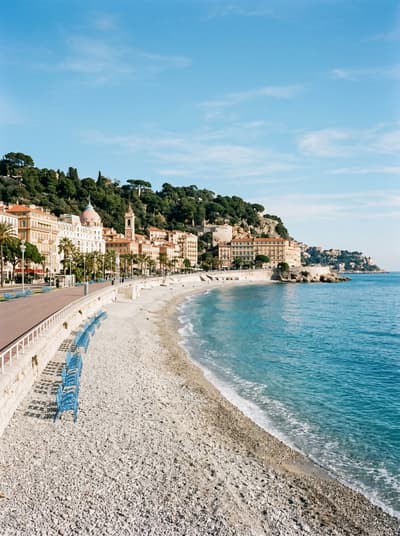
Nice
France
Italianate backstreets above a market where socca sizzles on copper pans the size of tables.
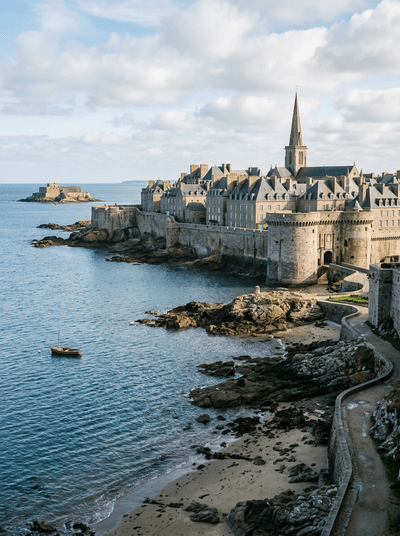
Saint-Malo
France
Granite ramparts ringing a corsair city where Europe's biggest tides lock you in twice a day.
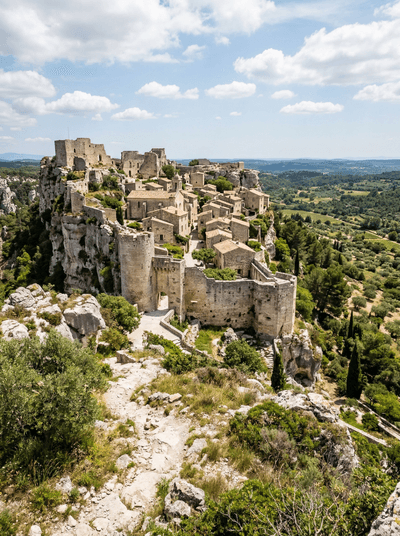
Les Baux-de-Provence
France
Ruined fortress walls dissolving into white rock as if the mountain were slowly swallowing them.
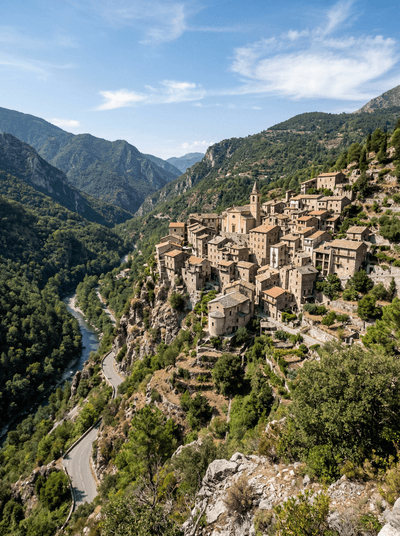
Saorge
France
Houses stacked into a gorge wall like an amphitheatre, with the Roya river as the stage.