
South Africa
Ndebele Cultural Village (Botshabelo)
Geometric murals in colours that hurt your eyes — each pattern a language painted on walls.
The colours hit before you understand the patterns — turquoise, ochre, emerald, and chrome yellow in geometric arrangements so precise they look machine-made. They are not. Every line is painted freehand by Ndebele women using fingers, sticks, and feathers, the designs encoding family identity and social status in a visual language that outsiders cannot read without a guide. The Ndebele Cultural Village at Botshabelo in South Africa's Mpumalanga province is a living gallery where walls speak.
Botshabelo — the Sotho word for 'place of refuge' — began as a farm purchased in 1865 by German missionaries of the Berlin Mission Society, offering shelter to displaced communities. The site now combines a reconstructed Ndebele homestead, a Victorian mission church, and the Mabhoko Fort across three centuries of architecture. Esther Mahlangu, the internationally recognised Ndebele artist who brought the mural tradition to BMW, the Louvre, and global galleries, worked here from 1980 to 1991. Live beadwork demonstrations reveal how colour sequences in marriage aprons follow codes specific to each Ndebele clan — no two aprons carry the same pattern. Fresh murals are applied annually before initiation ceremonies using mineral-based pigments sourced locally.
Couple
A cultural immersion that rewards close looking — the mural codes, the beadwork grammar, the layered histories of a single site. This is the kind of shared discovery that sparks conversation for days afterward.
Family
Children respond instinctively to the colours and geometry. Watching artists paint freehand with fingers and feathers makes abstract concepts of cultural expression tangible and immediate.
- Ndebele geometric mural painting is applied by women using fingers, sticks, and feathers — each design encodes family identity, social status, and ceremonial meaning that outsiders cannot read without a guide.
- Botshabelo Historical Village combines a reconstructed Ndebele homestead, a Victorian mission church, and the Mabhoko Fort on one site — three centuries of architecture in a single visit.
- Live beadwork demonstrations show how colour sequences in marriage aprons follow codes specific to each Ndebele clan — no two aprons carry the same pattern.
- Fresh murals are applied by community women each year before initiation ceremonies — the pigments are mineral-based, sourced locally, and the technique has no paint or brush.
Traditional Ndebele uphuthu (stiff maize porridge) with morogo (wild spinach) and slow-cooked beef stew.
Middelburg's Boer War-era hotels serve steak and potjiekos in dining rooms that haven't changed in decades.
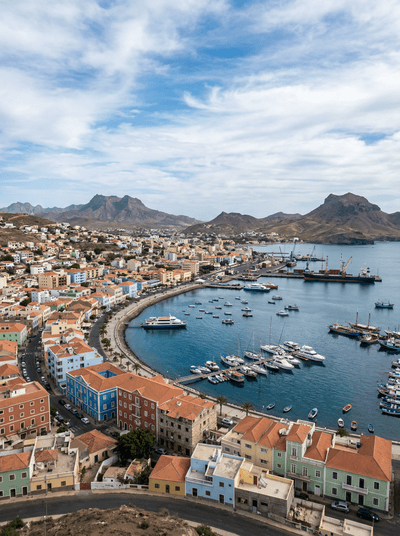
Mindelo
Cape Verde
Morna music drifts from dimly lit bars where Cesária Évora once sang barefoot for sailors.
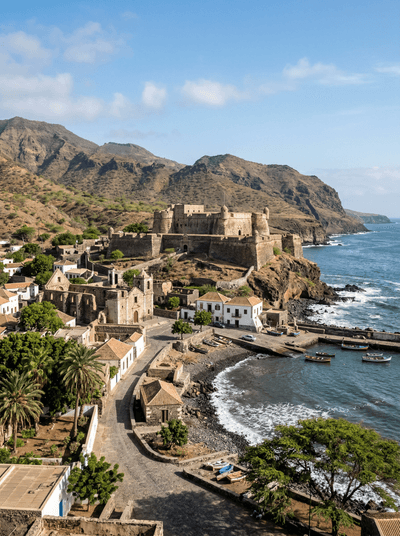
Cidade Velha
Cape Verde
First colonial city in the tropics — a slave pillory still stands in the silent square.

Fukuoka
Japan
Yatai street stalls steaming under canvas where strangers share ramen at midnight.
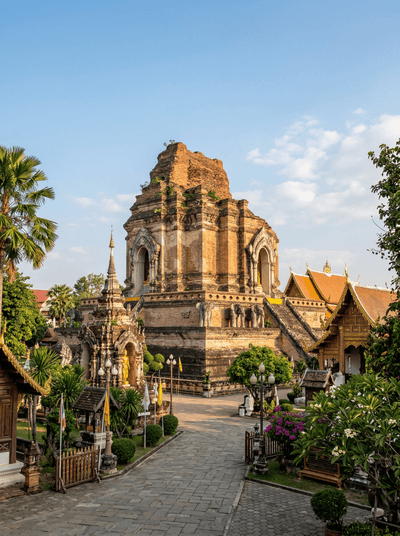
Chiang Mai
Thailand
Monks in saffron robes walking barefoot past tattooed expats and ancient brick chedis at dawn.

Cape Town
South Africa
Dawn light crowns a flat-topped mountain while penguins waddle the southern shore below.

Hermanus
South Africa
Whales breach so close to the cliff path you feel the spray on your skin.

Cederberg
South Africa
Sandstone arches and San rock art older than the pyramids, wild rooibos growing between the boulders.

Cape Agulhas
South Africa
A stone cairn marks where two oceans collide — the Indian warm, the Atlantic cold, underfoot.