Micronesia
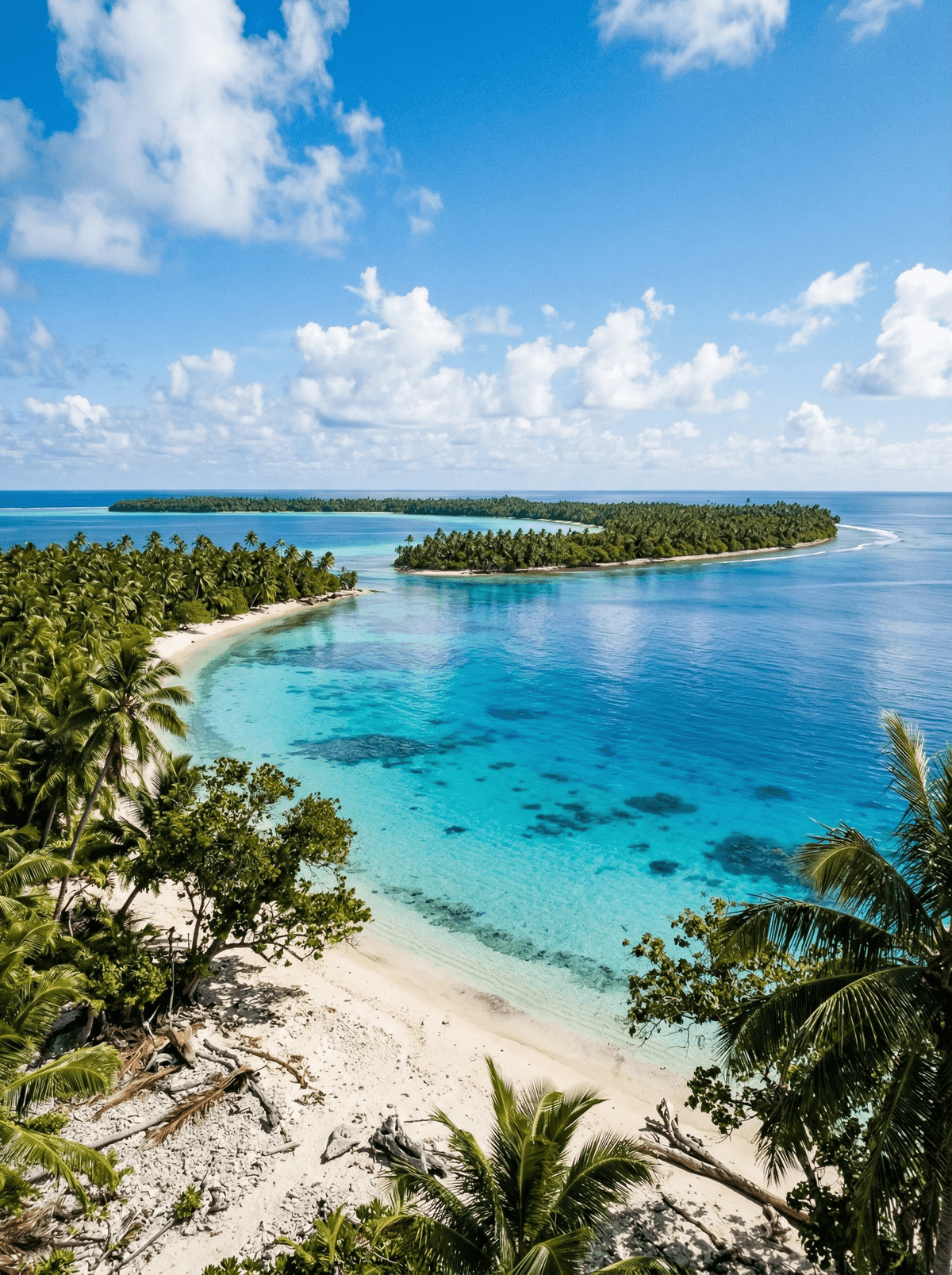
Pingelap Atoll
A one-airstrip atoll of palms and white sand, famous to science, barely charted by tourism.
The field-trip ship raises a low strip of palms and white sand barely holding above the swell, an atoll of three islets around a small lagoon at the far eastern edge of Pohnpei State. Life here runs on taro pits, breadfruit and the ship's irregular calls; guests are rare enough to be an event.
A typhoon in the late eighteenth century cut Pingelap's population to about twenty survivors, and one of them, the ruler, carried a rare recessive gene. Generations of isolation concentrated it, so complete achromatopsia now affects an estimated four to ten per cent of the atoll's people, against a few in every hundred thousand elsewhere. Oliver Sacks wrote this community into The Island of the Colorblind, and the families he described still live here, fishing the reef and working the taro gardens like their neighbours. Reaching them makes the second half of the story: a small charter aircraft to the airstrip, or the government field-trip ship from Pohnpei, which calls rarely across the year and gives you about a day ashore. Solar panels power the houses now, and after dark the village paths fill with torchlight.

Solo
A solo traveller planning months ahead can ride the field-trip ship out through the eastern atolls, sleeping aboard and spending the day ashore as a guest, not a spectator.
Couple
For a couple, the voyage is the trip: two days of open Pacific, an atoll day among gardens and reef, and the rare quiet of a place with no tourism at all.
- Pingelap is a three-islet atoll where daily life runs on taro pits, breadfruit and the field-trip ship's irregular calls.
- The community rebuilt from a late-eighteenth-century typhoon that cut the population to about twenty survivors, a history the atoll still tells.
- The islanders' story reached the world through Oliver Sacks' The Island of the Colorblind.
- Two lawful routes reach the atoll: small charter aircraft to the airstrip, or the government ship's eastern-atolls run with about a day ashore.
Dinner is what the reef gave that afternoon: fresh-caught fish in a family kitchen, because the atoll has no restaurant.
Breadfruit rules its season; between harvests, banana and giant swamp taro fill the pot.
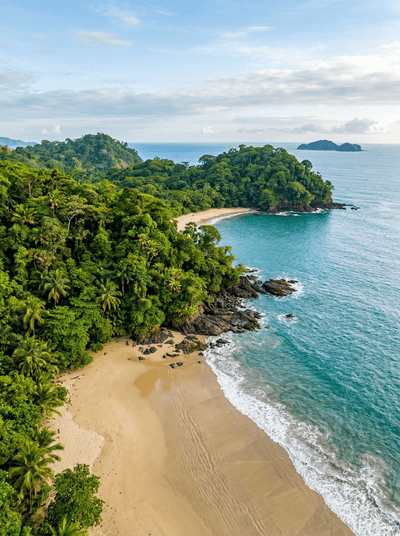
Manuel Antonio
Costa Rica
Capuchins patrol the sand beneath dozing sloths where rainforest walks into the ocean.
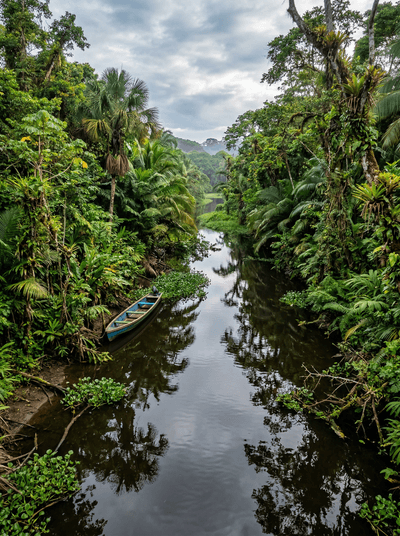
Tortuguero
Costa Rica
Jungle canals where green sea turtles haul onto black volcanic sand under a moonless sky.
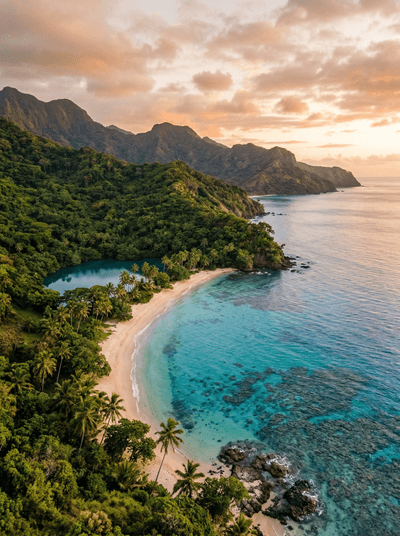
Kadavu
Fiji
Manta rays circle the world's fourth-largest barrier reef, off villages the road barely reaches.
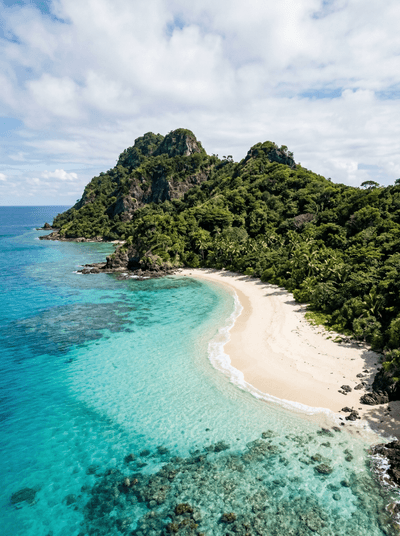
Monuriki
Fiji
The island from Cast Away truly belongs to crested iguanas brought back from the brink.
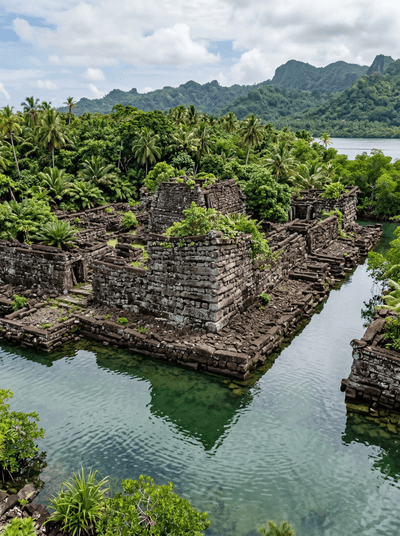
Nan Madol
Micronesia
A ghost city of black basalt rising from a lagoon, its canals silent for centuries.
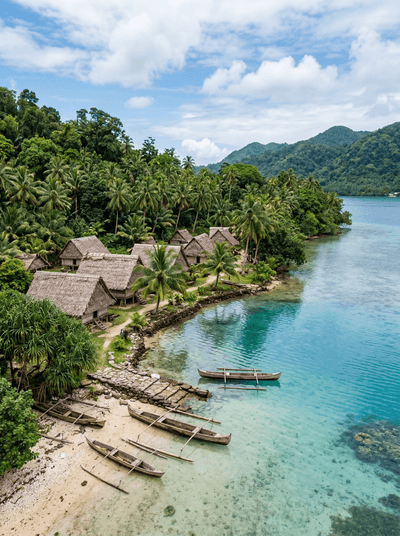
Yap
Micronesia
Stone money too heavy to move, so ownership transfers by word alone on this jungle island.
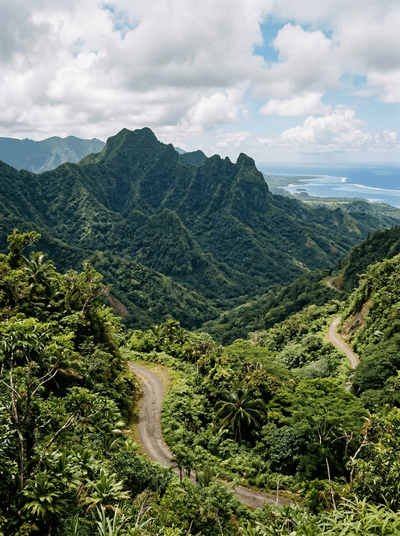
Pohnpei Highlands
Micronesia
Waterfalls spilling from cloud forest drenched by three hundred inches of rain each year.
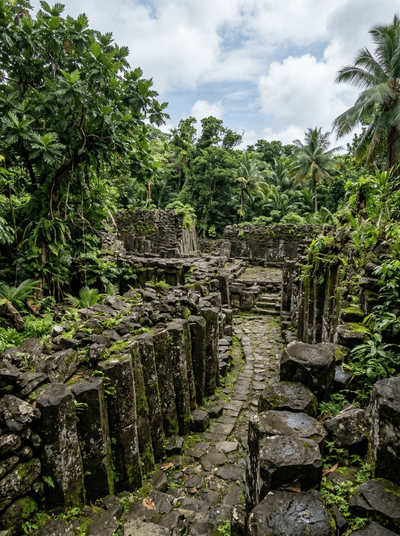
Lelu Ruins
Micronesia
Basalt walls of an ancient island kingdom rise from the jungle, royal tombs still inside.