Brazil
Praia do Rosa
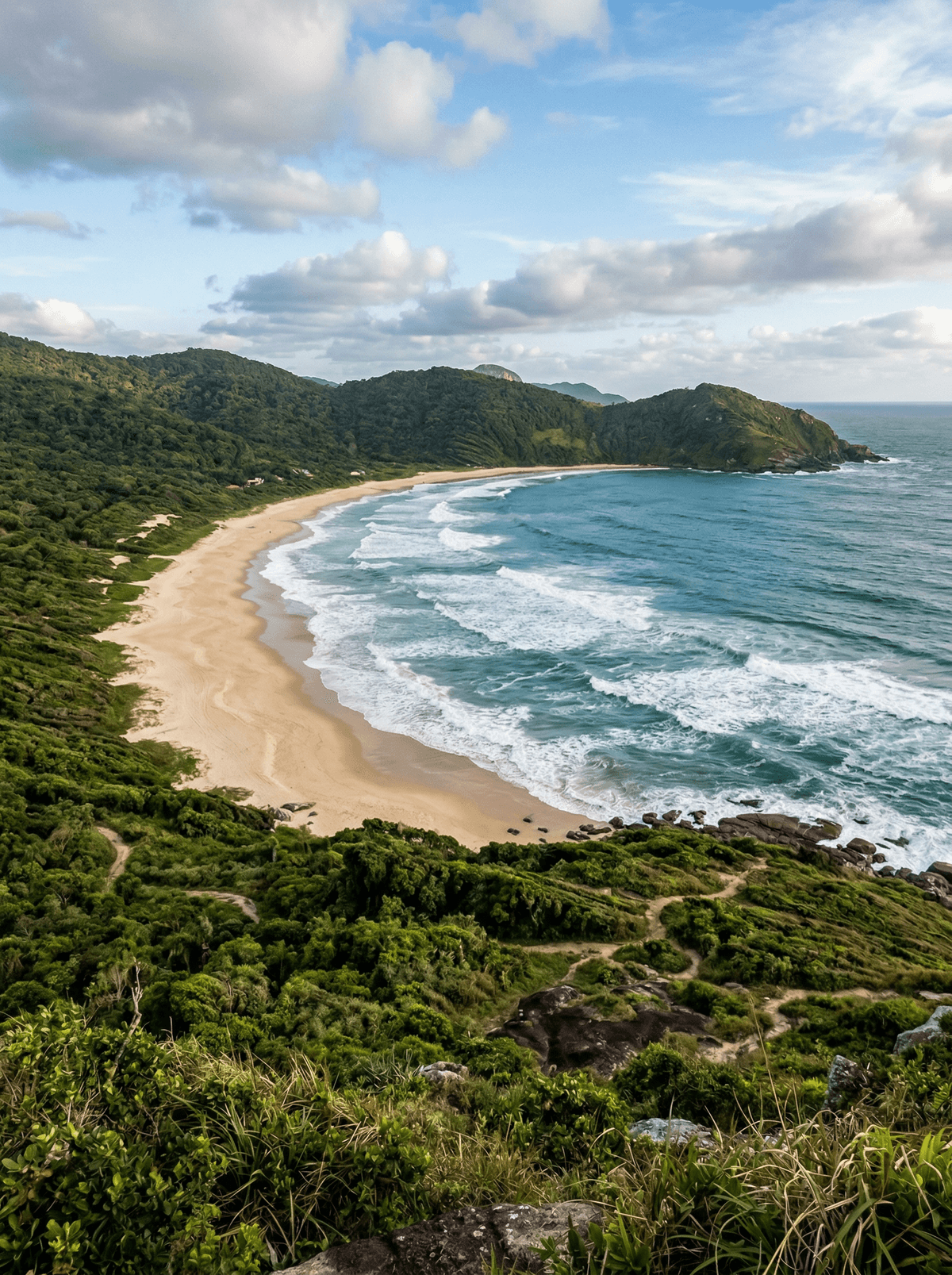
Right whales leave Antarctica to calve in this bay, and you watch from the headland.
From July the whales are back, up from Antarctica to the one stretch of warm quiet water where a calf can be born and fed. You watch them from the rock at either end of the beach, which is where the rules want you, because boats stress the animals and the headlands are close enough anyway.
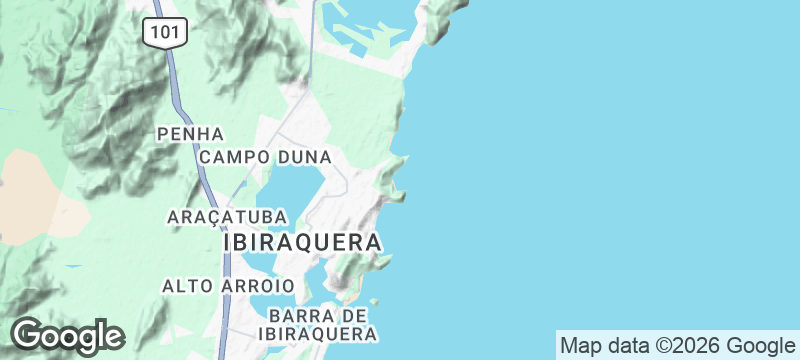
Praia do Rosa is a village on the Imbituba coast of Santa Catarina, ninety kilometres south of Florianópolis, and it sits inside the Área de Proteção Ambiental da Baleia Franca, about 130 kilometres of protected shoreline running through nine municipalities. Southern right whales come here between July and November to mate, calve and nurse, which is why the beach is called the nursery, and the same waters carry sea turtles, migratory birds and otters. Out of season the village is a surf town with an international reputation, alongside Praia da Silveira up the coast, and the Lagoa de Ibiraquera behind it takes the kitesurfers and the paddleboarders. Paths do the joining: the Caminho do Rei down to Praia do Luz, the Trilha do Mudo past the fishing shacks at Portinho do Rosa, the Trilha da Praia Vermelha around the northern headland. The long version is the Caminhos da Baleia Franca, a free public route of about 172 kilometres along beaches, headlands, dunes and lagoons.
Couple
Take the Caminho do Rei on foot in the late afternoon, when the ridge holds the light and the restaurants along it are opening, then drop to Praia do Luz and come back by the Trilha do Mudo. In whale months the rock at the south end of the beach is the place to sit, and it costs nothing.
Solo
Surfers get the point here without any explanation, and the village is used to people arriving alone for a fortnight of it. When the swell is flat there is the lagoon behind the dunes for kitesurfing and paddleboarding, and the whole coast strung on the Caminhos da Baleia Franca, 172 kilometres of public trail you can join for a morning or a week.
Family
The whale season is what makes this one for children, and it works because they watch from the rock rather than a boat, which means no seasickness and no expensive nothing-happened afternoon. Horses are the other easy win: the beach and the old ox-cart tracks behind the village both take riders, and the short rides are built for it.
- From July to November the southern right whales use this stretch to mate, calve and nurse, and Praia do Rosa is known as the nursery of the species.
- Watching happens from land by design, to keep boats off the animals, and every viewing point along the protected coast is free.
- The Caminho do Rei runs past the pousadas and kitchens on the ridge before dropping through green to Praia do Luz and Barra de Ibiraquera, with the Trilha do Mudo coming back past the fishing shacks.
- The protected area around it covers roughly 130 kilometres of coast across nine municipalities and is among the most visited federal conservation units in Brazil.
Handmade pasta at Sapore di Pasta, thirty years on the hill above the beach, working fish landed the same morning and herbs out of its own garden.
Round on the Lagoa de Ibiraquera, Lua Marinha keeps twenty-five ways with an oyster and a chef who dives for her own, and does camarão ao coco with lime rice.
Isle of Harris
Scotland
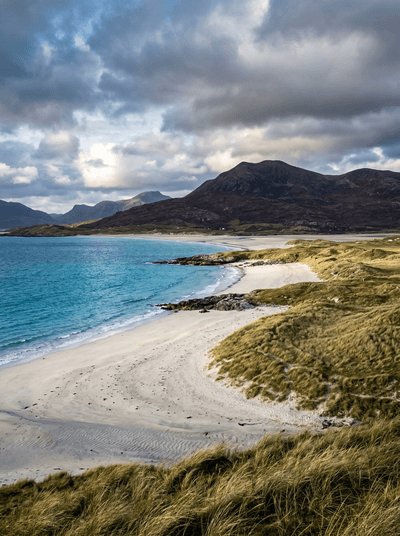
Caribbean-white sand meets Atlantic-turquoise water — but the wind smells of peat, not coconut.
Belle-Île-en-Mer
France
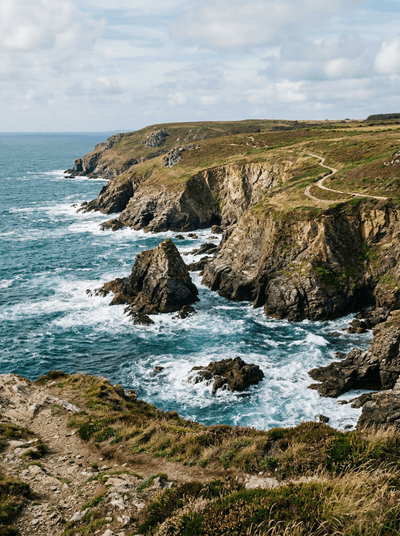
Monet's needle rocks, wind-hammered heath and hidden coves on an island the mainland forgot.
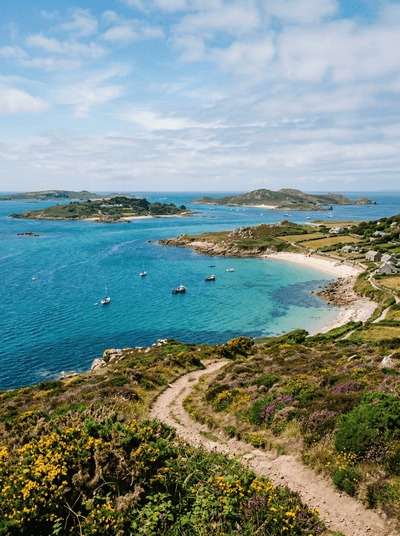
Scilly Isles
England
Sub-tropical islands where palm trees grow wild twenty-eight miles from the English mainland.
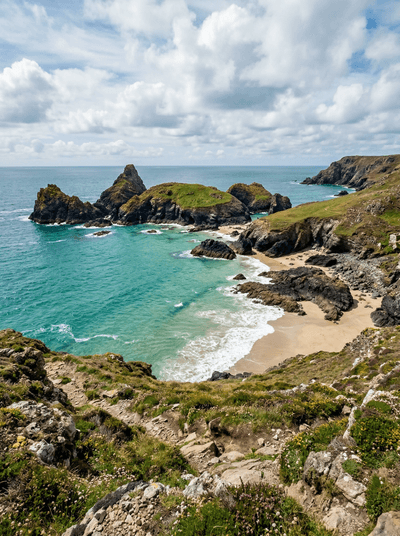
Kynance Cove
England
Serpentine rock stacks glowing red and green between turquoise tidal pools.
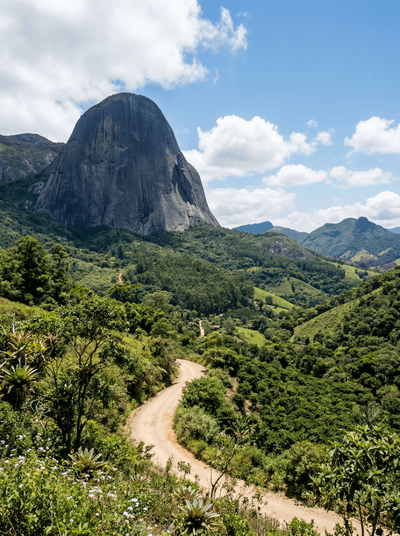
Pedra Azul
Brazil
A granite monolith blue with lichen, erupting from Atlantic Forest like a wave.
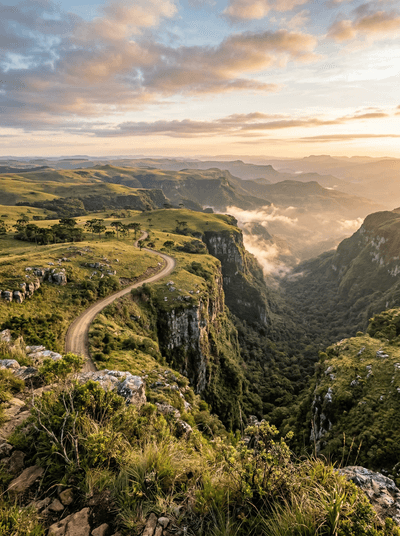
São José dos Ausentes
Brazil
The state's biggest fazenda went to auction twice because its owners never turned up.
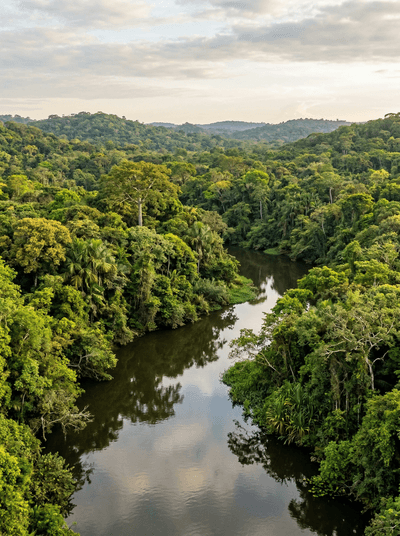
Cristalino Private Reserve
Brazil
Climb 250 steps before five and watch the flying rivers lift off the canopy below you.