Brazil
São José dos Ausentes
The state's biggest fazenda went to auction twice because its owners never turned up.
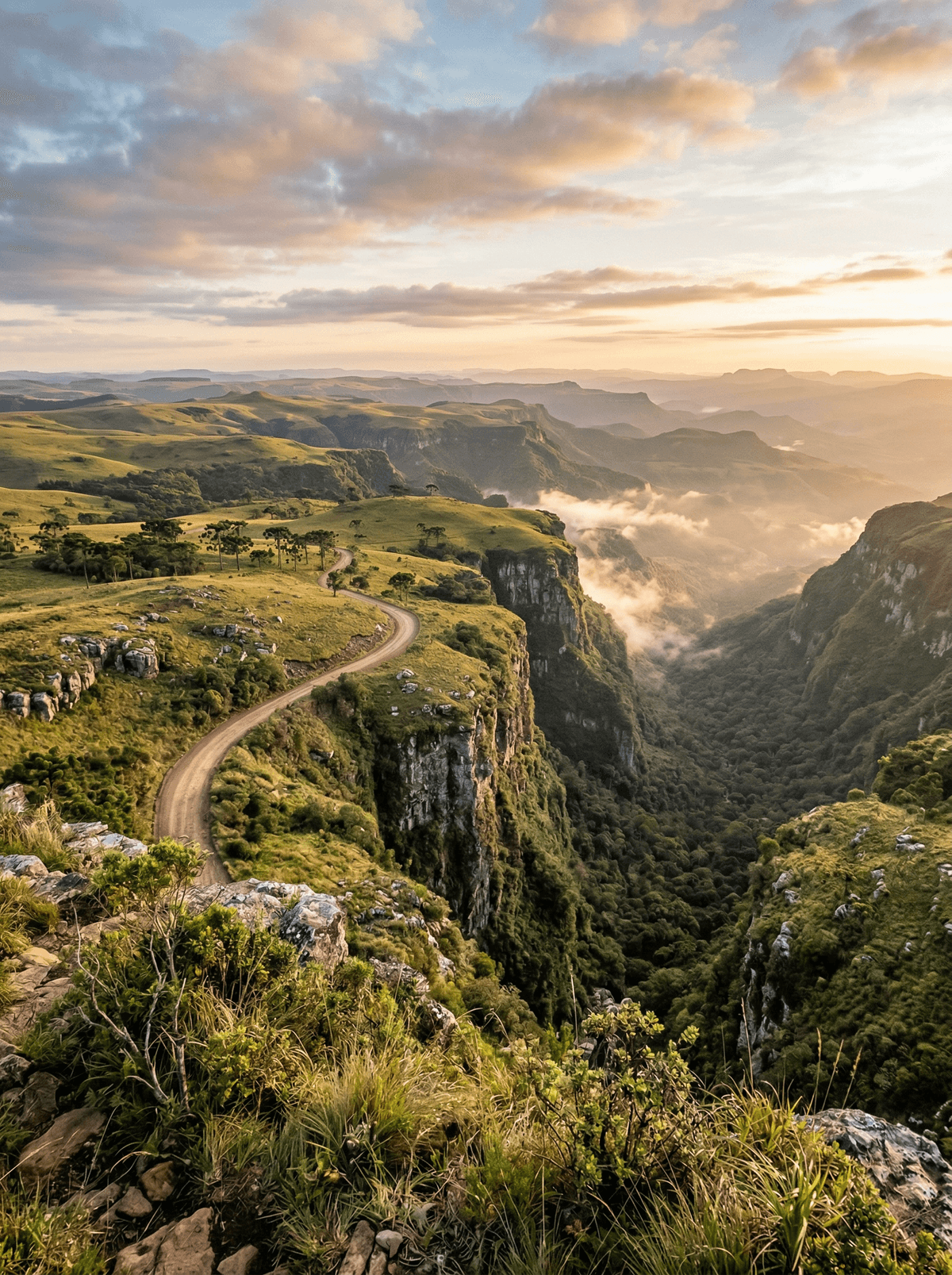
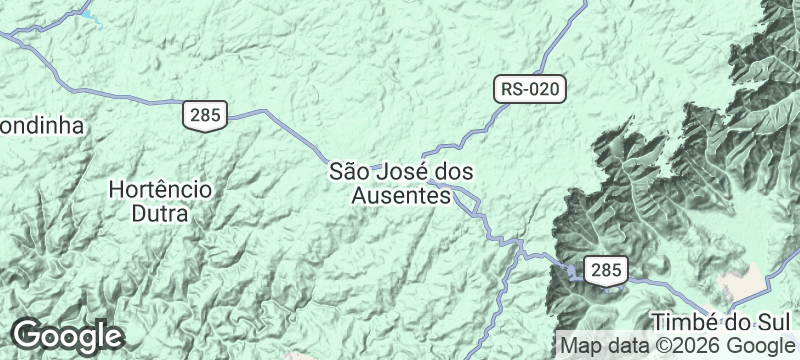
São José dos Ausentes means Saint Joseph of the Absent Ones, and the town is named for landowners who stayed away. What came instead were tropeiros driving cattle across the Campos de Cima da Serra and Jesuits off the Missões, and what they left behind are the colossal dry-stone corrals out in the grass, among the oldest structures in Rio Grande do Sul. The town holds the state's north-eastern corner, with the walls of the Aparados da Serra between it and Santa Catarina.
The high point of Rio Grande do Sul is here. Pico do Monte Negro reaches 1,403 metres on the lip of its own canyon, forty-three kilometres out on the Silveira road and close enough to drive to that the walk is short. Around it run something like a hundred kilometres of Serra Geral wall, cut into the Boa Vista, Cruzinha, Rocinha and Amola Faca canyons, the last of them carrying a waterfall down into the Rio Araranguá, and sea fog comes up the escarpment on most days of the year. The springs of the Rio das Antas and the Rio das Contas both rise in this municipality, the highest clear-water headwaters in the state, and at one spot two rivers run parallel with a single hill and eighteen metres of height between them. Out at Silveira the Museu Waldemar dos Santos Boeira keeps more than five thousand pieces from the first families here, beside a mounting stone the women used, a stone corral of unsettled age and a small graveyard whose origin nobody has yet fixed.
Solo
Several of the canyons sit on private ground, so the practical route in is through a farm. The Pousada Ecológica dos Canyons runs a self-guided walk from its own door across the Campos de Cima da Serra to a line of natural viewpoints over the Boa Vista, Pontão, Encerra, Realengo and Coxilha canyons, with Monte Negro at the end of it. Three local agencies also run trails on foot and in vehicles built for the tracks, and one of them, SulTrail, is made up entirely of women who know this ground.
Couple
Stay on a fazenda. Monte Negro, Aparados da Serra, Morro da Cruzinha and the Sítio Vale das Trutas all take guests out on the canyon roads. From the Mirante da Ferradura Ausentina you look down on the Rio das Contas bending back on itself in a horseshoe, and thirty-three kilometres out the Cachoeirão dos Rodrigues drops twenty-eight metres in a run of falls, reached on a short walk between fields and woods.
- Pico do Monte Negro is the highest point in Rio Grande do Sul at 1,403 metres, sits on the rim of its own canyon forty-three kilometres from the centre, and can be driven to within a short walk.
- The stone mangueirões left along the first drovers' road and by Jesuits coming off the Missões are among the oldest constructions in the state, standing out in the open as stone museums.
- The springs of the Rio das Antas and the Rio das Contas both rise in this municipality, which holds the highest clear-water headwaters in Rio Grande do Sul.
- A self-guided walk from the Pousada Ecológica dos Canyons strings together viewpoints over the Boa Vista, Pontão, Encerra, Realengo and Coxilha canyons and the Monte Negro peak.
Queijo artesanal serrano is the craft here, tasted through its maturing stages from the fresh curd up, and set against doce de leite, marmelada, figada and honey.
When the frost is on, the eating moves to the hearth: wine, pinhão to crack open and a chimarrão going round, with craft beer and blueberry juice both made in the municipality.
Imouzzer Ida Outanane
Morocco
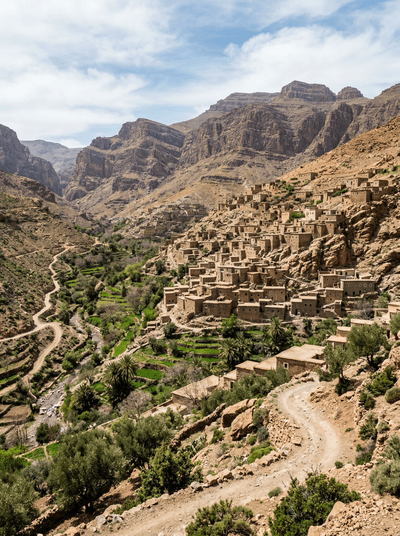
Winter rain wakes a cliff cascade above white villages, honey stalls and terraced argan.
Aït Bouguemez Valley
Morocco
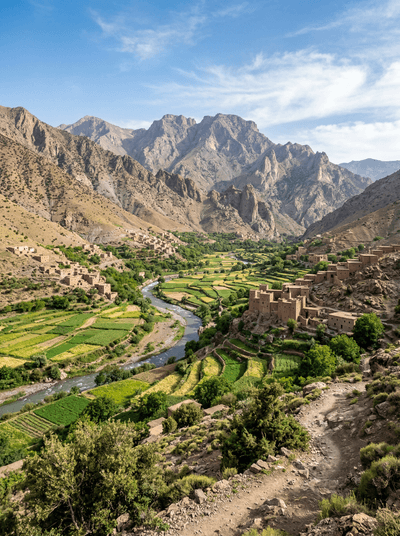
Dinosaur tracks survive on the valley floor among irrigated fields and earthen villages.
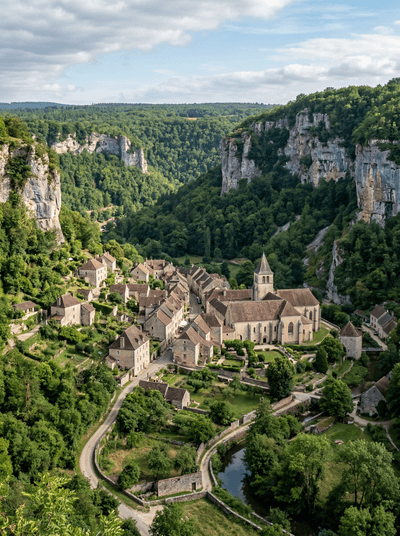
Baume-les-Messieurs
France
An ancient abbey below three converging cliffs where waterfalls run over moss into caves.
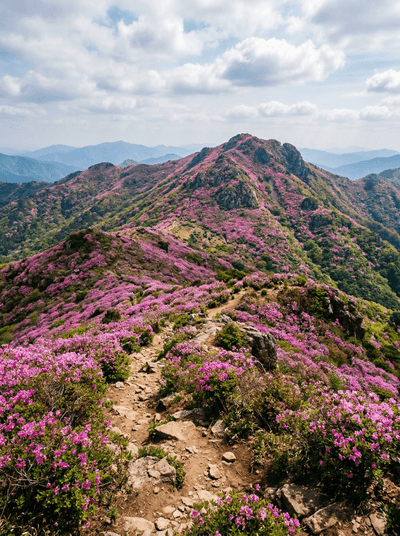
Hwangmaesan
South Korea
Royal azaleas turn a high plateau pink each May; silver grass takes autumn.
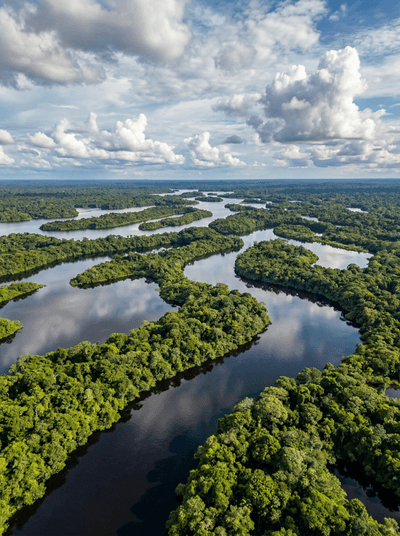
Anavilhanas
Brazil
Four hundred forested islands on rust-dark water that rises ten metres and floods the forest.
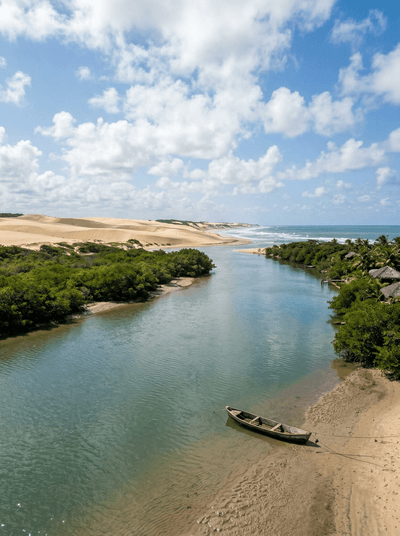
Mangue Seco
Brazil
Dunes advancing over the coconut groves, eight-metre palms buried to the tips of their fronds.
Cristalino Private Reserve
Brazil
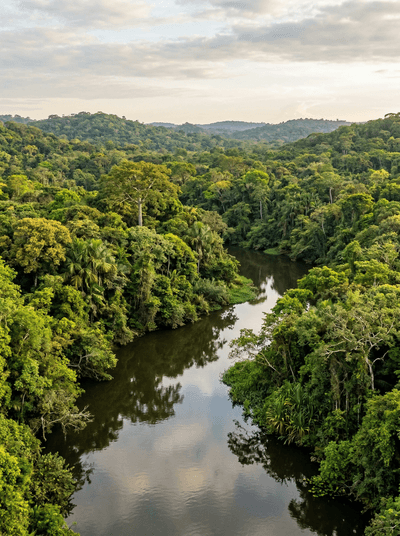
Climb 250 steps before five and watch the flying rivers lift off the canopy below you.