Greece
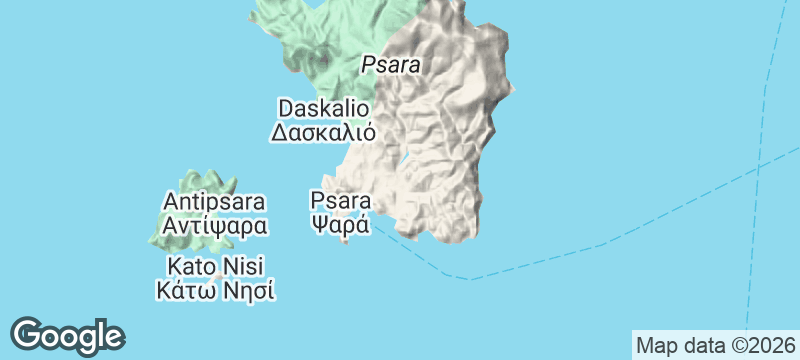
Psara
In 1824 this island of 30,000 was destroyed rather than surrendered — a few hundred remain.
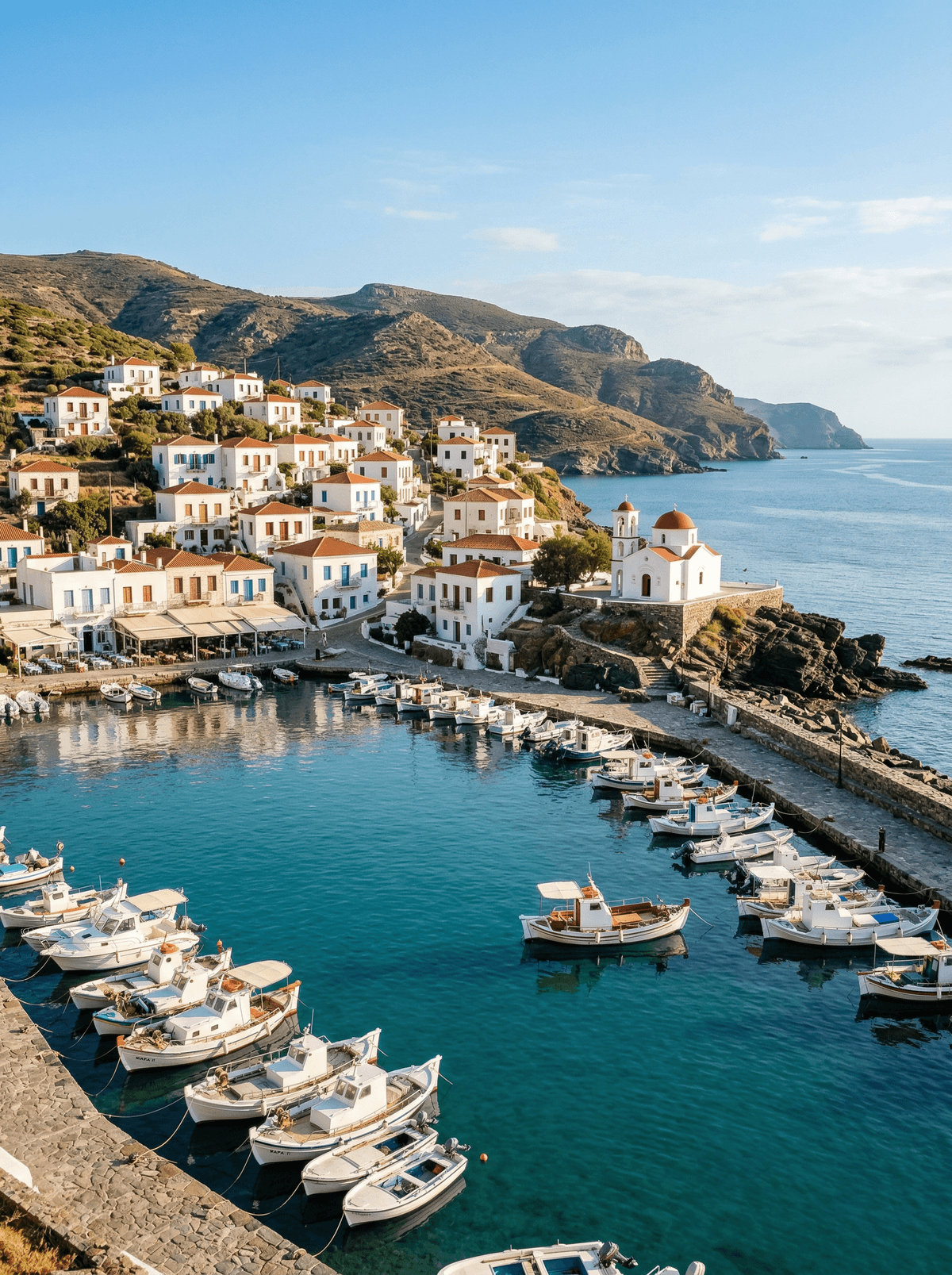
A quiet harbour faces the ridge memorials of an island devastated in June 1824. Ruins and monuments carry the loss, while ferries, beaches and a working fishing community keep Psara in the present tense.
Psara was one of the wealthiest maritime islands in the Aegean until June 1824, when Ottoman forces overwhelmed it during the War of Independence; in the final hours defenders and civilians gathered at the Palaiokastro powder magazine, and it was blown — an act remembered as defiance. Of thirty thousand Psariots, only a few hundred survived, and Solomos's epigram marks the summit memorial. Today the harbour holds three tavernas, the house of the naval hero Konstantinos Kanaris, and a quiet that carries the history.
Solo
A reflective journey through difficult history, balanced by harbour life, coastal walks and time to understand the island beyond one event.
- The powder-magazine hill carries Solomos's epigram — Greece's national poet answering the island's end.
- Kanaris, the fireship commander who terrified an empire, was a Psariot; his house still stands.
- Three tavernas, one harbour, a few hundred people — the scale makes the history physical.
- Ferries come over from Chios; few make the crossing, which is the point.
Three small tavernas work the harbour, cooking whatever the boats bring in.
Palamida pasti — autumn bonito, salt-cured and sun-dried — is the island's own preserve.
Kapingamarangi Atoll
Micronesia
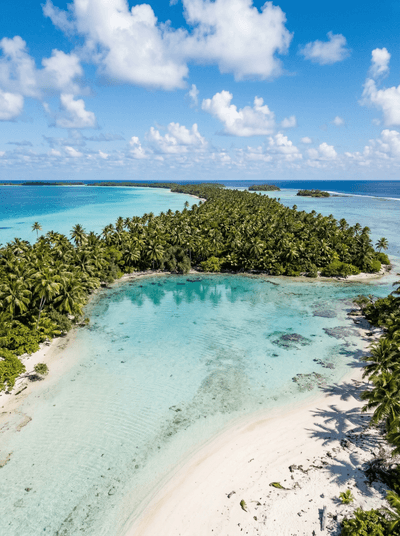
A Polynesian island lost inside Micronesia, its language closer to Samoan than to its neighbours'.
Ontong Java Atoll
Solomon Islands
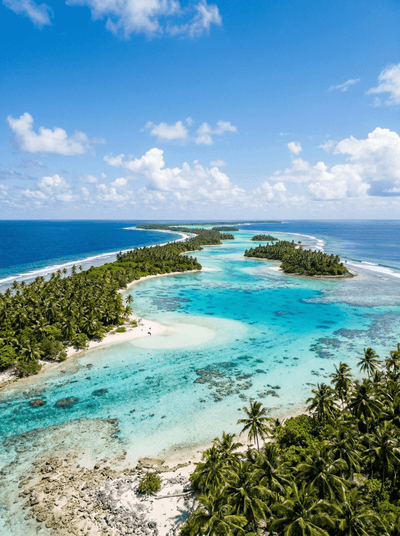
One of the largest atolls on Earth, with people living on its scattered islets.
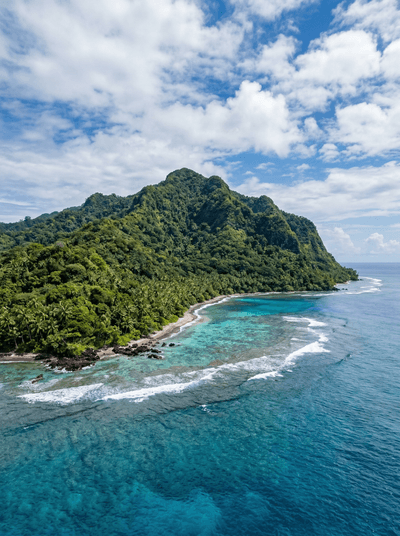
Anuta
Solomon Islands
Three hundred people, one mile of island, and a supply ship once or twice a year.
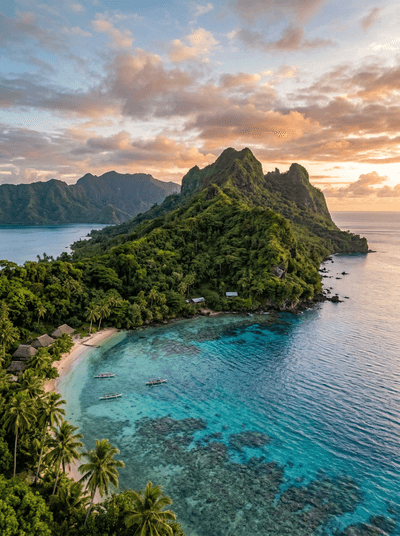
Duff Islands
Solomon Islands
Volcanic specks where elders still build ocean canoes and teach navigation without instruments.
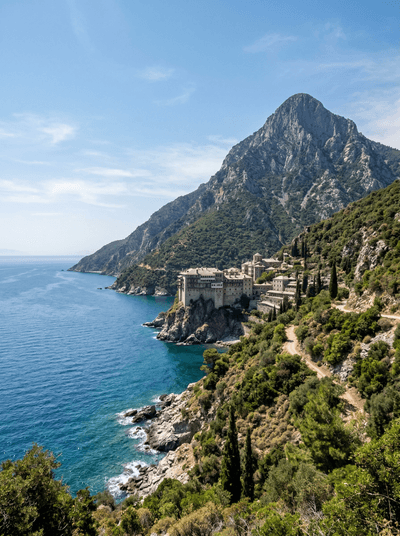
Mount Athos
Greece
Twenty monasteries line a forested peninsula governed by a thousand-year monastic tradition.
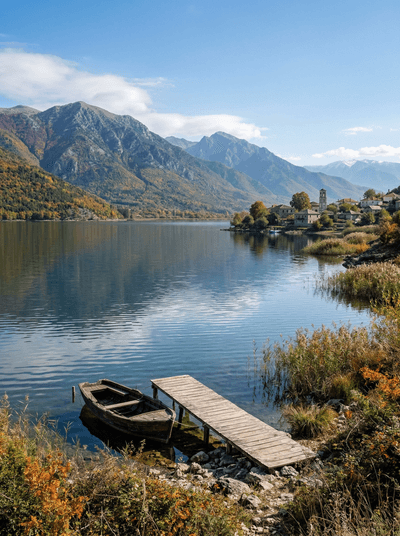
Prespa Lakes
Greece
Byzantine hermitages painted on cave walls above a lake shared by three countries.
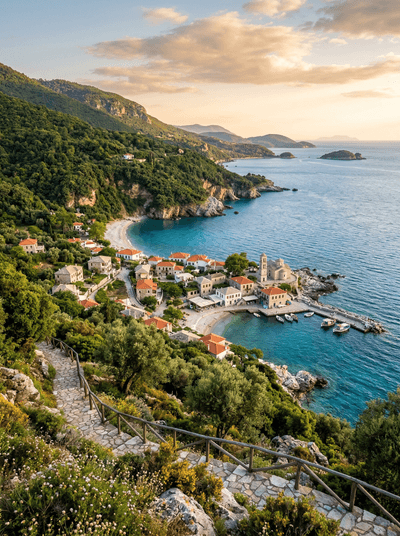
Pelion
Greece
The centaurs' mythic homeland — chestnut forests and stone villages sliding from peak to shore.
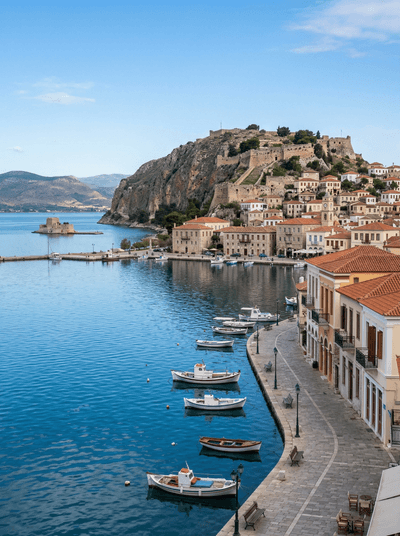
Nafplio
Greece
Stone steps climb to a Venetian sea fortress above a harbour of bobbing fishing caïques.