Micronesia
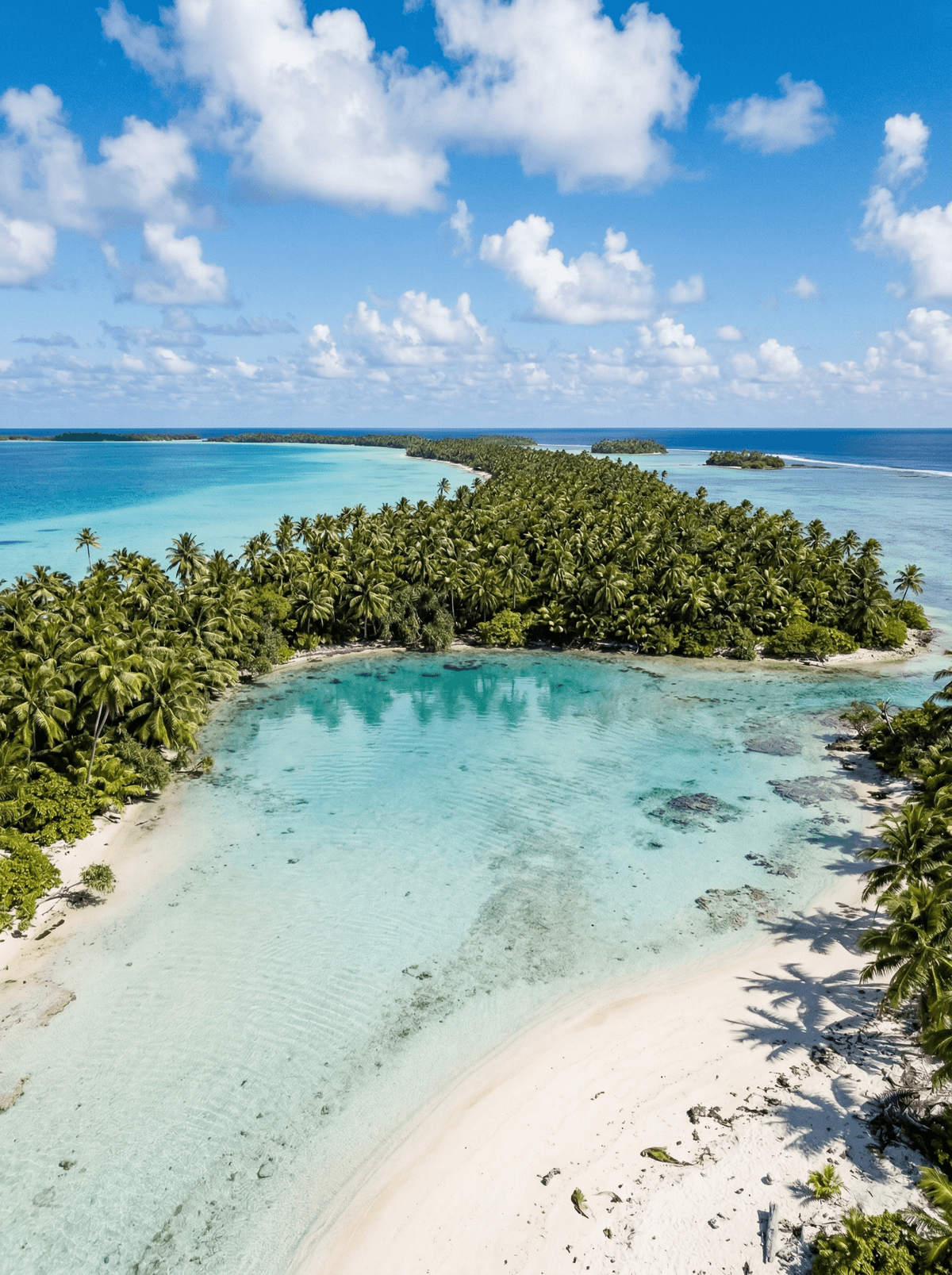
Kapingamarangi Atoll
A Polynesian island lost inside Micronesia, its language closer to Samoan than to its neighbours'.
The lagoon runs so shallow and clear near shore that a canoe seems to hover over the sand ripples. The voices on the beach are not speaking Pohnpeian: this is Kapingamarangi, the southernmost point of the Federated States of Micronesia, 740 kilometres from the state capital, and its people are Polynesian.
Kapingamarangi is a Polynesian Outlier, a community whose language belongs with Samoan and Tongan rather than with anything spoken between here and Pohnpei. The language is alive enough to teach from: a lexicon of 6,000 root words was compiled as a classroom resource for the Kapinga themselves and a reference for comparative linguists. The atoll sits at the far southern edge of the country with no airstrip, so the government passenger ship makes the long southern circuit just a handful of times each year, calling by way of Sapwuahfik and Nukuoro, with berths limited and the sea setting the timetable. The day ashore is a guest's day, spent at the community's pace among taro gardens, canoes and a reef that sees almost no outside boats.
Friends
A crew of friends who love the sea road as much as the landfall can share ship rails and deck sunrises for days, then one long shore day at Polynesia's quietest northern outpost.
- The Kapingamarangi language is a Polynesian Outlier, kin to Samoan and Tongan rather than to its Micronesian neighbours.
- A lexicon of 6,000 root words serves the Kapinga's own classrooms and comparative linguists alike.
- This is the southernmost point of the Federated States, 740 kilometres from Pohnpei, with no airstrip.
- The government ship's southern circuit calls only a handful of times each year, and the day ashore runs at the community's pace.
There is no restaurant between the dock in Kolonia and the atoll; provision well and eat with the ship's rhythm.
Ashore, meals follow what the boats land and the coconut groves and gardens, offered at the household's table.
Psara
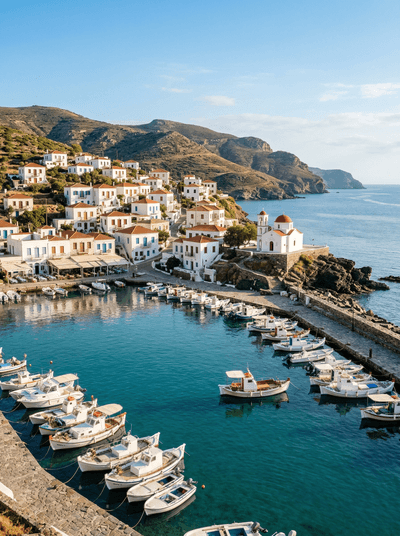
Greece
In 1824 this island of 30,000 was destroyed rather than surrendered — a few hundred remain.
Anuta
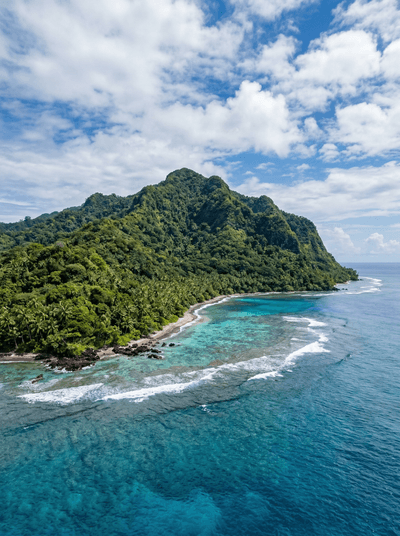
Solomon Islands
Three hundred people, one mile of island, and a supply ship once or twice a year.
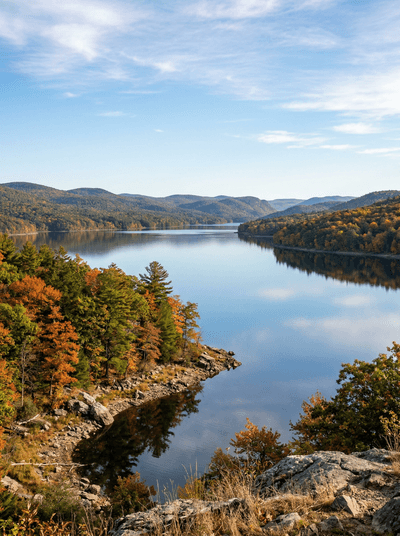
Quabbin Reservoir
United States
Four drowned towns sleep beneath the reservoir; their dead left one hearse at a time.
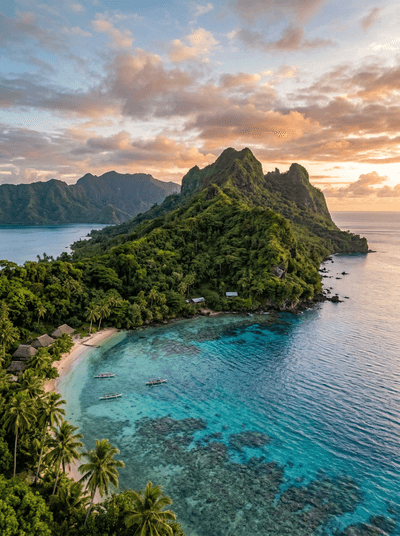
Duff Islands
Solomon Islands
Volcanic specks where elders still build ocean canoes and teach navigation without instruments.
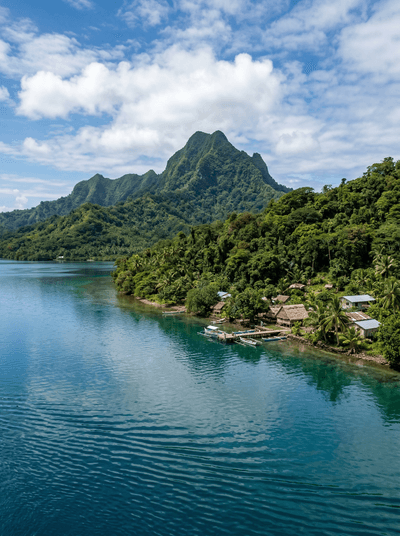
Tonowas
Micronesia
Jungle swallows the headquarters of Japan's Fourth Fleet: tunnels, guns and a bomb-proof command bunker.
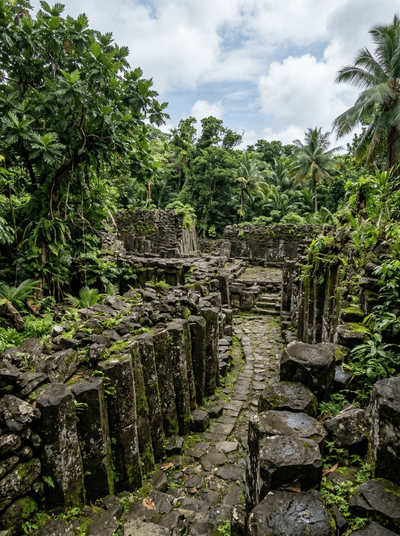
Lelu Ruins
Micronesia
Basalt walls of an ancient island kingdom rise from the jungle, royal tombs still inside.
Eten Island
Micronesia
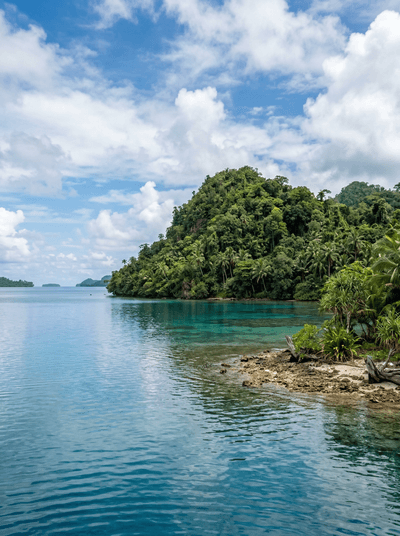
An entire island turned into a Japanese airfield, its runway now a straight line of jungle.
Yap
Micronesia
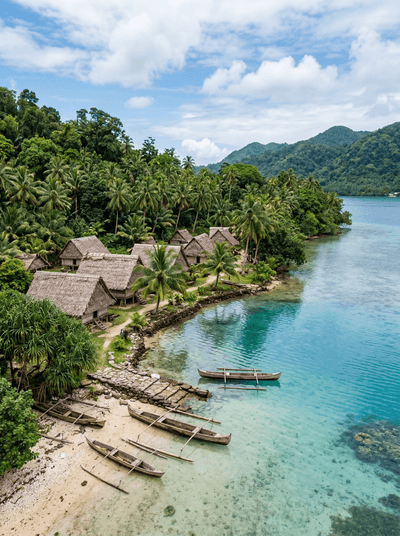
Stone money too heavy to move, so ownership transfers by word alone on this jungle island.