Solomon Islands
Ontong Java Atoll
One of the largest atolls on Earth, with people living on its scattered islets.
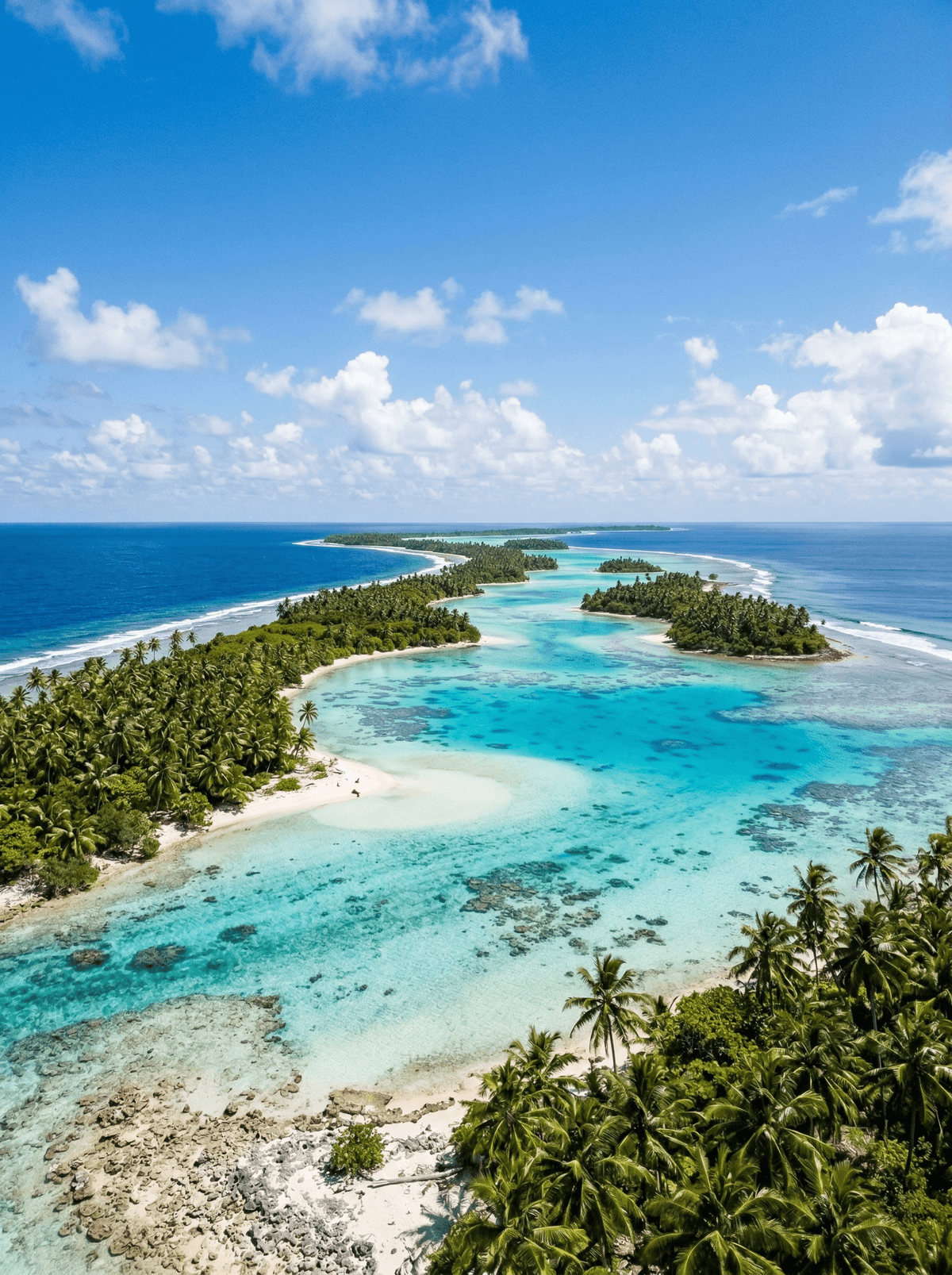
Ontong Java spreads a vast lagoon across Solomon Islands’ far north, its inhabited ground concentrated on low islets around Luaniua and Pelau. From the ship, the scale is all water, reef passages and an almost impossibly thin horizon.
Charted by Europeans as Lord Howe Atoll, Ontong Java is among the largest atolls anywhere, its lagoon running some seventy kilometres with the population gathered on the islets of Luaniua and Pelau. The language of the atoll is its own. Saltwater is pushing into the taro pits of these low islands, and the strain on food and water is real and recorded. A scheduled expedition departure in March 2027 includes a full atoll day, with landings resting on permissions and sea state.

Solo
Realistically this is an expedition-ship day, and those are sold by the berth, which is exactly how one traveller reaches an atoll like this.
- One of the largest atolls on Earth, where the Luangiua language is spoken and heard nowhere else.
- Saltwater intrusion is documented here, putting pressure on low-lying livelihoods.
- Heritage Expeditions sells a 27 March 2027 departure with Ontong Java as a full expedition day.
- Landings depend on expedition permissions and conditions, so the day is never guaranteed.
Ship-galley meals between landings, with drinking coconuts ashore when the islets offer them.
If community hospitality is arranged, the distinctive local combination is swamp taro with fish, coconut and breadfruit.
Psara
Greece
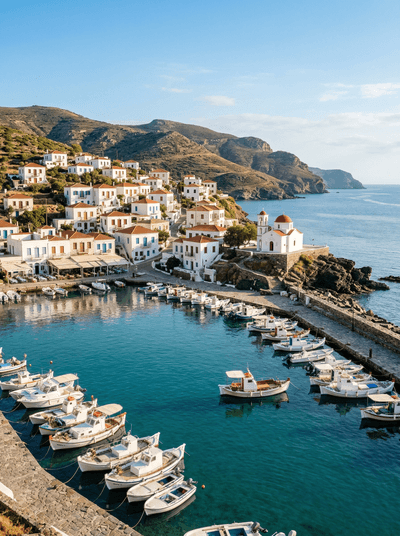
In 1824 this island of 30,000 was destroyed rather than surrendered — a few hundred remain.
Quabbin Reservoir
United States
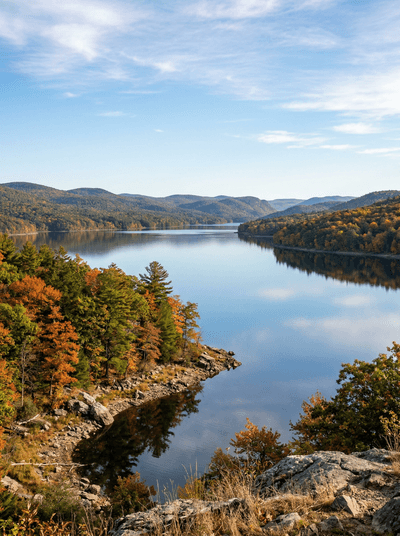
Four drowned towns sleep beneath the reservoir; their dead left one hearse at a time.
Kapingamarangi Atoll
Micronesia
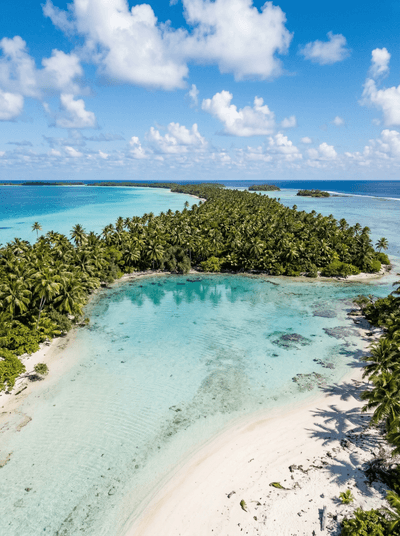
A Polynesian island lost inside Micronesia, its language closer to Samoan than to its neighbours'.
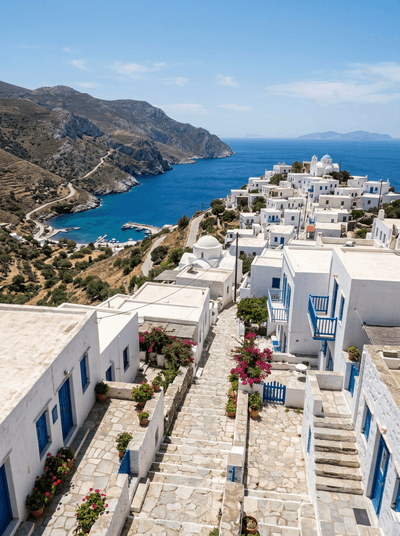
Amorgos
Greece
A whitewashed monastery clings to a 300-metre cliff face above crashing Aegean surf.
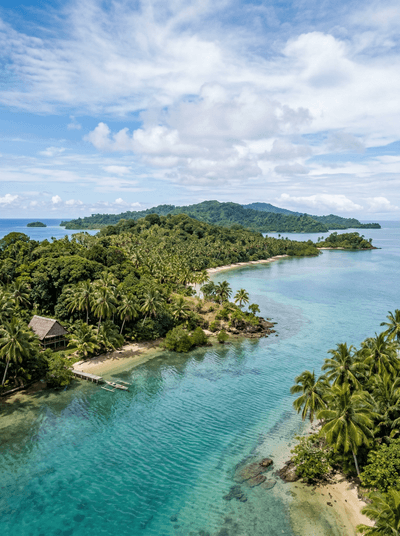
Taro Island
Solomon Islands
A provincial capital on an island low enough that the plan is to move it.
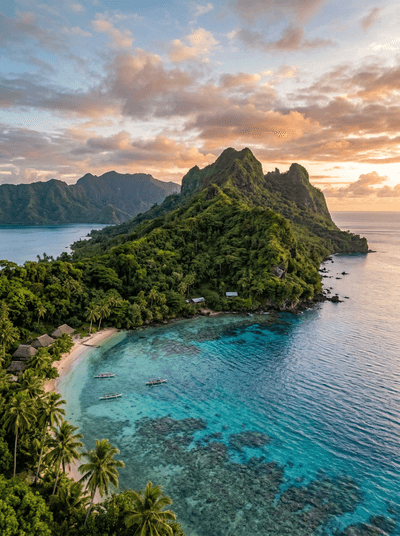
Duff Islands
Solomon Islands
Volcanic specks where elders still build ocean canoes and teach navigation without instruments.
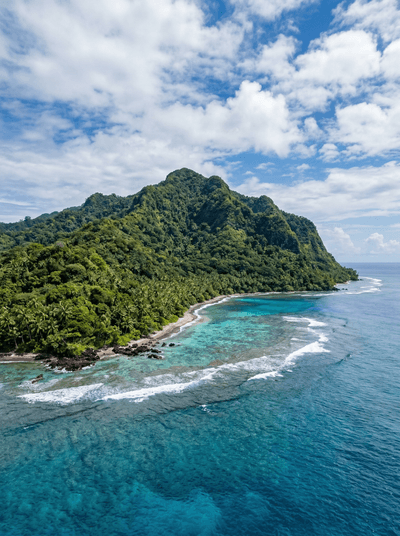
Anuta
Solomon Islands
Three hundred people, one mile of island, and a supply ship once or twice a year.
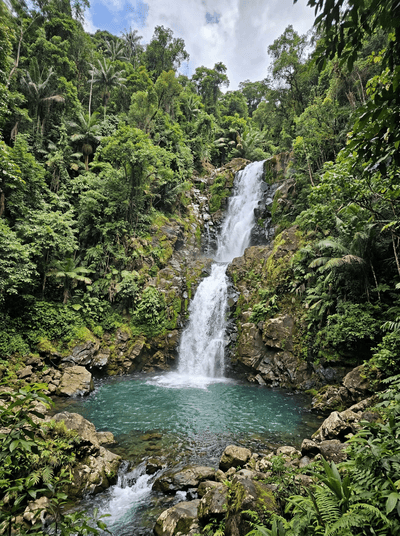
Mataniko Falls
Solomon Islands
A waterfall drops through pools into a cave, a day's walk out of the capital.