Solomon Islands
Reef Islands
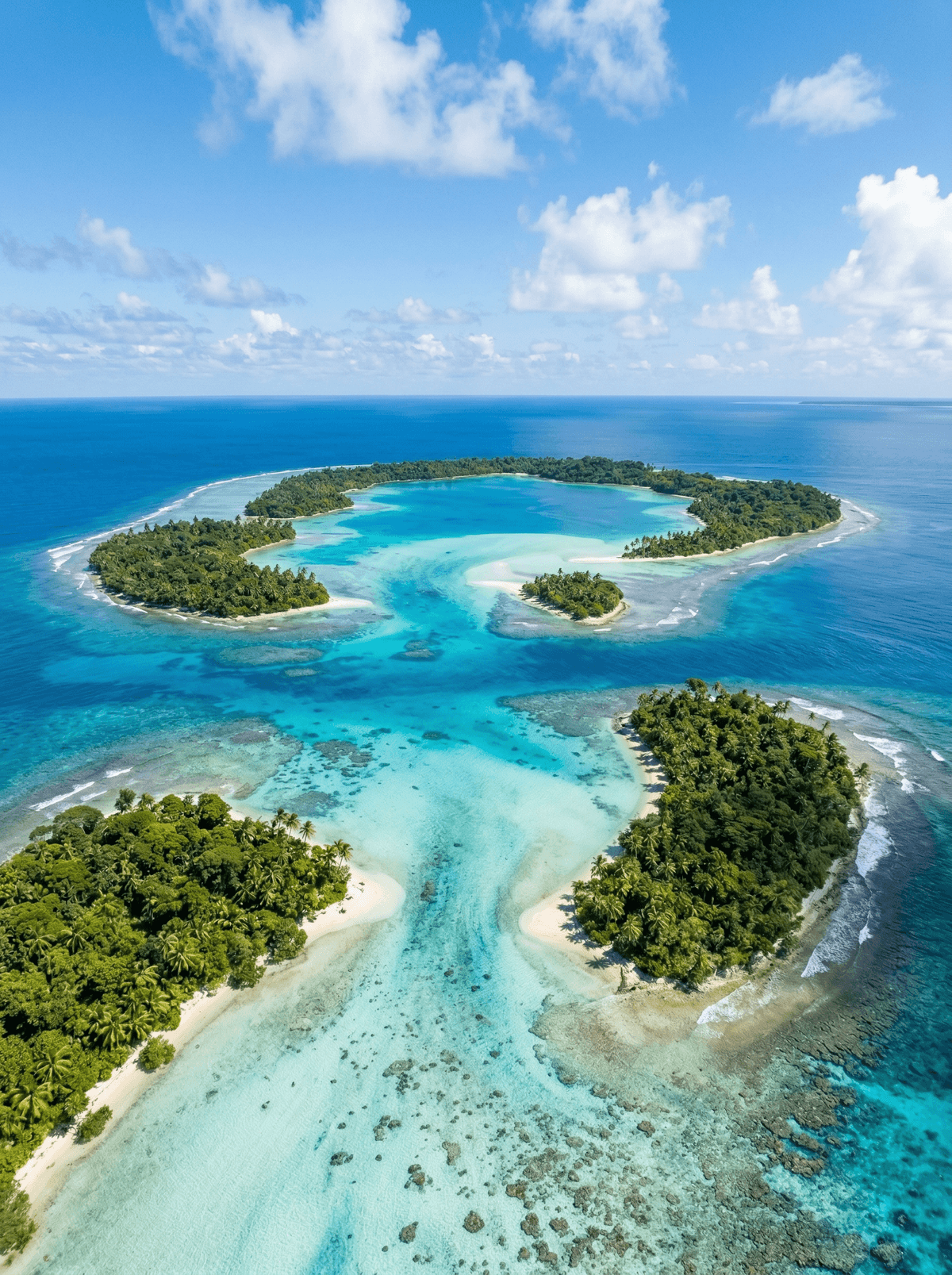
A six-guest lodge on one island, and reef in every direction from it.
The islets show as smudges on turquoise and vanish behind each swell, so low they barely count as land. Between gusts of trade wind, the only sound is water slapping a canoe hull.
Ngarando Island Resort on Pidgeon Island takes six guests, and there is no alternative to switch to. Fishing, diving, birdwatching, canoeing, village visits and motor-canoe runs out to the outer reefs all leave from it. The Reef Islands sit inside a long network of interaction across Temotu, and Aiwoo is one of the languages that network carries. A stay holds several days without anyone pretending a ceremony will be laid on.
Solo
Six guests means eating with the family who run it, and one person is easy to fit onto whichever boat is going out that day.
Couple
One small lodge on one small island with nothing else to switch to, which is either the holiday or the mistake depending on how you feel about that.
- Ngarando Island Resort on Pidgeon Island takes six guests, and there is no alternative on the island.
- Fishing, diving, birdwatching, canoeing, village visits and outer-reef trips all run by motor canoe from the lodge.
- Polynesian-outlier communities on islets like Pileni live beside Aiwoo-speaking neighbours, two Pacific worlds sharing one small chain.
- A stay holds several days without anyone pretending a ceremony will happen while you are there.
Reef fish and garden crops at the lodge's family table, cooked to the day's catch.
Ask for the day’s reef fish with garden taro or breadfruit, and carry supplementary snacks for outer-island boat trips.
Teshima
Japan
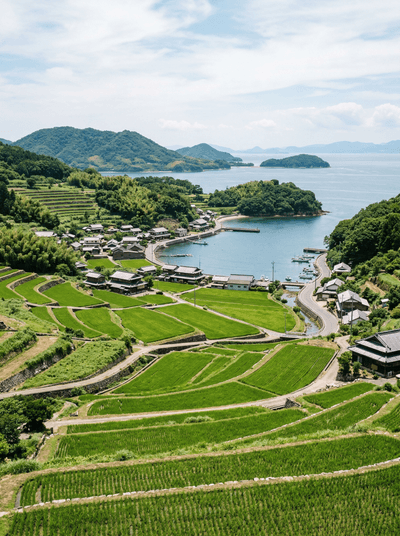
A single raindrop museum on a terraced island where art and rice paddies merge.
Taquile Island
Peru
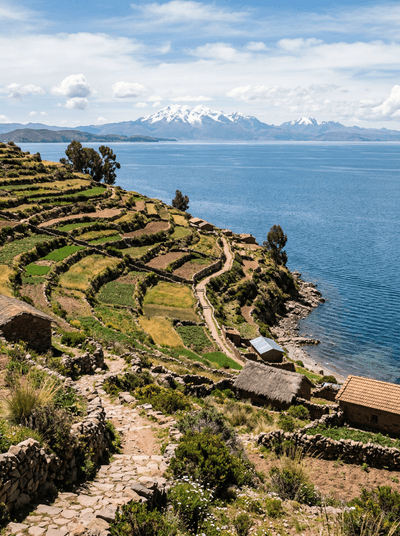
An island where the men knit, and the knitting is UNESCO-listed art.
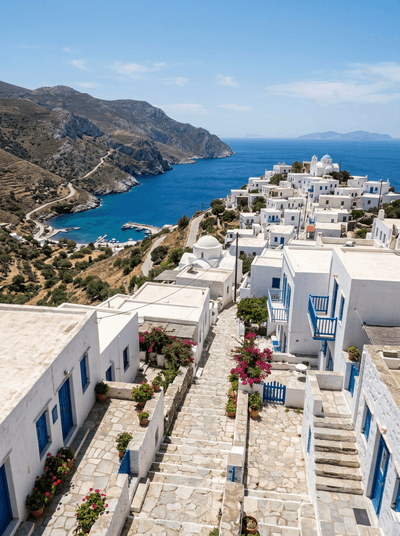
Amorgos
Greece
A whitewashed monastery clings to a 300-metre cliff face above crashing Aegean surf.
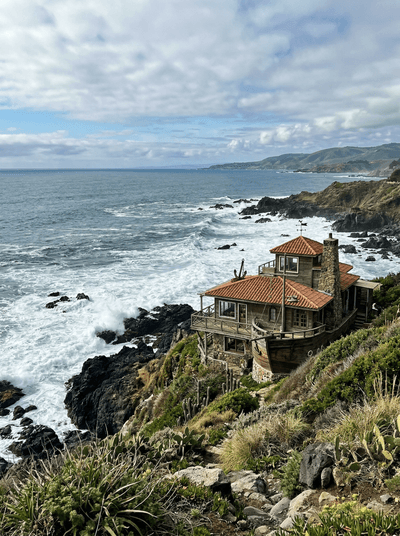
Isla Negra
Chile
Neruda's house of collections faces a Pacific coast of black rock and white water.
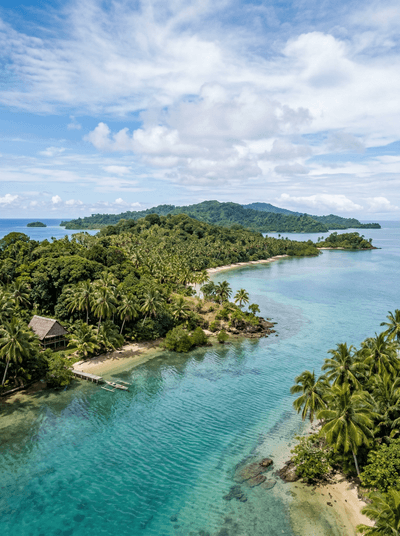
Taro Island
Solomon Islands
A provincial capital on an island low enough that the plan is to move it.
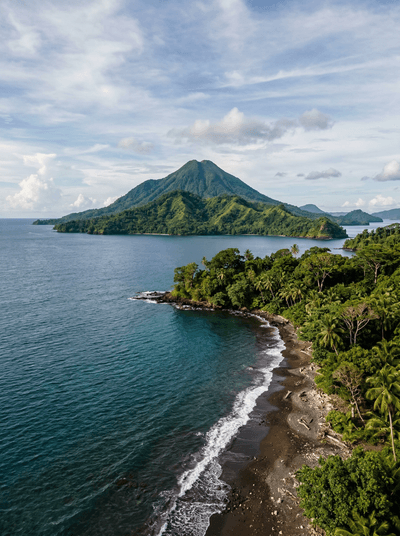
Savo Island
Solomon Islands
Megapodes bury their eggs in black sand that an active volcano keeps warm from below.
Are'are Coast
Solomon Islands
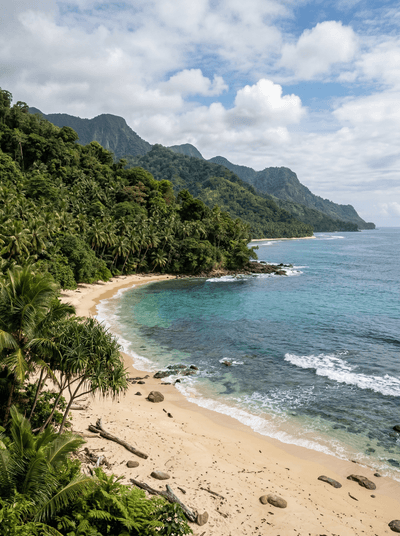
Bamboo pipes in their dozens weave a melody that no single player is carrying.
Munda
Solomon Islands
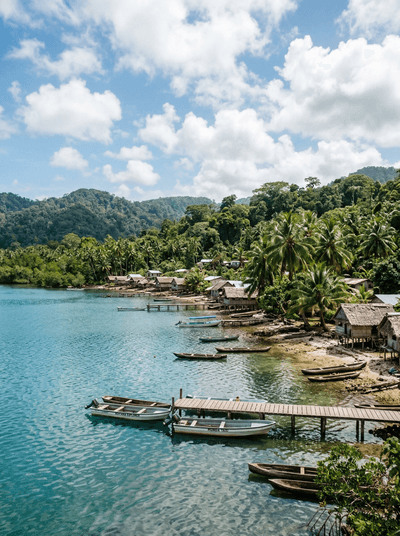
A working lagoon town with wartime wrecks and living reef in the same water.