Peru
Taquile Island
An island where the men knit, and the knitting is UNESCO-listed art.
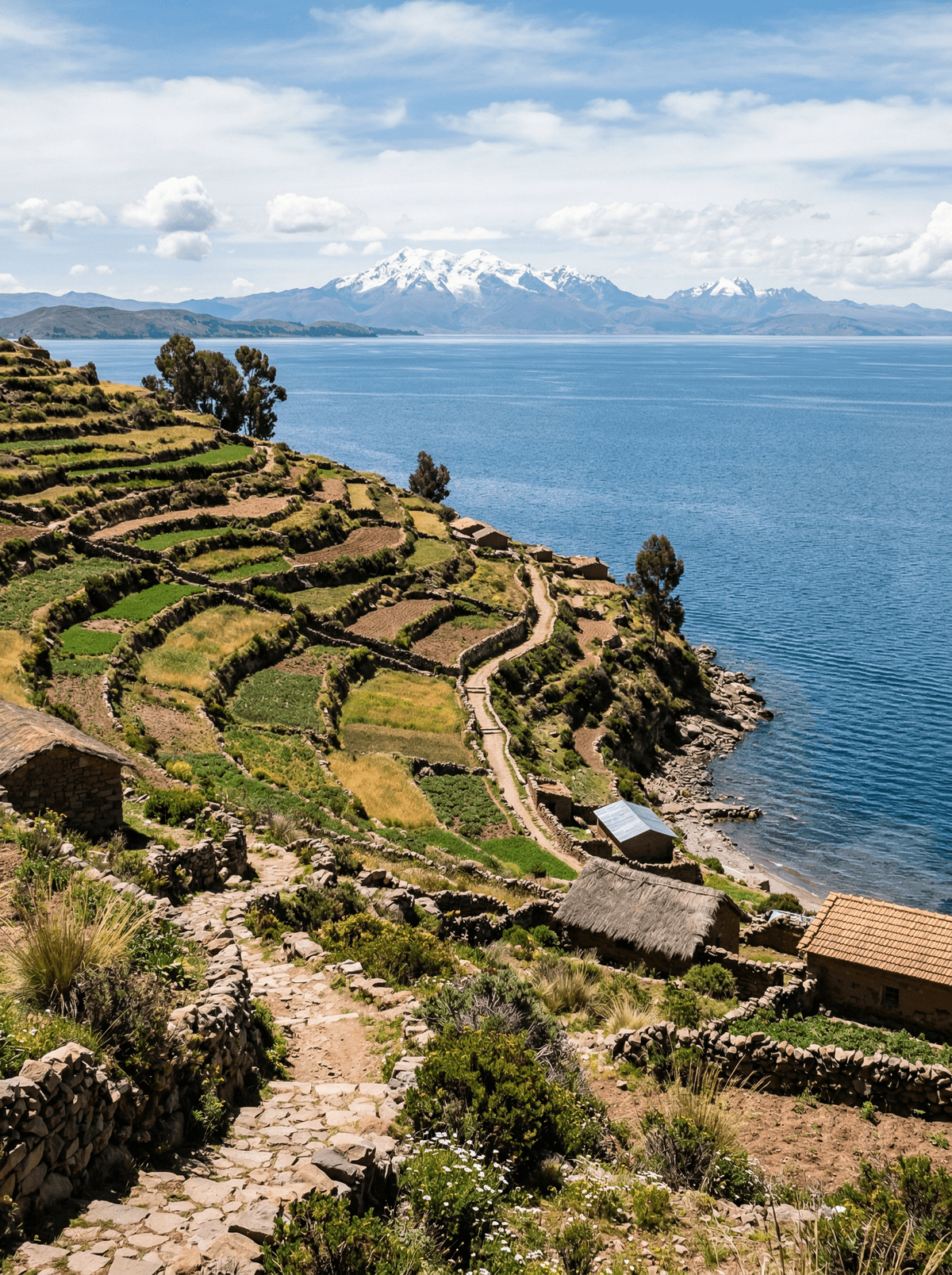
The engine cuts and Titicaca's silence settles — wind, water on the hull, nothing else. Taquile rises in terraced hillsides of gold and green, stone paths worn smooth by centuries. At almost 4,000 metres the light bleaches the sky white and turns the lake cobalt, and everywhere on the island, hands are knitting.
Taquile is a small island a long boat ride from Puno, and its textile art is UNESCO-listed intangible heritage of the living kind: boys learn to knit young, men produce the finest work, women spin and weave, and garments carry social information — the famous hats speak of status, though the island's identity is richer than any single symbol. What makes the visit remarkable is the machinery of daily life around the craft: communal governance, locally managed meals and homestays, terraced farming on slopes stitched with pre-Hispanic paths. The steep stone climb from the dock at this altitude is real; an overnight trades the day-trip's glance for the island's own rhythm — the craft seen closely, terraced paths at dusk, and sunset from the high point in near-total quiet.
Solo
Staying over on the community's terms is among Peru's most immersive cultural experiences — the craft, the paths and the lake at their own pace.
Couple
Stone paths, terraced hillsides and sunset over the great lake reduce travel to the place and your companion.
- Taquile's textile art holds UNESCO recognition as living, transmitted heritage.
- The men knit — finely, seriously — and garments carry the island's social language.
- The island manages its own visiting arrangements — the value of the visit stays on Taquile.
- Terraced slopes and stone paths frame Titicaca from an inhabited height.
Titicaca trout at island-run tables with the lake filling the view.
Quinoa soup against the lake's altitude, simple and sustaining.
Amorgos
Greece
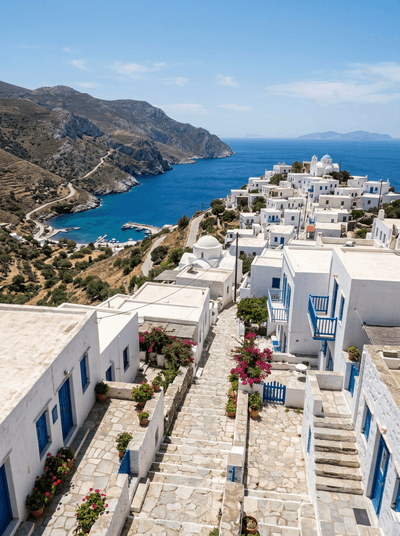
A whitewashed monastery clings to a 300-metre cliff face above crashing Aegean surf.
Teshima
Japan
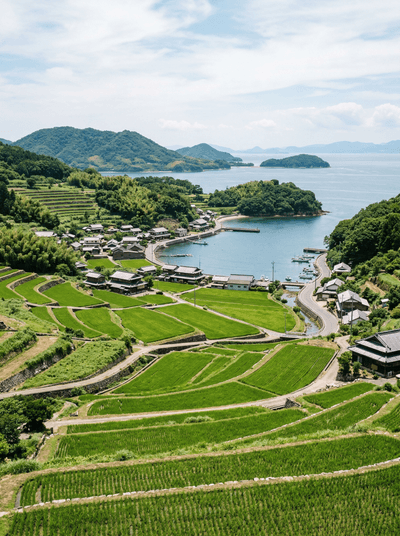
A single raindrop museum on a terraced island where art and rice paddies merge.
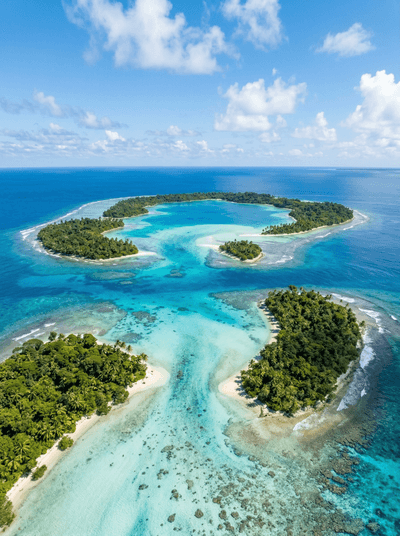
Reef Islands
Solomon Islands
A six-guest lodge on one island, and reef in every direction from it.
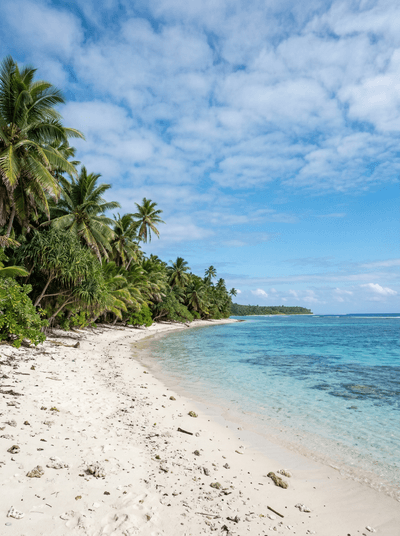
Niutao
Tuvalu
This island swallowed its lagoons: two lie landlocked inside Niutao, one joined underground to the sea.
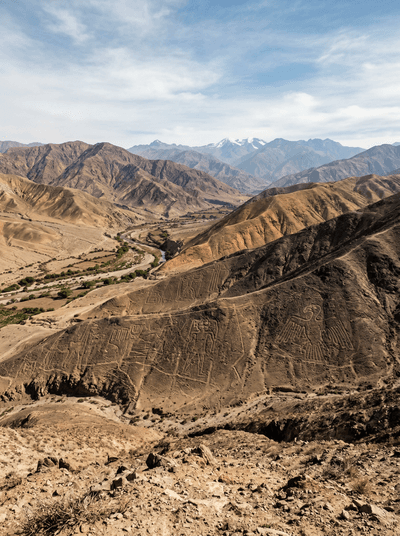
Palpa
Peru
Hillside geoglyphs with human faces, in a valley the tour planes ignore.
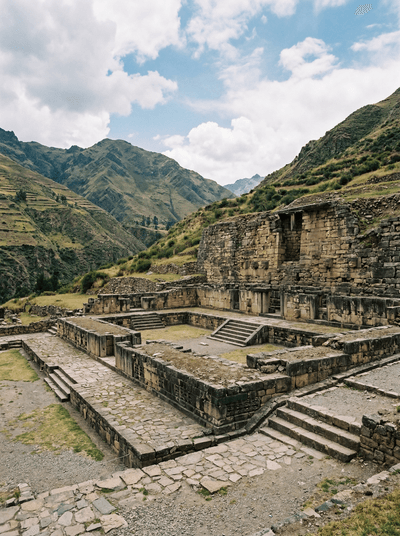
Chavín de Huántar
Peru
Underground galleries where a fanged god has waited in the dark for 3,000 years.
Yungay
Peru
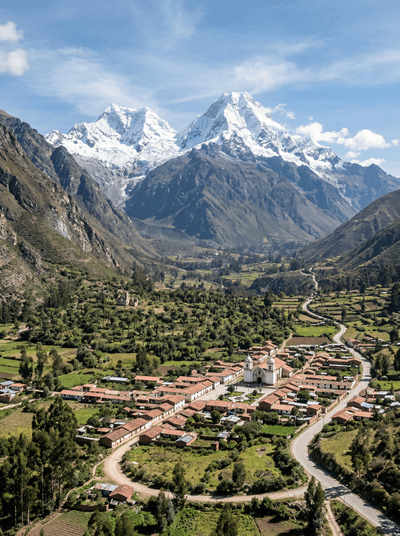
A buried city marked by four palm tips piercing the debris that entombed it.
Tarma
Peru
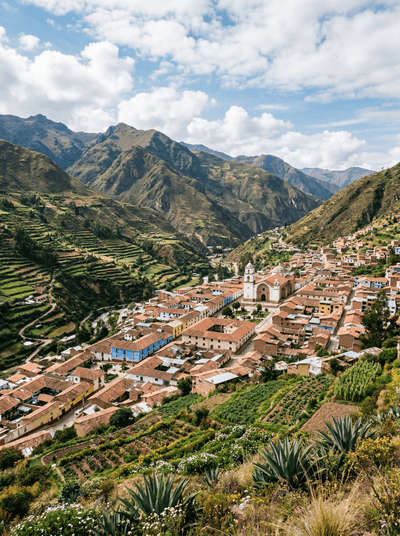
Streets carpeted in fresh flowers for Holy Week — a town redrawn in petals.