Argentina
Dunas de Tatón
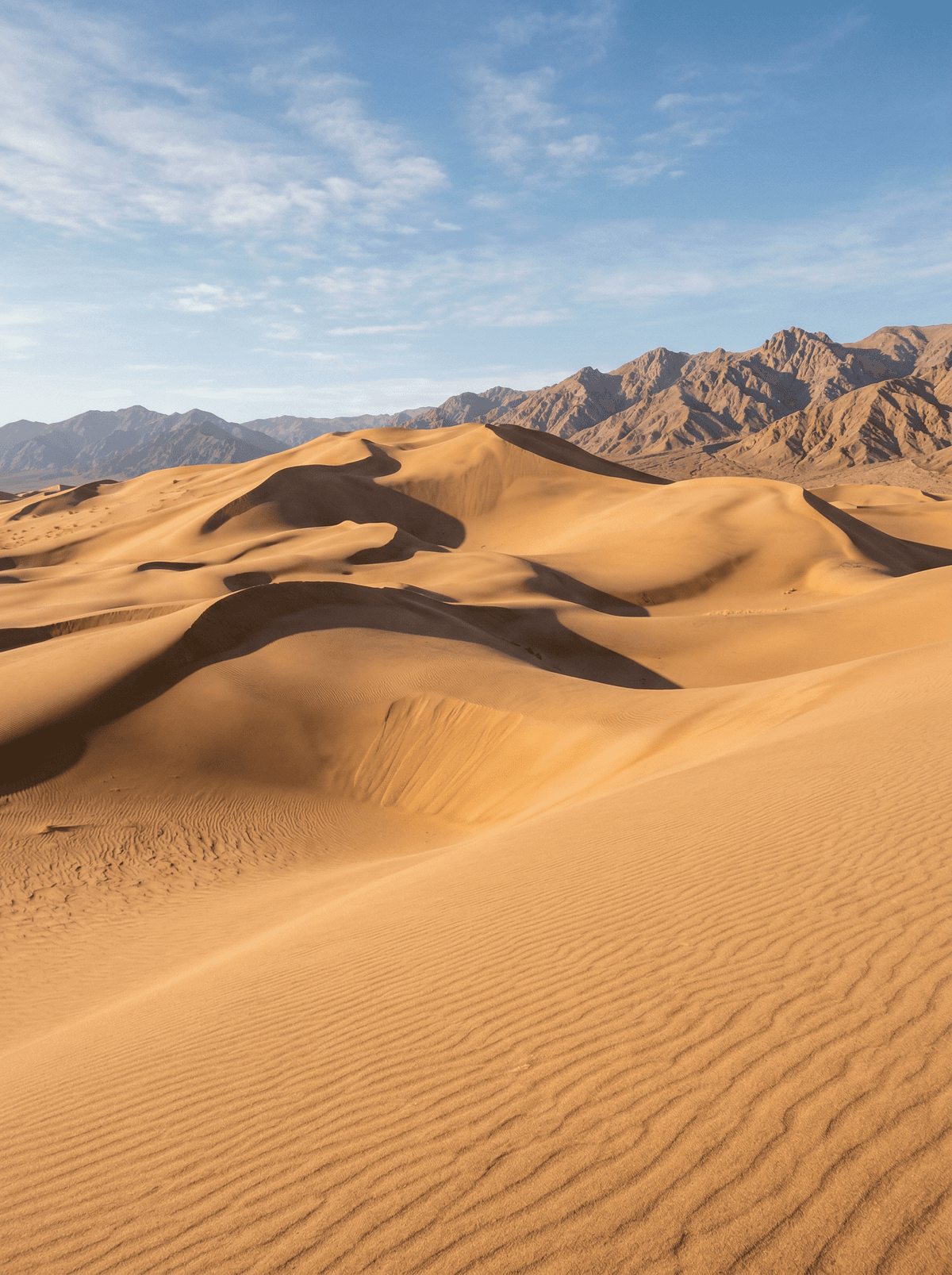
Pale dunes surge against dark Andean foothills where the sand seems to climb the mountains.
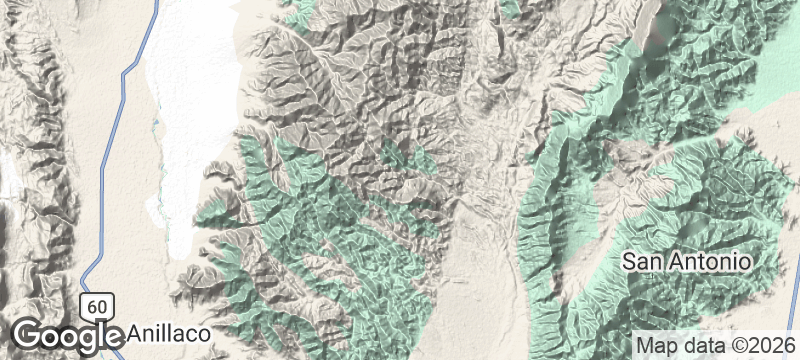
The Dunas de Tatón gather against the dark foothills beyond the Fiambalá oasis, pale sand running up the mountainsides in fields that seem to defy the geometry of deserts — individual faces reaching a hundred metres, and whole sand-draped slopes whose rise from valley floor to crest has been argued among the greatest of any dune landscape on Earth. Above them the Andes climb toward six-thousand-metre volcanoes; between them lies only sand and silence.
The dune fields formed from wind-carried volcanic and river sand pushed against the ranges north of Fiambalá, in country dry enough that nights freeze while middays burn. The visit is a managed desert outing: a recognised local operator booked from town, wind, access and equipment confirmed before leaving, water carried, and movement kept to the agreed route — dune terrain erases tracks in an hour, and the guide's judgement of slopes and vehicle lines is the safety system. Sandboarding runs on the steeper faces with proper equipment, 4WD and photographic excursions work the light, and the road toward the Paso San Francisco — one of the Andes' highest paved crossings — carries the ambitious onward toward Chile. The thermal terraces above Fiambalá wait below for the recovery soak.
Solo
The dunes, the altitude gradient and the volcanic skyline are not separately extreme — they are simultaneously extreme, and a guided vehicle removes the one problem worth removing: navigating shifting sand alone.
Couple
Sharing the changing light from safe stops while the operator judges the slopes is the couple's version of the day — the sand turns gold, rose and grey as the sun crosses.
Friends
A properly equipped sandboarding session under guide control, then the descent to Fiambalá's thermal pools, covers Catamarca's extremes in one day — the driest landscape in the morning, volcanic hot water in the afternoon.
- Sand runs up whole mountainsides in one of Earth's most argued-over dune rises.
- The pale sand is finer than coastal dunes, carried from ancient Andean rivers.
- Guided sandboarding and 4WD excursions run from Fiambalá with required local guides.
- The road onward climbs toward one of the Andes' highest paved border crossings.
Lunch and ample water collected in Fiambalá before entering the sand with the required guide.
The return meal from Fiambalá's own kitchens — nothing caters among the dunes.
Knoydart Peninsula
Scotland
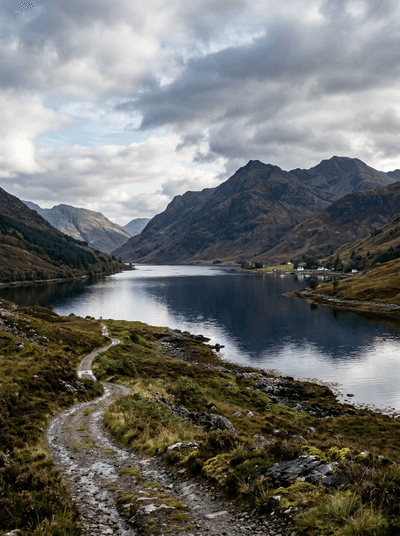
No road reaches this peninsula — you arrive by boat or not at all.
Hisma Desert
Saudi Arabia
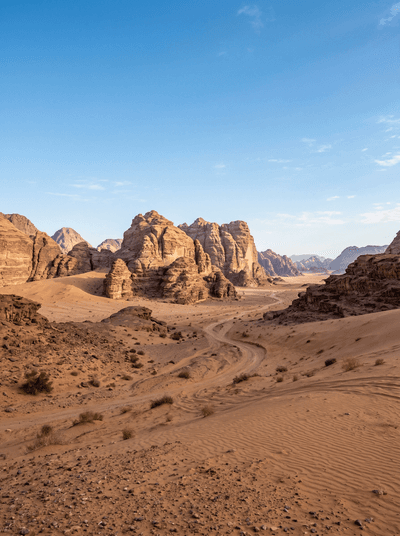
Red sandstone towers erupt from golden sand like a landscape sculpted on another planet.
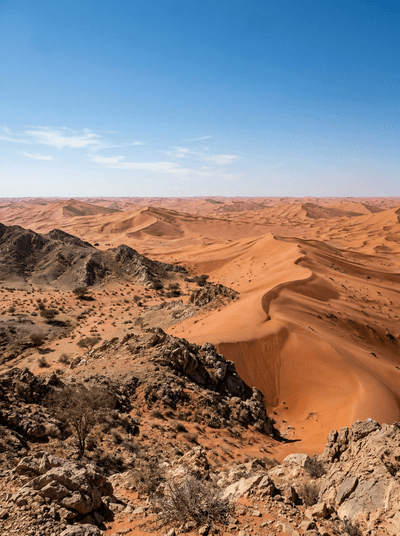
Empty Quarter Edge
Oman
The largest continuous sand desert on Earth begins where Dhofar's gravel plains give out.
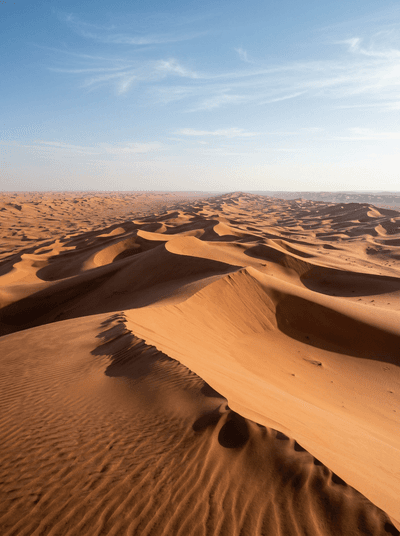
Rub' al Khali
Saudi Arabia
Dunes two hundred metres high stretching unbroken to every horizon, silence pressing like weight.
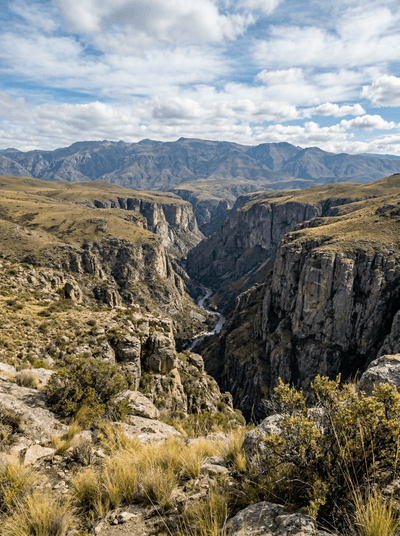
Parque Nacional Quebrada del Condorito
Argentina
Condors launch from cliff walls close enough to feel the downdraft of their wings.
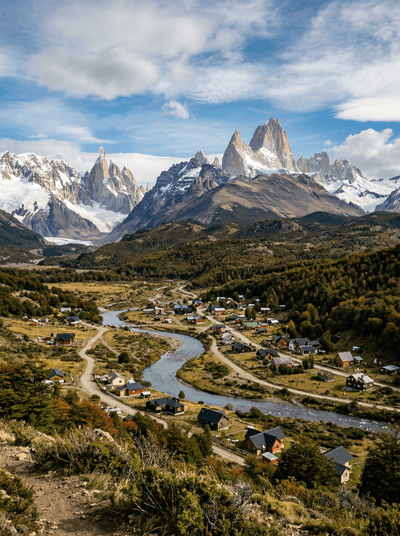
El Chaltén
Argentina
Granite spires pierce Patagonian cloud — condor country of vertical stone and wind.
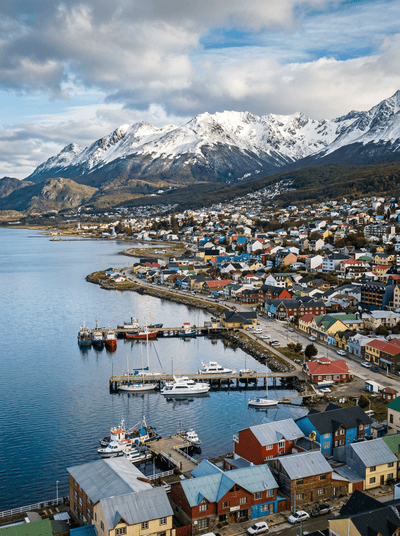
Ushuaia
Argentina
The port where Antarctica begins — beech forest climbing to glaciers at the planet's edge.