
Tanzania
Rubondo Island National Park
Chimpanzees from a 1960s experiment still hold a forested island in Lake Victoria.
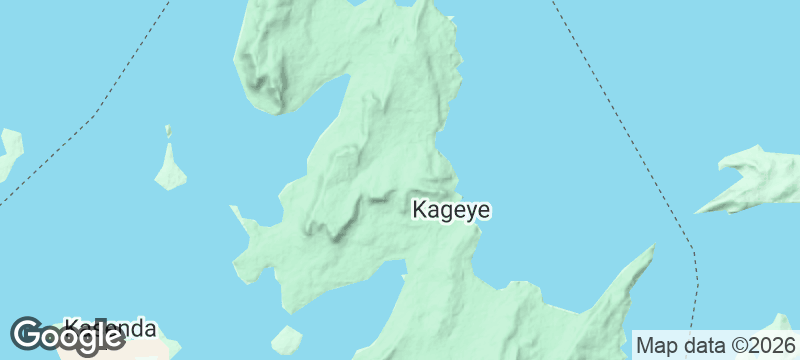
The island is all forest to the waterline, papyrus bays and sandy coves around the edge, and in the trees a chimpanzee population descended from a 1960s conservation experiment that nobody quite repeated.
Rubondo protects an entire Lake Victoria island, 457 square kilometres of equatorial forest, papyrus wetland and lakeshore, stocked in the 1960s by Bernhard Grzimek's conservation experiment with chimpanzees, elephants and giraffes whose descendants remain. Sitatunga wade the bays, fish eagles work the water, and the flagship camp bakes its own bread and closes for the April-May rains, the June-to-September dry season carrying the visits. Almost nobody comes, which the island wears well.
Solo
Self-reliant solo travellers can choose ranger walks or camp activities after securing difficult island transport and food arrangements.
Couple
Couples can alternate forest, beach and boat time without making introduced chimpanzees the measure of success.
- A 1960s conservation experiment stocked the island; the descendants remain.
- The park covers an entire forested Lake Victoria island.
- Sitatunga wade the papyrus bays at the forest's edge.
- June to September is the dry, open season.
Rubondo Island Camp bakes its own bread, cakes and sorbets, deck breakfasts over the water.
Breakfast is taken on the deck over the water, the camp's own baking on the table.
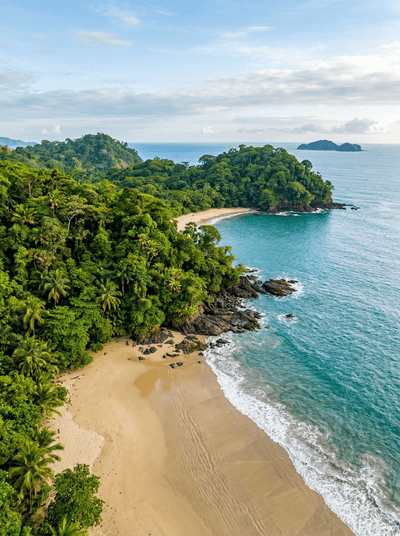
Manuel Antonio
Costa Rica
Capuchins patrol the sand beneath dozing sloths where rainforest walks into the ocean.
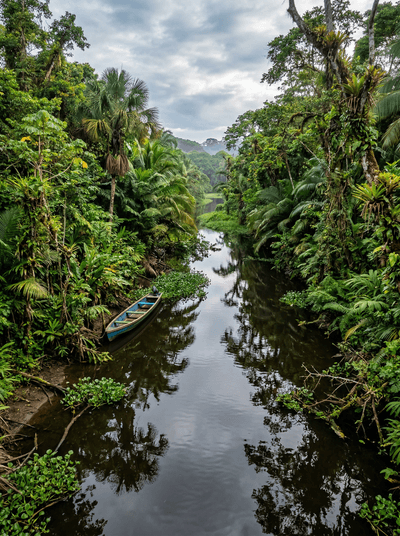
Tortuguero
Costa Rica
Jungle canals where green sea turtles haul onto black volcanic sand under a moonless sky.
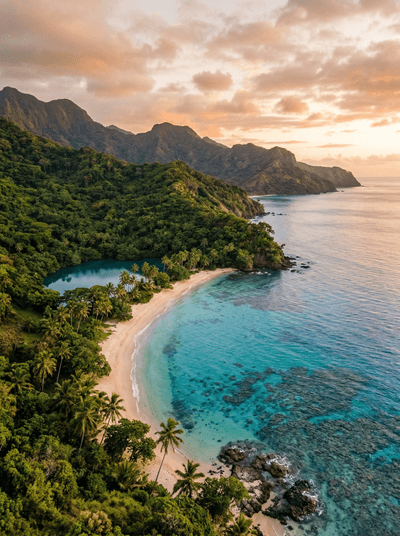
Kadavu
Fiji
Manta rays circle the world's fourth-largest barrier reef, off villages the road barely reaches.
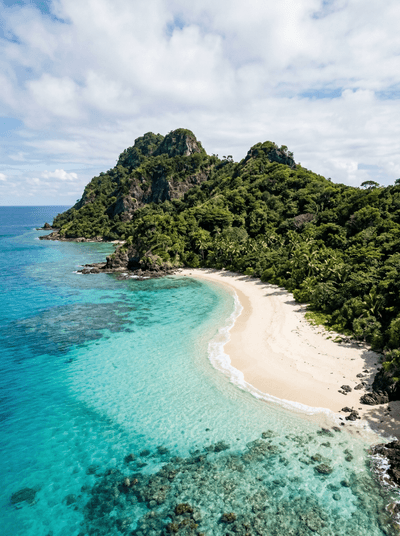
Monuriki
Fiji
The island from Cast Away truly belongs to crested iguanas brought back from the brink.
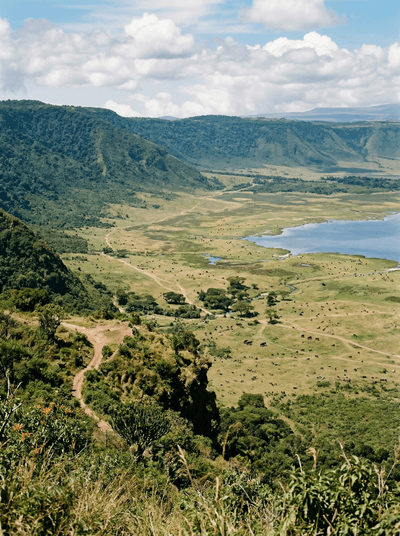
Ngorongoro Crater
Tanzania
A collapsed volcano holds its own weather, its own herds, and Maasai cattle besides.
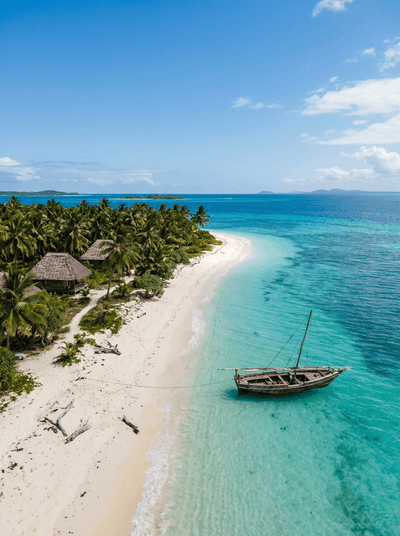
Fanjove Private Island
Tanzania
Green turtles nest beside a lighthouse whose ground floor serves dinner.
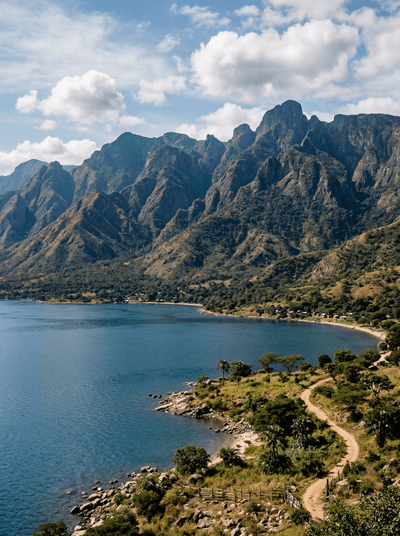
Livingstone Mountains
Tanzania
A green wall drops 1,500 metres from cold summits into a warm clear lake.
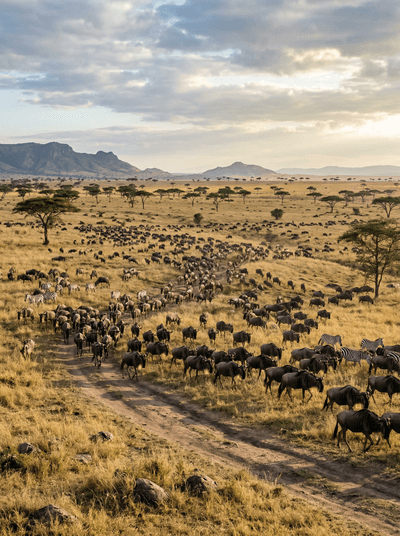
Serengeti National Park
Tanzania
Two million animals move with the rain across plains that have never known a fence.