Brazil
São João del-Rei
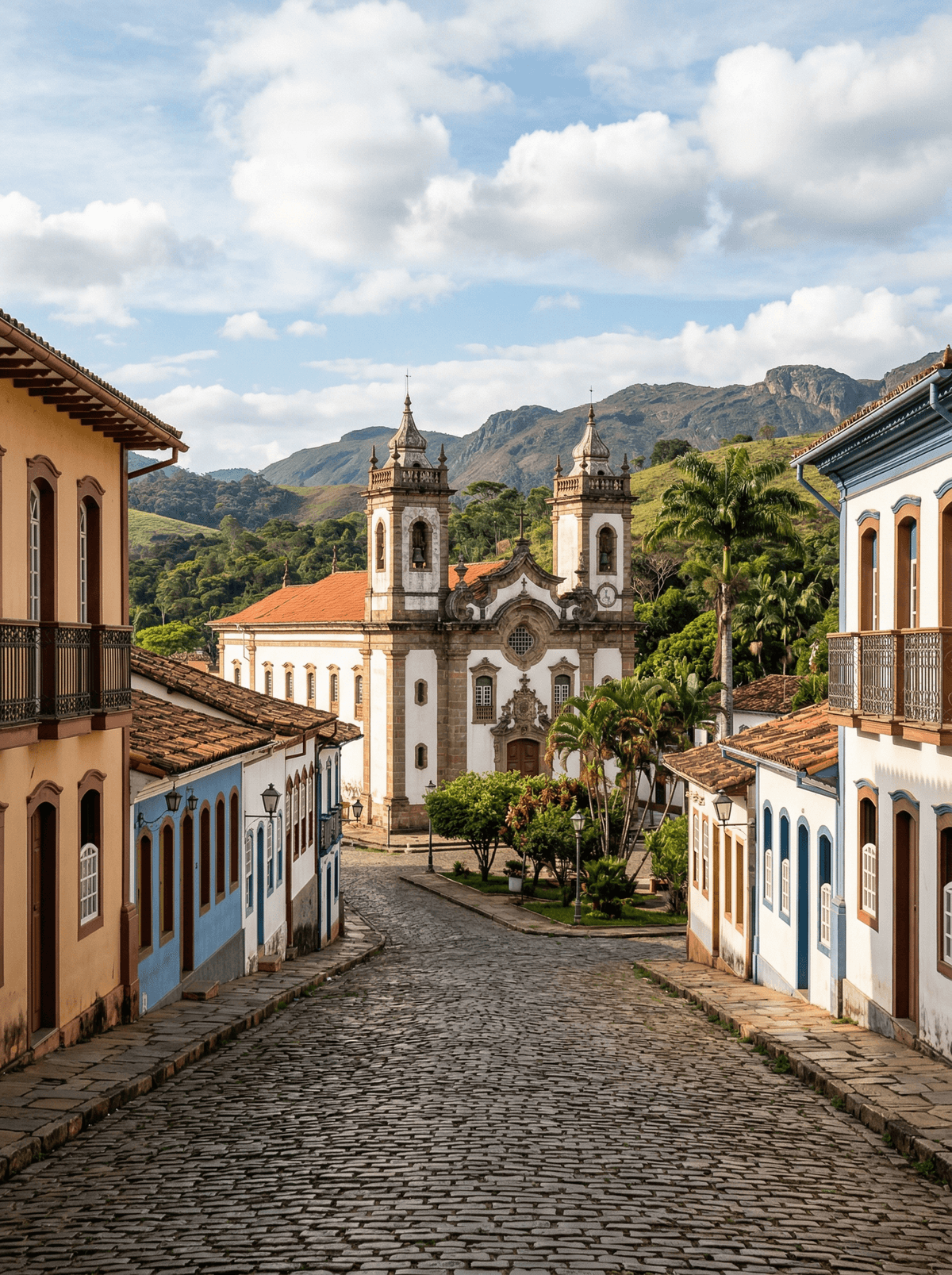
Baroque towers answering each other across a valley, ringing the sex of whoever has just died.
The bells start at different moments and cross each other over the valley, and none of that is decoration. The strokes are carrying information: a mass, a procession, a wedding, a baptism, and at a funeral, in the pattern itself, whether the person who has died was a man or a woman. Underneath, a working city of ninety thousand gets on with its morning.
São João del-Rei is the largest eighteenth-century city in Minas Gerais, sitting in the Campo das Vertentes where paulista bandeirantes found gold in the last years of the 1600s and stayed. The settlement became a vila in 1713 and took the name of King João V. Its first church went up on the Morro da Forca, the hill where the condemned were hanged, and it is now the Catedral Basílica Nossa Senhora do Pilar, finished in 1721 and carrying carved altars, jacaranda railings and silver. Rua Santo Antônio, narrow and bent enough that the town calls it the street of crooked houses, holds the headquarters of both orchestras, the Lira Sanjoanense from 1776 and the Ribeiro Bastos from 1790, and five stone and wood oratories stand around the centre for the Lent and Holy Week processions. IPHAN lists the whole architectural and landscape collection, which is why the churches, chapels, bridges, fountain and houses read as one thing rather than a set of monuments.

Couple
Give the weekend to the two towns. The steam train covers the 12 kilometres to Tiradentes at R$86 each way, leaving Wednesday at ten and two, Thursday to Saturday at half past eight and four, and Sunday at half past eight only. Look at the current timetable before building the days around it: the railway changes hands at the end of August 2026, when the two municipalities take over the line and a specialist operator takes the train.
Family
The train does the heavy lifting with children, twelve slow kilometres of smoke and whistle, half fare from six to twelve and free below that. Then the two museums: the Museu Ferroviário at the station, where the line's first locomotive from 1881 sits among the scales, clocks and telephones, and the Museu Regional, which keeps the gold-weighing scales, spinning wheels, looms and ploughs that people here actually used.
- IPHAN made the bell code national heritage in 2009, a language that calls people to mass, marks weddings and baptisms, and at a funeral says whether the dead was a man or a woman.
- Two orchestras keep their headquarters on one narrow bent street, the Lira Sanjoanense since 1776 and the Ribeiro Bastos since 1790, and the town calls it the street of crooked houses.
- Aleijadinho designed the church of São Francisco de Assis, which also holds the tomb of Tancredo Neves, born in this region.
- The steam train runs the 12 kilometres to Tiradentes from Wednesday to Sunday, and the line's first locomotive, dated 1881, stands in the railway museum by the station.
Feijão tropeiro and pork with jiló at the Mercado Municipal on Rua Frei Norberto, trading since 1924 and open from seven, well before the first train pulls out for Tiradentes.
The same aisles carry cured Minas cheese, artisan doce de leite and alambique cachaça, and on a Sunday the whole place shuts at eleven, so this is a breakfast errand.
Şirince
Turkey
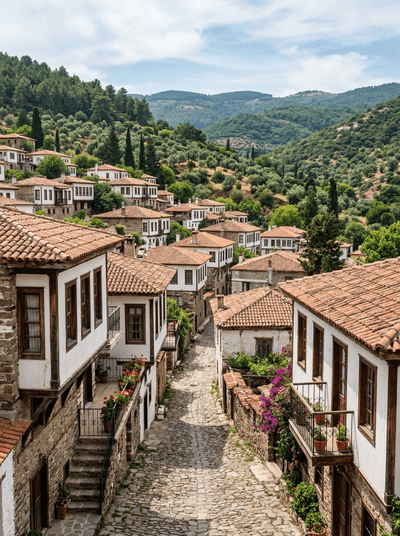
Grandmothers sell peach wine on doorsteps where Greek prayers gave way to Turkish ones in 1923.
Colmar
France
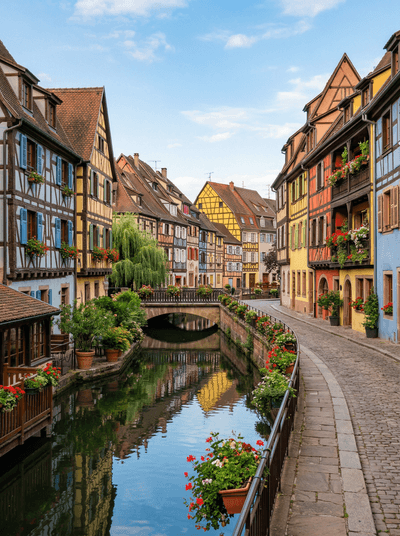
Candy-coloured half-timbered façades reflected in canals so still they look like poured paint.

Falkland
Scotland
A Renaissance palace hides the oldest real tennis court on Earth, in play since 1539.
Shirakawa-go
Japan
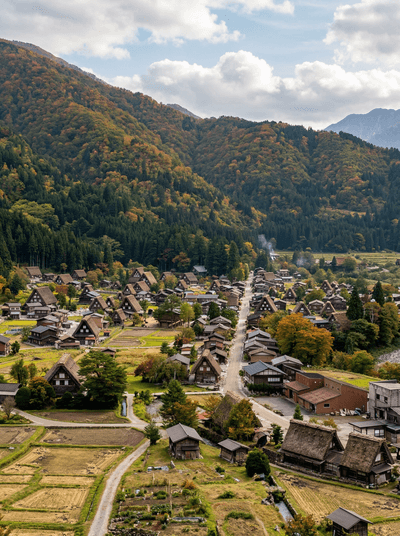
Thatched roofs steep as praying hands, built for snow that buries the ground floor.
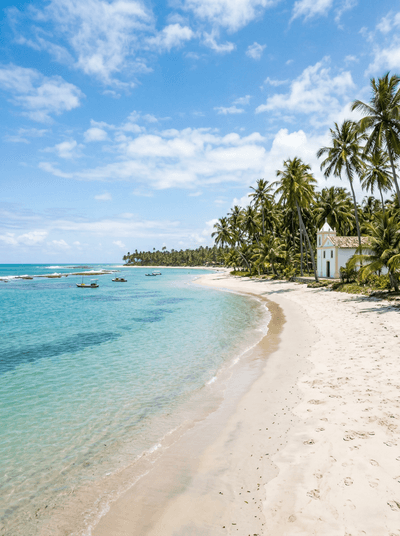
Praia dos Carneiros
Brazil
A chapel alone on the sand, and reef pools that open as the tide drops away.
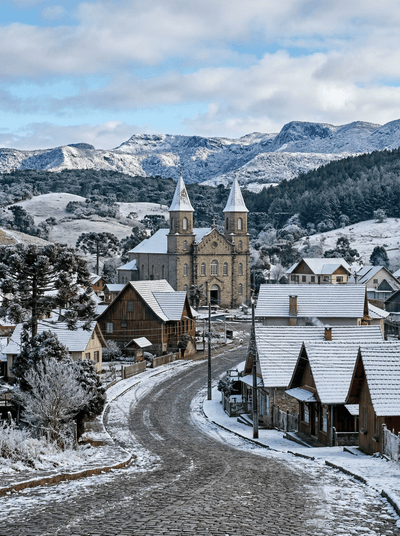
São Joaquim
Brazil
Apple orchards under frost in a highland town where Brazil forgets it's supposed to be tropical.
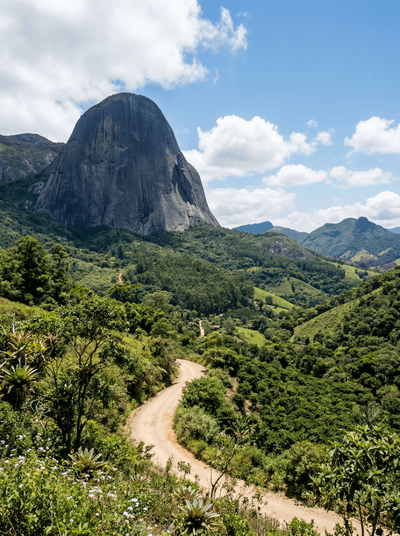
Pedra Azul
Brazil
A granite monolith blue with lichen, erupting from Atlantic Forest like a wave.
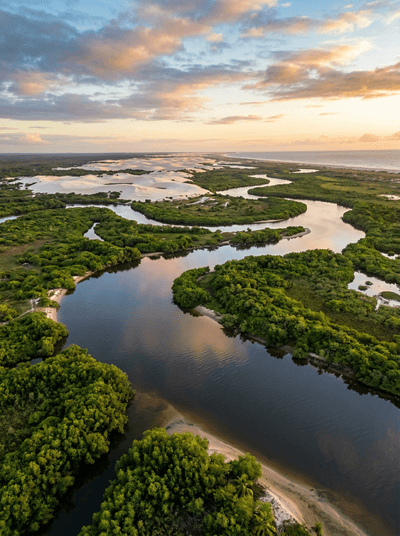
Delta do Parnaíba
Brazil
Every dusk, thousands of scarlet ibis come in to sleep in the mangrove canopy.