Brazil
São Joaquim
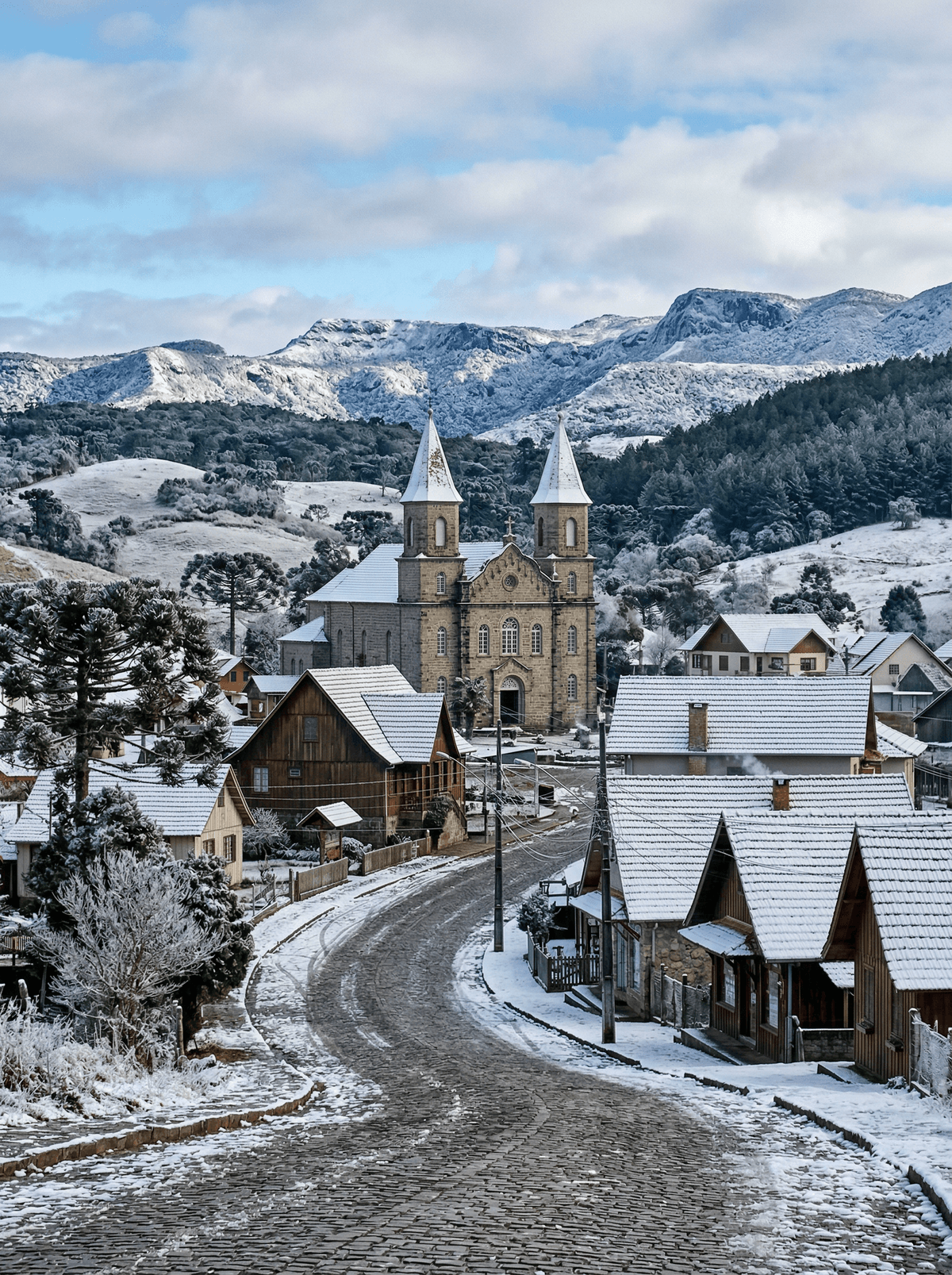
Apple orchards under frost in a highland town where Brazil forgets it's supposed to be tropical.
Apple blossoms shiver in a wind that carries the bite of altitude and the threat of frost. The orchards of the Planalto Serrano stretch across hillsides that could be Normandy or Hokkaido, not subtropical South America. In winter, the town wakes to fields edged in white, and the locals pull on layers with the practised ease of people who have been explaining Brazilian cold to disbelieving visitors for generations.
São Joaquim sits at 1,360 metres on the Santa Catarina plateau and almost everything about it follows from the cold. An apple tree needs a long spell below seven degrees to set properly, and a good season here delivers more than nine hundred hours of it, which the municipality converts into about a third of the national crop and 63 per cent of the state's, about 270,000 tonnes in 2024 from 11,000 planted hectares. Eighty per cent of the town's income comes off that fruit. The varieties are Gala and Fuji with the Fuji Suprema and Michima clones behind them, grown by families who have been at it for forty years. The same altitude built a second industry: sixteen wineries, seven of them open to visitors, on terroir between 1,230 and 1,300 metres, with Villa Francioni the first of them in the 1990s.
Couple
Wine here is a booked business rather than a drop-in one. Leone Di Venezia runs two tours a day, Tuesday to Saturday, twenty-six people at a time, on five hectares of Italian vines. Villaggio Bassetti opens its vineyard Tuesday to Saturday from ten, with tastings in the shop, and Bike no Vinhedo will take you 4,200 metres through the rows and stop for a board and a bottle.
Family
Come in the cold for the chance of frost and let the orchards carry the rest. This is where about a third of every apple in Brazil grows, on the trees whose names are on the supermarket shelf back home, and when the frost does form on a winter morning it does the thing children remember: a Brazilian field white to the fence line.
- Roughly a third of Brazil's apple crop comes off this one municipality, about 270,000 tonnes in 2024 from 11,000 hectares, and eighty per cent of the town's income comes back from it.
- Sixteen wineries work the altitude here and seven of them take visitors, on terroir sitting between 1,230 and 1,300 metres.
- Villa Francioni was the first winery in the region, started in the 1990s, and now bottles 300,000 a year across nearly twenty labels.
- Leone Di Venezia grows Refosco dal Peduncolo Rosso, Aglianico and Sangiovese on five hectares and runs two tours a day, Tuesday to Saturday, capped at twenty-six people.
Bike no Vinhedo rides 4,200 metres through the rows at Villaggio Bassetti and stops for a charcuterie board and a bottle off the same estate, laid out on a cloth between the vines.
The apples are Gala and Fuji, with the Fuji Suprema and Michima clones behind them, and the cold is the recipe: more than 900 hours below seven degrees in a good season is what puts the colour and the crunch in.
Barskoon Valley
Kyrgyzstan
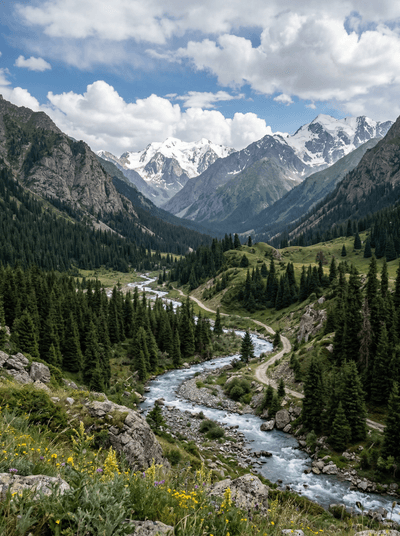
Waterfalls named Tears of the Snow Leopard, in a gorge that keeps two monuments to Gagarin.
Jeti-Ögüz
Kyrgyzstan
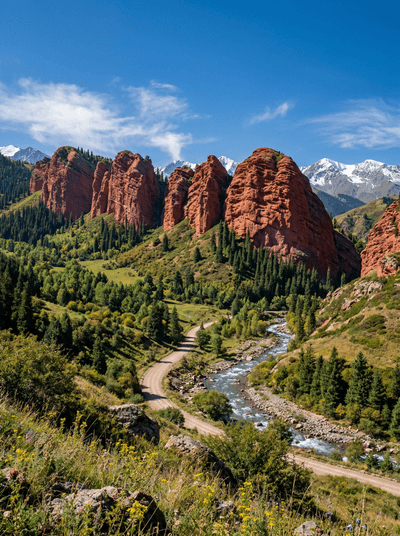
Seven rust-red sandstone bulls rearing from the valley floor, a broken heart cleaved beside them.
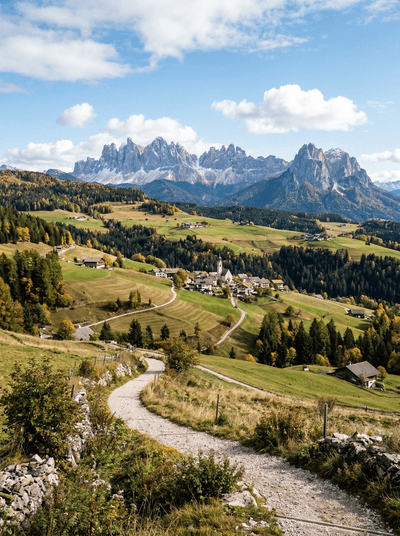
Altopiano del Renon
Italy
Boulder-capped clay towers spike out of the pines, the tallest earth pyramids in Europe.
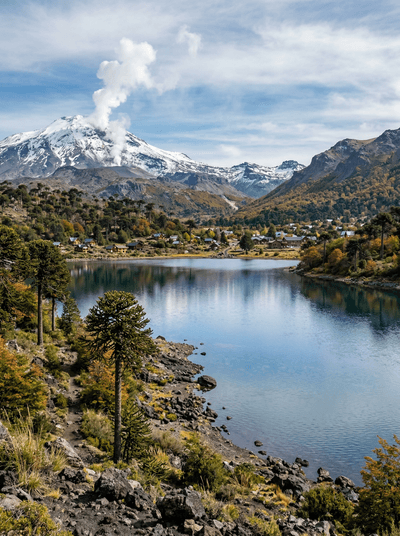
Caviahue
Argentina
Hot springs steam through araucaria forest inside a volcanic caldera dusted with snow.
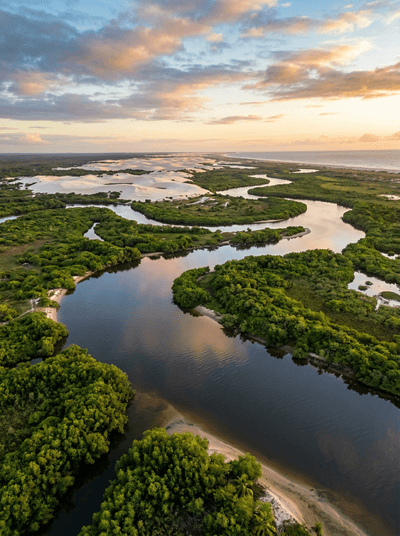
Delta do Parnaíba
Brazil
Every dusk, thousands of scarlet ibis come in to sleep in the mangrove canopy.
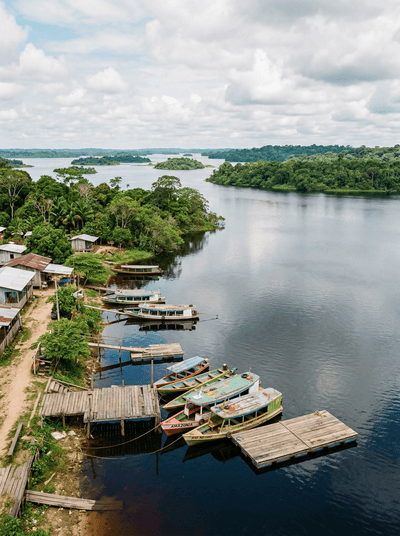
Novo Airão
Brazil
In tea-dark water, pink dolphins take chilled fish from staff hands; you may touch, never feed.
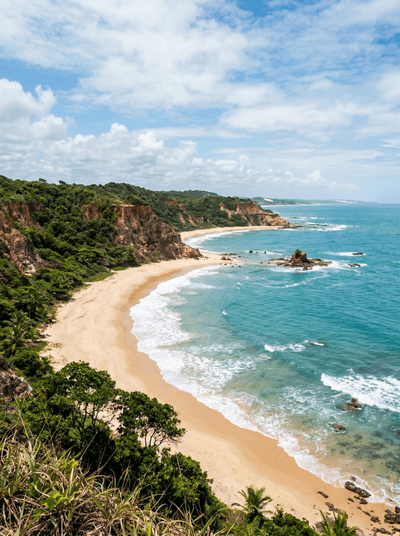
Praia da Pipa
Brazil
Dolphins hunting a bay seven hundred metres across, flinging their catch clear of the water.
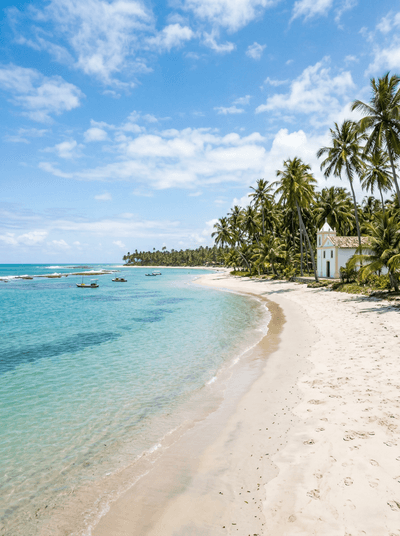
Praia dos Carneiros
Brazil
A chapel alone on the sand, and reef pools that open as the tide drops away.