South Korea
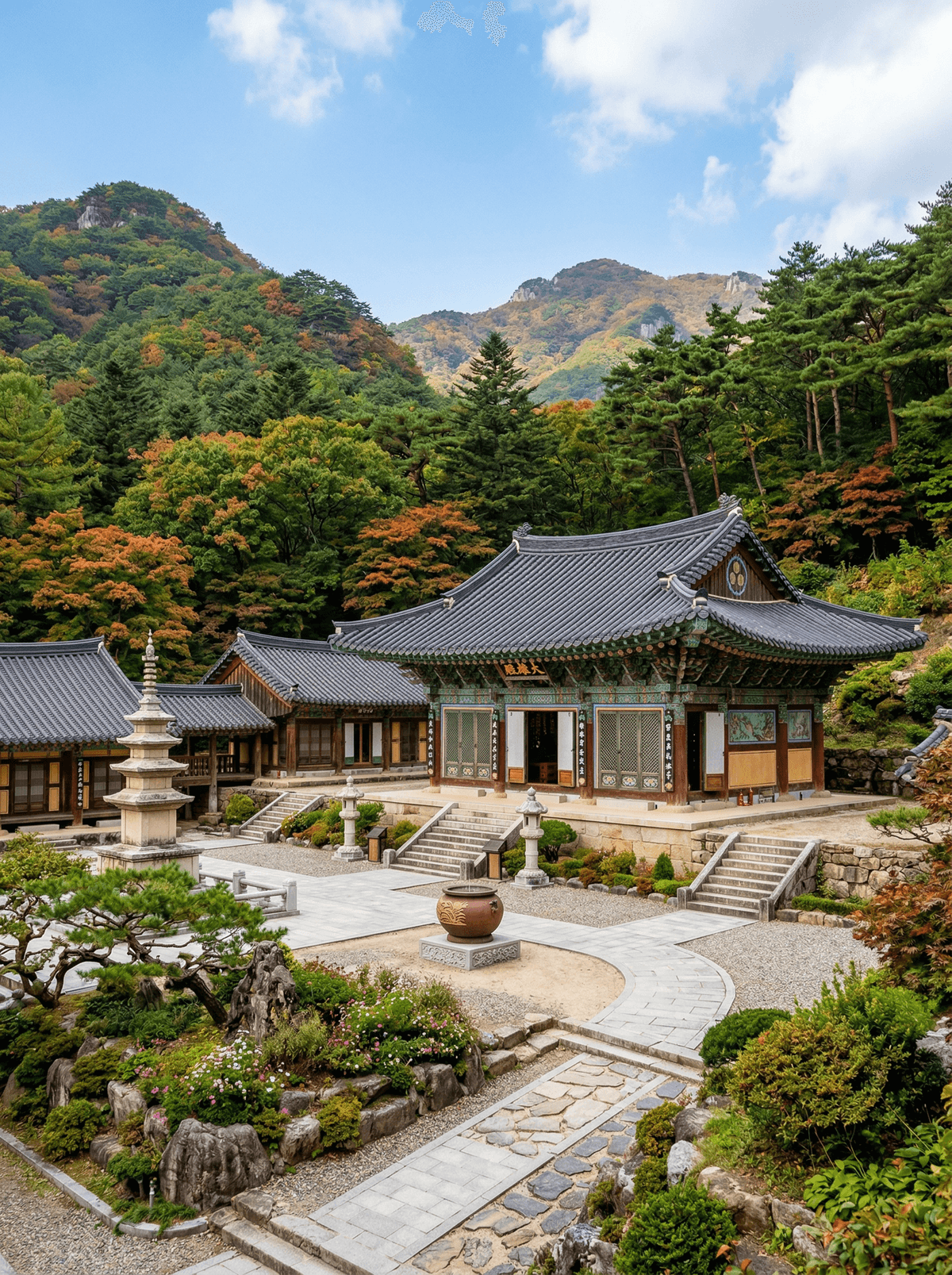
Seonunsa Temple
For two weeks each September the temple valley floor turns spider-lily red.
In late September the valley floor turns red, not with leaves but with spider lilies, thousands blooming at once against grey stone and dark timber. The monks have watched it happen for fourteen centuries.
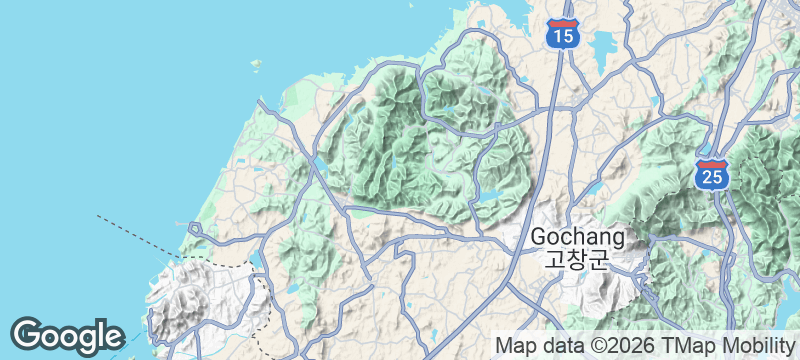
Seonunsa was founded in 577 under Baekje, and its valley in Seonunsan Provincial Park stages two floral events: the September eruption of red spider lilies across the floor, and the spring bloom of a five-hundred-year-old camellia forest around the approach. Marked valley paths continue past the main court toward hermitages and rock scenery on the county's map, and outside bloom weeks the temple keeps the quieter rewards of age, stone and running water.
Solo
A solo walker can continue beyond the temple on an official valley path, adjusting distance to daylight.
Couple
Temple courts and a wooded park route give couples both shared stillness and room to move.
- Red spider lilies carpet the valley floor each late September.
- The temple's founding runs back to 577 under Baekje.
- A five-hundred-year-old camellia forest blooms in spring.
- Marked paths continue to hermitages and rock scenery.
Pungcheon jangeo, the estuary eel, has generations-old restaurants on the approach.
Bokbunja, Gochang's black-raspberry wine, is the county's other pour.
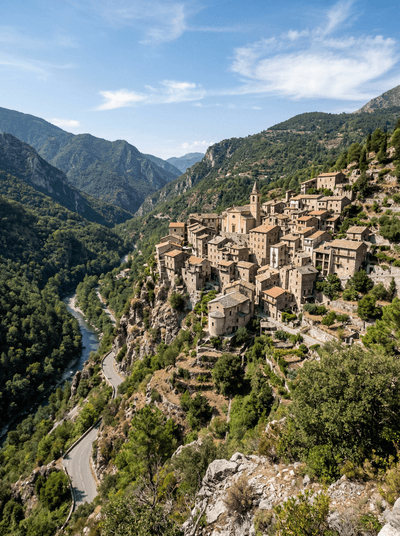
Saorge
France
Houses stacked into a gorge wall like an amphitheatre, with the Roya river as the stage.
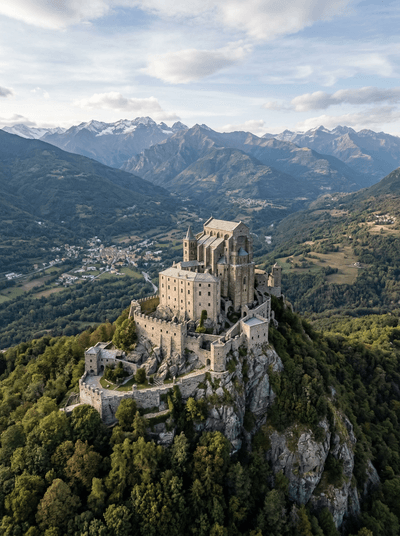
Sacra di San Michele
Italy
A thousand-year-old abbey growing from a mountaintop, its staircase carved through living rock.
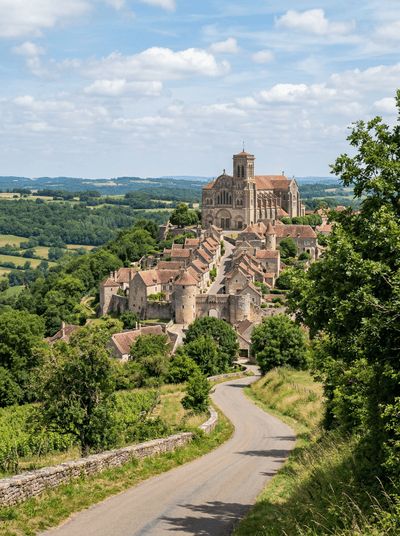
Vézelay
France
A hilltop basilica of light and carved stone where two crusades were preached into being.
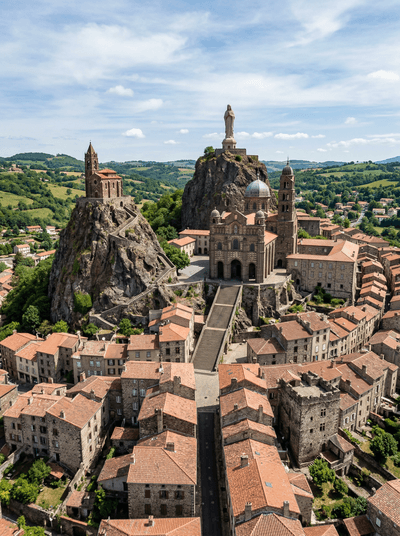
Le Puy-en-Velay
France
Three volcanic plugs crowned with a chapel, a cathedral and a giant red Madonna.
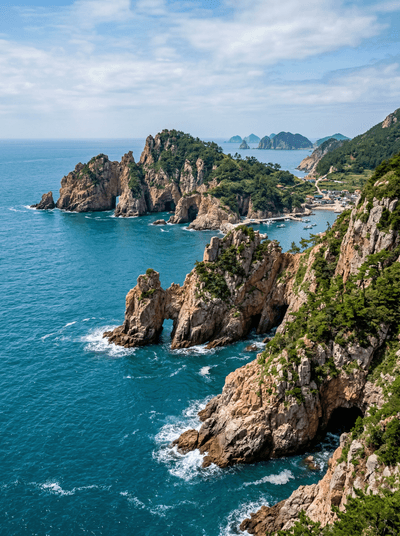
Hongdo
South Korea
Two hundred metres of red quartzite catch fire at sunset over the sea.
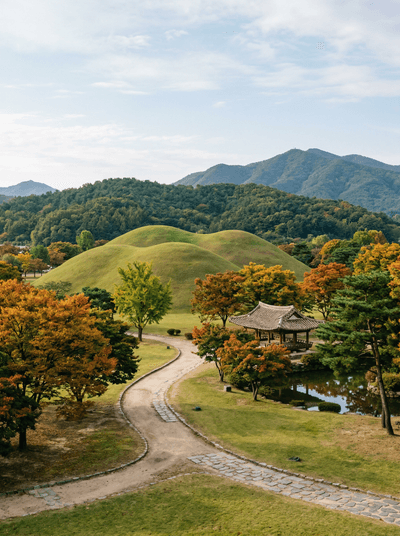
Gyeongju
South Korea
Grass-covered royal tombs the size of hills rise unfenced among city streets.
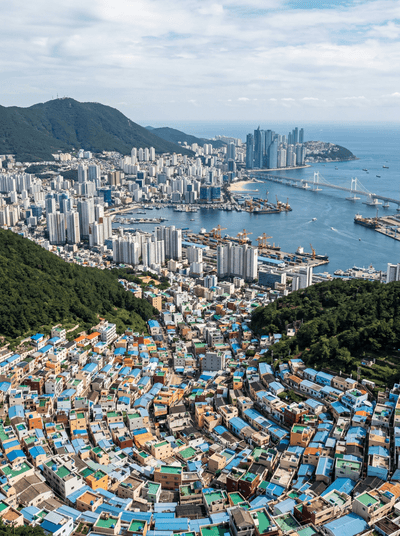
Busan
South Korea
Korea's largest fish market runs live auctions at dawn beside city beaches and cliff temples.