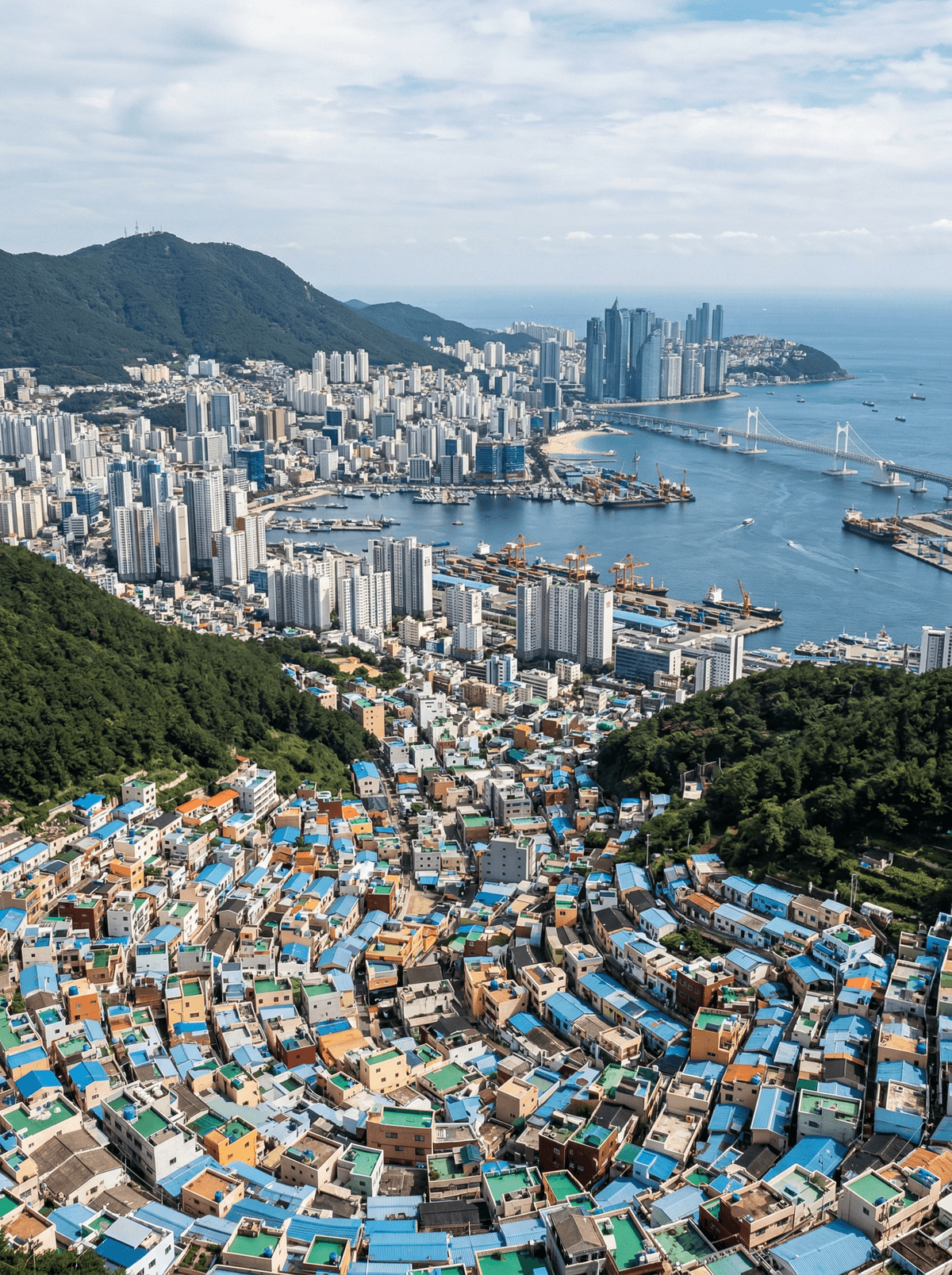
South Korea
Busan
Korea's largest fish market runs live auctions at dawn beside city beaches and cliff temples.
The market is the size of an aircraft hangar, whole floors given to live tanks and pre-dawn auctions. Outside, a beach runs through the middle of a city of over three million. Busan is not subtle about anything.
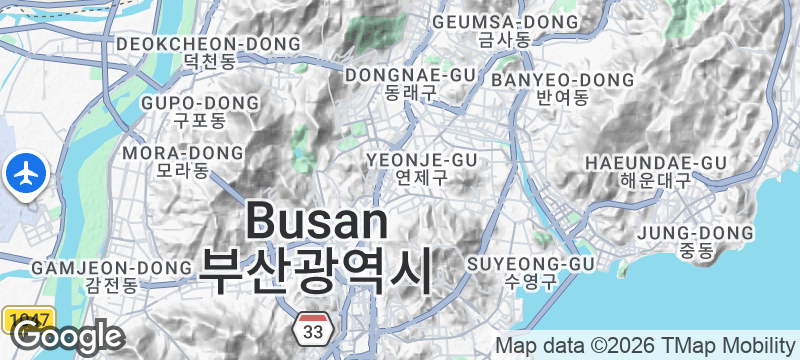
Busan is Korea's second city and largest port, where Jagalchi market operates at near-industrial scale with restaurants upstairs serving fish minutes from purchase, and Haeundae's 1.5 kilometres of sand run straight through a high-rise district. Gamcheon's painted hillside lanes, BIFF Square and the port make a strong western circuit; the eastern beaches and the cliff temple of Haedong Yonggungsa deserve their own route, because the city's long coastal geography punishes an everything-at-once plan.
Solo
Choose either the western port circuit or an eastern coastal route; solo metro travel makes that discipline easy.
Couple
A market morning and hillside afternoon work well for two when both agree not to cross the whole city.
Friends
Friends can share dishes at Jagalchi and BIFF Square before climbing one neighbourhood rather than five.
- Jagalchi runs Korea's largest fish market at near-industrial scale.
- Haeundae's sand runs 1.5 kilometres through a high-rise district.
- Gamcheon's painted lanes climb the hillside above the port.
- Haedong Yonggungsa puts a temple directly on the sea cliffs.
Seomyeon Local Food Street is the direct place for Busan dwaeji-gukbap, a pork broth served with rice and seasonings.
Near BIFF Square, cool down with Busan milmyeon, chewy wheat noodles in chilled broth with mandu on the side.
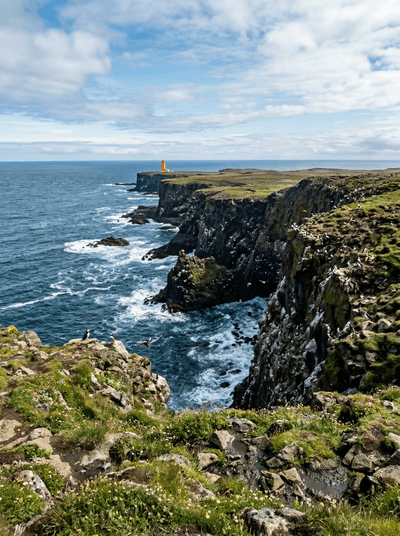
Grímsey Island
Iceland
A wind-battered island where you step across the Arctic Circle among a million nesting seabirds.
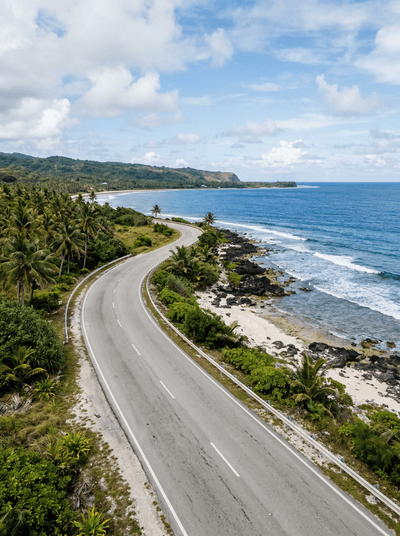
The Ring Road
Nauru
Salt air and rusting pillboxes line the road that loops an entire country in seventeen kilometres.
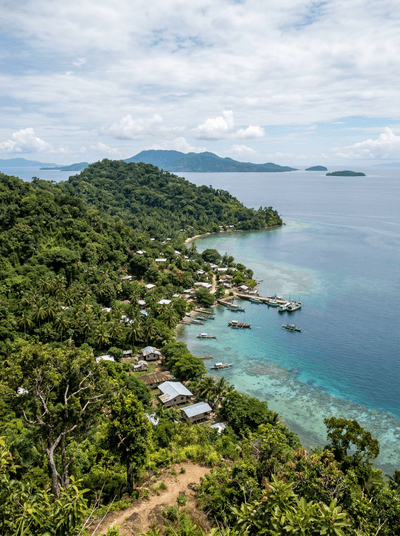
Tulagi
Solomon Islands
The old capital's harbour still holds the flying boats the war left on its floor.
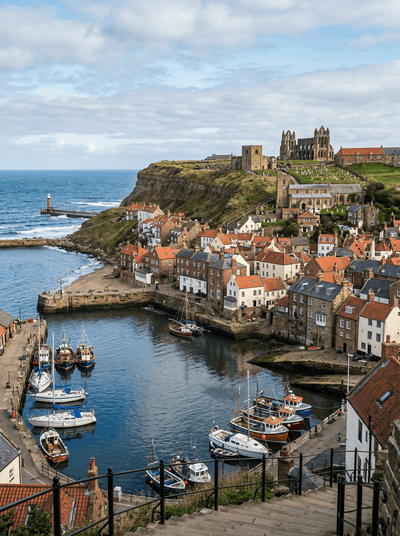
Whitby
England
Gothic abbey ruins over a harbour where Dracula came ashore and jet jewellery gleams black.
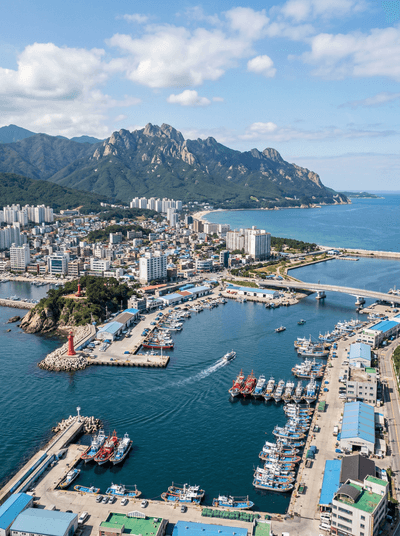
Sokcho
South Korea
Squid stuffed with noodles by families who carried the recipe south across the 38th parallel.
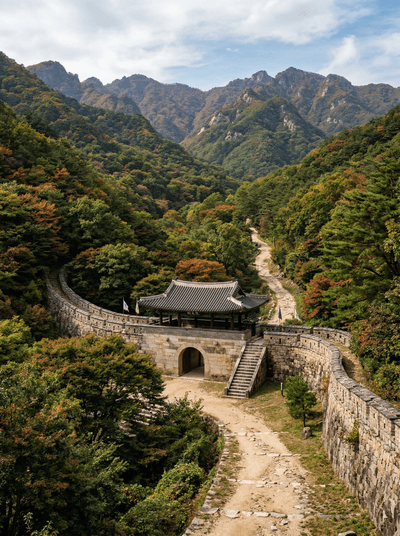
Mungyeong Saejae
South Korea
Joseon scholars walked this dirt pass through three stone gates for five hundred years.
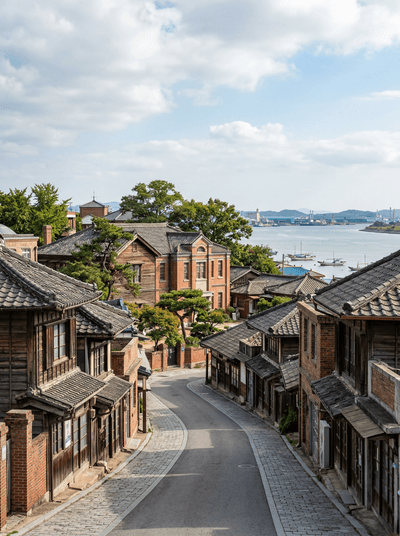
Gunsan
South Korea
Korea's oldest bakery still sells the bread it sold in 1945, streets frozen around it.