Morocco
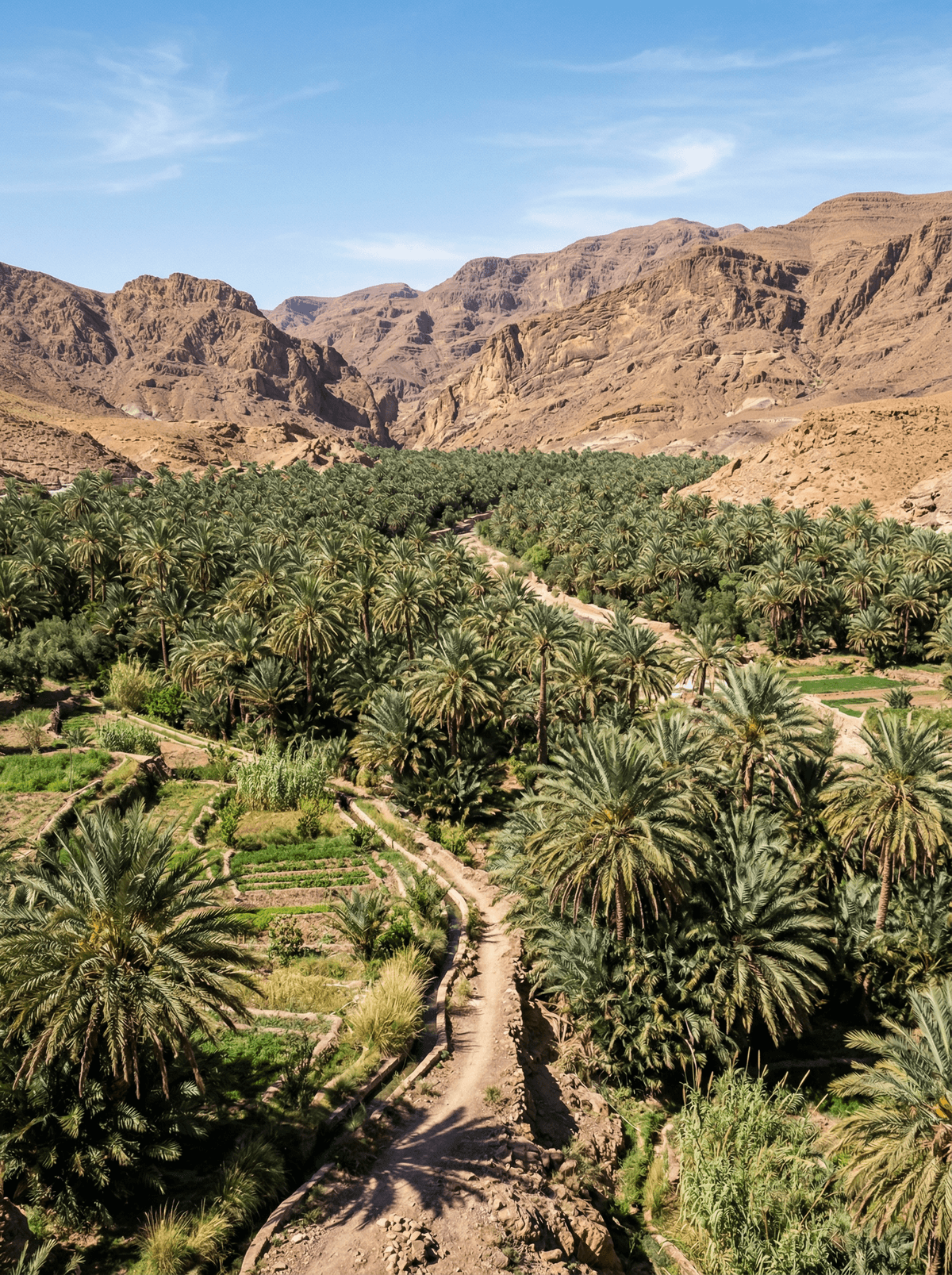
Tata Palm Groves
Elephants and rhinoceroses survive in stone beyond Tata's living palm shade.
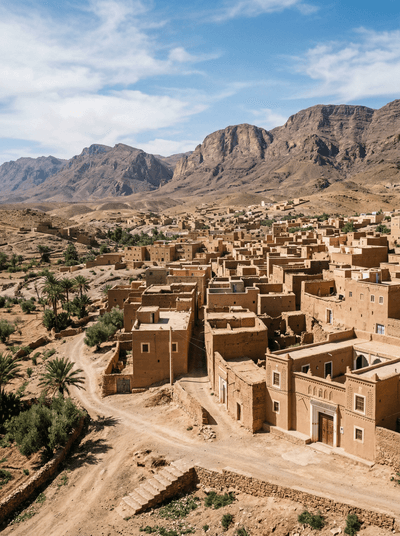
Date palms gather around water north of Tata; farther south-east, dark lines on sandstone resolve into bovids, ostriches and armed human figures. The contrast unfolds across a provincial journey, with each landscape holding its own ground.
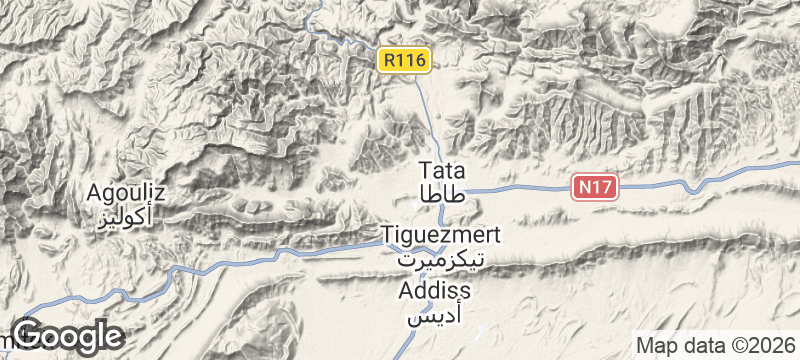
Give Tata two distinct chapters: first take the short road towards Agadir Lehna, climb to the village viewpoint over the palm groves and walk the irrigated oasis lanes without entering fields or homes uninvited. Reserve the longer day for a professional guide and suitable vehicle towards Akka, roughly 60 kilometres away. At Oum El Alek, fine-line engravings include bovids, elephants, rhinoceroses, ostriches and hunters; Adrar Metgourine and other stations are harder to reach, their slabs blending into open mineral ground. Let the guide choose a suitable site and never touch, wet, chalk, trace or climb on an engraving. Stay in registered accommodation in Tata, leave the route and return time there, travel in daylight and carry abundant water, shade, food, first aid, offline navigation and a charged phone; October to March tempers the heat, while storms can flood remote tracks.
Solo
Join or hire a professional local guide with a suitable vehicle. Leave your planned line and expected return with the accommodation, carry redundant water and navigation, and treat every panel as vulnerable archaeology: no touching, tracing, wetting or precise public coordinates.
- Agadir Lehna offers a near-town panorama across Tata's irrigated palm groves.
- Oum El Alek preserves fine-line elephants, rhinoceroses, ostriches, bovids and hunters.
- Harder stations turn the rock-art day into a guided off-road reading of the landscape.
- A Tata base links living oasis agriculture with evidence of a six-thousand-year-old savannah.
Slow-cooked lamb tagine at Oasis de Rêve in Tata.
Orange salad after lunch at Oasis de Rêve.
Debdou
Morocco
A spring runs past a Jewish cemetery beneath the broken walls of a mountain kasbah.
Rissani
Morocco
Date crates, donkey carts and ironwork crowd a market beside medieval Sijilmassa's ruins.
Ijoukak
Morocco
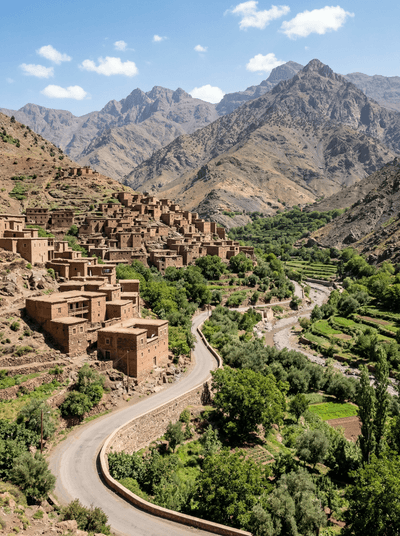
Walnut terraces drink from two rivers below the ruins of a mountain palace.
Guelmim
Morocco
Camel calls, wool, silverwork and bargaining give Amhayrich souk its desert-edge pulse.