Morocco
Guelmim
Camel calls, wool, silverwork and bargaining give Amhayrich souk its desert-edge pulse.
Camels and sheep occupy the dusty edge of Amhayrich souk while produce, household goods and craft stalls gather behind them. This is a working regional market first, and its ordinary purpose gives the morning its force.
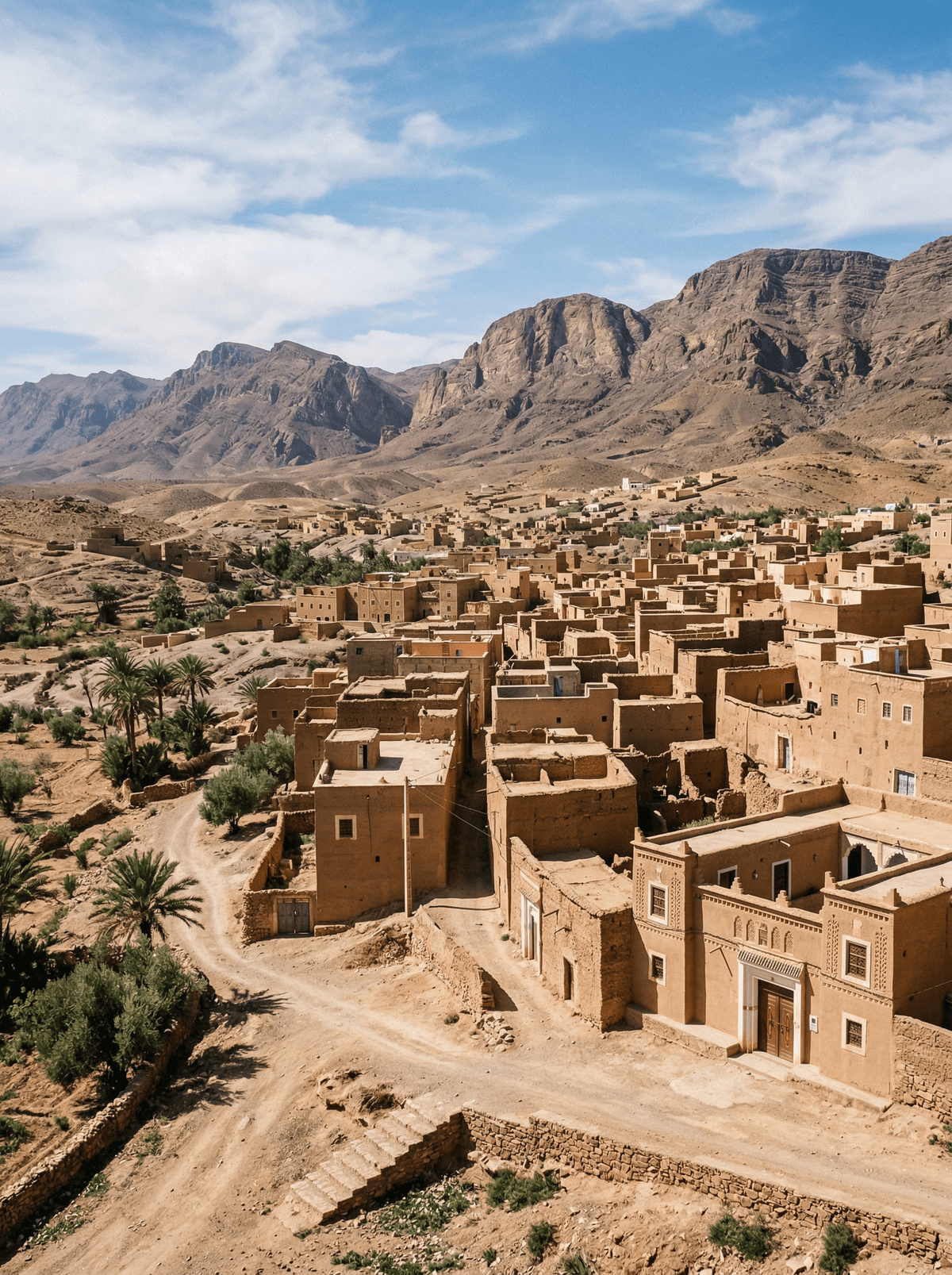
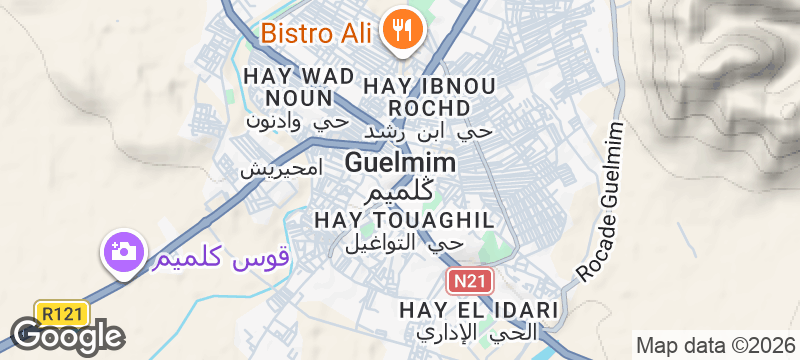
Arrive early for the livestock trade, keeping outside loading lanes and asking before making portraits. Follow the market into town through leatherwork, silver jewellery and woven goods, then look towards Agouidir, the eighteenth-century fortified nucleus set above modern Guelmim. The city makes sense as a junction where pastoral routes, oasis agriculture and the N1 still meet. In the afternoon, take the short road east to Asrir and Tighmert, where palm-grove lanes, small irrigated plots and the possible site of medieval Nul Lamta add a quieter layer while a local homestay or guide can shape the route without turning farms into open attractions. Return before dark and leave Plage Blanche for its own separate journey rather than compressing the region into one rushed excursion.
Solo
Reach Amhayrich early, keep clear of animals and loading lanes, carry small cash discreetly and ask before photographing traders. Arrange a confirmed driver or local guide for Asrir and Tighmert, take water and return on rural roads before dark.
- Amhayrich brings camels, sheep and regional traders together at the dusty edge of town.
- Leatherwork, silver jewellery and weaving extend the trading story beyond the animal pens.
- Guelmim's historic core preserves the memory of a caravan junction between oasis, mountain and desert routes.
- Asrir and Tighmert add caravan archaeology and palm-grove lanes about 10 to 12 kilometres east.
Villa Boujouf's camel brochettes with seasonal vegetables in Tighmert.
House-made orange salad with cinnamon at Villa Boujouf after an oasis walk.
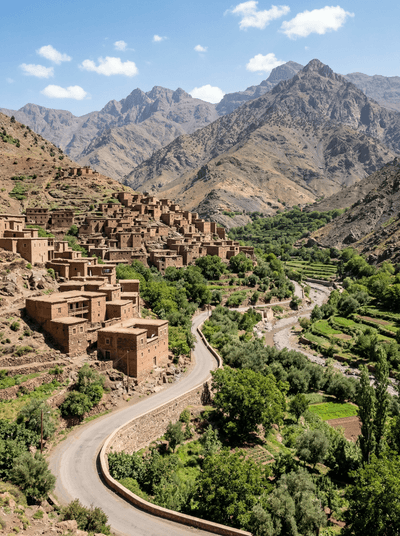
Ijoukak
Morocco
Walnut terraces drink from two rivers below the ruins of a mountain palace.
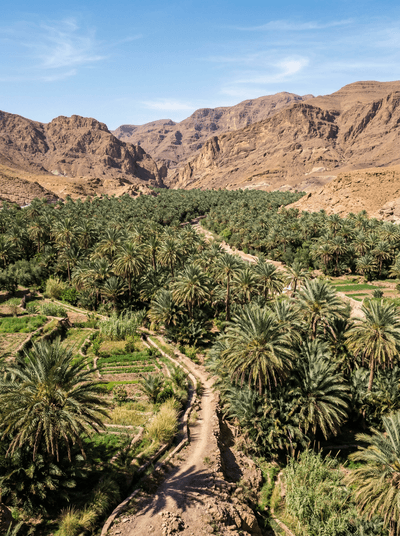
Tata Palm Groves
Morocco
Elephants and rhinoceroses survive in stone beyond Tata's living palm shade.
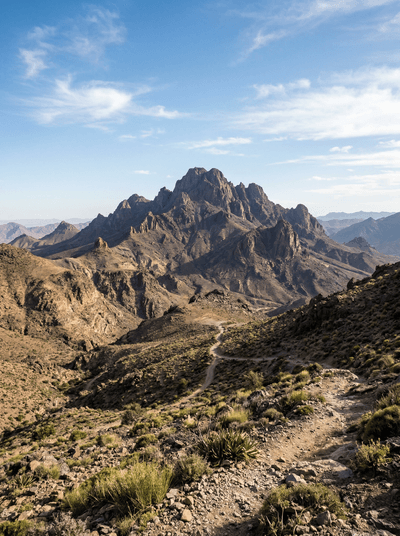
Jebel Sirwa
Morocco
Purple crocuses give way to black volcanic rock on a summit between two Atlases.
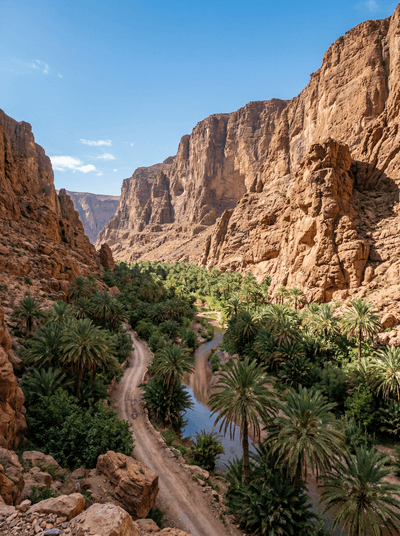
Aït Mansour Gorge
Morocco
The road falls out of pink granite into a red gorge roofed with date palms.