India
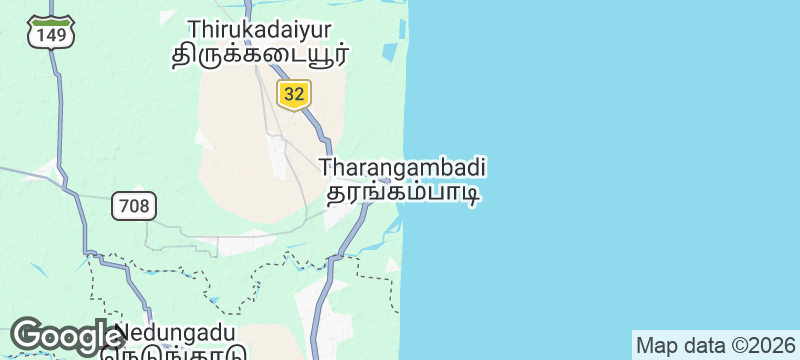
Tharangambadi
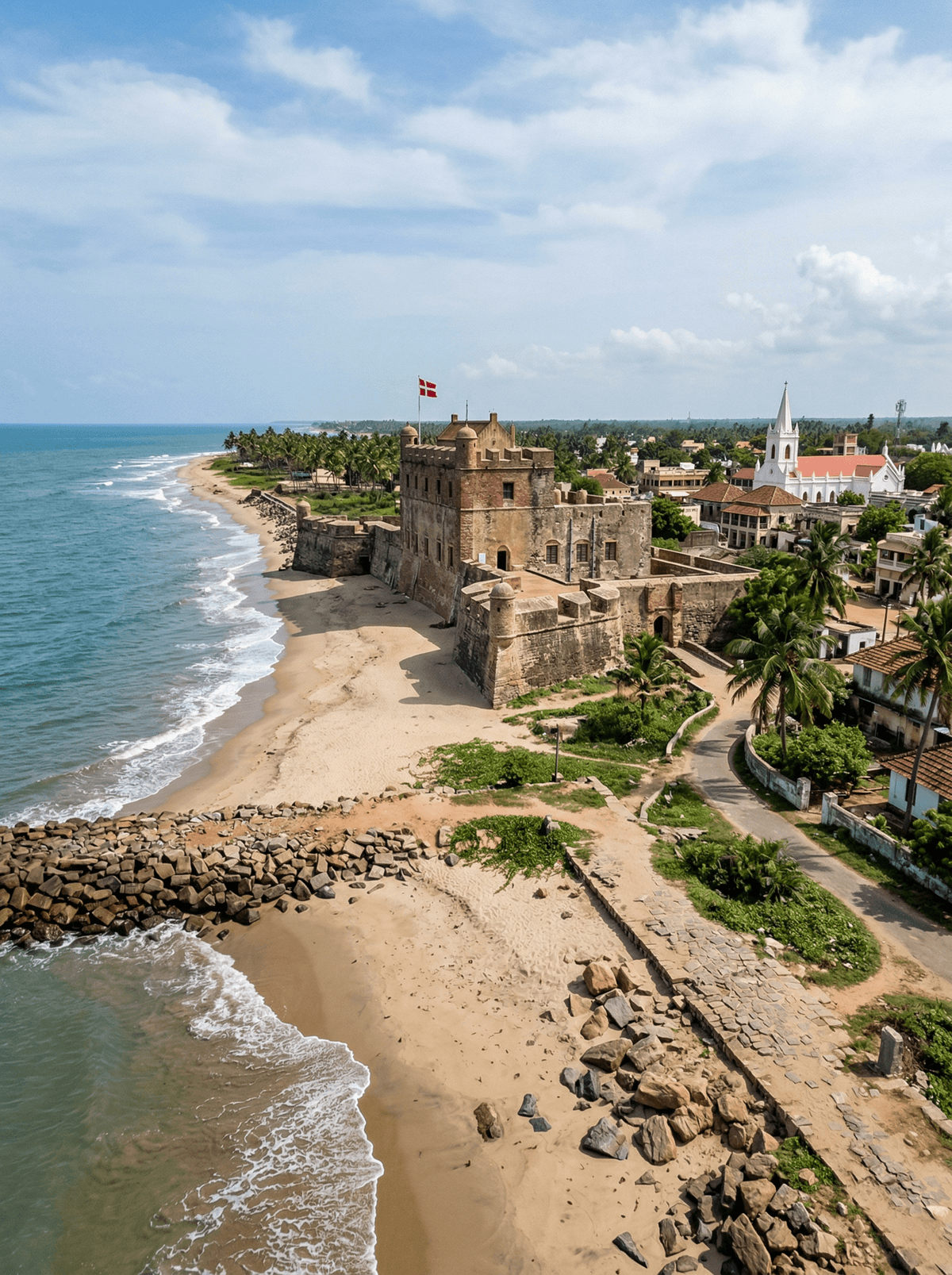
A decaying Danish fort battered by the Coromandel tide smelling of ozone and forgotten empires.
The Danish fort stands on the beach like a misplaced chess piece — a Northern European military structure battered by the warm Coromandel tide, its walls smelling of salt and old plaster. Outside, fishing catamarans of lashed logs launch into the dawn surf, a design older than the colony.
Tharangambadi — Tranquebar — was a Danish colony from 1620, when Christian IV's envoy Ove Gjedde founded it, until 1845, and Fort Dansborg remains one of Asia's best-preserved Danish structures, a museum since 1978. The town's name means 'place of the singing waves' in Tamil, and the surf validates it. Bartholomäus Ziegenbalg — India's first Protestant missionary — arrived in 1706 to produce the first Tamil New Testament.
Solo
Walk the straight Danish street plan from Land Gate to fort, then let the surf noise close the evening.
Couple
Take a heritage room at the Bungalow, the fort at dusk, seer fish at dinner.
- Fort Dansborg has stood on this beach since 1620 — Denmark's outpost on the Coromandel.
- 'Place of the singing waves' is the town's own name, and the surf backs the claim.
- The Ziegenbalg church marks where Tamil scripture printing began.
- The dawn catamarans keep the old kattumaram way — lashed logs riding the surf as they have done for centuries.
Meen kuzhambu — tamarind-sharpened fish curry — with rice is the Tamil coast's daily truth.
The Bungalow on the Beach, the heritage hotel beside the fort, serves dinner on a sea-facing terrace.
Lindisfarne
England
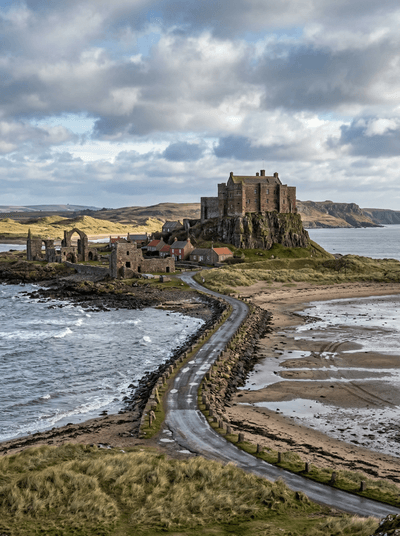
A tidal island monastery where the causeway drowns twice daily and the tide writes the rules.
Vadstena
Sweden
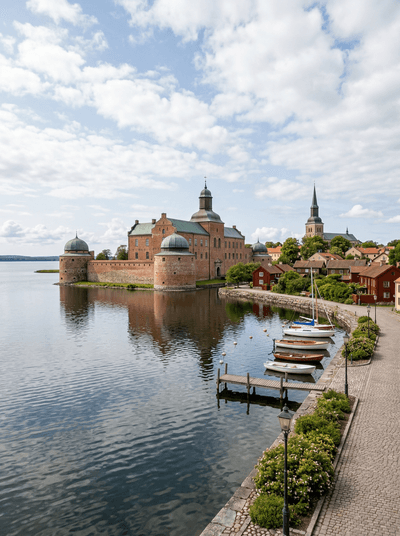
A lakeside convent town where Saint Birgitta's visions still echo in stone corridors.
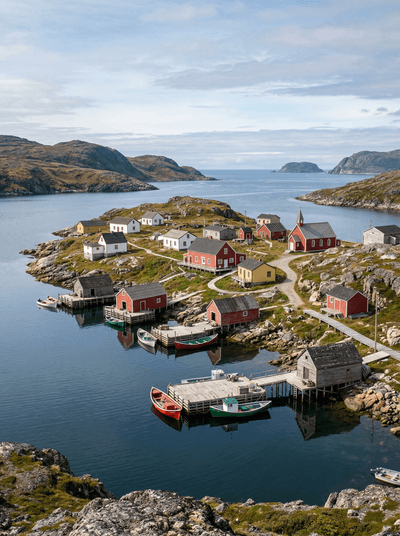
Battle Harbour
Canada
A restored salt-fish capital waits on a Labrador island, reached only by boat past drifting ice.
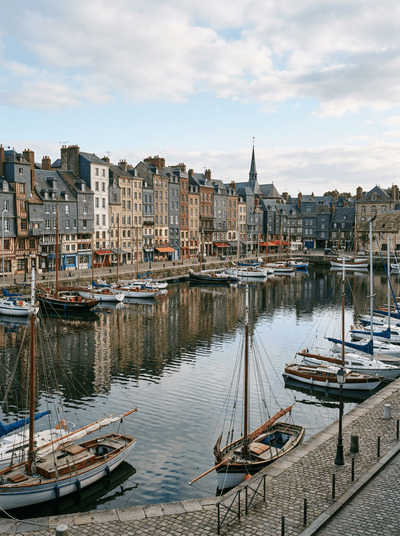
Honfleur
France
Slate-fronted houses mirrored in a harbour that taught the Impressionists how light works.
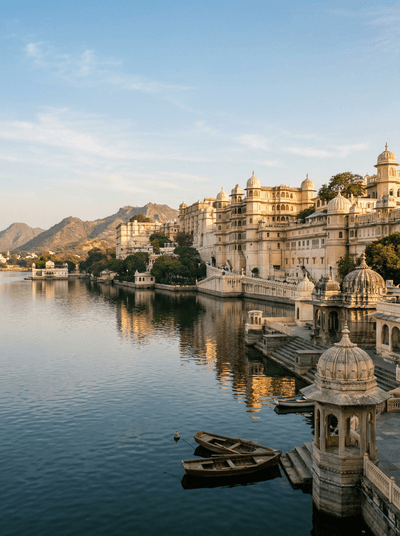
Udaipur
India
White marble palaces float on still lakes while the Aravalli hills burn copper at sunset.
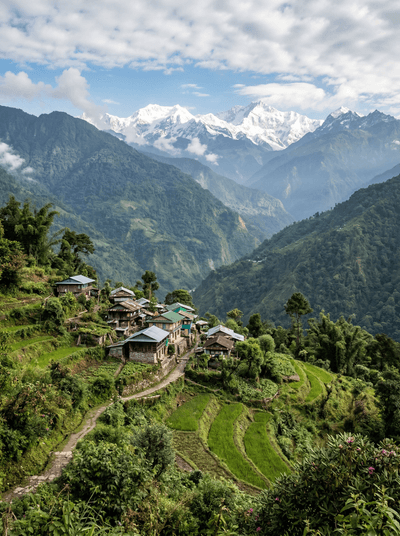
Dzongu
India
A protected indigenous reserve where hot springs bubble beneath the sheer ice wall of Kanchenjunga.
Ziro Valley
India
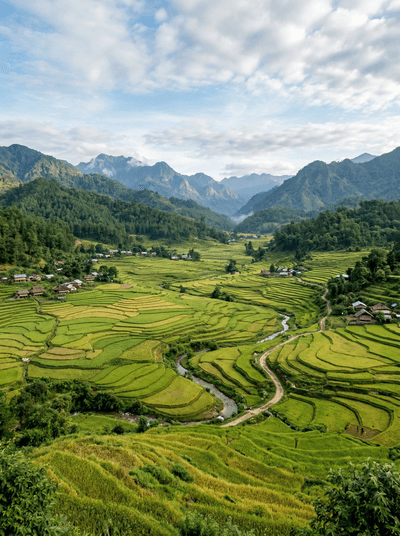
Fish swim between rice stalks in a pine-ringed valley farmed by the Apatani for centuries.