Oman
Wahiba Sands
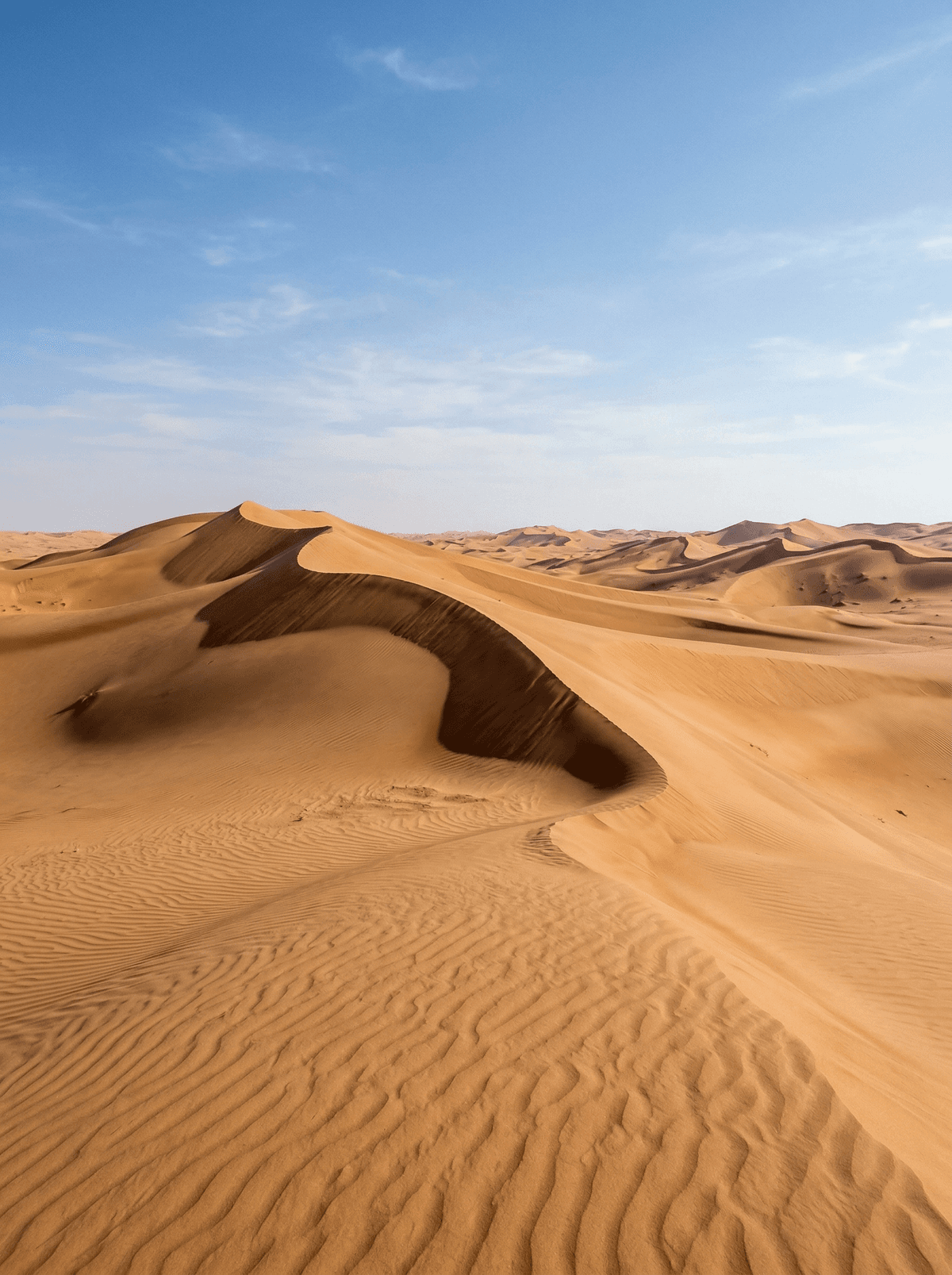
Burnt-sienna dunes roll to every horizon in a silence that makes your ears ring.
The dunes begin without announcement: gravel gives way to sand, and the horizon becomes nothing but curves. By late afternoon the ridges hold bands of copper and violet rather than one uniform sea of orange.
A'Sharqiyah Sands, still widely called Wahiba, begins where the tarmac ends past Bidiyah and runs south in dune ridges up to a hundred metres high. Licensed camps sit deep in the sand, and their evenings run to a rhythm: dune walks as the light turns copper, shuwa or mishkak off the fire, then a sky black enough that the Milky Way throws the only light. Bedouin families receive guests through the camps' own arrangements. Soft sand takes an experienced driver, and most guests cross by camp transfer.
Couple
An established desert camp lets couples watch the dune light shift at dusk and again after breakfast without risking an unsupported wild camp.
Friends
Book an experienced driver for the soft-sand crossing, then leave time for a group walk on the firmer ridges near camp.
Family
Camp transfers remove the difficult driving, while families can choose only the supervised activities confirmed for their stay.
Solo
A solo guest can use the camp's transfer and guided programme, gaining desert scale without self-driving into changing tracks.
- Officially A'Sharqiyah Sands, the dunes rise in long ochre ridges that the wind keeps redrawing.
- Licensed camps in the sands cook shuwa and mishkak and put guests under a sky dark enough for the Milky Way.
- The dune light shifts from copper to violet between late afternoon and morning, which is the argument for staying the night.
- Soft sand swallows ordinary cars, so the crossing is made with an experienced driver or a camp transfer.
Camps cook the desert's own dishes: shuwa from the fire pit and mishkak off the coals, with dates and coffee first.
A guided family visit, arranged through the camp, can mean Omani coffee and a home-cooked Bedouin lunch.
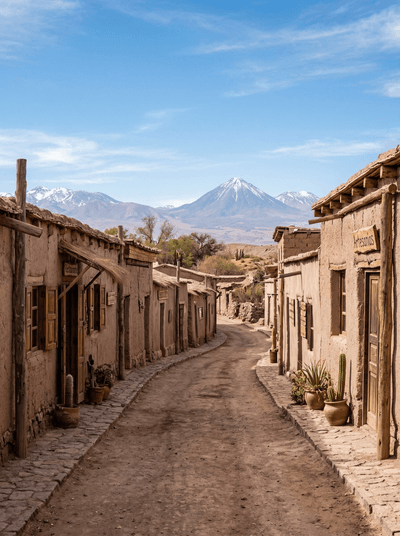
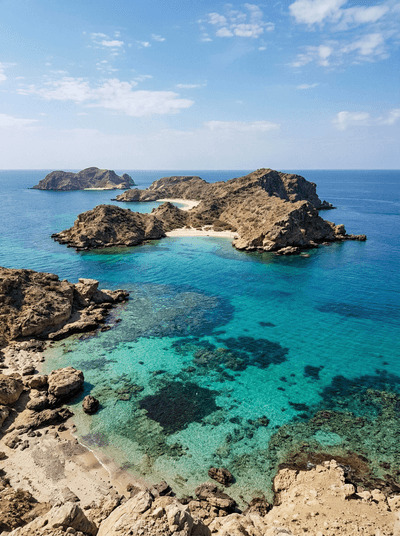
Daymaniyat Islands
Oman
Hawksbill turtles nest among nine islands whose coral reads clear from the surface.
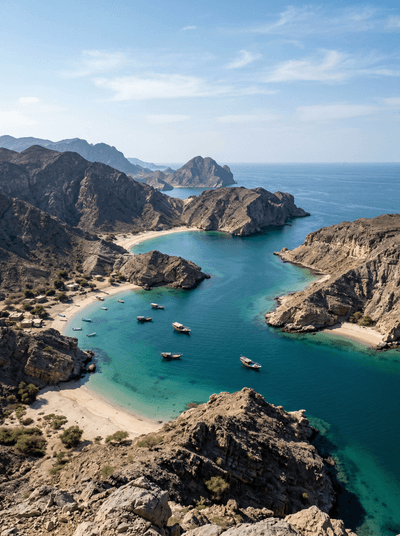
Bandar Khayran
Oman
Limestone headlands, mangrove inlets and hidden coves maze the coast twenty-five minutes from Muscat.
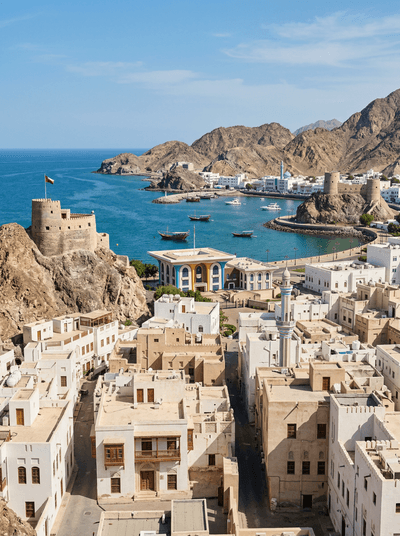
Muscat Old Town
Oman
The Sultan's palace stands framed between two forts the Portuguese raised over the harbour.
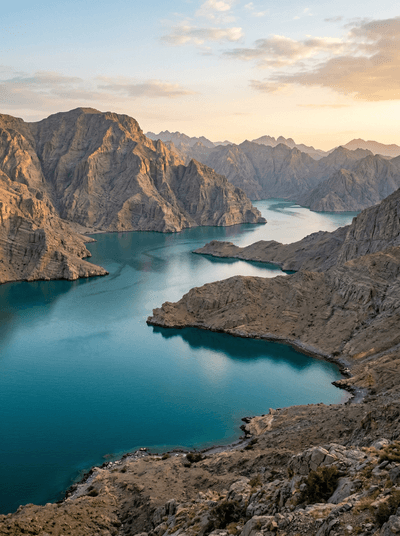
Musandam Peninsula
Oman
Bare limestone drops into drowned valleys where dolphins ride the dhow's bow wave.