France
Aigues-Mortes
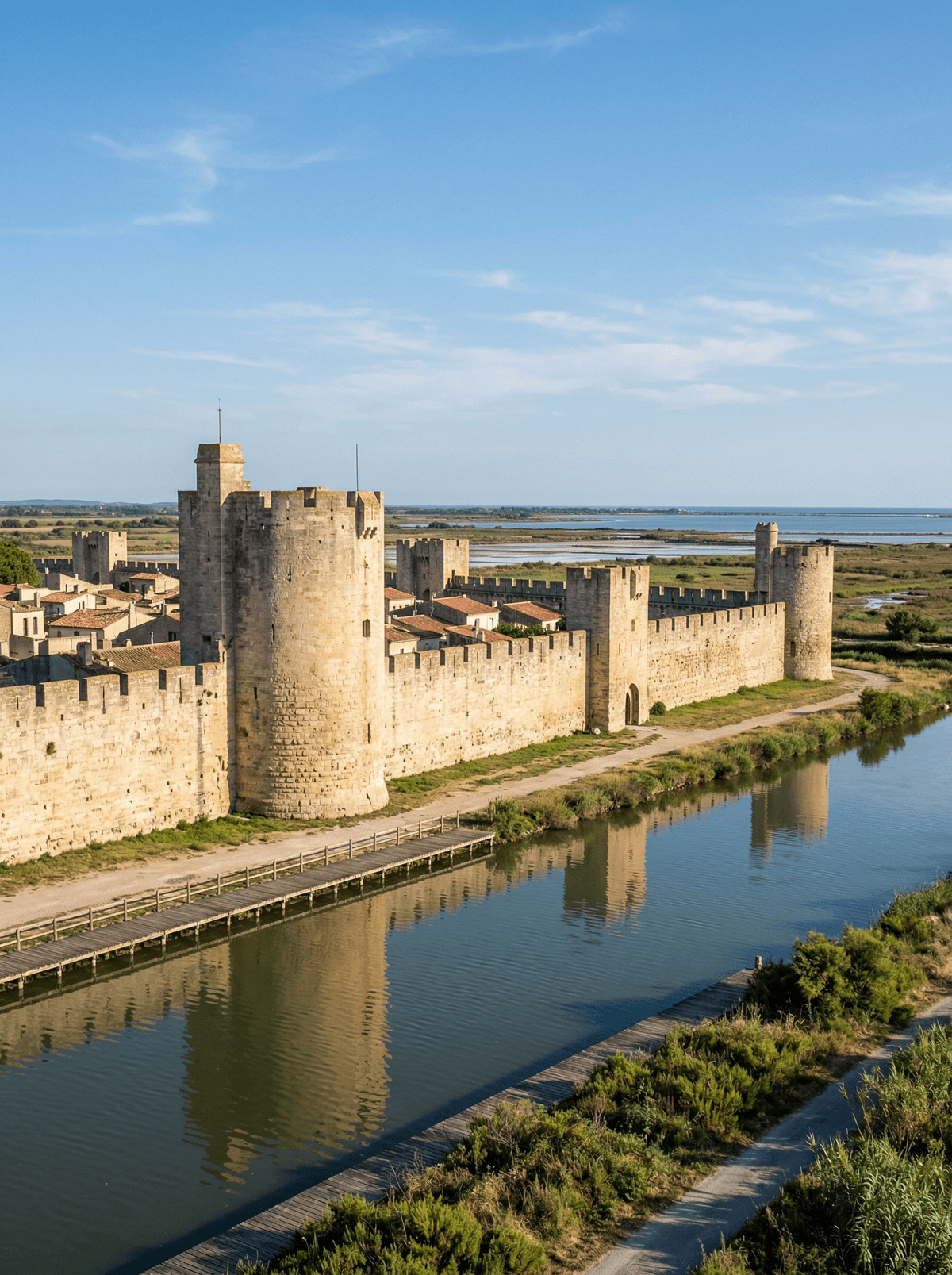
Crusader ramparts stranded on salt flats where the sea withdrew and left a walled port behind.
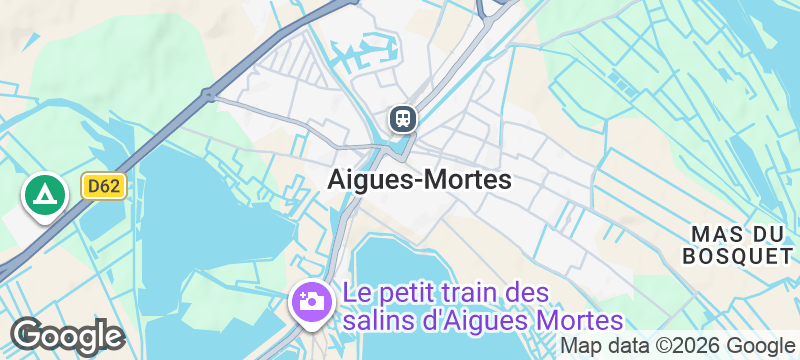
The crusader walls stand complete on all four sides, enclosing a grid of medieval streets on salt flats where the sea withdrew and forgot to come back. Aigues-Mortes, on France's Camargue coast, is a port stranded inland — the harbour that launched Saint Louis's crusade now sits among pink salt pans, ponds and flamingo lagoons — and the name means 'dead waters'. The stillness earns it.
Louis IX founded Aigues-Mortes in 1240 to give the French crown a port on the Mediterranean, and sailed for the Seventh Crusade from here; the rectangle of ramparts his successors built around the town survives whole, with its towers, its gates and a walkway you can follow the full circuit at rooftop height, the salt flats to one side and the medieval grid on the other. The Tour de Constance, the round tower at the corner, held Protestant prisoners after the Revocation — Marie Durand spent thirty-eight years inside and scratched RÉSISTER into the stone, still legible. Outside the walls the salt works turn their pans pink in summer, flamingos wading in the same water that gives the fleur de sel, and the town's own fougasse — a flat brioche scented with orange-flower water and sugar — is baked in the streets inside.
Solo
Walk the ramparts at dusk when the salt pans turn pink below and the town grid shows its full medieval geometry. The Tour de Constance and Marie Durand's carved word give the stone emotional weight.
Couple
The rampart walk circles the town at rooftop height with the salt flats on one side, the lanes on the other. Dinner inside the walls, with fougasse and a Picpoul de Pinet, closes the evening in candlelit stone.
Family
The salt pans are a landscape children can explore — pink water, flamingos, salt crystals forming at the edges. The rampart walk adds a fortress circuit, and the crusader story gives the walls a narrative.
- Crusader ramparts stand complete on all four sides, stranded on salt flats where the sea withdrew centuries ago.
- The Tour de Constance held Protestant women prisoner for decades — one scratched RÉSISTER into the stone, still visible.
- Salt pans outside the walls turn pink in summer — flamingos wade through the same water that gives the fleur de sel.
- The town's own fougasse — a flat brioche scented with orange-flower water — is baked in the lanes inside the walls.
Fougasse d'Aigues-Mortes — the town's sugared, orange-flower brioche — warm from the bakery inside the walls.
Sea bream baked under a crust of the local salt, at a table facing the pink pans.
San Ignacio Miní
Argentina
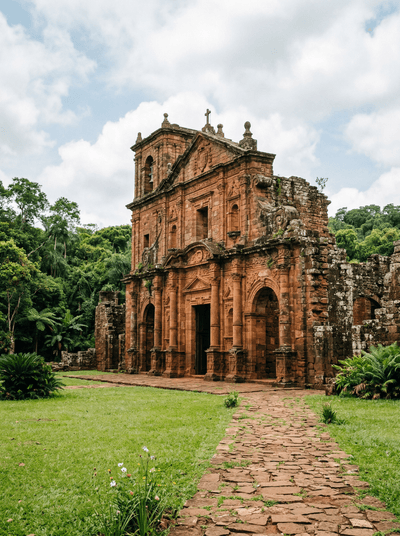
Jungle-wrapped Jesuit ruins where Guaraní played baroque beneath a howler-monkey canopy.
Ait Benhaddou
Morocco
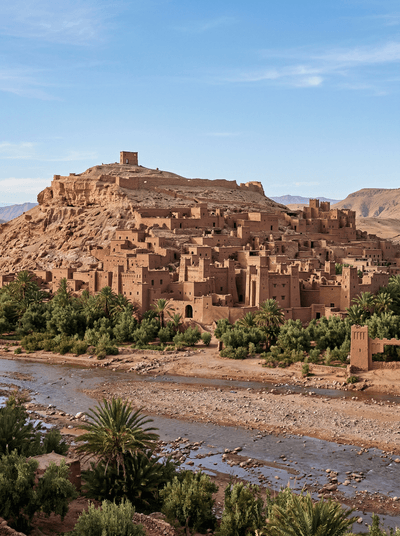
One man who lives here has been in ten films, because crews keep casting the village.
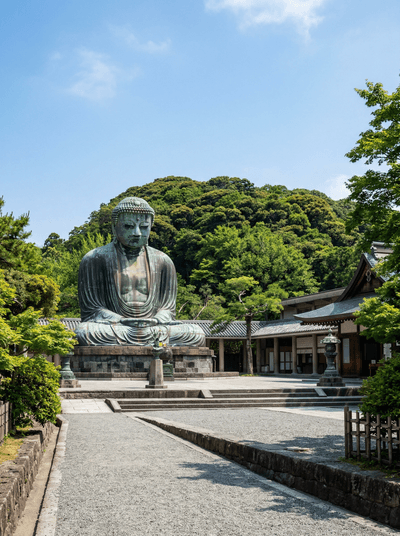
Kamakura
Japan
A bronze Buddha meditating outdoors for five centuries, since the sea took his hall.
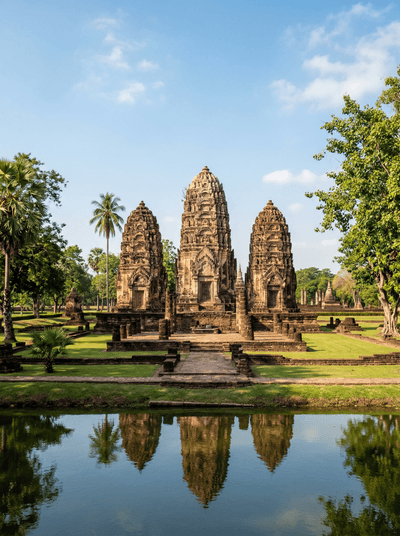
Sukhothai
Thailand
Cycling through lotus ponds and brick stupas where Thailand's first capital crumbles into dust.

Mont-Saint-Michel
France
A granite abbey rising from a bay where the sea withdraws fifteen kilometres and races back.
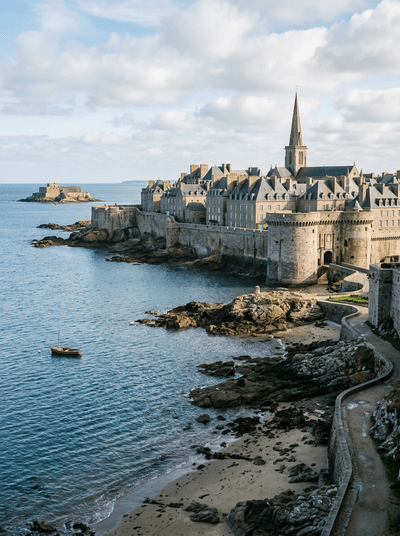
Saint-Malo
France
Granite ramparts ringing a corsair city where Europe's biggest tides lock you in twice a day.
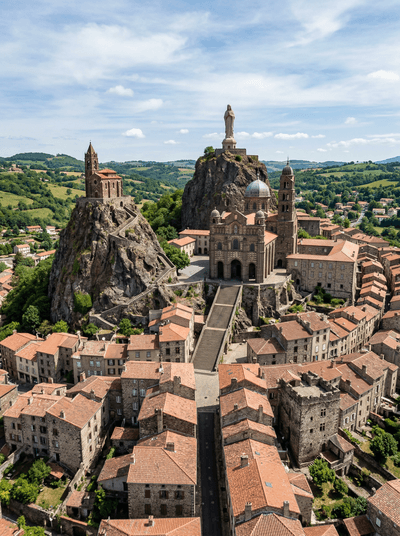
Le Puy-en-Velay
France
Three volcanic plugs crowned with a chapel, a cathedral and a giant red Madonna.
Les Baux-de-Provence
France
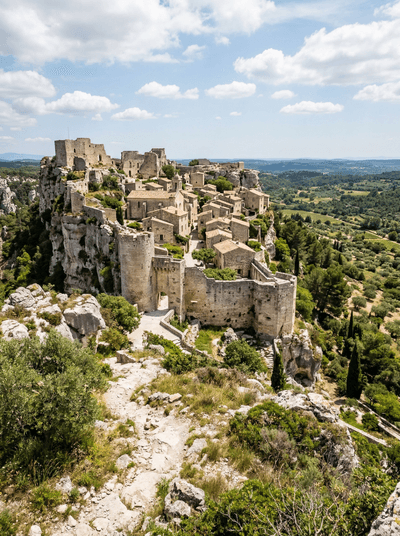
Ruined fortress walls dissolving into white rock as if the mountain were slowly swallowing them.