France
Saint-Malo
Granite ramparts ringing a corsair city where Europe's biggest tides lock you in twice a day.
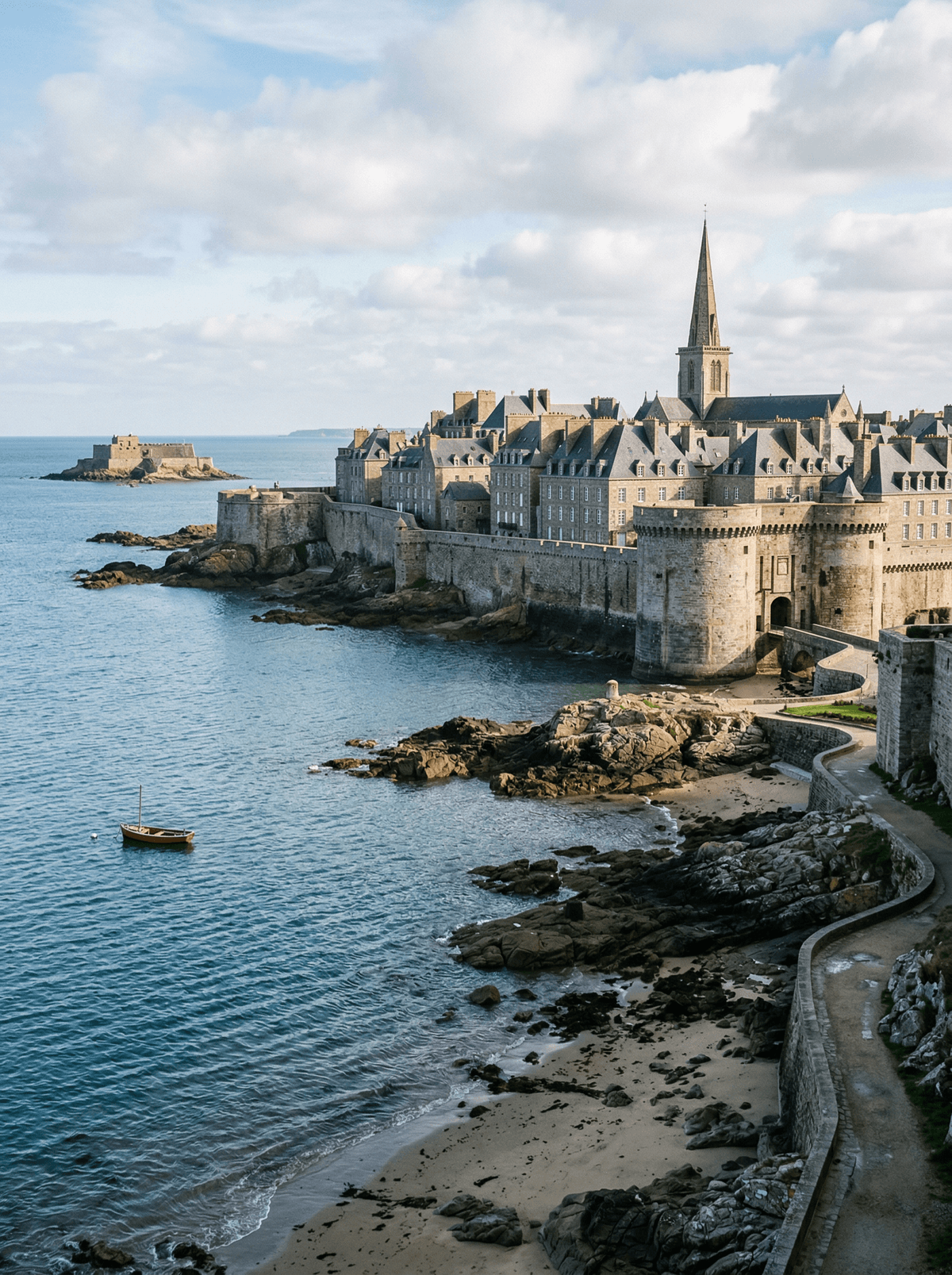
The granite walls close around you and the tide rises on both sides. Saint-Malo, on France's Breton coast, is a walled city built on rock, ringed by ramparts the sea crashes against twice a day with enough force to salt the stonework, and at high water the city becomes a near-island — the causeways go under, Fort National rises from the sea, and the horizon is nothing but grey ocean and grey sky.
The walled city, the Intra-Muros, sits on what was once an island joined to the mainland by a sandbar, and its ramparts — towers of the fourteenth and fifteenth centuries, curtain walls and bastions of the 1600s and 1700s — can be walked the whole way round above the harbour, the beaches and the open sea, with the château's keep of 1424 at one corner. This was the corsair city, home port of the licensed privateers who sailed under royal letters and built the tall granite houses with the proceeds, and it was almost entirely destroyed in August 1944 and rebuilt stone by stone to its old plan. The Emerald Coast here has the highest tides in Europe: at low water the beach spreads for hundreds of metres and the causeways open to Fort National and the Grand Bé, where Chateaubriand is buried facing the sea; at high water they vanish, so check the tide times before you cross. Cancale and its oysters are twenty minutes east.
Solo
Walk the ramparts at high tide when the sea crashes to both sides and the city feels like a ship. Time it to cross to Chateaubriand's tomb on the Grand Bé before the tide cuts you off.
Couple
The walled city compresses restaurants, rampart walks and sea views into a space compact enough for an evening. Oysters from Cancale, a bottle of Muscadet and a rampart bench at sunset is the classic Saint-Malo date.
Family
The causeway to Fort National appears and disappears twice a day — timing the crossing is an adventure of its own. The beach triples in size when the tide is out, and the rampart walk gives children arrow slits and cannon to find.
Friends
Oysters at Cancale, ramparts at high tide, galettes and cider in the walled city, sunset from the Sillon beach. Saint-Malo compresses a full Breton weekend into a walkable granite square.
- Granite ramparts ring the walled city completely — walk the full circuit at high tide when the sea crashes on both sides.
- The highest tides in Europe uncover causeways to Fort National and the Grand Bé at low water and drown them at high — tidal theatre twice a day.
- Corsair history is built into the tall granite houses and the street names — this was a city of licensed privateers.
- Cancale's oyster market is twenty minutes away — eat them on the harbour wall with the sea still on the shells.
Cancale oysters eaten raw from the harbour-wall stalls, the sea still dripping off the shells.
A galette complète with a bowl of dry cider in a walled-city crêperie — stone floors, low beams.
Tanji Fishing Village
Gambia
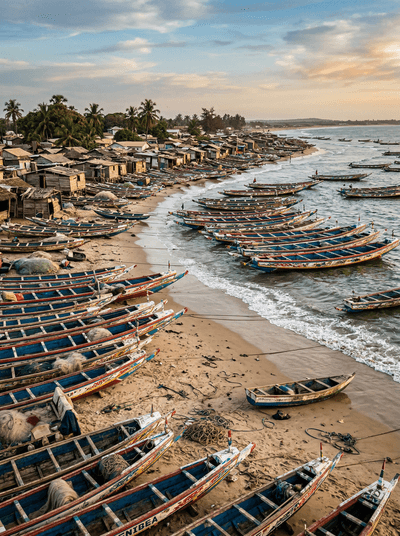
The beach erupts each afternoon: pirogues through surf, silver bonga by the basket, woodsmoke everywhere.
Rapa Nui (Easter Island)
Chile
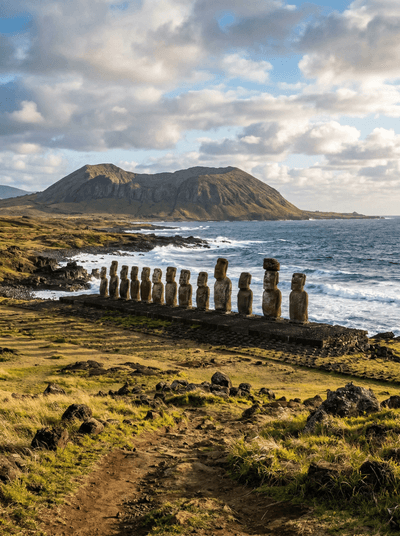
Moai, grassed craters and a living Polynesian culture meet in the open Pacific.
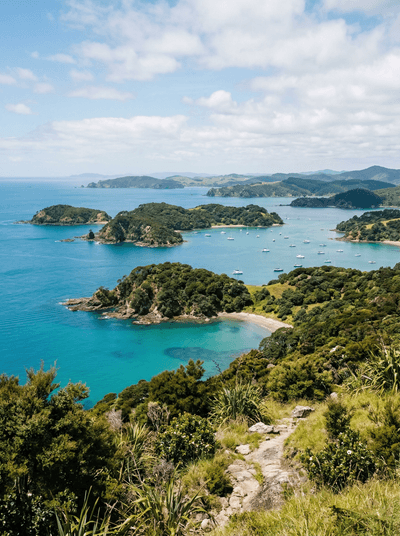
Bay of Islands
New Zealand
Some 144 islands scattered across the waters where modern New Zealand was founded.
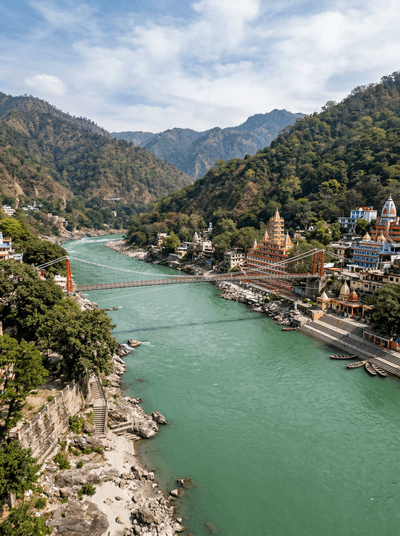
Rishikesh
India
White-water thundering out of the Himalayan foothills toward ghats where sadhus meditate at dawn.
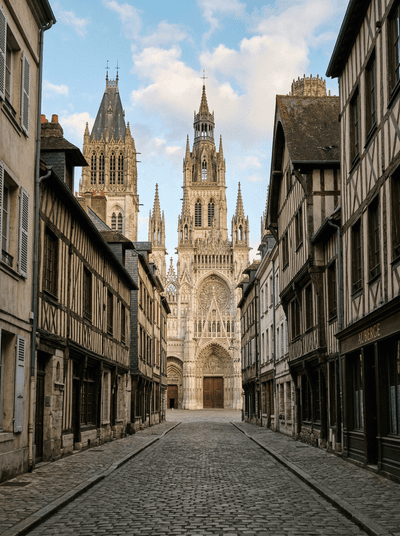
Rouen
France
Half-timbered lanes winding to the square where Joan of Arc's fire still scorches the stone.
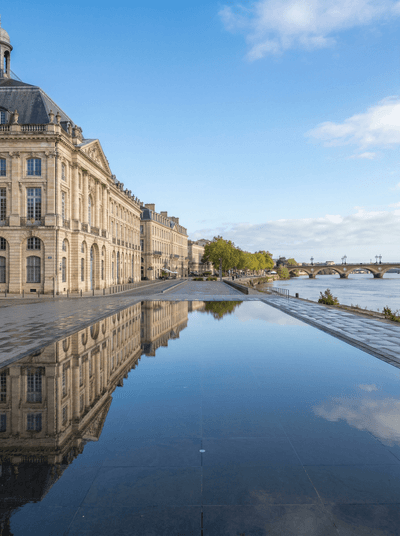
Bordeaux
France
Eighteenth-century grandeur doubled in the Garonne's water mirror — a wine capital scrubbed back to gold.
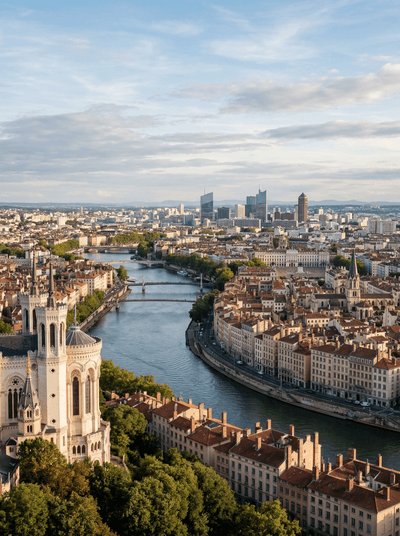
Lyon
France
Silk-workers' secret passages threading between two rivers in the city that feeds France.
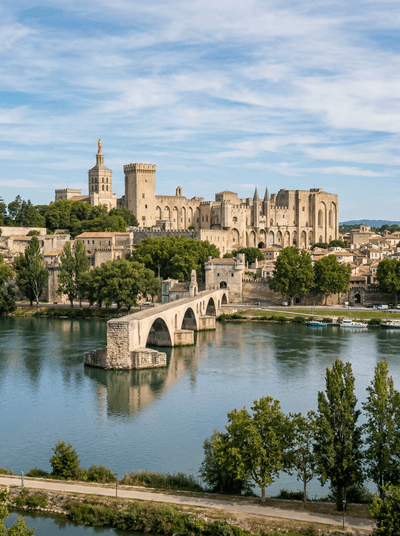
Avignon
France
Papal palace walls thick enough to hold a century of intrigue, and a bridge stopping mid-river.