Saudi Arabia
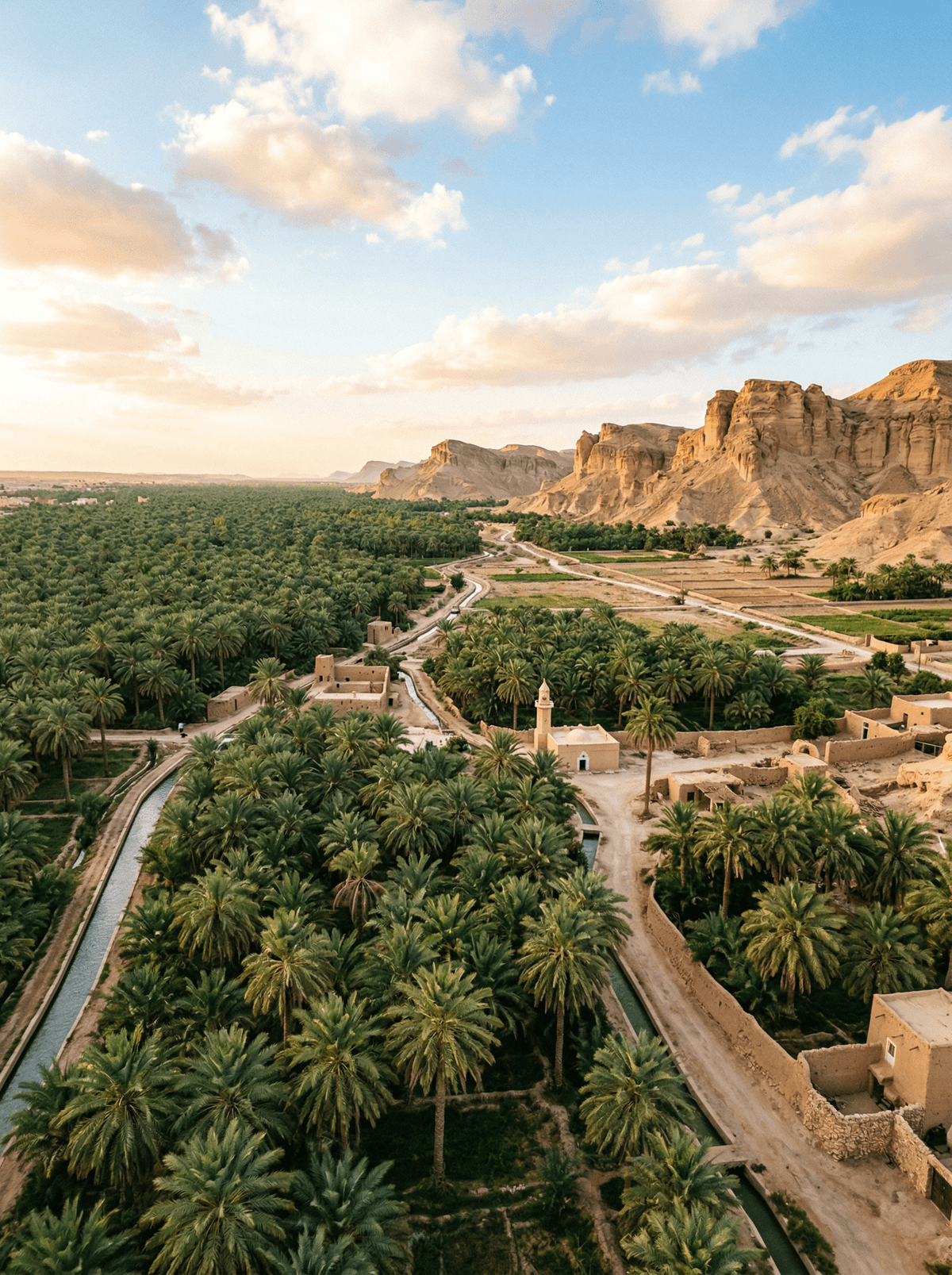
Al Ahsa Oasis
Historic springs and open canals raised 2.5 million palms beneath a furnace sky.
Beneath the date palm canopy at Al Ahsa, the light is green and dappled, the air noticeably cooler than the desert just beyond the tree line. Water still runs in the open canals between the trunks, and its sound follows you through the groves. Above the palms, the sky is the hard blue of the Eastern Province — a reminder that this abundance exists in defiance of the surrounding emptiness.
Al Ahsa Oasis in Saudi Arabia is the largest oasis in the world, with some 2.5 million date palms across a landscape settled since the Neolithic. UNESCO inscribed it as a World Heritage site in 2018, recognising an agricultural tradition built on distributing spring water through open-air canals. Historically, around thirty named natural springs supported the oasis, including the hot, sulphurous Ain Najm and the warm Umm Sab'ah, Al-Harra, Al-Khudud, and Al-Haqel. Intensive groundwater pumping reduced their natural discharge: a peer-reviewed 2011 study reported that most free-flowing springs no longer operated naturally and wells had replaced them, while official Saudi sources say some springs still flow and many smaller ones have dried. No verified current count of naturally flowing springs was found. Umm Sab'ah, once an artesian spring, was being pumped through a 300-metre well when studied in 2008. The groves endure through surviving springs, wells, and the managed canal network. Ain Najm's bath structures date to 1703; nearby Hofuf holds Ibrahim Palace and historic Souq Al-Qaisariya.
Solo
Walking the irrigation channels between palm groves in the early morning — alone, with only birdsong and running water — is a meditation the oasis gives freely.
Couple
Sunset walks through the palm groves, followed by dinner in restored heritage houses near the old souk, offer a quiet romance far from the Gulf cities' bustle.
Family
The oasis is walkable, shaded, and genuinely educational — children can see ancient irrigation in action and taste khalas dates fresh from the harvest.
Friends
The combination of the souk, the springs, Ibrahim Palace, and the surrounding Al-Qarah caves makes a full day of exploration for a group.
- Some 2.5 million date palms form the canopy of the world's largest oasis, sustained by an evolving system of springs, wells, and canals.
- Ibrahim Palace — an Ottoman-era fortress — stands guard over the oasis with its whitewashed walls and mosque.
- Open-air irrigation canals still thread the palm groves, following courses that carried spring water for centuries.
- Historic Souq Al-Qaisariya in Hofuf fills its covered lanes with pottery, textiles, spices, and dates.
Khalas dates — amber and caramel-soft, eaten fresh in harvest season or as syrup and date paste once the season turns.
Hasawi red rice — Al-Ahsa's distinctive grain, traditionally served to visitors and guests.
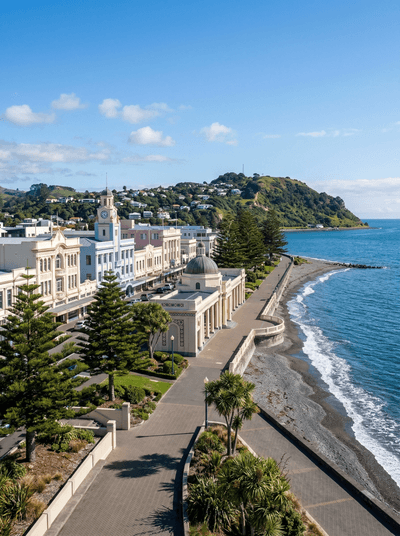
Napier
New Zealand
Rebuilt entirely in Art Deco after a 1931 earthquake levelled the city in minutes.
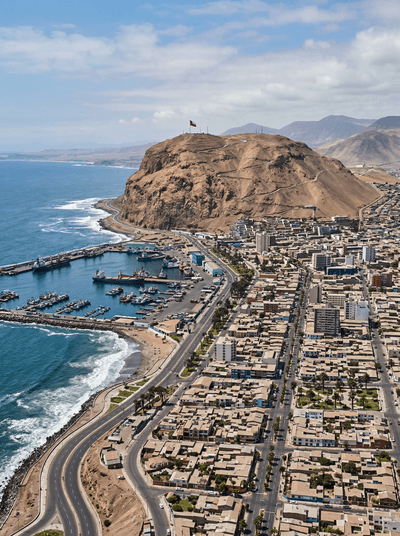
Arica
Chile
One of humanity's earliest mummification traditions rests beneath Arica's beaches and headland.
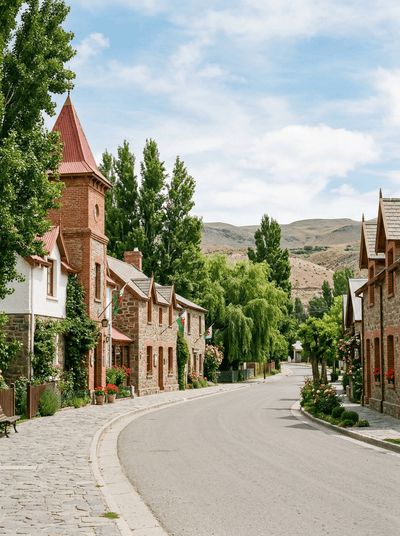
Gaiman
Argentina
Welsh teahouses serving bara brith and cream scones in the middle of Patagonian steppe.
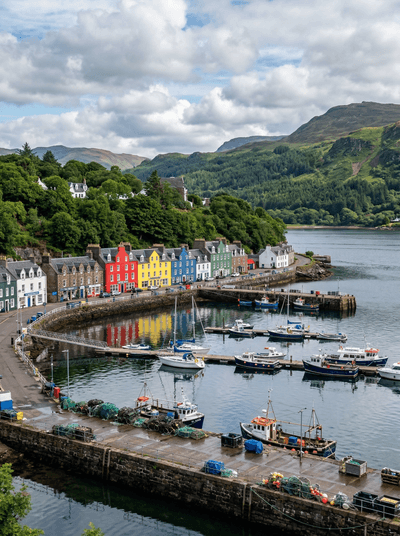
Tobermory
Scotland
Crayon-bright houses line a harbour where fishing boats rock above sunken Armada gold.
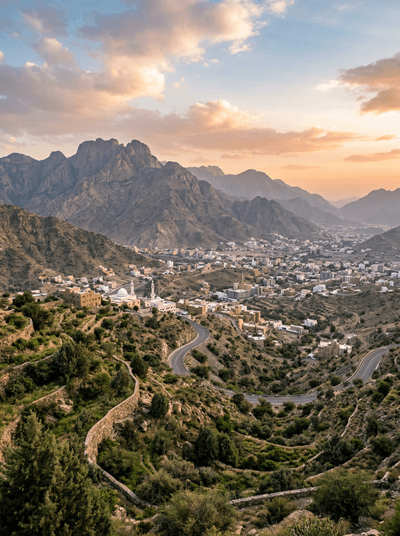
Ta'if
Saudi Arabia
Damask roses carpeting mountain terraces where Saudi royals once escaped the lowland heat.
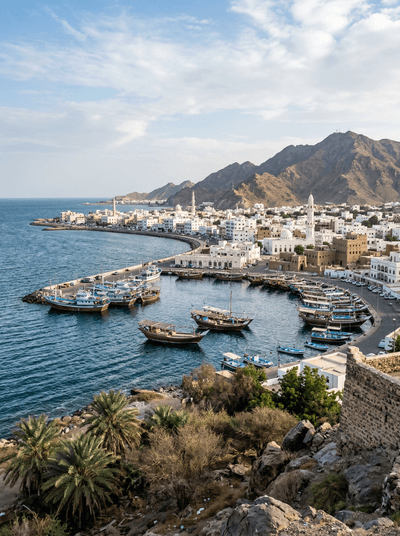
Jizan
Saudi Arabia
A tropical port city where African-influenced markets and mangrove creeks meet the Red Sea.
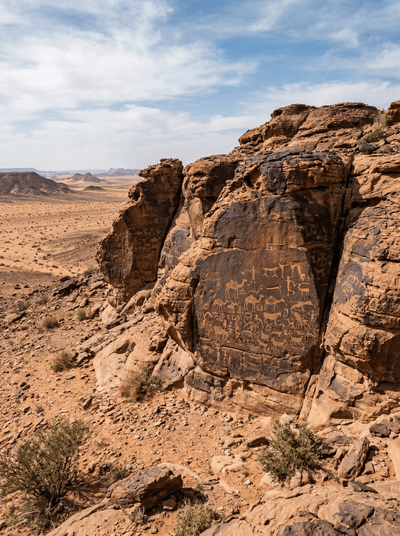
Jubbah
Saudi Arabia
Petroglyphs of camels, ibex and hunters carved into sandstone ten thousand years ago.
Al Soudah
Saudi Arabia
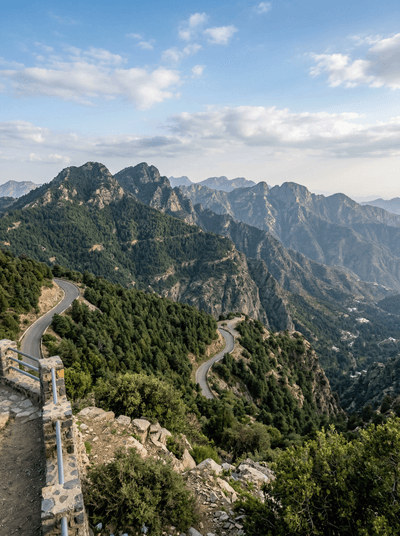
Saudi Arabia's rooftop, where juniper forests cling to ridges three thousand metres above the desert.