Argentina
Gaiman
Welsh teahouses serving bara brith and cream scones in the middle of Patagonian steppe.
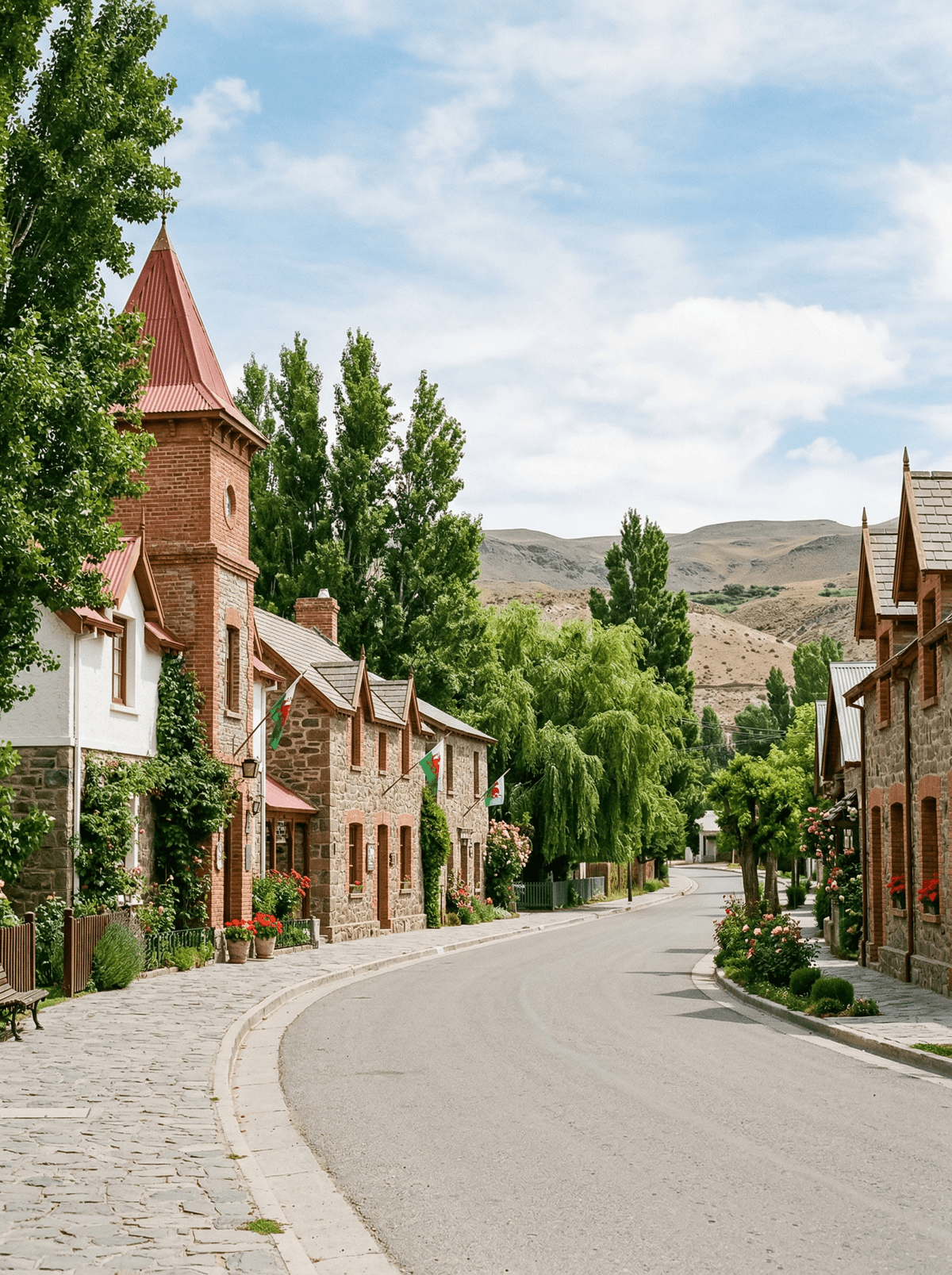
Gaiman is a Welsh colony town on the Patagonian steppe, where teahouses serve bara brith and torta negra galesa against red clay bluffs and dust. The first Welsh settlers reached the Chubut valley in 1865 hoping to keep their language and culture intact, Gaiman took shape from 1874, and the street signs are still bilingual.
The colony sailed from Liverpool aboard the Mimosa, and in Gaiman the chapels, tea rooms and former railway station each carry part of that story: five Welsh chapels stand in and around the town, the oldest from 1880, and the regional museum in the old station preserves what the immigrants carried. Welsh is taught again — at Coleg Camwy and through the Welsh Language Project, which has sent teachers from Wales each year since 1997. Afternoon tea remains the most visible tradition, reserved at a chosen tea room rather than assumed: scones, bara brith, and the dense torta negra the settlers devised to keep through Patagonian scarcity. One teahouse still keeps the table where Princess Diana took tea in 1995 after whale-watching off Puerto Madryn. The municipal cultural circuit threads it together, with chapel and museum openings worth confirming before setting out.
Solo
Gaiman rewards the traveller who asks questions — chapels, museum and tea rooms each preserve a different part of the settlement story, and an afternoon of eating and listening beats a week of surface touring.
Couple
A museum-and-tea afternoon gives history, conversation and ceremony without manufactured romance — and arriving across empty Chubut lends the whole thing the quality of a mirage.
Family
The Welsh-in-Patagonia story lodges in children's memory — a community that crossed an ocean and rebuilt home in the middle of nowhere — and the cakes are excellent. Short stops keep the day working.
- Five Welsh chapels stand in and around town, the oldest raised in 1880.
- Tea rooms serve bara brith, torta negra galesa and scones by reservation, as tradition.
- The regional museum fills the former railway station with what the settlers carried.
- Welsh lives again in classrooms, with teachers sent from Wales every year since 1997.
Welsh cream tea — torta galesa, scones loaded with cream, strong black tea in porcelain.
Torta negra galesa — the dense fruit cake devised in Chubut to keep without refrigeration.
Chaves
Portugal
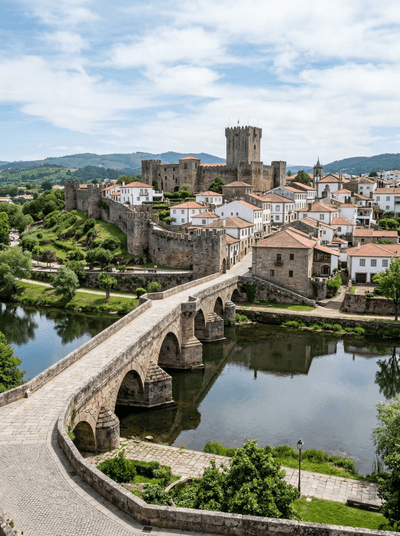
Roman baths still steam beside a bridge Trajan built — thermal water hot for two millennia.
Bodh Gaya
India
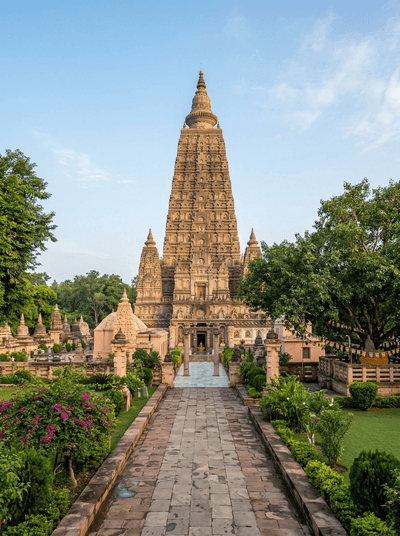
Maroon-robed monks chanting beneath the descendant of the fig tree where Buddhism itself began.
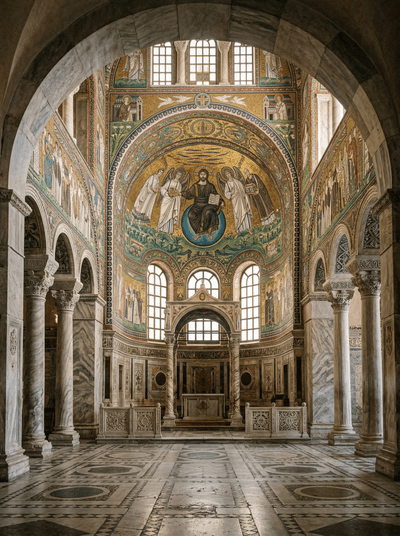
Ravenna
Italy
Byzantine mosaics so luminous the gold tiles still burn after fifteen centuries.
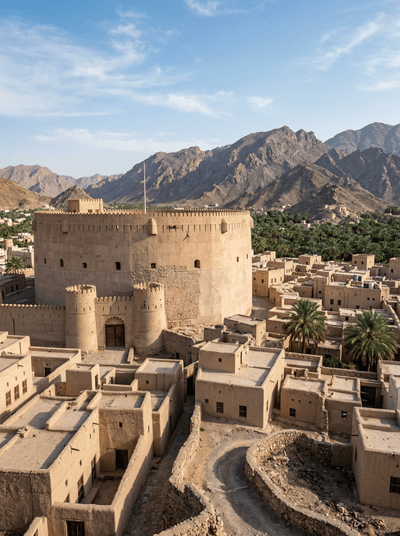
Nizwa
Oman
On Friday mornings goats and cattle circle the ring beneath a tower built for cannon fire.
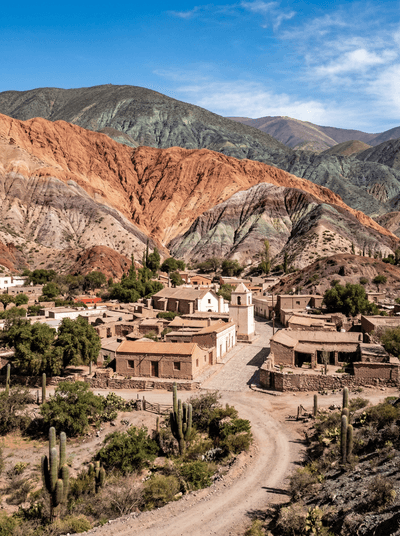
Purmamarca
Argentina
A seven-colour hill burns amber over adobe lanes where llamas carry the morning market.
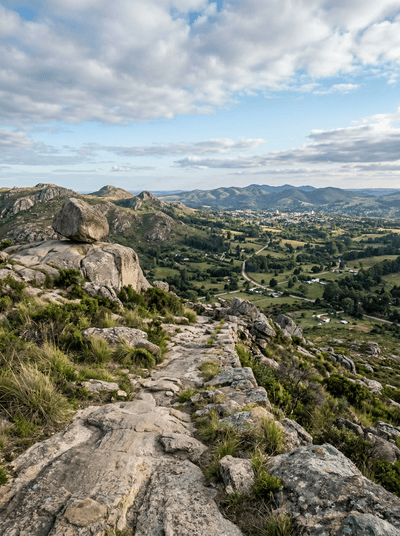
Tandil
Argentina
Two-billion-year-old hills worn to stumps, where artisan salami cures in granite-cooled caves.
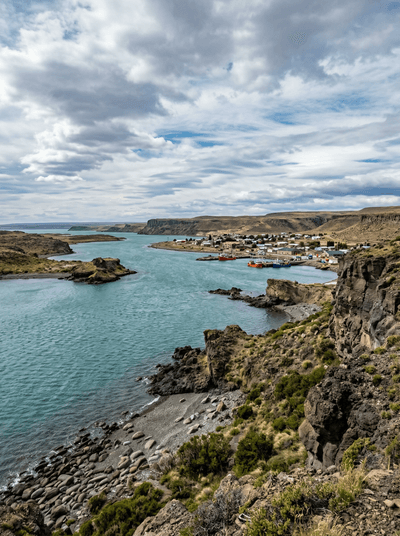
Puerto Deseado
Argentina
Tiny black-and-white dolphins spin through a flooded river canyon meeting the open sea.
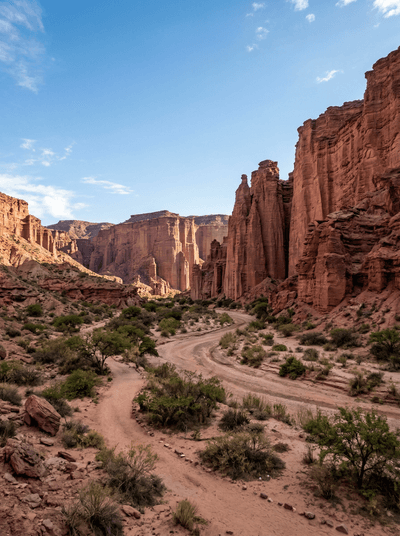
Parque Nacional Talampaya
Argentina
Red sandstone canyons where condors nest above dinosaur-age trackways in the riverbed.