Saudi Arabia
Jubbah
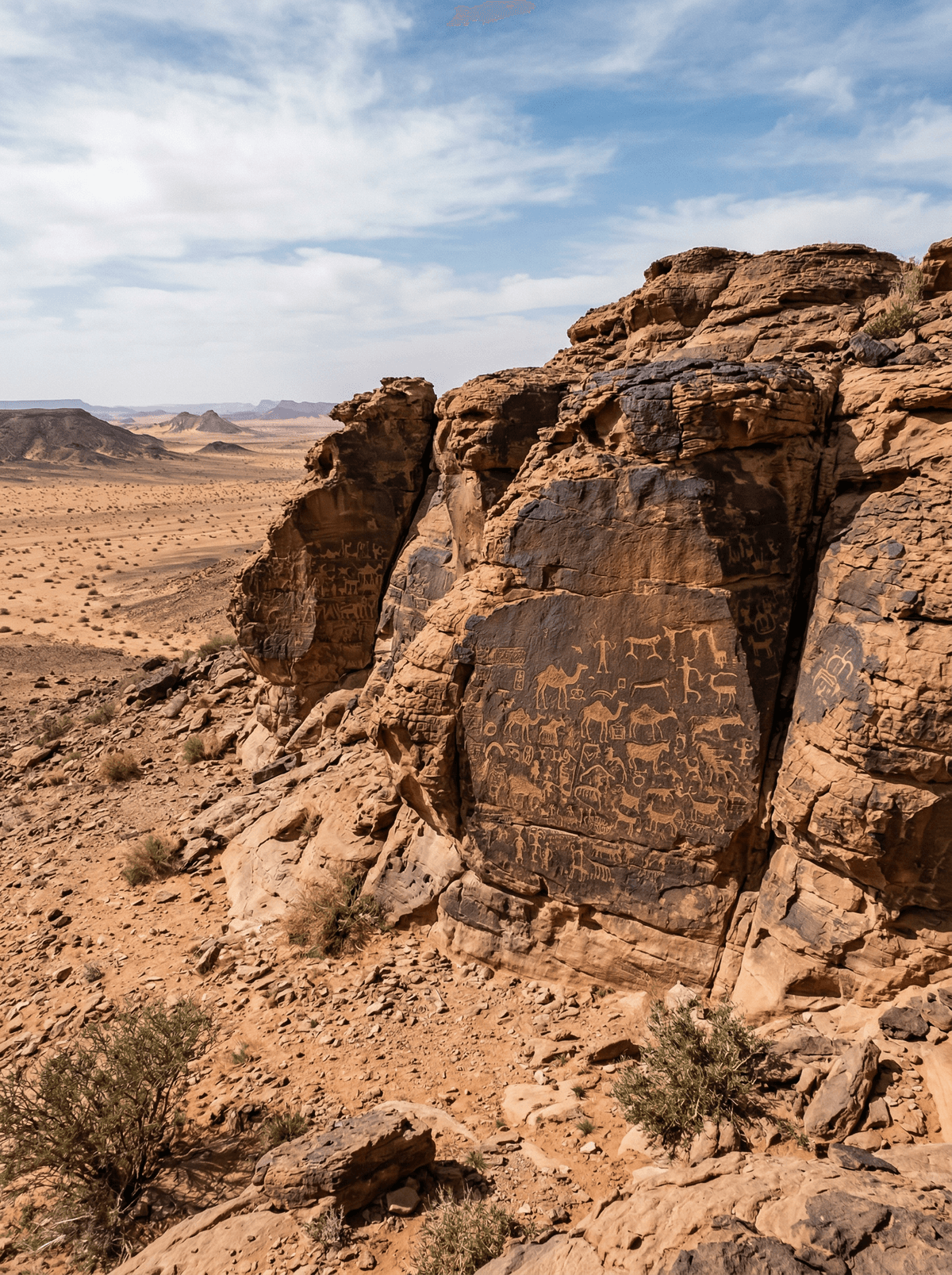
Petroglyphs of camels, ibex and hunters carved into sandstone ten thousand years ago.
The sandstone outcrop of Jabal Umm Sinman rises from the desert floor near Jubbah like a geological afterthought, and its rock faces are covered in images carved by hands that last touched them millennia ago. Camels, ibex, ostriches, human figures — the petroglyphs span over 10,000 years, layered on top of each other in a palimpsest of cultures that used this rock as their canvas. The desert wind has preserved them with a fidelity that later civilisations could not manage for their own monuments.
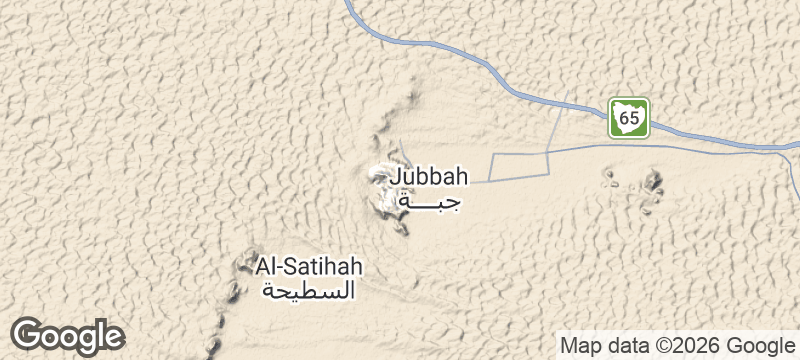
Jubbah is a town in Saudi Arabia's Ha'il region, set beside the sandstone outcrop of Jabal Umm Sinman — inscribed by UNESCO for its exceptional collection of rock art. The petroglyphs here date from the Neolithic through to the early Islamic period, recording shifts in climate, fauna, and human culture across ten millennia. Images of cattle — species that have not lived in this region for thousands of years — provide evidence of a wetter, greener Arabia. The site is part of the broader Rock Art in the Ha'il Region inscription, which also includes Shuwaymis to the south. The desert setting has protected the carvings from weathering, and many retain a crispness that belies their age.
Solo
Standing alone before images carved ten thousand years ago — in a silence that has barely changed since — is a humbling solo experience.
Couple
The interpretive walk between panels is a shared discovery — pointing out new carvings to each other as you move along the rock face.
Family
For older children, the rock art brings prehistory to life in a way no museum can — these are real images in their original setting.
Friends
The combination of UNESCO archaeology and Ha'il's open desert makes Jubbah a destination groups can build a full day around.
- Jabal Umm Sinman's rock faces hold petroglyphs spanning over 10,000 years — UNESCO World Heritage.
- Carved images of camels, ibex, ostriches, and human figures mark the passage of cultures across millennia.
- The dry desert air has kept many panels crisp enough to read every line, ten millennia on.
- An interpretive route links the major panels — prehistory in its original setting, no museum glass.
Hail harees — boiled wheat and meat, prized as a warming meal in the cold season.
Keubaibat Hail — grape leaves stuffed with spiced rice and simmered over lamb.
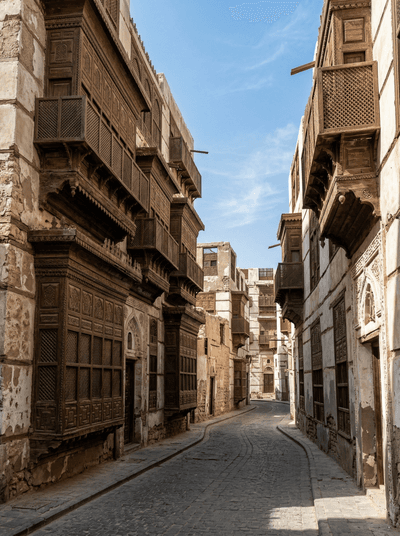
Jeddah Al-Balad
Saudi Arabia
Coral-stone towers with carved wooden balconies leaning over spice-scented alleys.
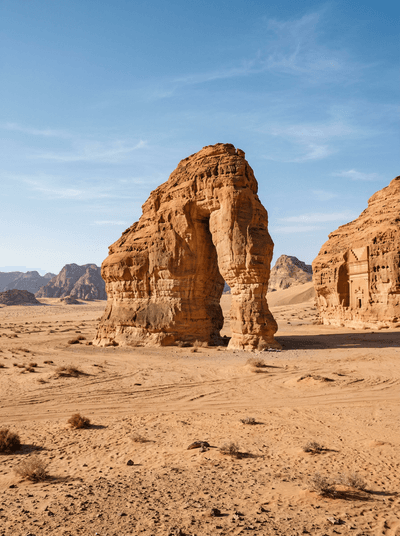
Al-Ula
Saudi Arabia
Nabataean tombs carved into sandstone cliffs that glow amber at dusk.
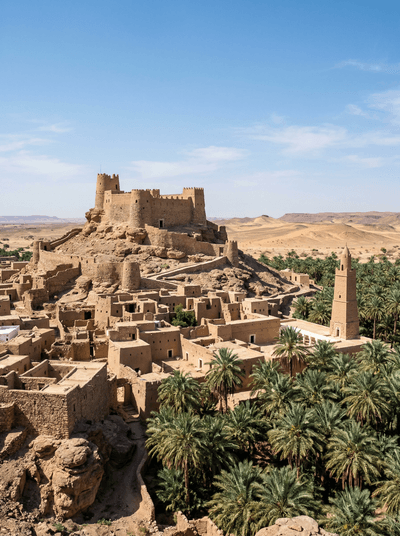
Dumat al-Jandal
Saudi Arabia
Marid Castle crowns a silent oasis where caravans rested for millennia beneath its towers.