Panama
Archipiélago de las Perlas
The pearl that dazzled a Tudor queen and Elizabeth Taylor was pulled from these waters.
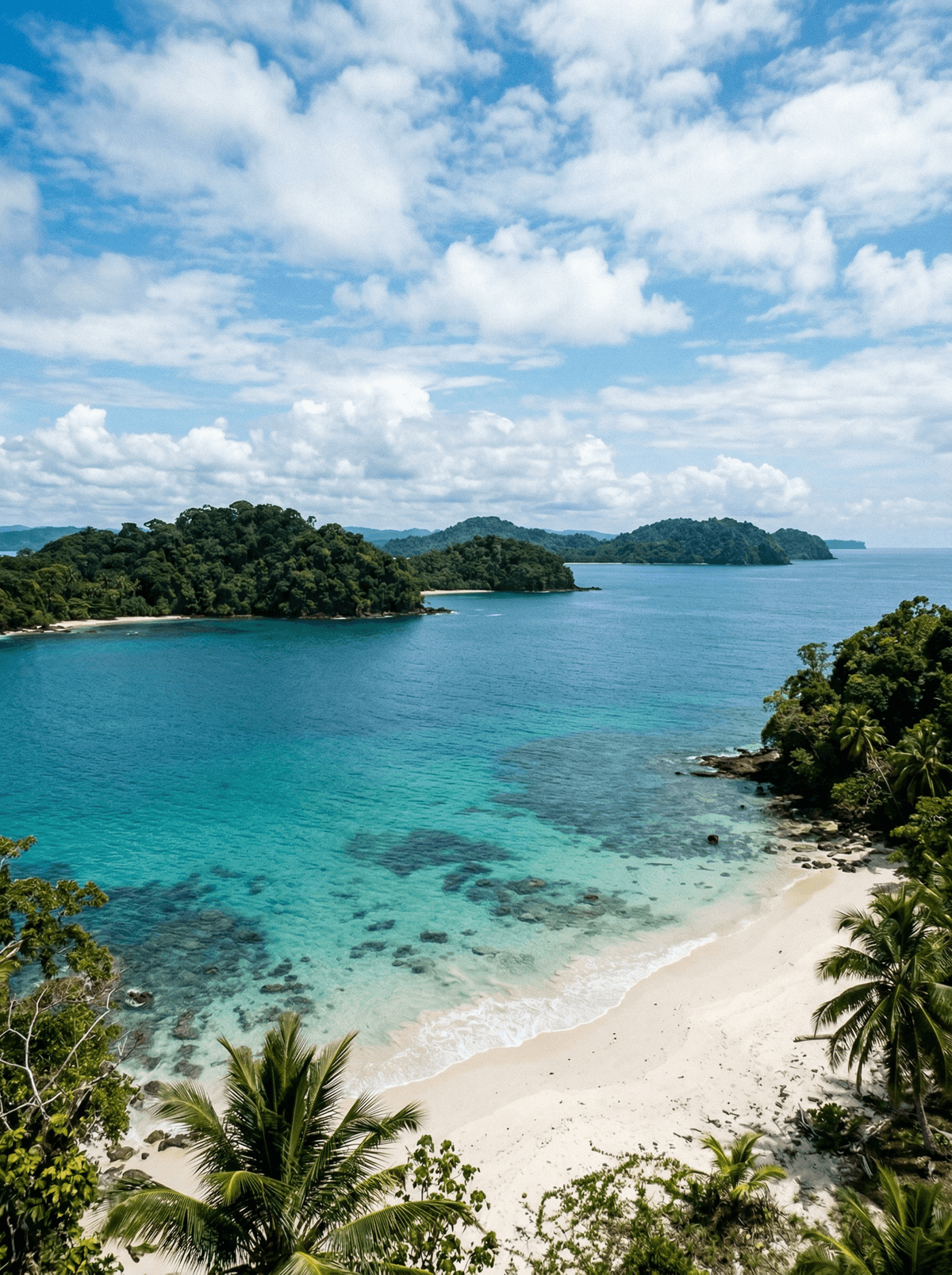
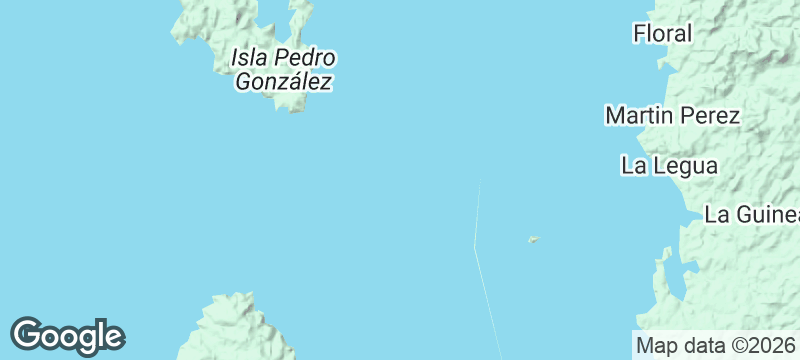
The boat clears Panama City's skyline and the Pacific breaks into islands, 39 of them trailed by a hundred islets, scattered over water that shifts from jade to cobalt. In the whale months, July through October, humpback blows hang in the channels between them.
Pearls named this archipelago and made it famous long before anyone came for the beaches. La Peregrina, one of the most celebrated pearls ever found, came out of these waters: lore says an enslaved diver surrendered it for his freedom, Philip II of Spain sent it to his bride Mary I of England, it spent 250 years with the Spanish crown, and in 1969 Richard Burton bought it for Elizabeth Taylor; after her death it sold for 11.8 million dollars. The sea still performs here: humpback whales arrive between July and October to breed in the archipelago's channels. Contadora, the main island, packs more than ten beaches into its small frame, while uninhabited Mogo Mogo, Chapera and Bartolomé wait a boat-hop away, and the whole scatter sits two hours by ferry from the capital's causeway.
Couple
Take the panga out for a whale morning in season, then claim one of Contadora's quieter beaches and a table above the sand for sunset.
Family
Short crossings, calm coves for young swimmers and whale watching that silences every age make this the easiest island escape from Panama City.
Friends
Charter between uninhabited islands, snorkel the coves, and finish with ceviche and cold beer back on Contadora.
- La Peregrina, said to have been found here by an enslaved diver who won his freedom, went on to adorn Mary I of England and Elizabeth Taylor.
- Humpback whales arrive between July and October to breed in the archipelago's waters.
- Contadora, the main island, holds more than ten beaches, each with its own character.
- The archipelago counts 39 islands and around a hundred islets, most still in a natural state.
Casa Tortuga on Contadora builds its daily specials around whatever the boats land; the ceviche is the local favourite.
Island snack bars keep fish and mixed ceviche in the cool box for barefoot lunches between swims.
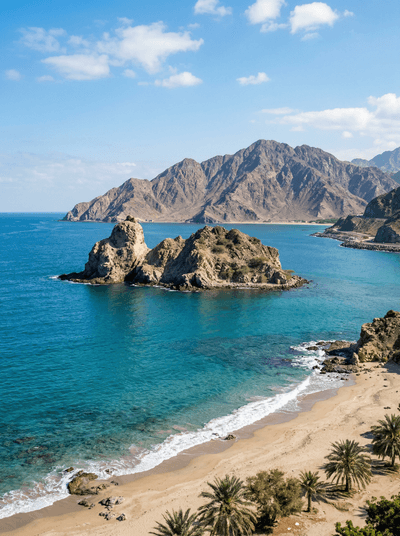
Snoopy Island
United Arab Emirates
A rock shaped like a sleeping beagle, ringed by coral where reef sharks patrol.
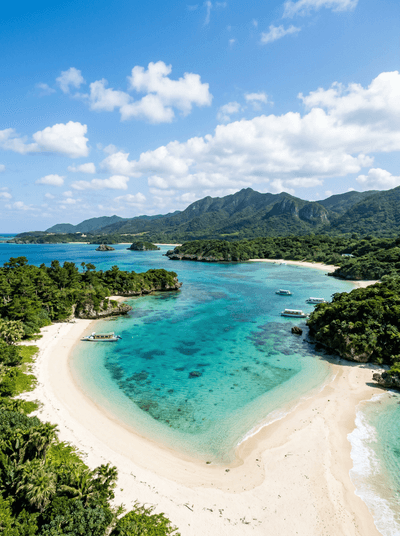
Ishigaki
Japan
Mangrove kayaks at dawn, manta cleaning stations by noon, Yaeyama soba by sunset.
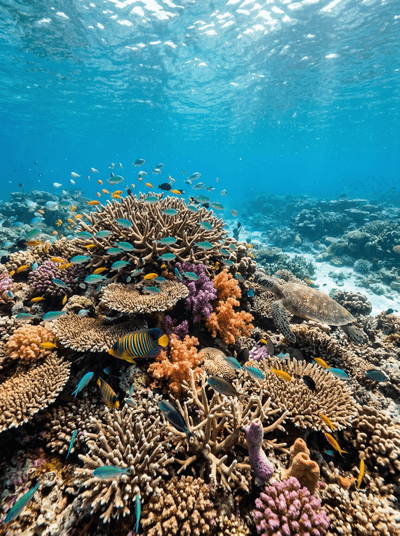
Great Barrier Reef
Australia
Turtles thread through a coral world stretching 2,300 kilometres along Queensland.
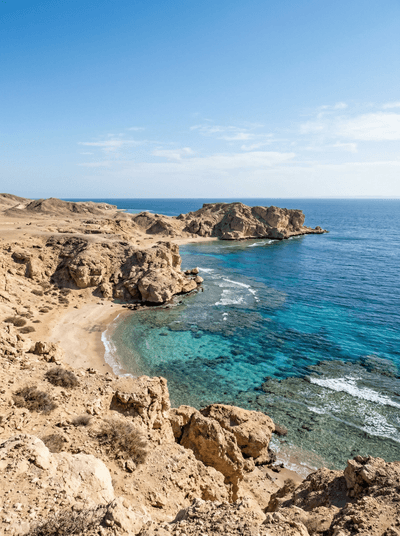
Ras Mohammed
Egypt
The Sinai desert drops into the Red Sea here, mangroves clinging to the last ledge.
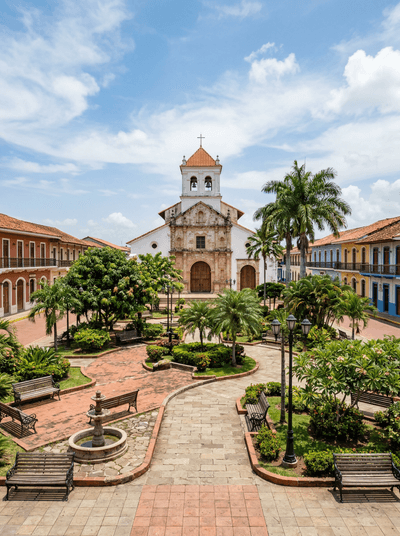
Las Tablas
Panama
One town, two streets, and a two-century Carnival war fought with music, queens and fireworks.
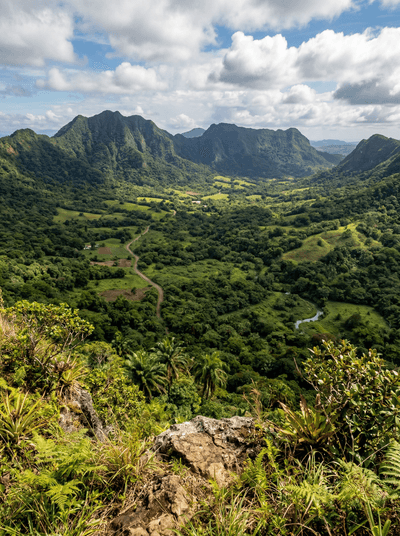
El Valle de Antón
Panama
A whole town spreads across the floor of an extinct volcano's crater.
Volcán Barú
Panama
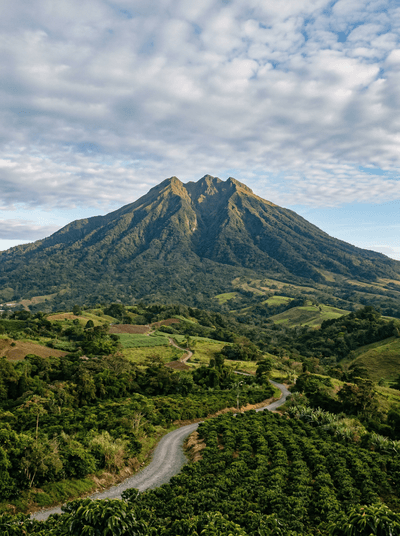
On a clear dawn from Panama's summit, two oceans shine at once.
Islas Secas
Panama
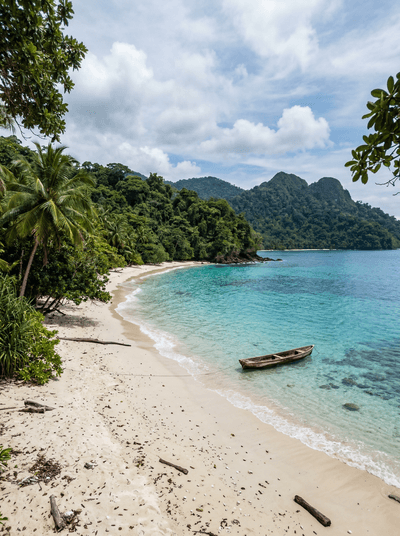
Fourteen volcanic islands, thirteen still wild, twenty miles out in whale-crossed Pacific water.