Iceland
Askja
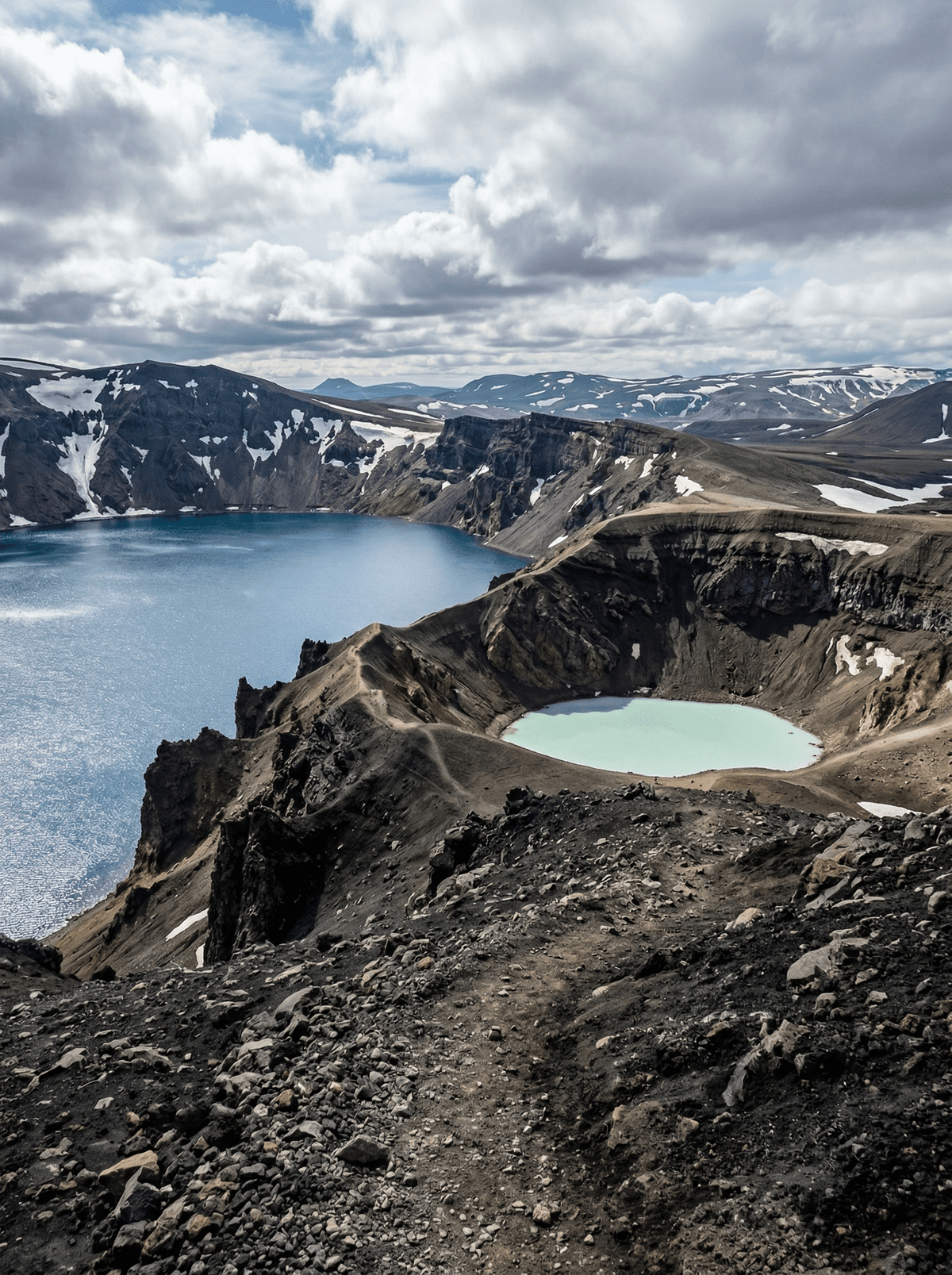
A milky-blue volcanic crater lake inside a desolate moonscape used for NASA training.
The landscape has no colour. Ash grey, pumice white, basalt black — the Askja caldera is a monochrome desert so alien that NASA sent Apollo astronauts here to practise for the moon. Then you reach the rim and look down at water the colour of powdered milk.
Askja is a nested caldera in the Dyngjufjöll mountains, shaped by a catastrophic eruption in 1875 that dropped ash across Scandinavia and helped drive a wave of Icelandic emigration to North America. Inside the main caldera lie deep, cold Öskjuvatn and Víti — a 150-metre explosion crater holding milky geothermal water, viewed from the rim on ranger-guided summer walks. Around it all stretches Ódáðahraun, Iceland's largest lava desert, thousands of square kilometres of near-lifeless basalt: the terrain that brought NASA here in 1965 and 1967. Getting in is the expedition — a full-day highland drive with unbridged river crossings, in a proper 4x4 or with an operator, in the short window the tracks are open.
Friends
The full-day 4x4 expedition across the lava desert to a lunar caldera is the sort of undertaking a trip gets defined by.
Solo
Standing alone where NASA trained moonwalkers puts everyday life in perspective — the remoteness and silence are total.
- NASA brought Apollo astronauts here in 1965 and 1967 because the basalt desert mimics the moon.
- Víti's milky-blue crater steams inside the caldera, reached on ranger-led summer walks.
- Getting in means a highland 4x4 track with river crossings — a genuine expedition.
- The 1875 eruption threw ash across Scandinavia and helped push a wave of emigration to Canada.
Icelandic meat broth or moorland-lake Arctic char at Fjallakaffi in Möðrudalur, the last farm before the desert.
Everything after that rides in with you — expedition rations eaten on the crater rim, the desert for company.
Arenal & La Fortuna
Costa Rica
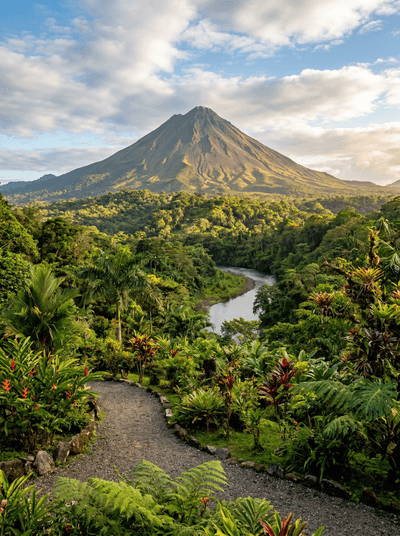
Hot springs steaming through jungle beneath a volcano's perfect cone at dusk.
Drakensberg
South Africa
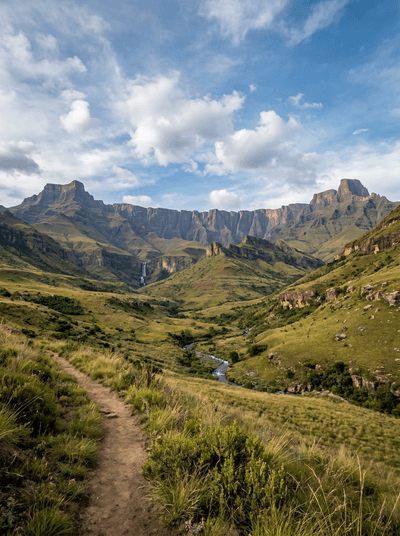
Basalt walls rise above sandstone caves painted across thousands of years.
Parque Nacional Volcán Isluga
Chile
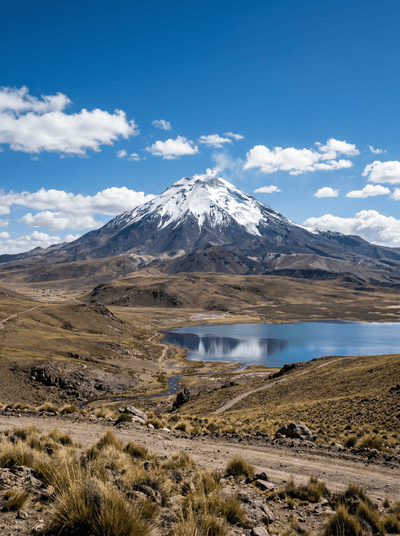
Volcanic horizons and high wetlands surround living Aymara settlements in the altiplano.
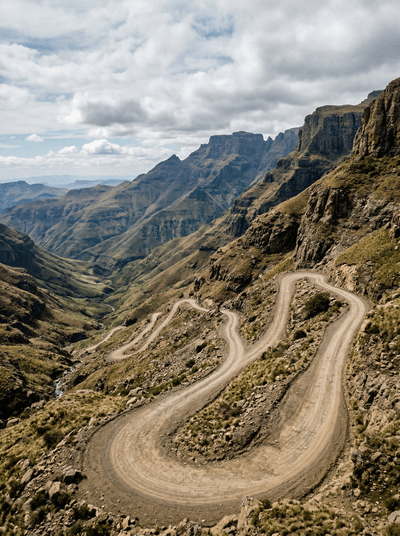
Sani Pass
South Africa
A switchback road climbs from green foothills to a high border above the clouds.
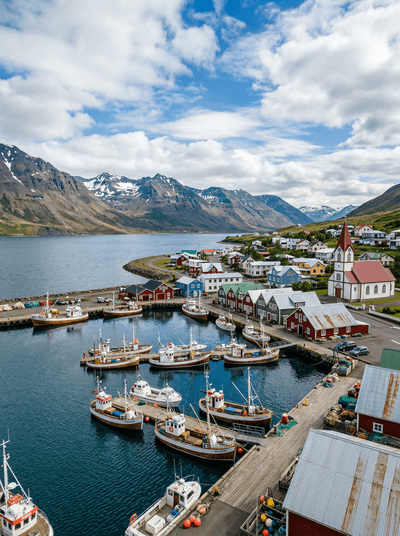
Húsavík
Iceland
Wooden sailing ships chasing the exhales of blue whales in a sapphire northern bay.
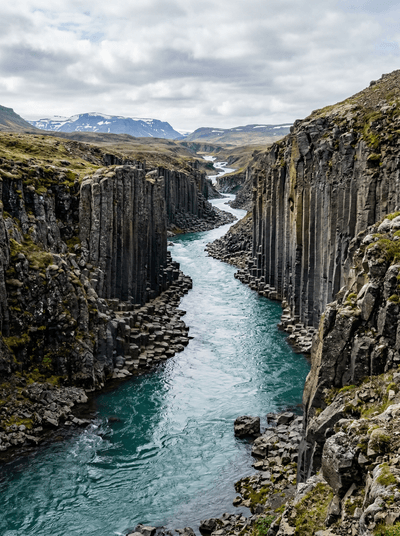
Stuðlagil Canyon
Iceland
A glacial river surging through geometric towers of perfectly hexagonal basalt.
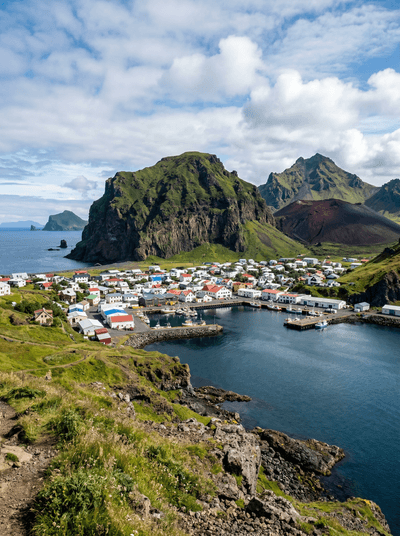
Heimaey
Iceland
An island where houses remain half-buried in volcanic ash beside a million nesting puffins.
Landmannalaugar
Iceland
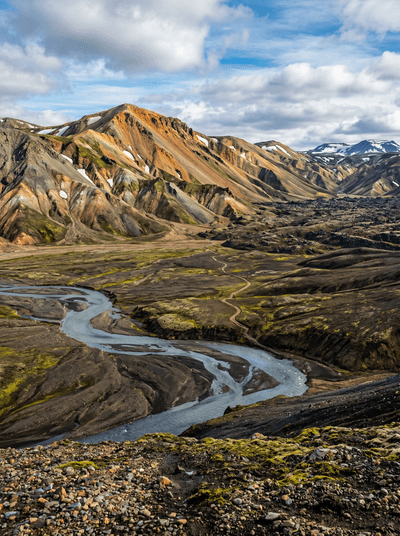
Steaming hot springs bubbling at the base of obsidian flows and rhyolite peaks.