France
Avignon
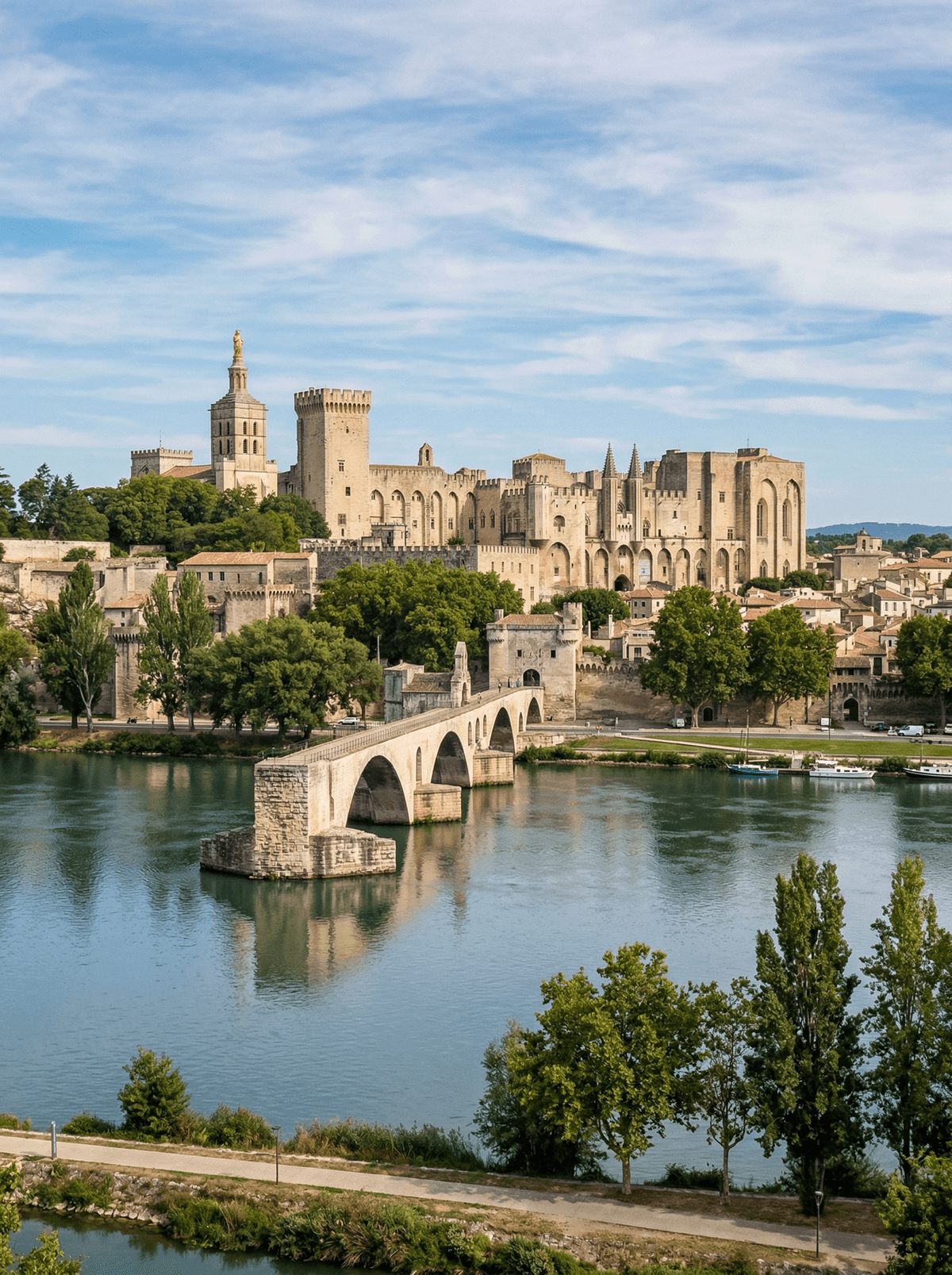
Papal palace walls thick enough to hold a century of intrigue, and a bridge stopping mid-river.
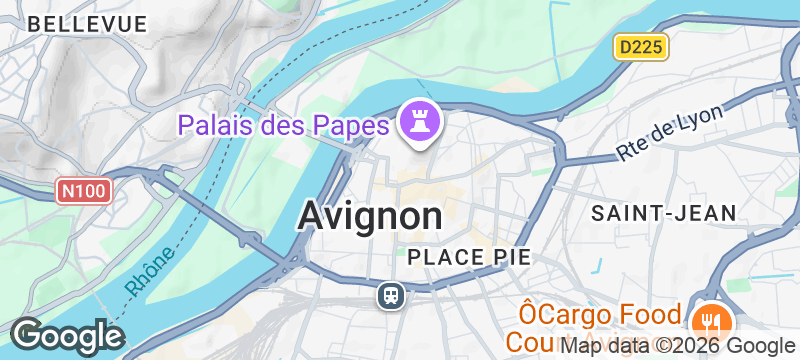
The palace walls are thick enough to contain centuries. The Palais des Papes rises from its rock above the Rhône, in southern France, like a cliff face dressed in Gothic arches, the largest Gothic palace in the world and still radiating the authority that pulled the papacy out of Rome for most of the fourteenth century. Below it the mistral hits the Rhône and the bridge of the song stops mid-river, going nowhere, held up by stubbornness alone.
Seven popes ruled from Avignon between 1309 and 1376, and the palace they built — fortress and residence in one — is the biggest Gothic building of its kind anywhere, its vast chapel, audience halls and frescoed private chambers open to visit with a rooftop view over the river. The Pont Saint-Bénezet, the Pont d'Avignon of the nursery rhyme, once crossed the whole Rhône and now ends after four arches, the rest carried off by floods long ago; standing on the broken end looking at the water is strangely moving. Every July the Festival d'Avignon, founded by Jean Vilar in 1947, turns the palace courtyard and every church, cloister and street corner into a stage. Avignon is also the capital of the Côtes du Rhône, and Châteauneuf-du-Pape begins a short drive north — the vineyards start where the city walls end.
Solo
The palace interior is big enough to absorb hours — the scale of the Grande Chapelle, the frescoes in the pope's private rooms, the view from the roof across the Rhône. The broken bridge afterwards is a meditation on the futility of permanence.
Couple
The Festival in July turns every courtyard into a stage. Even outside it, the palace square at dusk, with the stone still warm and the Rhône darkening below, justifies the wine and the shared silence.
Friends
Wine tasting in Châteauneuf-du-Pape, theatre at the festival, the palace at sunset, dinner in the Place de l'Horloge. Avignon gives a group enough culture and conviviality to fill a long weekend with no repetition.
- The Palais des Papes is the largest Gothic palace in the world — the scale of papal power is visible in every vault.
- The broken bridge — the Pont d'Avignon — stops mid-river, and standing on the end looking at the Rhône is strangely moving.
- The Festival d'Avignon every July fills every courtyard, church and street corner with theatre — the whole city is a stage.
- Avignon is capital of the Côtes du Rhône — Châteauneuf-du-Pape is a short drive, and the vineyards start where the walls end.
Papalines d'Avignon — pink, thistle-shaped chocolates filled with the herbal liqueur of the Comtat — the city's own sweet.
Châteauneuf-du-Pape poured beneath the palace walls — the Rhône's papal wine.
Khajuraho
India
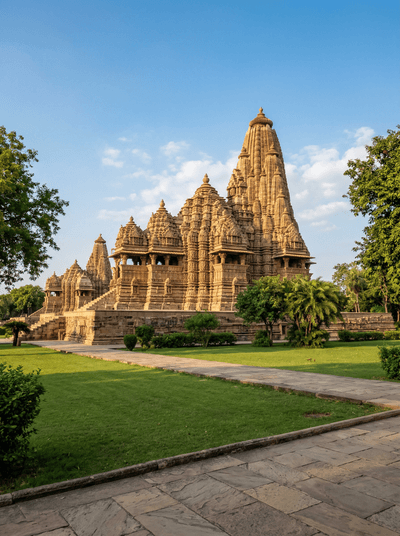
Elaborate sandstone temples covered in explicitly acrobatic carvings rising unexpectedly from the flat central plains.
Chiang Rai
Thailand
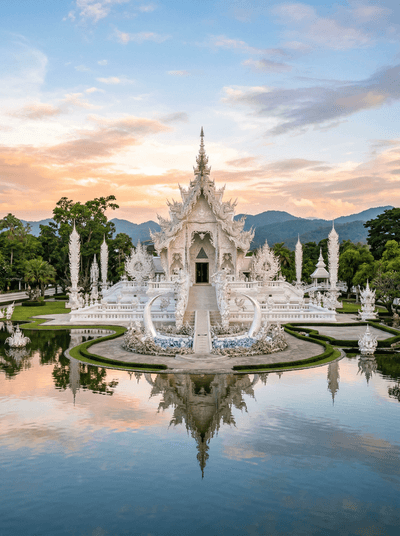
A temple built entirely of white mirror glass reflecting pop-culture damnation inside Buddhist serenity.
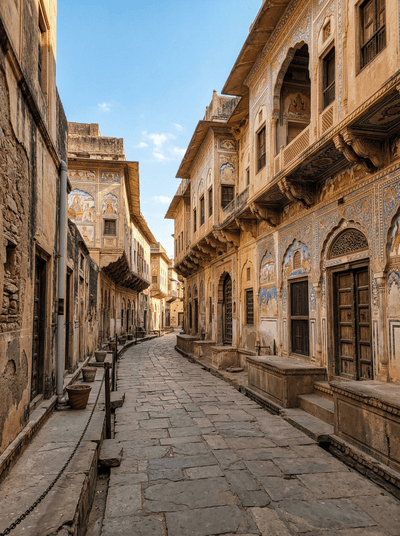
Mandawa
India
Gramophones and steam trains painted on mansion walls, a desert town turned open-air gallery.
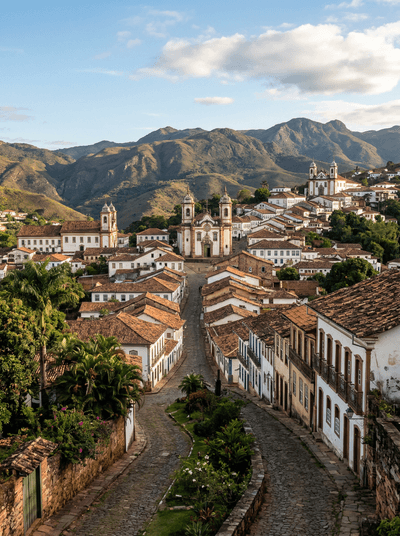
Ouro Preto
Brazil
Baroque churches dripping gold leaf in a mining town where the cobblestones still remember revolution.
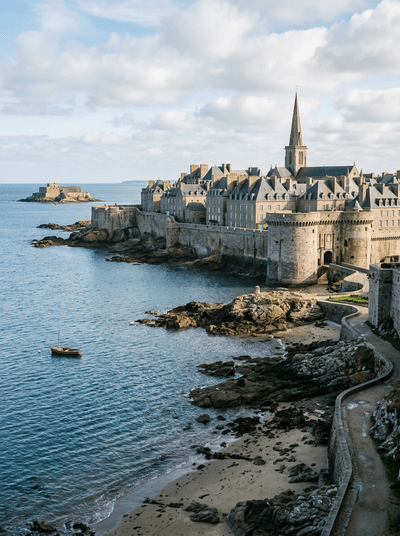
Saint-Malo
France
Granite ramparts ringing a corsair city where Europe's biggest tides lock you in twice a day.
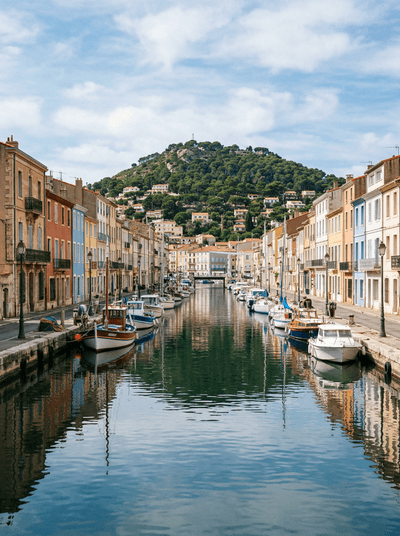
Sète
France
A canal-laced fishing port where jousting boats clash and Brassens's songs drift along the quays.
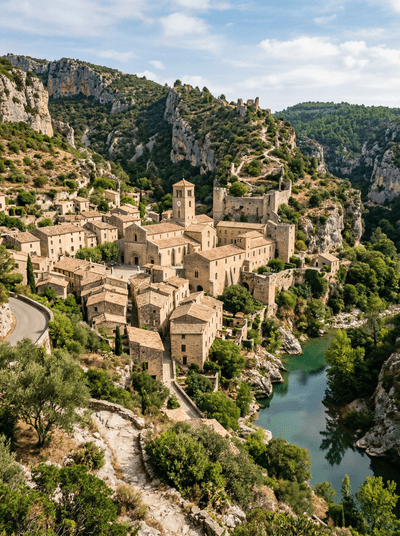
Saint-Guilhem-le-Désert
France
A Carolingian abbey hidden in a gorge where one of Charlemagne's knights retired to pray.
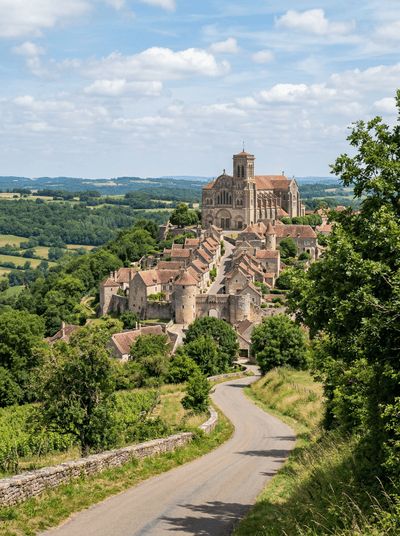
Vézelay
France
A hilltop basilica of light and carved stone where two crusades were preached into being.