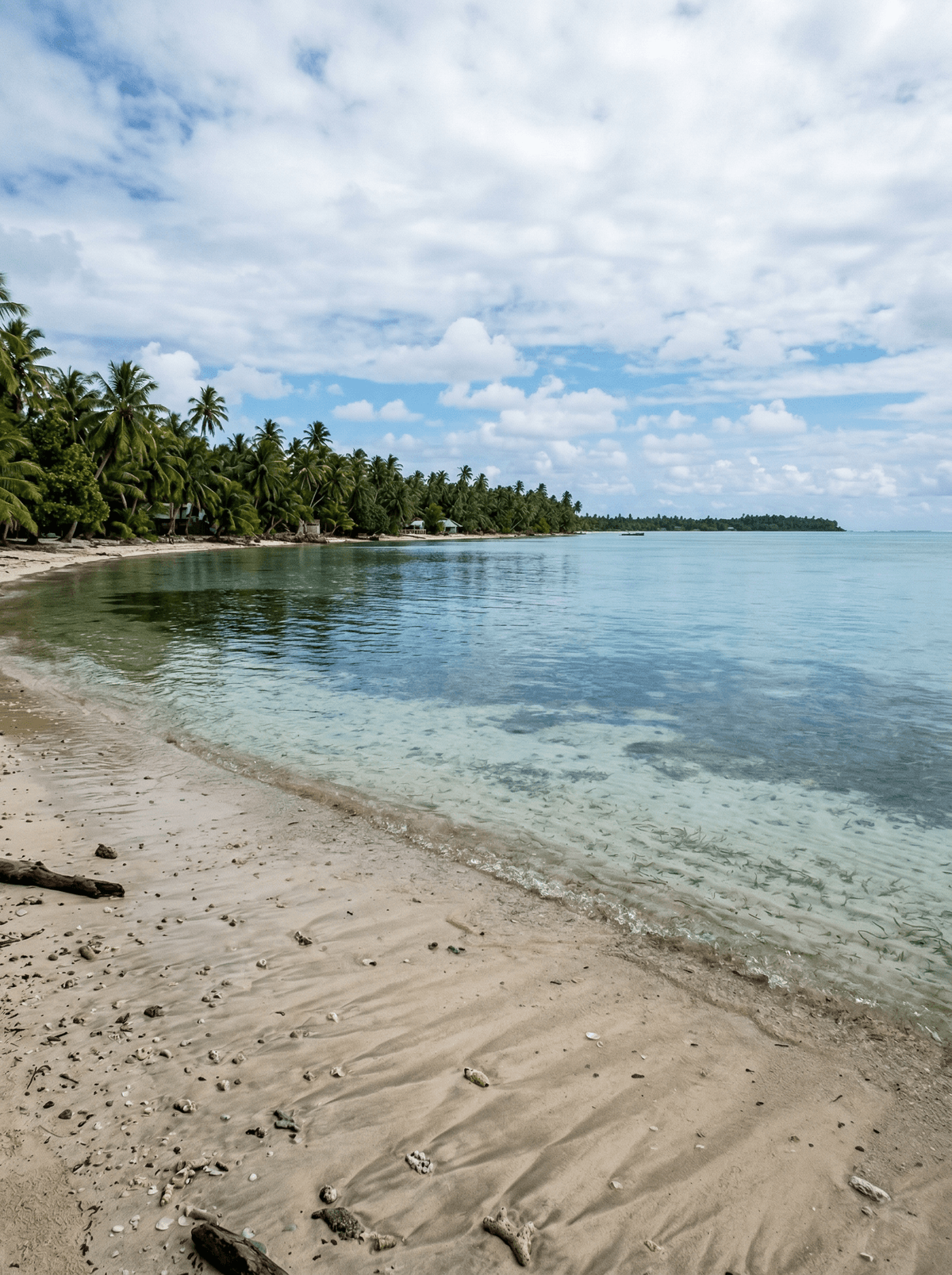
Kiribati
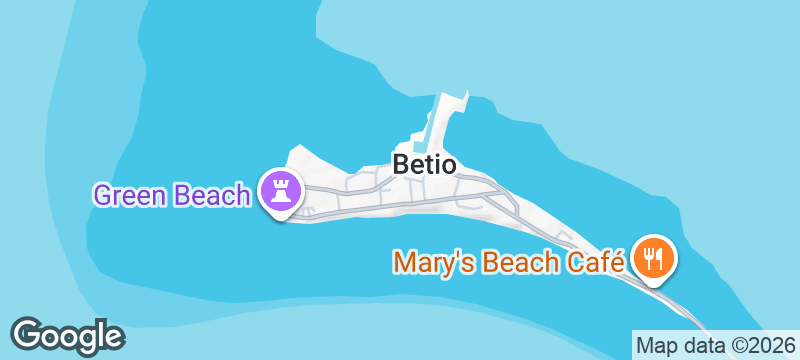
Betio
Rusting Japanese guns still point seaward from beaches where a thousand Marines fell in three days.
Salt wind carries the smell of grilled tuna across cracked concrete seawalls where Japanese gun emplacements still face the water. Betio is loud, hot and crowded, and the rusting steel of 1943 sits right alongside the daily business of a working Pacific harbour. The war never left this islet; it just got company.
Betio was the centre of the Battle of Tarawa, one of the Pacific War's bloodiest amphibious assaults. Over three days from 20 November 1943, 1,009 US Marines and close to 4,700 Japanese defenders died on a coral islet crossable on foot in an hour. Four British-made 8-inch naval guns, sold to Japan back in 1905, still stand at the island's corners, and low tide uncovers the remains of amtracs, American and Japanese tanks and concrete reef obstacles. No visitor centre exists and nothing is charged for entry: homes are built over bunkers, the old Japanese command post still stands, and recovery teams continue to identify Marines missing since the battle. The harbour and market keep present-day I-Kiribati life running right through the middle of it.
Solo
A solo visit moves at the pace the place demands: standing alone beside an 8-inch gun while harbour life carries on behind you, then following the seawall to the memorials. One practical note carried as fact: South Tarawa's lagoon is polluted, so this is ground to walk, not water to swim.
Friends
The weight of Betio's history lands differently with company. Walk the Red Beaches together, piece the three days of battle from the debris, guided by someone from the town, then talk it through over grilled tuna at Betio Lodge afterwards.
- The Battle of Tarawa was fought here over three days from 20 November 1943; 1,009 US Marines and close to 4,700 Japanese defenders were killed on this one small islet.
- Four 8-inch naval guns, part of a consignment Britain sold to Japan in 1905, still stand on Betio's corners facing the sea.
- Low tide reveals the remains of amtracs, American and Japanese tanks and concrete reef obstacles, while homes and volleyball courts occupy the bunkers between them.
- The Defense POW/MIA Accounting Agency's Tarawa Project has identified more than 150 missing servicemen since 2016, so the islet stays a living place of remembrance rather than a finished museum.
Fresh tuna dominates every table on Tarawa; at Betio Lodge's restaurant and barbecue area it comes straight off the boats that unload at the harbour.
After dark, street hawkers cook island favourites under umbrellas: barbecued chicken, breadfruit and fried bananas eaten standing in the warm night air.
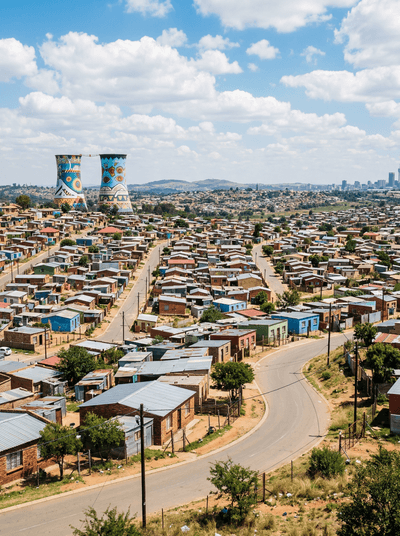
Soweto
South Africa
One Soweto street holds two Nobel homes beside music, memory and kota smoke.
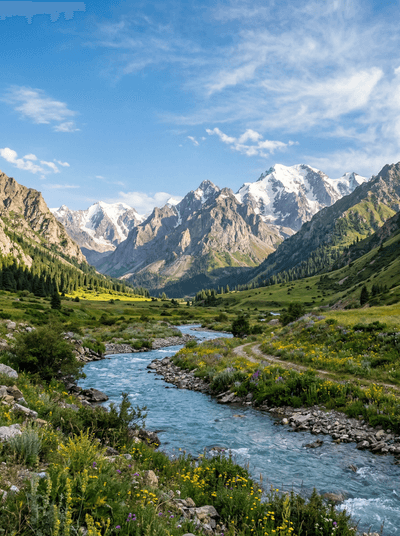
Kara-Suu
Kyrgyzstan
The Fergana Valley's largest market sprawling to the Uzbek border, languages shifting with every stall.
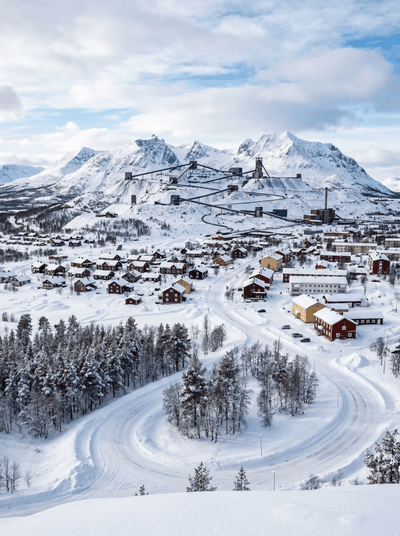
Kiruna
Sweden
A city moving itself sideways because the iron mine beneath refuses to stop.
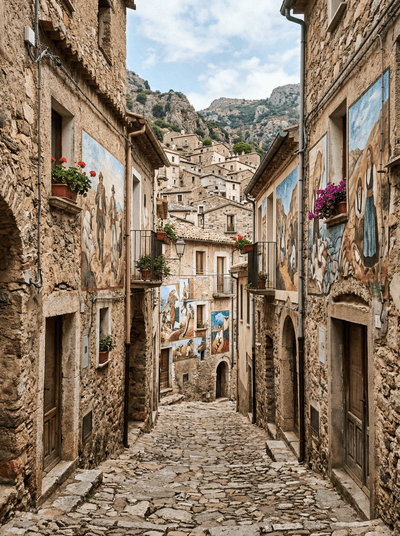
Orgosolo
Italy
A shepherds' village where the walls argue politics in hundreds of painted murals.
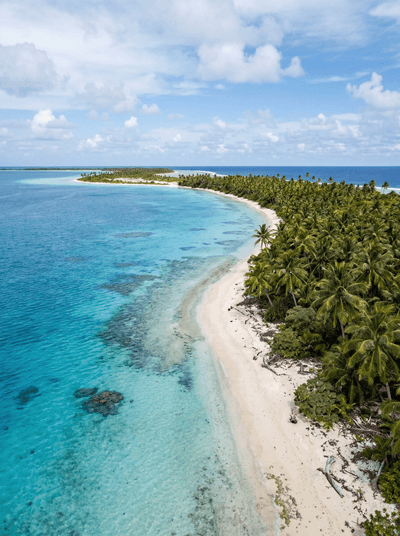
Kanton
Kiribati
Flying-boat ruins and space-tracking relics rust beside a lagoon kept by forty-one islanders.
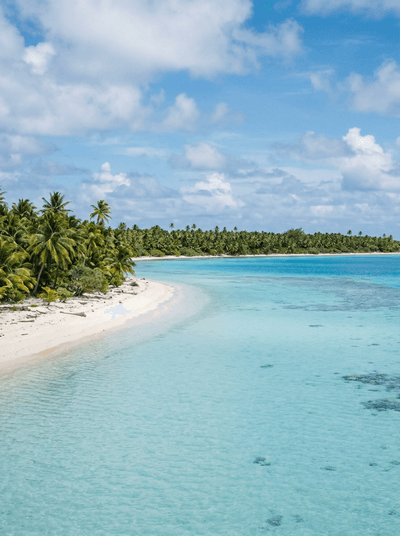
Kiritimati
Kiribati
Bonefishers wade endless turquoise flats while millions of seabirds darken the sky above.
Abaiang
Kiribati
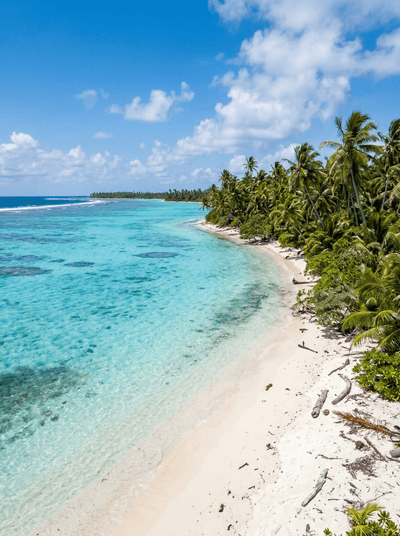
At high tide the sea surrounds Tebunginako's church; the village choir times services around it.
North Tarawa
Kiribati
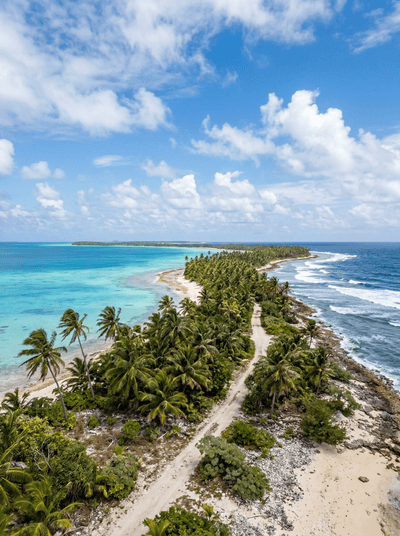
Wade turquoise shallows between villages at low tide; at high water the road becomes a boat.