Cape Verde
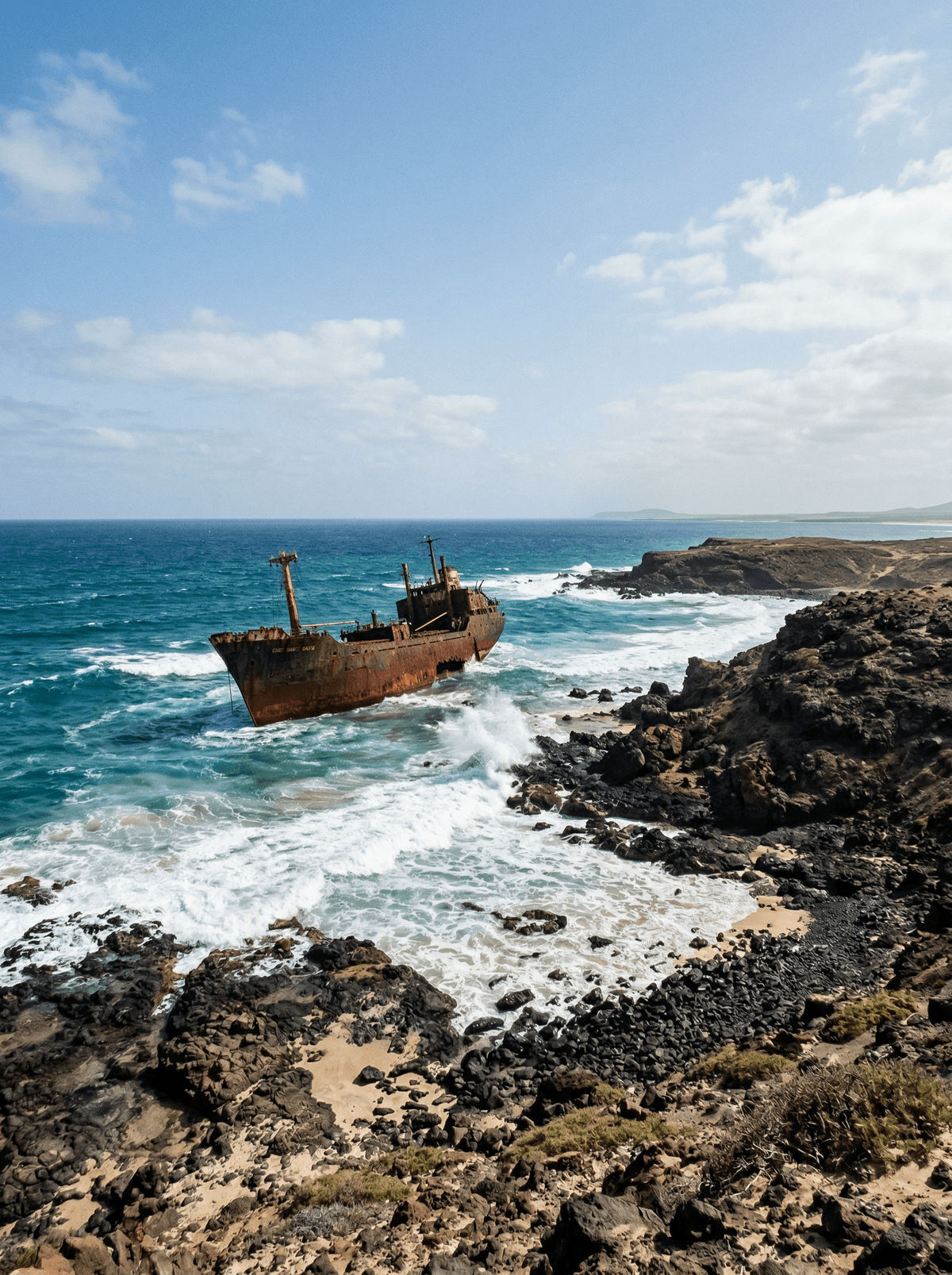
Cabo Santa Maria
A freighter carrying gifts for General Franco has rusted on this beach since 1968.
The hull shows first as a dark interruption in kilometres of pale sand: the Cabo Santa Maria, run onto a sandbar in September 1968 with a cargo of food, machinery and presents bound for Franco's Spain. The Atlantic has been dismantling her ever since.
The ship was Spanish, Cartagena-built and quick for her day, and she grounded on Boa Vista's north shore intact, which points at human error rather than storm. Crew and passengers survived; the cargo passed into island legend. Six decades of salt, surf and storms have thinned the freighter to a red-brown skeleton, still monumental from along the beach, increasingly fragile up close, and now a symbol of Boa Vista. Visits run as 4x4 and quad excursions over sand tracks, and the rules are simple: keep off the sharp, unstable metal, stay well above the waterline on this current-swept coast, and bring shade and water, because Atalanta beach offers neither.
Couple
Take the excursion out, then walk the tideline until the hull frames the whole empty coast; the scale is the romance, one ruined ship and kilometres of sand.
Friends
The sand-track drive is half the day out; the wreck and the long shoreline are the other half. Leave the climbing urge at the hotel.
- The Cabo Santa Maria grounded on Atalanta beach in September 1968, carrying food, machines and gifts intended for General Franco.
- She stranded on a sandbar without structural damage; human error, not storm, put her here.
- The corroding hull has become a symbol of Boa Vista, reached by 4x4 and quad excursions.
- The open north coast is exposed and current-swept; the wreck is for walking around, not climbing.
Nothing grows or grills on Atalanta beach; carry water and let lunch wait.
Tours loop inland to family kitchens in the island's eastern villages; expect the day's fish and a proper stew.
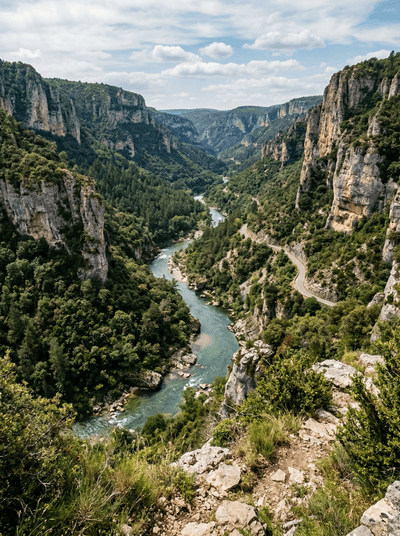
Gorges du Tarn
France
Emerald water snaking between limestone walls hundreds of metres high while vultures circle overhead.
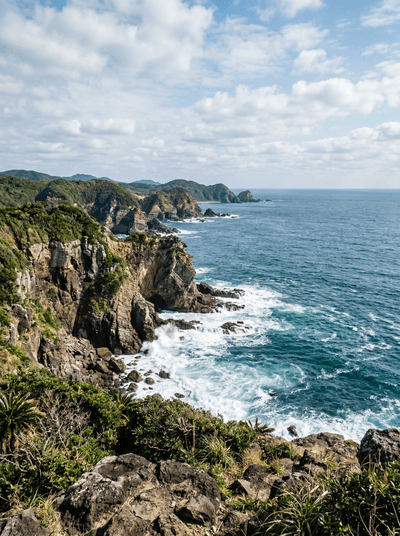
Tanegashima
Japan
A surf island where Japan launches rockets and Portuguese sailors first brought guns.
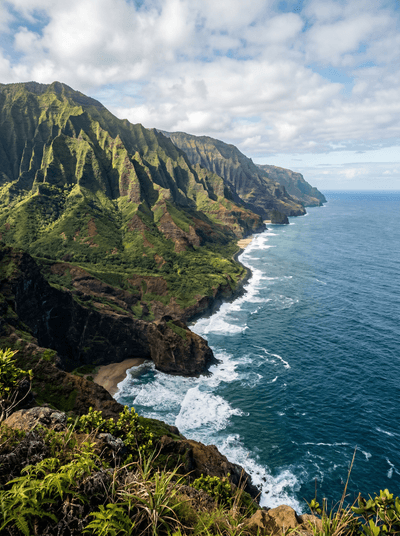
Na Pali Coast
United States
Cathedral sea cliffs rising four thousand feet from the Pacific, reachable only by boat or trail.
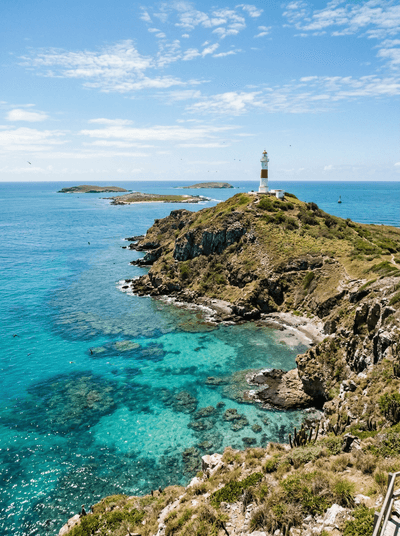
Abrolhos Archipelago
Brazil
Humpback mothers calve above coral mushrooms thirty metres tall that grow nowhere else.
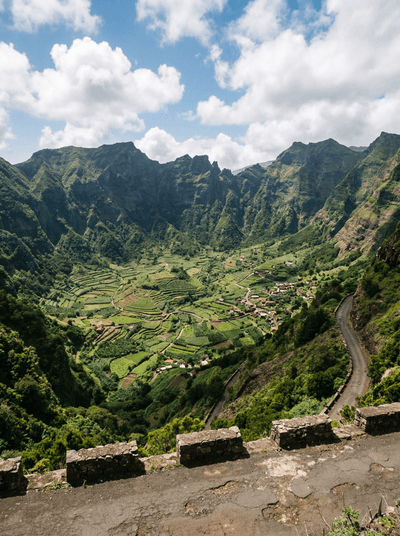
Cova Crater
Cape Verde
A perfectly round caldera floored with crop terraces, invisible until the rim, gone again in cloud.
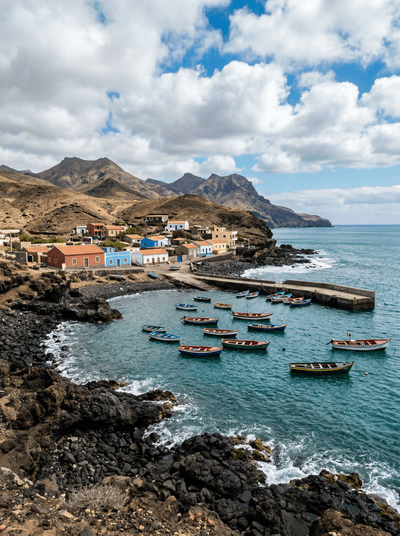
Calhau
Cape Verde
Climb a dead volcano from the beach and count three uninhabited islands from its rim.
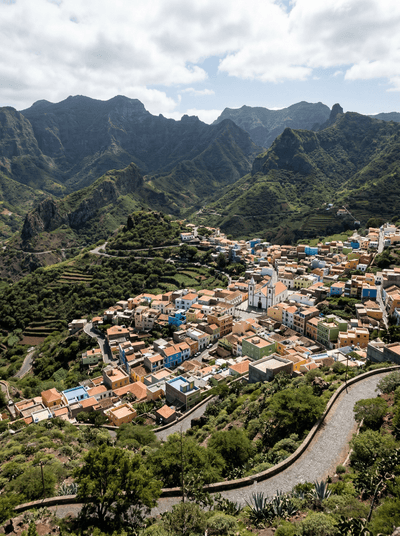
Assomada
Cape Verde
Papaya, maize and market din fill the highland town that feeds all Santiago.
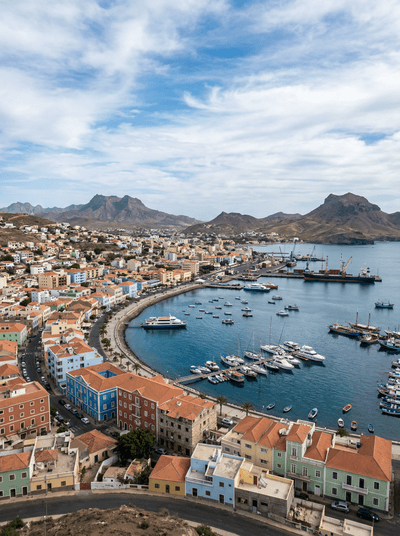
Mindelo
Cape Verde
Morna drifts from harbour bars where the barefoot diva Cesária Évora first sang for sailors.