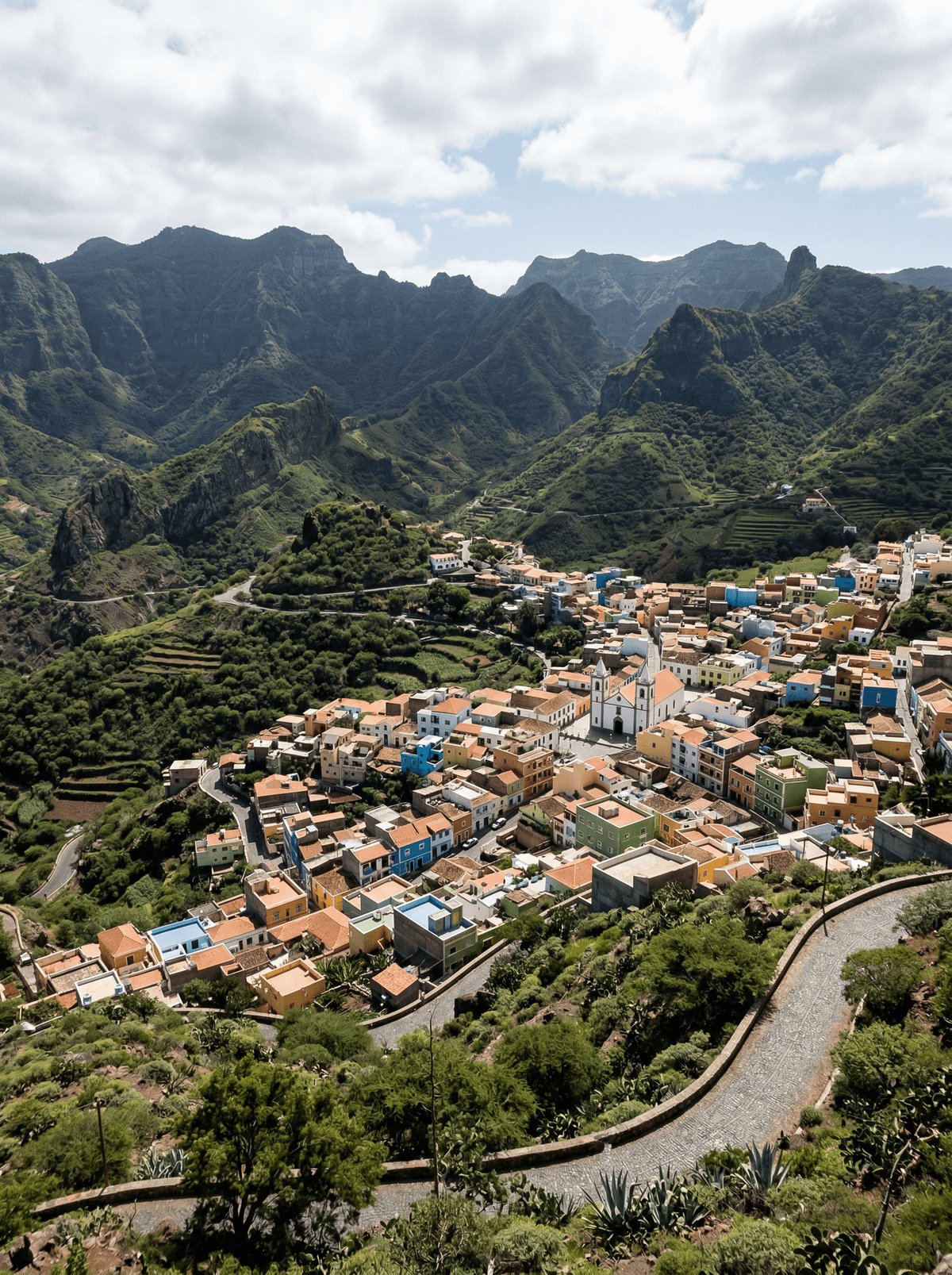
Cape Verde
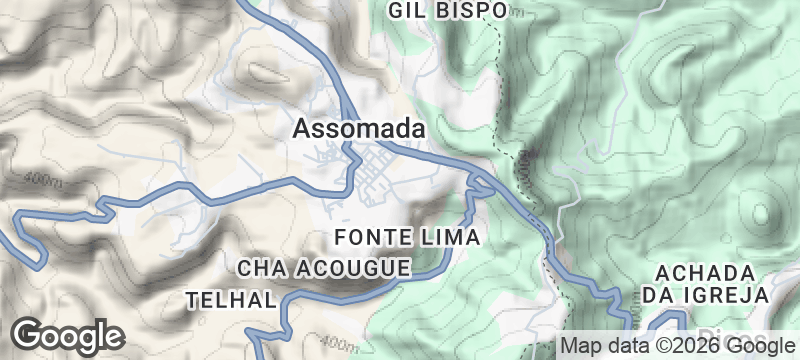
Assomada
Papaya, maize and market din fill the highland town that feeds all Santiago.
The market begins before the hall does, spilling across pavements: sacks of maize, pyramids of papaya and mango, chickens, cloth, and the day's argument about prices. Assomada sits in Santiago's cooler interior, and the whole island seems to funnel through it.
Assomada is the capital of Santa Catarina and the trading heart of Santiago's farm country, the region Cape Verdeans call the island's granary. Its marketplace draws sellers and buyers from every corner of the island daily, and the town around it moves to shared taxis, funaná on radios and highland weather. This interior is also a heartland of tabanka, the drum-led procession tradition born of the meeting of African and European ritual on Santiago; its instruments, costumes and ritual objects have been gathered into a museum collection in the municipality, and the tradition still lives in its festivals. Come on a market morning, eat where the vendors eat, and see the Santiago that exists with its back to the beaches.
Solo
Go with the market's early rhythm and no shopping list; conversations happen over produce, and a lunch room finishes the morning.
Couple
Trade a beach day for the highlands: market, cool air, a slow homestyle lunch, and the drive back through farm country.
Friends
Divide the market between you, fruit, fish, cloth, then reconvene over cachupa and compare hauls.
- Assomada is the market centre of Santa Catarina, in the farm country called Cape Verde's granary.
- The marketplace draws people from all corners of Santiago daily.
- The Santiago interior is a heartland of tabanka, whose instruments and costumes form a museum collection in the municipality.
- Highland Assomada is a natural base for Serra Malagueta and the island's interior.
Terra Terra cooks the homesick classics: cachupa, cuscuz, caldo de peixe and calabaceira juice from the baobab.
Market mornings are the feast: buy fruit by the armful, then take a proper cachupa at a lunch room nearby.
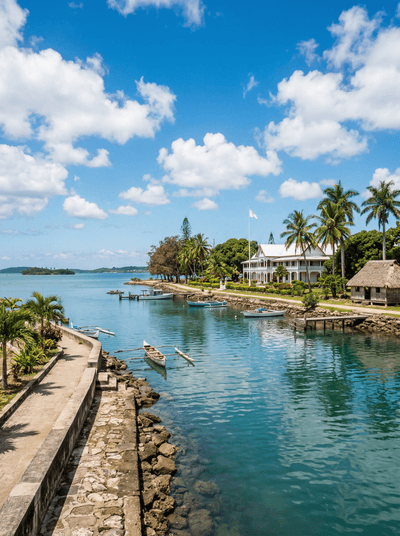
Nuku'alofa
Tonga
Sunday silence swallows an entire kingdom by law, then hymns break from every church at once.
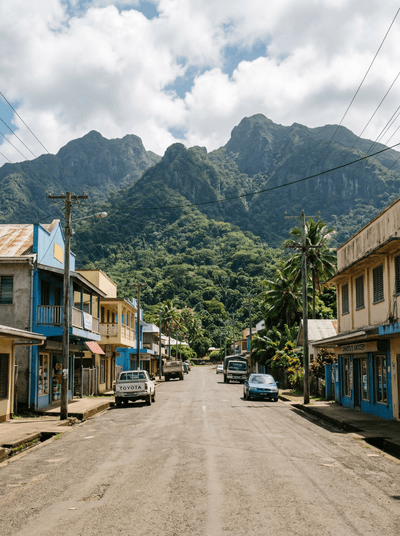
Labasa
Fiji
A cobra-shaped rock at Labasa's snake temple has outgrown its roof twice.
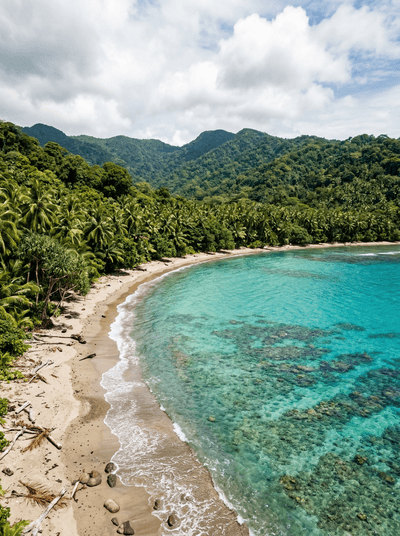
Nendo
Solomon Islands
Money made from red feathers came from here, and the memory of it has not gone.
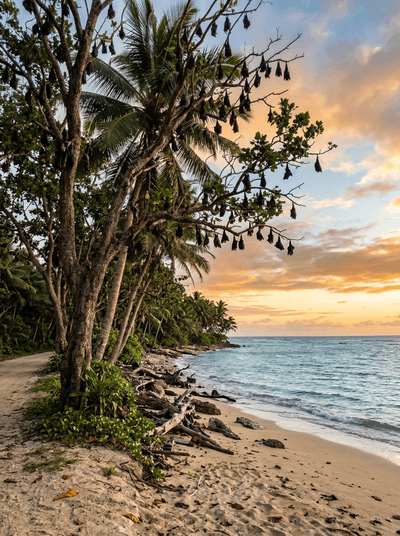
Kolovai
Tonga
Flying foxes drape the casuarina trees of one village, sacred and reserved for the Royal Family.
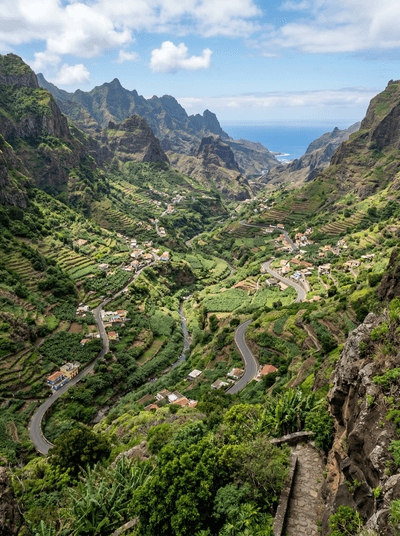
Vale do Paúl
Cape Verde
Sugarcane and coffee terraces pour off a crater rim into a valley threaded with running water.
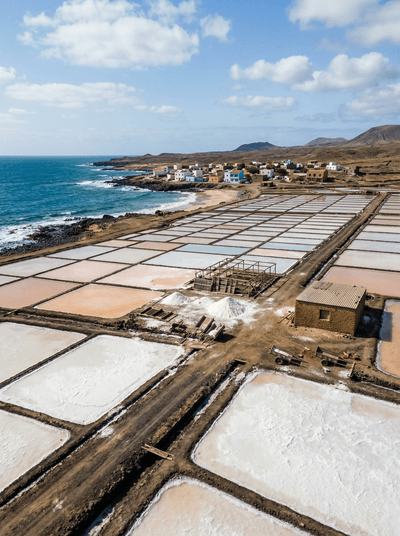
Salinas de Porto Inglês
Cape Verde
Women of the island's salt cooperative still harvest white gold from wetland pans.
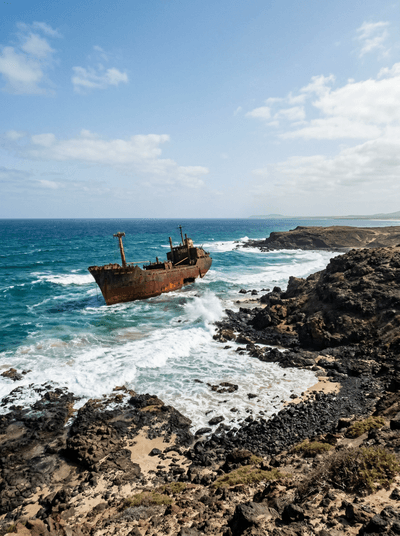
Cabo Santa Maria
Cape Verde
A freighter carrying gifts for General Franco has rusted on this beach since 1968.
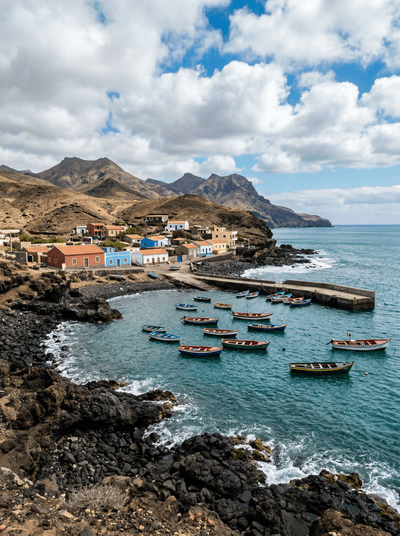
Calhau
Cape Verde
Climb a dead volcano from the beach and count three uninhabited islands from its rim.