United States
Charleston
Sweetgrass baskets sold on street corners where the air smells of pluff mud and jasmine.
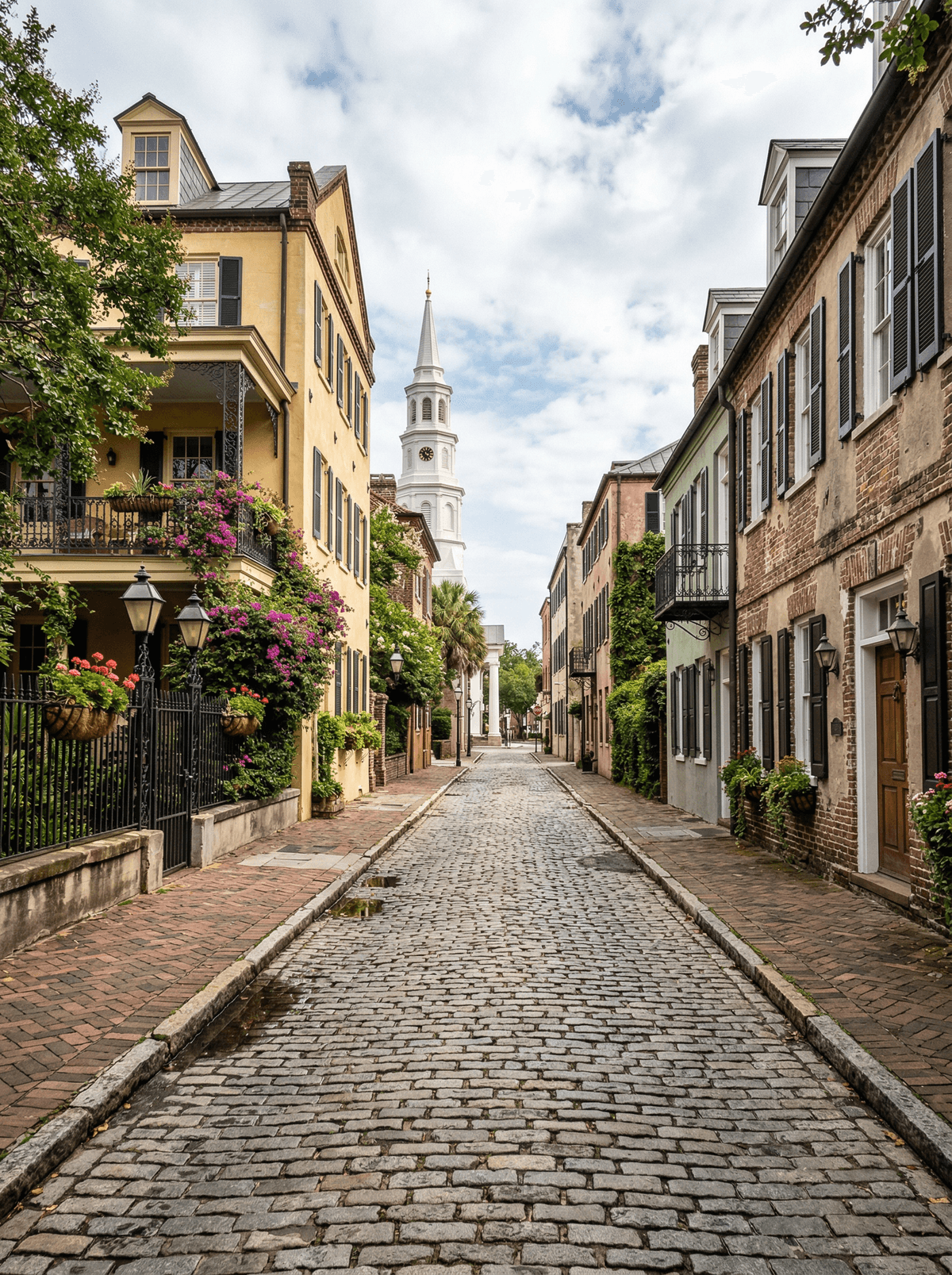
The salt-marsh scent of pluff mud drifts up from the harbour and mixes with jasmine spilling over garden walls. In the market sheds, Gullah Geechee weavers coil bulrush and sweetgrass into baskets the way their families have for generations, and by late afternoon the light turns the steeples and ironwork the colour of warm honey.
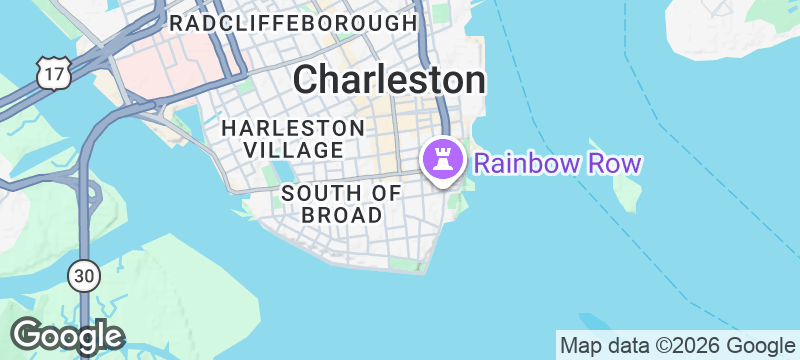
Charleston keeps one of the largest intact historic districts in America, and most of it is still residential, so the streets feel lived-in rather than preserved under glass. Rainbow Row's thirteen pastel Georgian houses line East Bay Street, and the hundreds of steeples above the rooftops explain the nickname the Holy City. The kitchens carry three centuries of Lowcountry cooking, a cuisine invented largely by enslaved Gullah women whose one-pot dishes, she-crab soup and shrimp and grits among them, still headline the city's menus. From the Battery seawall at the peninsula's tip, the view runs clear across the harbour to Fort Sumter, where the Confederacy fired on the US garrison on 12 April 1861 and opened the Civil War.
Couple
Garden gates draped in jasmine, dinner on a candlelit piazza and a slow walk along the Battery watching the harbour turn silver make this an easy city to fall for together.
Friends
Rooftop bars and chef-led dining rooms sit within a few walkable blocks, so a group can graze from oyster hour to a late Lowcountry supper without ever calling a taxi.
- Gullah Geechee weavers still coil sweetgrass baskets by hand at the market and along Lowcountry roadsides, a craft carried from West Africa and now collected by museums.
- Rainbow Row's thirteen pastel Georgian houses stand shoulder to shoulder on East Bay Street, a stroll from the Battery seawall.
- The first shots of the Civil War were fired on Fort Sumter in Charleston Harbor in April 1861, and the fort is reached only by ferry across the water.
- She-crab soup and shrimp and grits began as Gullah invention here and never left the city's tables.
She-crab soup enriched with roe, a Gullah creation that still opens dinner across the historic district.
Shrimp and grits, born of Lowcountry one-pot cooking and now served from market sheds to white-tablecloth rooms.
Kagoshima
Japan
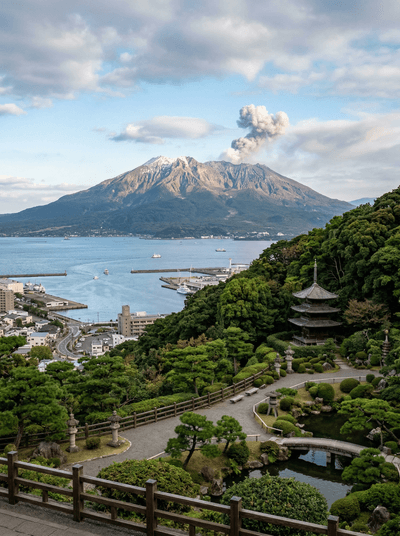
Volcanic ash drifting like grey snow on a city living beneath an active cone.
Rouen
France
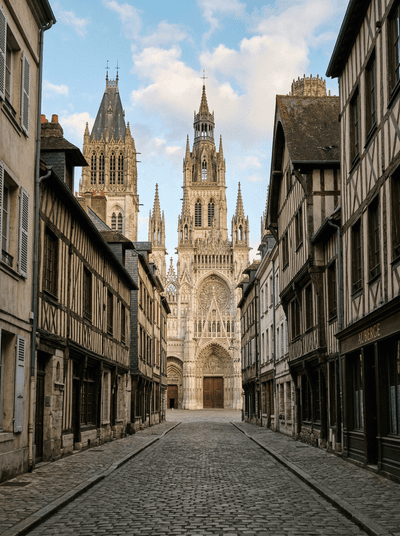
Half-timbered lanes winding to the square where Joan of Arc's fire still scorches the stone.
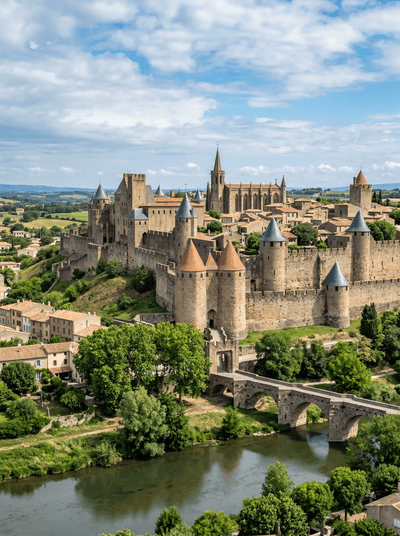
Carcassonne
France
Double ramparts and a crown of towers silhouetted at dusk like a medieval fever dream.
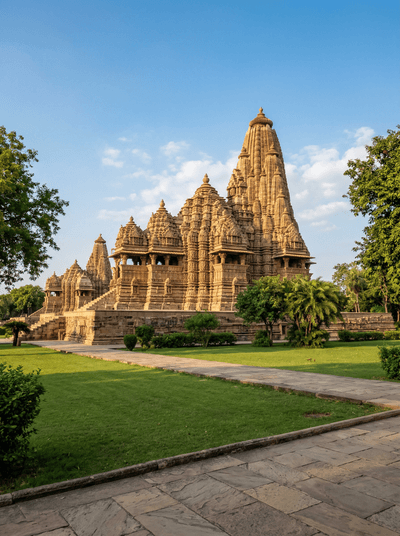
Khajuraho
India
Elaborate sandstone temples covered in explicitly acrobatic carvings rising unexpectedly from the flat central plains.
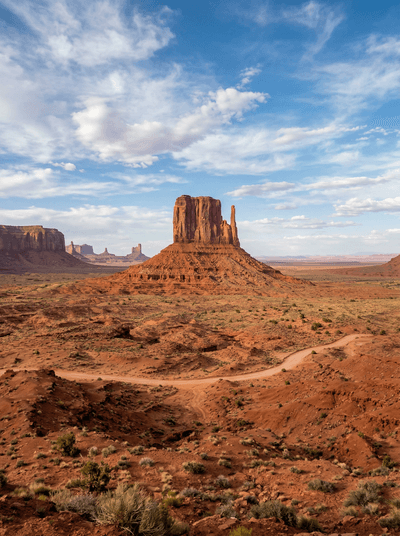
Monument Valley
United States
Sandstone mittens casting shadows across a rust-coloured desert frozen mid-creation.
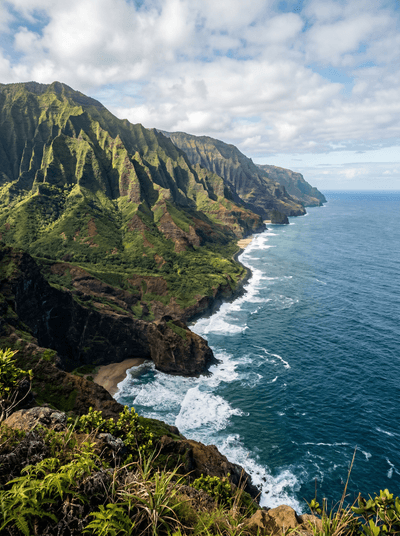
Na Pali Coast
United States
Cathedral sea cliffs rising four thousand feet from the Pacific, reachable only by boat or trail.
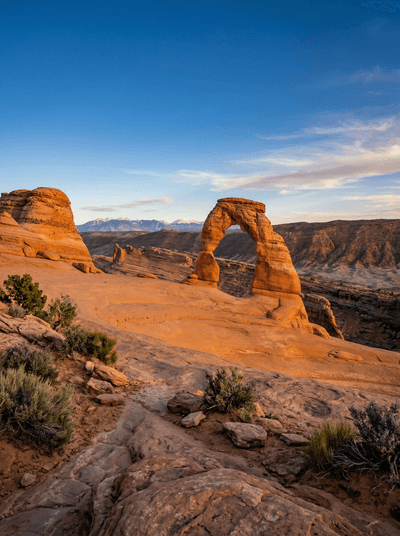
Moab
United States
Red rock arches framing the desert sky in a town built for dirt and adrenaline.
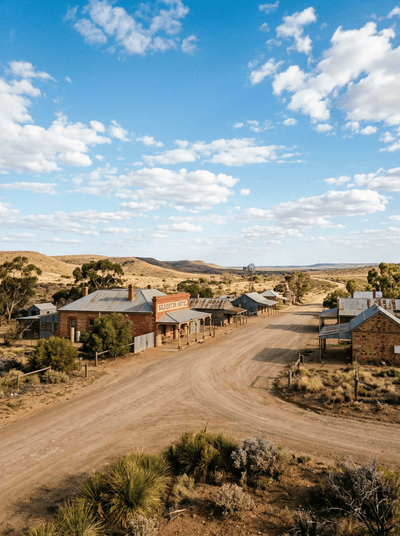
Silverton
United States
A narrow-gauge steam train delivers you to a mining town at 9,318 feet.